Grimmory
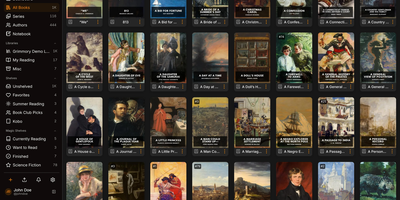
Consolidate fragmented collections of digital novels, graphic novels, manga, and audiobooks into Grimmory, an open-source media library server that combines automated file sorting with rich in-browser reading environments. The server indexes diverse media formats including EPUB, MOBI, AZW3, FB2, PDF, CBZ, CBR, CB7, M4B, and MP3 files across isolated storage directories. Readers explore literature through specialized browser viewports that provide customizable typography, CFI highlight annotations, two-page comic spreads with right-to-left manga modes, and chapter-based audiobook playback with sleep timers. Automated BookDrop watch folders ingest incoming files, retrieving book covers, author biographies, and community ratings from Google Books, Open Library, and Amazon APIs. Dynamic Magic Shelves organize catalogs automatically using nested boolean rule trees that filter books by page counts, genres, release dates, or narrator identities without server reload overhead. External e-readers access media catalogs through standard OPDS feeds or native Kobo and KOReader synchronization endpoints that match documents by binary content hashes. Built-in email delivery sends formatted books directly to Kindle devices with a single click, while OpenID Connect authentication enforces granular multi-user library permissions. Running on a dedicated VPS on RepoCloud with guaranteed CPU, RAM, and SSD, full root SSH access, and a browser serial console. GNU AGPLv3 licensed.
Komga
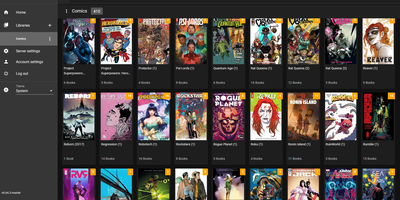
What Jellyfin is for video, Komga is for comics, manga, BDs, magazines, and eBooks: point it at folders of CBZ, CBR, CBT, PDF, and EPUB files and it becomes a proper library with cover art, embedded metadata import, and per-user reading progress. The responsive web reader handles multiple reading modes - left-to-right for western comics, right-to-left for manga, webtoon scrolling - while collections and read lists organize crossovers and story arcs, with ComicRack .cbl read list import for existing curation. Its openness is the real differentiator: OPDS v1.2 and v2.0 feeds serve virtually every reader app (Panels, Moon+ Reader, Mihon/Tachiyomi, KyBook), with OpenSearch and page-streaming extensions so mobile apps fetch pages on demand instead of whole archives. E-ink support is built in, not bolted on - Kobo devices sync directly against Komga instead of Kobo's servers, with two-way read progress, on-the-fly KEPUB conversion via Kepubify, and optional proxying so official Kobo purchases still work; KOReader sync covers everything else. Multi-user management brings per-library access control, age restrictions, and label restrictions for family setups. Housekeeping tools detect duplicate files and duplicate pages, and a REST API feeds a healthy ecosystem of community scripts. Runs from a single Docker container with embedded SQLite.
Kumiho
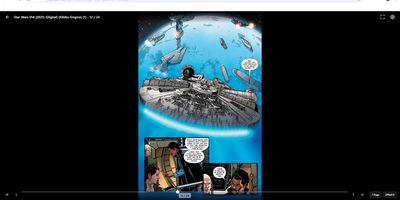
Drop a hard drive's worth of comics, e-books, and audiobooks into folders, point Kumiho at them, and the whole collection becomes a library you can browse and read from any browser. The scanner walks nested folders recursively and treats the folders that actually hold pages or files as series, so an existing collection works as it is, with no metadata matching ritual before the first read. Comics and manga open in a responsive viewer built for the format: page turning on a desktop, continuous webtoon scrolling on a phone or tablet. E-books in EPUB, PDF, and TXT open in the same library, while archives in ZIP and CBZ are read directly without unpacking. Audiobooks get a real player, with a chapter list, resume playback that remembers where you stopped, progress tracking, bookmarks, and a sleep timer for listening at night. A series folder can even carry its own soundtrack: an MP3 whose filename matches starts playing as background music while you read. Everything runs from one lightweight Go server in a single Docker container, storing its database and configuration in mounted volumes, so the library sits comfortably on a small VPS next to the files it serves. Running on a dedicated VPS on RepoCloud with guaranteed CPU, RAM, and SSD, full root SSH access, and a browser serial console. Apache 2.0 licensed.