Tryton
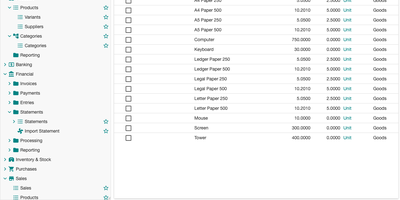
In Tryton, an invoice knows its shipment and a production order knows its stock, since accounting, inventory, purchasing, and sales are modules of one ERP rather than separate programs exchanging exports. Financial accounting posts customer and supplier invoices, reconciles bank statements imported from SEPA or configured CSV formats, manages dunning and direct debits, and produces Factur-X electronic invoices, while analytic accounting splits results across cost centers. Stock tracks goods through warehouses and locations with lots, shipments, inventories that warn when counts drift beyond tolerance, and automatic period closing, and production consumes bill-of-material inputs into finished goods with quantity checks. Sales quotations become orders, shipments, and invoices without retyping; purchases calculate real supplier lead times; point of sale records lot numbers at the till; subscriptions bill recurring services on schedule. Multi-company installations share the same database with per-company wizards, tax rules can be defined per organization for European trade, and parties, products, carriers, currencies, and customs duties are managed as shared reference data. Access happens through the browser web client, a desktop client, or scripting and REST libraries, so integrations read and write the same business objects your staff see. Running on a dedicated VPS on RepoCloud with guaranteed CPU, RAM, and SSD, full root SSH access, and a browser serial console. GPL-3.0-or-later licensed.
Apache OFBiz
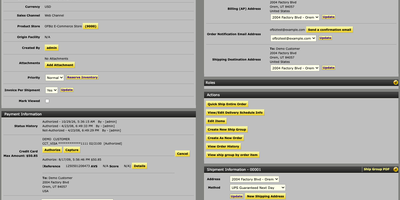
Apache OFBiz is the enterprise resource planning system a company installs when accounting, inventory, orders, and the factory floor must all agree with each other in real time. One shared data model connects the modules, so a sales order entered by the CRM team immediately reserves stock in the warehouse, schedules a pick list, and posts the receivable to the general ledger when it ships. The catalog manager handles unlimited stores, categories, and product variants with price rules and a promotion engine, and the built-in e-commerce storefront and point of sale sell from the same inventory your warehouse counts. Manufacturing plans production with bills of materials, routings, and MRP runs that propose purchase orders for missing raw materials, then costs every job as it moves through the shop. Accounting is proper double-entry: accounts receivable and payable, invoicing, payments, fixed assets with depreciation, budgets, and financial reports across multiple organizations. Facility tools manage several warehouses with lot and serial tracking, receiving, returns, and physical inventory counts, while the HR module keeps positions, contracts, expenses, and performance reviews. Party management unifies customers, suppliers, and employees into one record, REST and service APIs expose every function to integrations, and project and work effort tools track tasks against orders. Running on a dedicated VPS on RepoCloud with guaranteed CPU, RAM, and SSD, full root SSH access, and a browser serial console. Apache-2.0 licensed.