StackRender
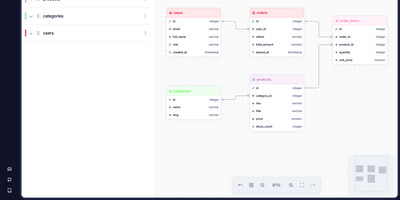
To design relational database schemas visually and generate production-ready SQL migrations without writing boilerplate DDL by hand, developers use StackRender, an interactive browser-based schema modeling studio. Users can start from a blank drag-and-drop Entity Relationship Diagram canvas or import existing SQL DDL scripts directly from PostgreSQL, MySQL, MariaDB, SQLite, Oracle, and Microsoft SQL Server databases. Each table node provides granular control over column data types, lengths, precision, character sets, collations, nullability, uniqueness, primary keys, composite indexes, and custom PostgreSQL enum types. When connecting tables across one-to-one, one-to-many, and many-to-many relationships, the schema analyzer checks for circular foreign key dependencies and suggests performance indexes on frequently joined columns. As a schema evolves over time, the visual state-diff engine records every structural modification and generates paired UP forward-migration and DOWN rollback scripts, accurately translating table and column renames into non-destructive ALTER statements rather than dropping and recreating data. Running on a dedicated VPS on RepoCloud with guaranteed CPU, RAM, and SSD, full root SSH access, and a browser serial console. AGPL-3.0 licensed.

OpenReader
With OpenReader, any EPUB, PDF, Word document, Markdown file, or plain text book transforms into an interactive reading workspace paired with natural text-to-speech playback and multi-chapter audiobook export. Documents render natively in their original page layout rather than flattening into plain text, using layout-aware block detection and cross-page stitching so multi-column academic papers, technical manuals, and textbooks flow in the right reading order while skipping headers and footnotes. As narration plays, word-level forced alignment highlights each spoken word directly on the page in real time, and progressive background generation starts audio playback on the first segment while synthesizing upcoming pages ahead of your cursor. Readers can connect local speech engines such as Kokoro, KittenTTS, and Orpheus or cloud voice providers, select language-aware voices for multilingual books, adjust playback speed, and switch among thirteen light and dark reading themes. Cached audio segments persist across seeks and browser reloads, allowing the background worker to assemble complete M4B or MP3 audiobooks for offline listening on mobile devices while syncing reading progress, queues, and library imports across sessions. Running on a dedicated VPS on RepoCloud with guaranteed CPU, RAM, and SSD, full root SSH access, and a browser serial console. MIT licensed.
AMUX
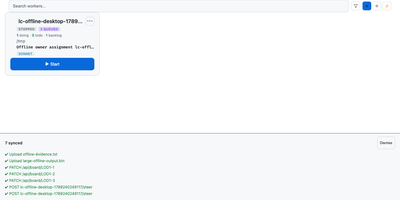
To coordinate swarms of autonomous coding agents across complex software projects, AMUX provides a concurrency-safe kanban workspace with real-time thought stream inspection and live steering controls. Engineers assign development tasks through an interactive board where autonomous worker processes claim cards using compare-and-swap mutexes to eliminate race conditions between parallel sessions. Operators monitor active reasoning streams, inspect streaming terminal outputs, and inject guidance commands mid-turn without interrupting background execution. A cryptographic origin router relays messages between agents, enabling workers to delegate sub-tasks, request automated peer code reviews, and share environment state safely. Built-in schedulers trigger recurring automated maintenance routines, dependency updates, and bug triage sweeps on cron-like timers or autonomous loop cadences. Teams can switch language models dynamically on active sessions to tackle complex architecture challenges with high-capability reasoning engines while conserving resources on routine tasks. An integrated self-healing supervisor watches over agent runtimes, automatically compacting context windows, restarting crashed terminal sessions, and resuming pending instructions seamlessly. Running on a dedicated VPS on RepoCloud with guaranteed CPU, RAM, and SSD, full root SSH access, and a browser serial console. MIT licensed.
plMail
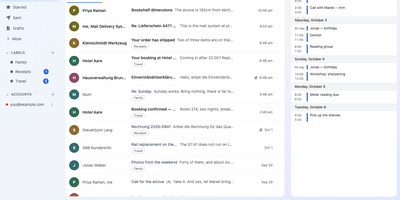
Gmail, Outlook, and every IMAP mailbox you own share one inbox, one search box, and one calendar in plMail, a mail client you host yourself. Accounts sit side by side with sending aliases, and new mail arrives on its own through IMAP IDLE, Gmail and Outlook push, and browser notifications. Credentials are encrypted before storage. Search understands from:, subject:, label:, has:, and before:, completes as you type, and highlights matched words. Filters are nested any, all, or none trees, and each shows how many real messages match before you save it. Drag several conversations at once onto folders, labels, or inbox tabs; a label adds itself without removing the mail from your inbox. A calendar sits beside the mail, with two-way sync for Google, Microsoft, and CalDAV. Move events on the week grid, answer invitations in place, and send share and booking links. An optional language model, pointed at your own Ollama server or any OpenAI-compatible endpoint, searches by meaning, drafts replies, summarizes threads, and sorts mail into tabs once you switch it on. Attach files from and save them to Drive, OneDrive, Dropbox, Nextcloud, Immich, and Paperless-ngx. Sign in through Authentik, Keycloak, or any OpenID Connect provider, and pick from 41 themes. Android and iOS apps connect to your own server. Running on a dedicated VPS on RepoCloud with guaranteed CPU, RAM, and SSD, full root SSH access, and a browser serial console. AGPL-3.0 licensed.
MediKeep
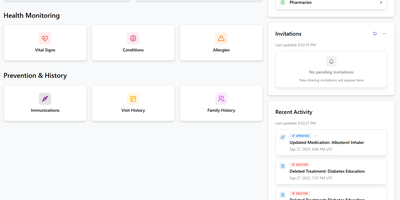
Your medical history, fragmented across a dozen patient portals, in one place on your server: MediKeep (formerly Personal Medical Records Keeper) is a self-hosted health record system. Built with a React frontend and FastAPI backend over PostgreSQL, it organizes 14 categories of medical data - medications with dosages and schedules, conditions, procedures, allergies, immunizations, symptoms, injuries, doctor visits and encounters, treatments, lab results, and even medical equipment with service dates and supplier info. Treatment management is genuinely sophisticated: an advanced mode links treatments to their medications with per-medication overrides for prescriber, pharmacy, and effective dates, and reverse lookup shows which treatments use a given medication. A dashboard summarizes records and recent activity, file uploads attach documents to records, and tagging works across categories. When a new specialist asks for your history, the report builder assembles custom reports by category and exports to PDF, JSON, or CSV - a curated, portable summary instead of a folder of photocopies. Authentication supports Google and GitHub SSO with OIDC providers like Keycloak and Authelia expected to work, and the built-in backup system protects the archive. Health data is exactly what should never live in someone else's cloud.
Bindery
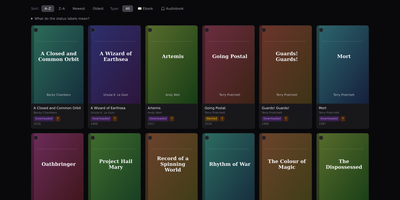
Stop wrestling with dead scrapers and scattered reading folders by orchestrating your digital library through Bindery, an automated ebook and audiobook management platform that tracks favorite authors, monitors release schedules, coordinates indexer searches, and organizes media collections. Users can configure monitoring profiles to automatically track author bibliographies across OpenLibrary, Google Books, and Hardcover without fear of dead endpoints breaking their library. Dual-format tracking allows each book entry to hold separate digital ebook and multi-part audiobook files in distinct directory roots. The integrated search engine evaluates Newznab and Torznab indexers in parallel, scoring releases by edition tags, audio bitrate, narrator names, and release year to grab the highest quality versions. Download jobs pass seamlessly to background clients like SABnzbd, NZBGet, Transmission, or Deluge, moving completed files into custom library folder structures with hardlinks. An interactive release calendar highlights upcoming publications, while the manual metadata editor locks custom titles, genres, and series ordering against upstream refreshes. Readers can browse curated collections directly through the built-in OPDS feed on mobile reading apps or export organized media straight into Calibre and Audiobookshelf. Running on a dedicated VPS on RepoCloud with guaranteed CPU, RAM, and SSD, full root SSH access, and a browser serial console. MIT licensed.
Yep Anywhere
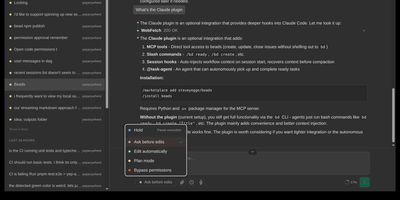
Designed for developers on the go, Yep Anywhere turns any smartphone browser into a full-featured control center for supervising, steering, and reviewing autonomous AI coding agents. Operators can monitor live execution across multiple active projects simultaneously without sitting at a desktop terminal. Real-time reasoning feeds. Instant push alerts for permission prompts. One-tap tool approvals. Developers can unblock pending tasks mid-turn, redirect active workflows, or queue sequential follow-up prompts for automatic delivery at the next safe milestone. An integrated source control viewer displays syntax-highlighted working-tree and commit diffs, allowing reviewers to attach line-level comment bundles directly back into the agent context. Mobile voice transcription lets users dictate instructions straight into running sessions, while photo library integration makes uploading bug screenshots effortless. All agent credentials, CLI configurations, and repository data remain private on the host server without requiring third-party cloud database accounts or proprietary device pairing. Running on a dedicated VPS on RepoCloud with guaranteed CPU, RAM, and SSD, full root SSH access, and a browser serial console. MIT licensed.
Synaplan
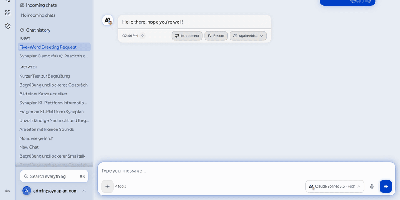
Instead of a separate chatbot for each channel, Synaplan runs one self-hosted AI assistant for your team, website visitors, WhatsApp line, and inbox, and shows what every reply cost. In the web app, connect OpenAI, Anthropic, Gemini, Groq, Mistral, xAI, Hugging Face, or local Ollama. Each kind of work gets its own model, from chat and image to video and audio, and every answer carries a Free, Low, Mid, or High cost badge. A planner splits a big request into a task graph and sends each step to the model that fits. On your website, one script tag adds a chat widget, and a human operator can take over any conversation live. On WhatsApp Business and email, the assistant replies on the channel where the question arrived. Behind every channel sits one knowledge base: upload PDFs, Word and Excel files, or images with OCR, and semantic search feeds them into answers. Saved tasks run on demand or on a schedule, approvals pause any action that writes, and watched pages mail you a diff when a URL changes. Connections reach Microsoft 365, Dropbox, Nextcloud, ownCloud, WebDAV, CalDAV, Jira, and Confluence. An MCP server and an Anthropic-compatible endpoint let Claude, Cursor, and Claude Code use your instance. Users and groups share folders and assistants, and admins see usage and health. Running on a dedicated VPS on RepoCloud with guaranteed CPU, RAM, and SSD, full root SSH access, and a browser serial console. Apache-2.0 licensed.
PotatoMesh
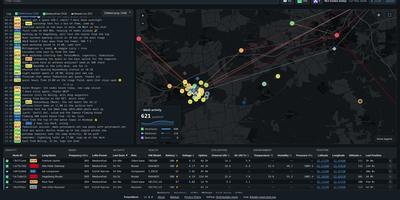
When your community asks what its LoRa mesh is doing right now, PotatoMesh answers with a live map, chat log, and node table built from the traffic your own radios hear. It is a self-hosted dashboard for Meshtastic, Meshcore, and Reticulum networks, with no MQTT clutter. Each node gets a detail page charting battery, voltage, channel utilization, temperature, humidity, and air quality over the past week, plus the neighbors it hears with signal strength and the trace routes it appears in. New nodes and telemetry reports pop up in the chat as they arrive, and a charts page follows telemetry and packets per hour across the whole network. Federation finds other PotatoMesh communities automatically and plots them on a world map with active-node counts per protocol. Ingestors feed the dashboard from radios over serial, TCP, Bluetooth, or passive UDP, and several can report to one instance. Open browsers update live, a Prometheus endpoint exports metrics, and Markdown pages publish your rules, contact details, or legal notice. Add a stop-sign emoji to a node's name to hide it, or switch on private mode to drop the chat entirely. Running on a dedicated VPS on RepoCloud with guaranteed CPU, RAM, and SSD, full root SSH access, and a browser serial console. Apache-2.0 licensed.
WikiDocs
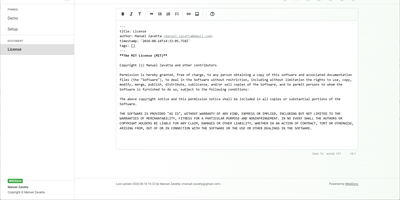
Write your knowledge as plain Markdown files, and WikiDocs turns the folder into a searchable, versioned wiki with no database to set up or back up. Pages carry YAML front matter, so the whole wiki can be copied, archived, or opened in any text editor. An editor with a formatting toolbar handles headings, lists, task lists, links, and images, and pictures can be pasted straight from the clipboard. Math is typeset with KaTeX, Mermaid renders diagrams such as ER models and mind maps, and code blocks get syntax highlighting. Every save keeps a revision, a versions dialog lists them, and deleted pages wait in a trash where they can be restored or erased. Attachments upload and download from any page, namespaces build a page tree in the sidebar with pinned pages on top, and full-text search highlights every match. Public mode publishes a read-only knowledge base, private mode requires sign-in, and administrator and user accounts are managed in the app. Settings cover the wiki title, owner notice, privacy banner, language, timezone, light or dark template, and accent color, and every page has a print button. A desktop app keeps files on your computer and syncs with your self-hosted instance, while a REST API with Swagger documentation lets other tools read and write pages. Running on a dedicated VPS on RepoCloud with guaranteed CPU, RAM, and SSD, full root SSH access, and a browser serial console. MIT licensed.
Maintenant
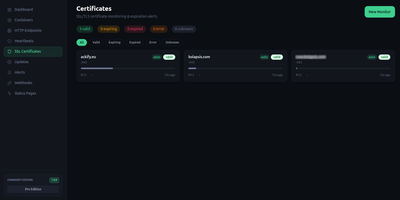
Maintenant replaces three to five separate monitoring tools with a single Go binary that consolidates container discovery, endpoint monitoring, SSL tracking, resource metrics, and public status pages without requiring any external database. The embedded Vue 3 frontend serves on port 8080 immediately after deployment, auto-discovering Docker containers and Kubernetes pods through direct socket and API access without configuration. HTTP and TCP endpoint monitoring validates availability with configurable intervals, while TLS certificate tracking alerts before expiration across all monitored domains. Resource metrics collect CPU, RAM, network throughput, and disk usage per container with real-time Server-Sent Events streaming to the dashboard. Heartbeat and cron monitoring accepts pings from external scheduled jobs, triggering alerts on missed check-ins via webhook callbacks and Discord notifications. The built-in alert engine supports escalation rules and notification batching. Public status pages expose component health to end users without authentication, customizable per monitored service. Network security insights analyze exposed ports, container privilege levels, and host configuration to produce a posture score. Update intelligence scans OCI registries to detect available container image updates with digest comparison. The REST API with SSE broker enables automation, and the integrated MCP server provides tooling for AI assistant integration. SQLite in WAL mode stores all data with zero operational overhead. Running on a dedicated VPS on RepoCloud with guaranteed CPU, RAM, and SSD, full root SSH access, and a browser serial console. AGPL-3.0 licensed.
Monitor
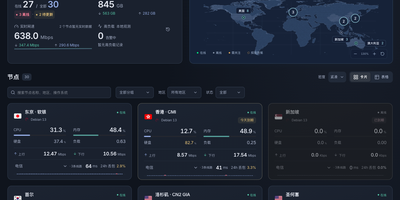
Monitor watches your servers the way a status page should: second by second, from one small binary you run yourself. A lightweight Linux agent on each machine reports CPU, memory, disks, network throughput, connections, and processes to your hub over a persistent connection, and the hub pushes a fresh snapshot to your browser every two seconds. History is kept for charting, so node pages show how load, traffic, and latency behaved over days. Ping tasks run from the hub's side too: define targets once and every agent measures latency to them on its own interval, drawing the curves next to the machine metrics. The public face is a status page you can reskin without touching the server: themes install from the panel, run as static pages against a small public API, and anonymous visitors see only the nodes you marked public, with addresses and hostnames stripped out. Node management stays practical: registration windows hand out tokens safely, installing an agent is one command, and replacing a token disconnects the old connection immediately. When a node goes offline, crosses its traffic allowance, approaches expiry, or someone signs in, alerts go out through Telegram or any webhook. The hub listens only on localhost behind your HTTPS proxy, signs in by password or GitHub OAuth allowlist, and lists revocable sessions. Running on a dedicated VPS on RepoCloud with guaranteed CPU, RAM, and SSD, full root SSH access, and a browser serial console. MIT licensed.
Bytedesk
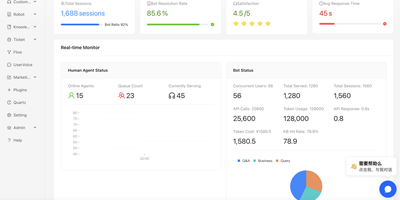
Support teams handling website live chat, email queues, and social messaging channels gain a unified, AI-assisted helpdesk in Bytedesk. Incoming conversations from web widgets, mobile SDKs, WhatsApp, WeChat, and email flow into a single agent workbench equipped with skill-group routing, VIP priority rules, and automatic human handoff. Customer-facing AI agents connect to Ollama, DeepSeek, OpenAI, Qwen, and Zhipu models to answer recurring inquiries using retrieval-augmented generation (RAG) over internal knowledge bases and FAQ libraries, complete with function calling and Model Context Protocol (MCP) tool execution. Complex escalations convert into SLA-tracked tickets with custom approval workflows, or transition directly into browser-based WebRTC video calls, screen sharing sessions, and FreeSwitch voice call center queues. Supervisors track real-time queue depth, bot resolution rates, token usage, automated AI quality scores, and customer satisfaction surveys from the analytics dashboard. Native client SDKs for Web, iOS, Android, Flutter, UniApp, WordPress, and WooCommerce make embedding customizable chat widgets straightforward across any storefront. Running on a dedicated VPS on RepoCloud with guaranteed CPU, RAM, and SSD, full root SSH access, and a browser serial console. AGPL-3.0 licensed.

MinusPod
Eliminating repetitive sponsor reads and dynamic mid-roll commercials before an episode even reaches your headphones, MinusPod operates as a self-hosted podcast ad-removal server and RSS feed manager. You subscribe to shows inside the web dashboard using PodcastIndex search or OPML import, and the server generates clean replacement RSS feeds compatible with Pocket Casts, Overcast, Apple Podcasts, and Audiobookshelf. When a new episode drops via scheduled polling or instant Podping notifications, the pipeline transcribes the audio locally with faster-whisper or Parakeet, or routes it through a remote transcription API. Your choice of LLM provider, including Ollama, Anthropic Claude, OpenRouter, or any OpenAI-compatible endpoint, scans overlapping transcript windows to pinpoint sponsor reads, cross-promotions, and intros. Programmatic audio analysis reinforces AI detection by measuring EBU R128 loudness jumps, Chromaprint acoustic fingerprints, show jingles, and dynamically inserted ad transitions before FFmpeg splices the audio or marks segments as skippable Podcasting 2.0 chapters. A browser-based Ad Editor lets you audition pre-cut and post-cut audio, nudge start and end timestamps, and confirm detections that train global, network, and show-specific sponsor patterns. Running on a dedicated VPS on RepoCloud with guaranteed CPU, RAM, and SSD, full root SSH access, and a browser serial console. MIT licensed.
Tinykit
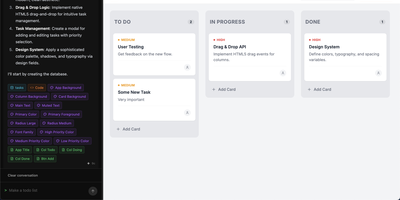
Describe the small app you keep wishing existed, and Tinykit builds it, gives it a database, and puts it live on your server. Tell it the tool you need and the agent writes the code, creates the data collections behind it, and wires the two together, then steps aside. The result is not a screenshot of an app; it is the app, served from your own server with its data syncing in real time and its files stored beside it. Open the built-in code editor to adjust the single file behind each app, or avoid code entirely: content fields let you edit text like a miniature CMS, and the design system panel restyles colors, fonts, and shadows visually. Every change takes a snapshot, so bold prompts carry an undo button and nothing is one bad idea away from lost. Hosts running errands for a household, an internal team, or a portfolio of side projects can keep adding apps, each reachable on its own domain, with token costs for every prompt shown in real money so the building budget is never a mystery. Running on a dedicated VPS on RepoCloud with guaranteed CPU, RAM, and SSD, full root SSH access, and a browser serial console. MIT licensed.
Respan Gateway
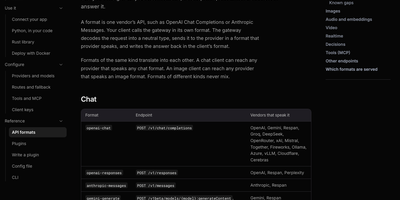
Respan Gateway is a single-binary LLM gateway that lets the SDK you already use call any AI model from any provider, translating between OpenAI, Anthropic, and Gemini API formats on the way through. Point an OpenAI, Anthropic, or Gemini client at it and you reach chat models on sixteen providers, plus any OpenAI-compatible endpoint of your own, with streaming, tools, images, and reasoning translated. Traffic control works the way operators think: name a route, send it to the cheapest or fastest provider, retry on failure, fall back to a second vendor, or hedge a slow call by racing another provider. Models that never had tools get them anyway, because MCP servers and built-in search, browsing, code, document, and memory tools run inside ordinary chat requests behind the gateway. Realtime voice crosses vendors too, with an OpenAI Realtime client able to talk to Gemini Live, alongside images, speech, transcription, embeddings, and video through one endpoint. A live request log in the web UI shows the client key, model, provider, status, tokens, cost, and latency of every call, so runaway agents and surprise bills are visible immediately. Everything is a plugin on one public Rust API, from routing and pricing to tracing, with examples for guardrails, PII masking, and billing. One TOML file configures keys, providers, routes, and tools, validates before it starts, and reloads on signal. Running on a dedicated VPS on RepoCloud with guaranteed CPU, RAM, and SSD, full root SSH access, and a browser serial console. Apache-2.0 licensed.
Lampline
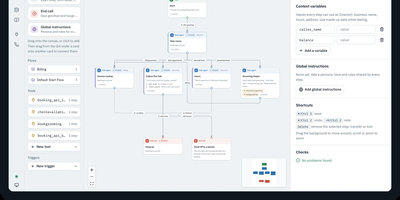
Once a voice agent is imported or built, Lampline connects it to a phone line, sends an AI caller to grade real calls, and keeps it all on your own server. Start by importing a Dialogflow CX or CX Agent Studio export along with a report of anything to check, or build fresh in a drag-and-drop builder that mixes LLM steps with scripted pages for exact lines and form fields. Next, pick one of 20 model providers, including Claude, OpenAI, Gemini, Bedrock, Groq, and DeepSeek, or run Ollama with local speech and no API keys. Test by chat or microphone while each step lights up, and let agents call HTTP and MCP tools and save records in collections of their own. Then connect callers through Twilio, Telnyx, or any SIP trunk, PBX, or session border controller via jambonz, with transfers to a person that carry the call's details as SIP headers. Finally, evals phone the agent over a real line, where an AI Test Caller brings background noise, accents, and interruptions, grades each transcript check by check, and reports typical and p95 response times as callers hear them. Each agent stays a folder of YAML and Markdown that you can review in git and lint or test with the vk CLI. Running on a dedicated VPS on RepoCloud with guaranteed CPU, RAM, and SSD, full root SSH access, and a browser serial console. Apache-2.0 licensed.
PodFetch
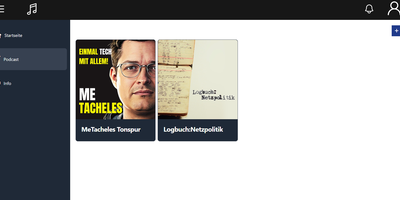
Podcast enthusiasts and homelab archivers automate digital episode preservation and stream personal audio feeds using PodFetch, an open-source self-hosted podcast manager that combines scheduled RSS downloads, Podcasting 2.0 transcript indexing, and browser playback into a modern listening platform. Listeners can subscribe to international podcast channels through direct feed URLs, Apple Podcasts directory searches, or bulk OPML subscription imports, configuring background polling timers to download new releases automatically upon publication. The integrated audio player supports variable speed playback, episode bookmarks, listening histories, and fullscreen visualization modes directly inside responsive desktop and mobile browser sessions. Advanced search capabilities leverage Podcasting 2.0 synchronized transcripts and automated speech-to-text generation via OpenAI-compatible Whisper APIs, allowing collectors to run full-text keyword searches across every spoken phrase in their audio archive. Built-in GPodder API synchronization maintains subscription lists and playback positions across popular smartphone apps like AntennaPod and native companion clients without relying on commercial cloud accounts. Server operators can assign multi-user accounts with private favorites lists, export customized RSS aggregation streams, and route storage paths between fast solid-state drives and large secondary mechanical hard disks. Running on a dedicated VPS on RepoCloud with guaranteed CPU, RAM, and SSD, full root SSH access, and a browser serial console. Apache-2.0 licensed.