WeKnora
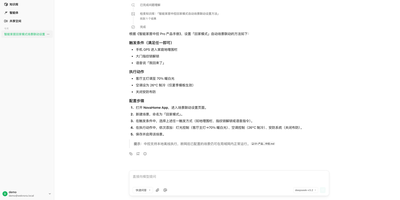
WeKnora turns scattered corporate documents into a searchable, reasoning-capable knowledge asset that your team can query in plain language and receive cited, sourced answers. Upload PDFs, Word files, web pages, Feishu wikis, Notion databases, Yuque docs, GitLab repositories, or RSS feeds into structured knowledge bases, and three distinct modes make the content actionable: RAG Quick Q&A retrieves relevant chunks and generates answers with source citations; the ReAct Agent autonomously orchestrates multi-step reasoning across knowledge retrieval, MCP tool calls, web search, and sandboxed code execution to produce comprehensive research reports; and Wiki Mode deploys LLM agents to distill raw documents into an interlinked markdown knowledge base with an interactive knowledge graph, revision history, and one-click rollback. Connect 20+ LLM providers including OpenAI, DeepSeek, Qwen, Claude, and local Ollama models without vendor lock-in, and choose from seven vector database backends (Qdrant, Milvus, Weaviate, and more) for embedding storage. Enterprise features include four-tier RBAC with per-resource ownership and per-workspace audit logs, AES-256-GCM credential encryption, scoped API keys, Langfuse observability tracing for every agent loop and tool call, and a runtime task-queue dashboard for worker-pool governance. Cross-session long-term memory preserves conversational context across interactions. The Agent Skills catalog lets teams install and share sandboxed scripts executed in Docker or E2B containers. A Chrome Extension captures web content directly into knowledge bases. Running on a dedicated VPS on RepoCloud with guaranteed CPU, RAM, and SSD, full root SSH access, and a browser serial console. MIT licensed.
SD WebUI Forge
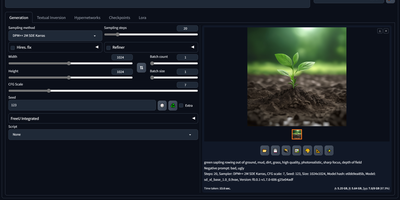
With 12,800 GitHub stars and backing from the same developer who created ControlNet, Stable Diffusion WebUI Forge replaces Automatic1111's inference backend with a dynamic GPU memory management system that runs SDXL 30-75% faster while consuming significantly less VRAM — enabling 1024x1024 generation on 6GB cards where A1111 requires 8GB or more. The Gradio 4 interface provides txt2img, img2img, inpainting, and outpainting workflows with a Forge Canvas supporting pressure-sensitive input from Wacom tablets and Microsoft Surface devices. Native Flux.1 model support loads Flux Dev and Schnell checkpoints using BitsandBytes NF4 and FP8 quantization for deployment on consumer GPUs without model splitting. Built-in ControlNet integration includes all preprocessors — Canny, Depth, Normal, OpenPose, MLSD, Scribble, Segmentation, Tile, and IP-Adapter — without requiring separate extension installation. The extension ecosystem maintains full compatibility with popular Automatic1111 extensions including Adetailer for face enhancement, After Detailer, Regional Prompter, and Dynamic Prompts. LoRA loading supports standard, LyCORIS, and DoRA formats with automatic weight detection. The API provides RESTful endpoints for txt2img, img2img, extra single/batch processing, and progress monitoring enabling headless batch generation. Deploy via one-click installer package, Python virtual environment, or Docker with NVIDIA GPU passthrough. Running on a dedicated VPS on RepoCloud with guaranteed CPU, RAM, and SSD, full root SSH access, and a browser serial console. AGPL-3.0 licensed.
Exceptionless
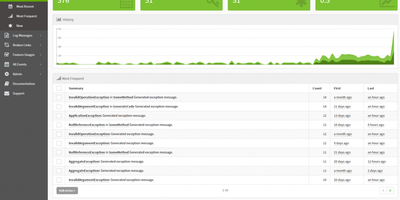
Exceptionless has earned over 2,400 GitHub stars and has been processing production errors since 2014 as the real-time event monitoring platform that captures far more than crashes. Built with ASP.NET Core on Elasticsearch for storage and Redis for caching, Exceptionless ingests exceptions, log messages, feature usage events, broken links, and custom event types through official SDKs for JavaScript, Node.js, .NET Core, ASP.NET, WPF, Web API, WebForms, Console apps, and React Native. Automatic event stacking groups related occurrences by exception type, message, and call stack into single actionable items, while manual stacking keys let developers create custom groupings for specific features or workflows. The real-time dashboard displays Most Frequent, Most Recent, and New event views with filtering by project, date range, environment, and custom tags. Stack management tracks resolution status with version-aware regression detection that automatically reopens resolved issues when the same error surfaces in a newer release. Webhook integrations connect to Slack, Discord, and external services through Zapier for automated issue tracking in GitHub Issues and Jira. Per-project notification settings control email and chat alerts for new errors, regressions, and critical events. OpenTelemetry support captures distributed traces alongside error data. The v8.6.0 release introduced a hosted Model Context Protocol server at the /mcp endpoint, enabling AI tools to query error data via OAuth-authenticated access. Deploy via Docker with the exceptionless/exceptionless image alongside Elasticsearch and Redis. Running on a dedicated VPS on RepoCloud with guaranteed CPU, RAM, and SSD, full root SSH access, and a browser serial console. Apache 2.0 licensed.
CrowdSec
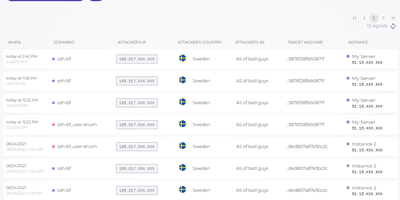
With over 14,000 GitHub stars and a growing global network of security deployments, CrowdSec turns every attack on any participating server into protection for the entire community. The security engine operates as a combined IDS/IPS and WAF, analyzing log sources from Nginx, Apache, SSH, WordPress, and over 50 other services to detect brute force attacks, port scans, web vulnerability exploitation, and credential stuffing in real time. When one server detects a new threat, the attacker's IP is shared through the community blocklist, proactively protecting thousands of other installations before the attacker can reach them. The built-in WAF powered by Coraza v3 inspects HTTP requests at the application layer, validates against OpenAPI schemas, and applies custom rules with flexible AND/OR condition mixing for precise threat detection. Bot detection serves challenge pages with client fingerprinting to distinguish legitimate traffic from automated scrapers and scanners. Remediation components block malicious IPs at multiple infrastructure layers including iptables, nftables, Nginx, HAProxy, Cloudflare, and AWS Security Groups through the detect-here-remedy-there architecture. The scenario-based detection system ships with default rules for common attack patterns and supports custom scenarios written in YAML with an expressive filter language. A centralized console provides real-time visualization of alerts, threat intelligence analysis, and management of multiple distributed security engines. GDPR compliant by design, all log analysis happens locally and raw logs never leave your infrastructure. Running on a dedicated VPS on RepoCloud with guaranteed CPU, RAM, and SSD, full root SSH access, and a browser serial console. MIT licensed.
Temporal
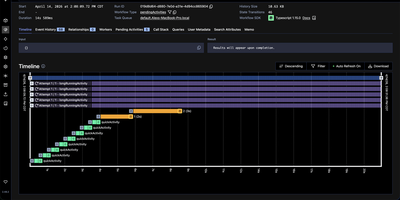
Powering mission-critical infrastructure at OpenAI, Cursor, Replit, Lovable, Retool, and Snap with over 22,000 GitHub stars, Temporal is the durable execution platform that originated from Uber's Cadence project — built by the creators of AWS SQS, AWS SWF, and Azure Durable Functions with nine years of production-proven reliability. The workflow-as-code model lets developers write business logic in Go, Java, Python, TypeScript, .NET, PHP, or Ruby using native SDKs, while the Temporal Server automatically persists state at every step, replays from failures, retries activities with configurable backoff policies, and manages task queues without developers writing reconciliation logic. Workflows support signals for external event injection, timers for scheduled delays, child workflows for decomposition, and queries for real-time state inspection — all backed by deterministic replay over an event-sourced history that guarantees exactly-once semantics. The Web UI provides visual workflow execution inspection with event timelines, pending activity monitoring, namespace management, and worker health dashboards. Persistence supports PostgreSQL, MySQL, or Apache Cassandra for horizontal scalability, with Elasticsearch or OpenSearch for advanced workflow visibility queries. Multi-cluster replication enables global failover across data centers. The self-hosted stack deploys via Docker Compose with the auto-setup image, PostgreSQL, Web UI, and admin tools — operational within 30 minutes. Running on a dedicated VPS on RepoCloud with guaranteed CPU, RAM, and SSD, full root SSH access, and a browser serial console. MIT licensed.
Gotify
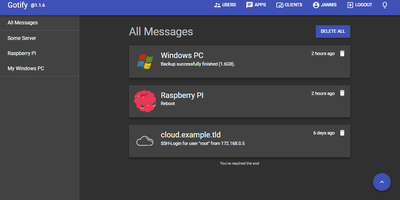
Real-time alerts from your own infrastructure to your phone, with no Firebase, Pushover, or third-party push service in the path: Gotify is a simple, self-hosted notification server written in Go. The model is deliberately minimal: senders push messages with a single HTTP POST to the REST API, receivers subscribe over a WebSocket stream, and a clean React web UI manages the pieces. Senders are namespaced as "applications," each with its own token, so your backup script, Uptime Kuma, CI pipeline, and cron jobs each get an identity, an icon, and independently revocable credentials - centralized alerting from many services with per-source management. Messages carry a title, body, and priority level that maps to notification importance on the client. The official Android app (on both F-Droid and Google Play, notable for working entirely without Google Play Services) shows push notifications for new messages; the web UI itself supports Web Push in the browser; and gotify/cli pushes messages from shell scripts with one command. A server-side plugin system adds custom behavior, and the whole thing runs as a single small binary with SQLite by default - near-zero resource footprint. Because dozens of tools (and Apprise) speak Gotify natively, it slots in as the notification hub for an entire homelab or ops stack.
Neon
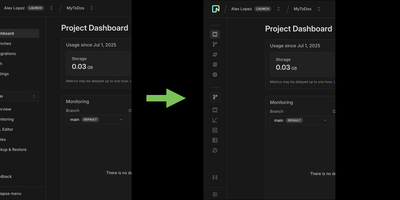
Neon reimagines PostgreSQL with a serverless architecture that decouples storage from compute, enabling instant copy-on-write database branching, autoscaling under load, and scale-to-zero when idle with sub-second cold starts. The lakebase architecture distributes durability across three layers: stateless compute nodes running unmodified PostgreSQL, safekeepers providing Paxos-based WAL quorum replication, and a pageserver that materializes pages on demand while offloading immutable history to S3-compatible object storage via MinIO or AWS S3. Copy-on-write branching creates full database clones as metadata operations without duplicating data, enabling developers to spin up isolated test environments, run parallel CI/CD pipelines, or recover from data loss through point-in-time restore across the configurable history window. Autoscaling dynamically adjusts CPU and memory based on live traffic without manual capacity planning, while scale-to-zero ensures costs drop to storage-only during idle periods. Neon maintains 100% PostgreSQL compatibility with broad extension support including PostGIS, pg_cron, pgvector, pg_stat_statements, and hundreds more, so existing applications connect with standard PostgreSQL drivers and ORMs unchanged. The API-first control plane enables programmatic provisioning, branch management, and multi-tenant fleet operations for platform builders and AI agent integrations. Acquired by Databricks in May 2025 and backed by over 22,800 GitHub stars. Deploys via Docker Compose with pageserver, safekeepers, storage broker, and compute nodes backed by MinIO object storage. Running on a dedicated VPS on RepoCloud with guaranteed CPU, RAM, and SSD, full root SSH access, and a browser serial console. Apache 2.0 licensed.
Pixelle Video
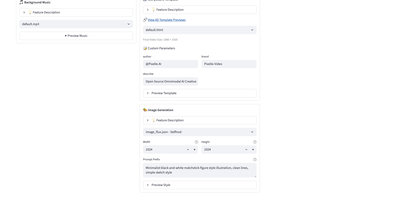
Backed by Alibaba's AIDC team and carrying over 27,700 GitHub stars, Pixelle-Video turns a single text prompt into a publish-ready short video in approximately three minutes — handling scriptwriting, image generation, voice narration, music selection, subtitle overlay, and final MP4 export in one automated pipeline. The engine supports multiple LLM backends for script generation including GPT-4, Qwen, DeepSeek, and local Ollama deployments, while image and video creation routes through either self-hosted ComfyUI workflows, cloud-based RunningHub pipelines, or direct API connections to DashScope Wan, OpenAI, Seedream, Seedance, and Kling AI. Text-to-speech synthesis uses Edge-TTS, Index-TTS, and other mainstream engines with multi-language voice profiles. Five distinct pipelines cover Quick Create, Standard, Digital Human Avatar broadcasting, Image-to-Video transformation, and Motion Transfer from reference video. The Streamlit web UI on port 8501 provides a visual workflow builder with template selection across portrait (1080x1920), landscape (1920x1080), and square formats, while the FastAPI server on port 8000 exposes a REST API with endpoints for async video generation, task polling, content scripting, TTS and image generation, template listing, and health checks. History persistence tracks all completed generations. HTML-based visual templates support static, image-overlay, and AI-video styles with customizable prompt prefixes. The modular architecture lets operators swap any atomic capability — image model, video model, TTS engine, or VLM — by editing a workflow JSON file without touching Python code. Running on a dedicated VPS on RepoCloud with guaranteed CPU, RAM, and SSD, full root SSH access, and a browser serial console. Apache 2.0 licensed.
Change Detection
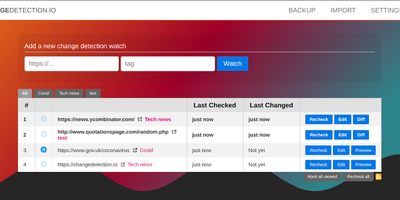
Price drops, restocks, job postings, government announcements, competitor edits - changedetection.io watches web pages and alerts you the moment anything changes, down to PDF text and checksums. Point it at a URL, set a check interval, and precise filters decide what counts as a change: a Visual Selector targets page elements by pointing and clicking, CSS selectors and XPath narrow scope, trigger-text and ignore-text rules (with regex support) cut noise, and JSONPath or jq handles API responses. A dedicated re-stock and price detection mode extracts product metadata and fires on thresholds - alert only when the price drops below your target or the percentage change exceeds a limit. JavaScript-heavy sites render through a real Chrome browser via Playwright, with the ability to execute JS steps first (log in, click, scroll) before extracting text. Notifications reach 85+ services through Apprise - Discord, Slack, Telegram, email, webhooks - optionally with a screenshot of the changed page, and AI-powered summaries (any OpenAI-compatible endpoint, including local Ollama) describe what changed. Per-watch proxies, custom headers, and POST/GET control cover hostile targets. Apache-2.0 licensed with local file-based storage: the URLs you monitor and why stay entirely your business.
Open Code Review
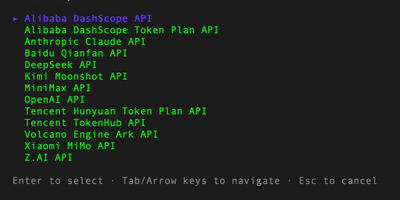
Originated as Alibaba Group's official internal AI code review assistant serving tens of thousands of developers and identifying millions of code defects over two years before open-sourcing in May 2026 — now at 21,000+ GitHub stars — Open Code Review is the production-hardened platform that proves enterprise-grade code review can be fully open-source under Apache 2.0. The hybrid architecture separates deterministic engineering pipelines (file selection, diff parsing, rule matching for NPE, thread-safety, XSS, and SQL injection across 10+ languages) from LLM-powered agent reasoning with tool-use capabilities including FileRead, CodeSearch, and cross-file context inspection, consuming approximately one-ninth the tokens of general-purpose coding agents while delivering line-level precise comments with severity and confidence scoring. The bundled web dashboard (port 4173) provides review management, findings triage, result browsing, and direct GitHub posting without external dependencies, while the session viewer (port 5483) renders full LLM request/response traces for debugging and auditing. Integration spans GitHub Actions, GitLab CI, GitFlic CI, and Gerrit with delegation mode enabling Claude Code, Cursor, and other AI agents to leverage OCR's engineering logic alongside their own LLM reasoning. Supports OpenAI, Anthropic, Google Gemini, DeepSeek via built-in providers plus Ollama and vLLM for air-gapped deployments. Running on a dedicated VPS on RepoCloud with guaranteed CPU, RAM, and SSD, full root SSH access, and a browser serial console. Apache 2.0 licensed.
Lemmy
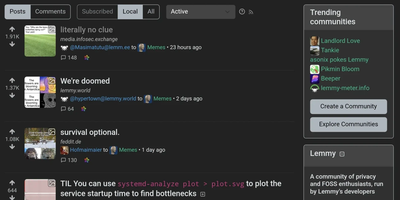
Powering over 496 instances with more than 35,000 monthly active users and 26,500 communities, Lemmy has established itself as the leading open-source, federated link aggregation platform in the Fediverse. Built entirely in Rust for memory-safe, high-performance server operation, Lemmy enables anyone to run their own Reddit-style community that automatically connects with every other Lemmy instance — and compatible ActivityPub platforms like Mastodon, PieFed, and Kbin — through standardized federation protocols. Users create and subscribe to topic-based communities, submit posts containing text, links, or images, engage through threaded comment discussions, and shape content visibility through upvote/downvote mechanisms. Instance administrators retain full control over moderation policy, federation allowlists and blocklists, site appearance, and user registration settings, while community moderators can sticky posts, lock threads, ban users, and maintain public moderation logs for transparency. The platform supports private messaging between users, email notifications, RSS and Atom feed generation for every community, comprehensive internationalization with dozens of language packs, custom emoji support, and both light and dark themes through a clean mobile-responsive interface. Deployment is straightforward with official Docker Compose configurations and Ansible playbooks, backed by a PostgreSQL database with pict-rs for image hosting. Lemmy's Rust backend consistently benchmarks among the most efficient Fediverse server implementations, enabling small VPS instances to serve thousands of users. Running on a dedicated VPS on RepoCloud with guaranteed CPU, RAM, and SSD, full root SSH access, and a browser serial console. AGPL-3.0 licensed.
Dokploy VPS
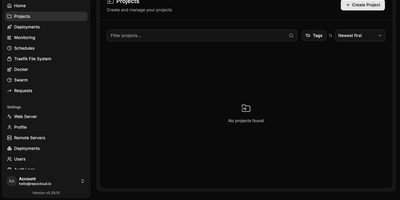
Your own Heroku or Vercel on a dedicated server — Dokploy is the open-source PaaS that replaces cloud platform subscriptions with a single dashboard you control. Point it at a Git repository or a Docker image, and it builds and deploys the application using Dockerfiles, Nixpacks, or Heroku/Paketo buildpacks. Traefik handles reverse proxying, routing, load balancing, automatic Let's Encrypt SSL, and HTTP/3. Databases — MySQL, PostgreSQL, MongoDB, MariaDB, libsql, and Redis — provision from the UI with automated backups to any S3-compatible destination. Complex multi-service applications deploy through native Docker Compose support, and multi-node scaling uses Docker Swarm. The web dashboard covers environment variables, volumes, resource limits, real-time CPU/memory/network monitoring, and deployment logs, with a CLI and REST API for automation. Deploy notifications go to Slack, Discord, Telegram, or email. One-click templates install common open-source tools, and a single control plane can manage deployments across multiple remote servers. Because everything is standard Docker, there is no lock-in: Dockerfiles, Compose files, and data volumes work anywhere else Docker runs. The push-to-deploy workflow of a $20/seat cloud PaaS, running on a dedicated VPS with guaranteed CPU, RAM, SSD, and full root access — no per-app, per-environment, or per-seat fees regardless of how many applications you deploy. 26,000+ GitHub stars.
MeshCentral
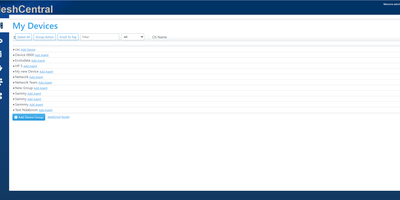
With over 7,000 GitHub stars and continuous development since 2017 by former Intel engineer Ylian Saint-Hilaire, MeshCentral has become the go-to self-hosted alternative to ConnectWise Control and Splashtop for managing devices remotely without per-seat licensing fees. The Node.js server installs via a single npm command and manages Windows, macOS, Linux, and FreeBSD endpoints through lightweight agents that maintain persistent WebSocket connections for real-time remote desktop, terminal access, and file transfer directly in the browser. Intel AMT integration provides out-of-band hardware management including power control and BIOS access even when the operating system is unresponsive. Device groups organize endpoints by location, customer, or function with granular role-based access control for multi-technician environments. Session recording captures remote desktop interactions for compliance auditing, while Wake-on-LAN powers on machines remotely across subnets. The server supports MongoDB for production deployments handling thousands of agents or the embedded NeDB for smaller setups under 200 devices, with a single 8GB VPS comfortably managing 1,500 concurrent agents. Security features include mandatory TLS with automatic Let's Encrypt certificate provisioning, multi-factor authentication via TOTP and FIDO2, SAML-based single sign-on, IP filtering, and HashiCorp Vault integration for secrets management. The web console provides real-time device monitoring with hardware and software inventory, network topology visualization, and customizable branding. TacticalRMM uses MeshCentral as its remote access layer. Running on a dedicated VPS on RepoCloud with guaranteed CPU, RAM, and SSD, full root SSH access, and a browser serial console. Apache-2.0 licensed.
OctoBot
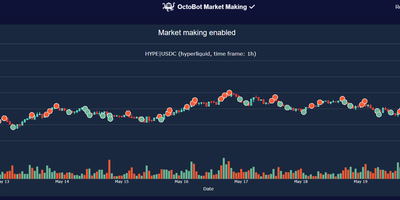
OctoBot provides a free and fully configurable cryptocurrency trading platform that runs on your own server. The bot automates investment strategies across 15+ exchanges including Binance, Coinbase, MEXC, Hyperliquid, Kucoin, OKX, and Bybit, supporting spot, futures, and perpetual markets. The AI trading system connects to any OpenAI-compatible API or local Ollama server, enabling strategies powered by ChatGPT, Llama, Mistral, or any custom model for market analysis and signal generation. TradingView integration accepts PineScript indicator signals and strategy alerts via webhooks, while built-in technical analysis covers RSI, Moving Averages, MACD, Bollinger Bands, and other standard indicators. The modular tentacle architecture allows community-developed plugins to extend strategy logic, evaluators, data sources, and exchange interfaces. The backtesting engine replays historical market data against any configured strategy, reporting profit and loss, drawdown, win rate, and trade-by-trade breakdown before committing real funds. Paper trading provides risk-free live simulation with the same execution logic as production. The web dashboard displays real-time portfolio value, open positions, trade history, and strategy performance with interactive charts. Telegram bot integration enables remote monitoring, notifications, and command execution from mobile devices. Docker deployment runs the full stack in a single container with persistent volume storage for configuration and trade data. On RepoCloud, deploy OctoBot on a dedicated VPS with root SSH access, persistent storage for your trading data and strategy configurations, and complete control over exchange API keys and AI model connections, all under the GPL-3.0 license.
CTFd
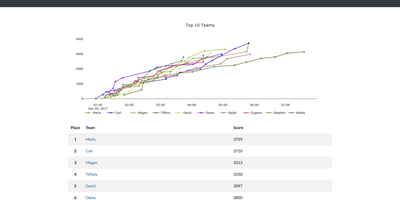
Starred by over 6,500 users on GitHub and trusted by organizations including Toyota, CTFd has been the leading open-source platform for hosting cybersecurity competitions since 2015, providing everything needed to run professional Capture The Flag events through a clean web-based administration panel without touching a database query. The framework supports both individual and team-based competitions with automatic tie resolution, configurable score freezing, and scoregraphs comparing the top teams with detailed progress tracking. Challenge creation offers static and regex-based flags, dynamic scoring that adjusts point values based on solve count, unlockable hints purchasable with points, file attachments uploaded to local storage or Amazon S3-compatible backends, and challenge attempt limits with automatic bruteforce protection. Version 3.8 introduced challenge logic fields controlling flag submission behavior with any, all, and team modes, integrated dynamic scoring into the standard challenge type, participant ratings and reviews on challenges, and admin-stored challenge solutions viewable after competition. The Markdown-based content management system enables custom pages for rules, FAQs, and resources, while SMTP and Mailgun integration handles email confirmation and password recovery. The plugin architecture supports custom challenge types, flag validators, and scoring algorithms, while the theme system provides complete visual customization. Import and export functionality preserves entire competition configurations for archival and reuse across events. Running on a dedicated VPS on RepoCloud with guaranteed CPU, RAM, and SSD, full root SSH access, and a browser serial console. Apache 2.0 licensed.
Manticore Search
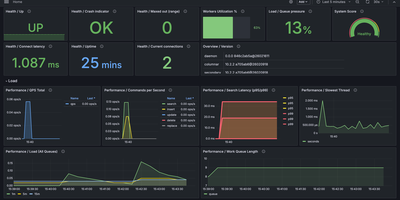
With nearly 12,000 GitHub stars and a lineage tracing back to Sphinx Search, Manticore Search is the C++ search database that delivers the full-text, vector, and hybrid search capabilities of Elasticsearch at a fraction of the resource cost — starting in under a second and consuming just 40MB RAM for an empty instance. The SQL-first interface speaks the MySQL wire protocol, meaning mysql client, MySQL Workbench, and any MySQL-compatible driver connects natively without adapters, while the HTTP JSON API provides RESTful access for modern applications. Over 20 full-text operators handle proximity search, quorum matching, field-start and field-end constraints, MAYBE operators, and regex patterns, backed by stemming, lemmatization, stopwords, synonyms, wordforms, and advanced morphology in 70+ languages. Vector search with HNSW indexing enables semantic similarity queries, and hybrid mode combines keyword relevance with vector distance in a single ranked result set using a cost-based query optimizer. Real-time indexing delivers sub-second document availability after insert, sharded tables distribute data across nodes, and Galera-based synchronous replication ensures high availability. Conversational search via CREATE CHAT MODEL and CALL CHAT integrates LLM-backed responses with KNN retrieval and conversation history directly inside the database. Client libraries ship for PHP, Python, JavaScript, TypeScript, Java, Go, Rust, and Elixir. Columnar storage via the Manticore Columnar Library handles analytical workloads on large datasets. Running on a dedicated VPS on RepoCloud with guaranteed CPU, RAM, and SSD, full root SSH access, and a browser serial console. GPLv3 licensed.
Ory Kratos
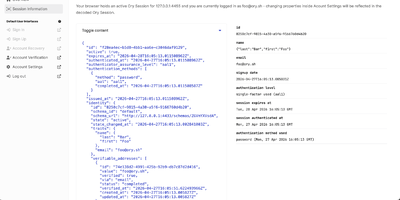
With 13,800 GitHub stars, adoption by OpenAI for ChatGPT's authentication infrastructure serving 800 million weekly active users, and governance under the Ory open-source ecosystem, Ory Kratos provides enterprise-grade identity management as a headless API server that separates authentication logic from user interface — enabling any frontend framework to consume standardized self-service flows for registration, login, recovery, verification, and profile management. Multi-factor authentication supports passkeys, WebAuthn security keys, TOTP authenticator apps, SMS one-time codes, email magic links, and backup recovery codes with configurable Authenticator Assurance Levels enforcing step-up authentication for sensitive operations. Social sign-in connects to any OpenID Connect provider including Google, GitHub, Apple, and Microsoft, plus enterprise SAML 2.0 federation for B2B single sign-on. Customizable identity schemas using JSON Schema define user profiles with flexible trait structures, while pre- and post-flow webhooks enable integration with CRMs, analytics, and compliance systems. The courier system handles email and SMS delivery for verification codes and password recovery links. Session management provides device tracking, forced logout, and configurable lifespans with privileged session elevation. Deploy alongside Ory Hydra for OAuth2/OIDC token issuance and Ory Keto for fine-grained permissions to build a complete identity platform. Docker Compose deployment with PostgreSQL. Running on a dedicated VPS on RepoCloud with guaranteed CPU, RAM, and SSD, full root SSH access, and a browser serial console. Apache 2.0 licensed.
Nexus Repository
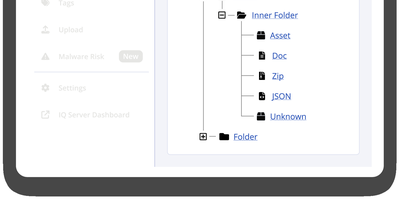
Trusted by millions of developers and integrated into CI/CD pipelines at organizations worldwide, Sonatype Nexus Repository is the industry-standard binary artifact repository manager that stores, organizes, and distributes software components across every major package ecosystem. Community Edition supports over 20 formats including Maven for Java builds, npm for JavaScript packages, Docker for container images, PyPI for Python libraries, NuGet for .NET assemblies, Helm for Kubernetes charts, Go modules, RubyGems, Cargo for Rust crates, Conda for data science environments, APT for Debian packages, Yum for RPM distributions, and Hugging Face for AI/ML models. Three repository types serve different needs: hosted repositories store internally-produced artifacts, proxy repositories cache remote registries like Maven Central, npmjs.org, and Docker Hub reducing bandwidth and improving build reliability, and group repositories aggregate multiple hosted and proxy repositories behind a single URL endpoint. The web UI provides component browsing and search, repository configuration, blob store management with configurable cleanup policies, and direct artifact upload via drag-and-drop. Role-based access control enforces fine-grained permissions per repository with configurable security realms, while the comprehensive REST API enables automated repository provisioning, component management, and integration with Jenkins, GitHub Actions, GitLab CI, and Azure DevOps. External PostgreSQL database support enables Kubernetes deployments with improved backup, restore, and horizontal scaling capabilities. Running on a dedicated VPS on RepoCloud with guaranteed CPU, RAM, and SSD, full root SSH access, and a browser serial console. Eclipse Public License 1.0 licensed.