MeterSphere
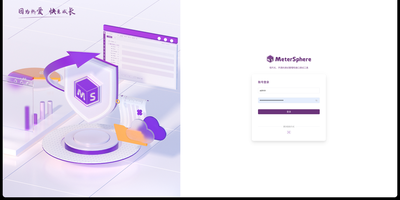
MeterSphere is the open-source continuous testing platform that brings test management, API testing, and AI-powered automation into a single self-hosted environment. The Spring Boot Java backend handles test execution with the JMeter engine while the Vue.js frontend delivers a responsive interface for managing test cases, plans, defects, and reports across projects. The built-in AI assistant leverages large language models to auto-generate functional test cases and API interface definitions, reducing manual test creation effort. Test management covers the complete lifecycle from writing and reviewing cases in list or mind-map views, through test plan creation with single plans and plan groups, to defect tracking with customizable templates and workflow rules. API testing combines Postman-like ease of use with JMeter-level flexibility, supporting interface debugging with server-side and local execution, API definition with visual request and response editors, interface mocking with configurable headers and body parameters, scenario automation with visual orchestration, and detailed test reports with automatic generation. The system-organization-project hierarchy supports up to 30 users in the community edition with role-based access control, file management, and configurable notification channels. MySQL stores application data, Kafka handles message queuing, MinIO provides S3-compatible object storage, and Redis manages caching. The plugin marketplace extends testing capabilities and enables DevOps pipeline integration. On RepoCloud, deploy MeterSphere on a dedicated VPS with Docker, root SSH access, and complete control over your testing infrastructure, all under the GPLv3 license.
Unkey
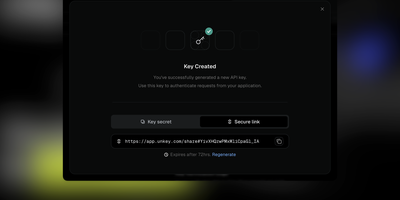
Unkey is the open-source platform that unifies API key management, rate limiting, deployment, and observability into a single control plane. The Go API service validates keys with sub-millisecond latency using regional Redis caches and MySQL 8.0 persistent storage, while ClickHouse captures every verification event for per-key and per-keyspace analytics with filterable time-series charts, request counters, and active key tracking. Keyspaces organize API keys by product, environment, or tier, each configurable with custom prefixes, byte lengths, IP whitelists, encrypted key recovery, and delete protection. Per-key settings include expiration dates, rate limit quotas with configurable windows, RBAC roles and permissions, owner identities linking multiple keys to a single user or organization, and key rotation with grace periods from immediate revocation through 24-hour overlap. The deployment pipeline connects GitHub repositories for automatic Docker container builds, generates preview environments per commit, promotes tested versions to production, and validates releases with OpenAPI diff detection flagging breaking changes before production. The edge gateway authenticates and rate-limits requests at the closest region before routing to the nearest API instance. Immutable audit logs track every key creation, verification, deletion, and configuration change with actor, timestamp, and event metadata. The CLI provides terminal access to key management, analytics queries, and deployment operations. On RepoCloud, deploy Unkey on a dedicated VPS with Docker, root SSH access, and complete control over your API infrastructure, all under the AGPL license.

DumbPad
With a deliberately minimalist design philosophy and zero database dependencies, DumbPad delivers a self-hosted notepad that stores notes as plain text files with real-time auto-saving every 10 seconds and keyboard-shortcut manual saves. The Node.js Express backend serves a vanilla JavaScript frontend that supports multiple named notepads with direct URL linking and shareable links for instant access to specific notes. The split-view editor displays markdown source on the left and rendered preview on the right with a draggable resize handle, while the full preview mode renders complete markdown with GitHub-style alert blocks for Note, Tip, Important, Warning, and Caution callouts, extended table formatting, fenced code blocks with syntax highlighting via highlight.js covering approximately 180 programming languages, collapsible details sections, and checklist support. Fuzzy search matches across both filenames and file contents for fast navigation across large collections. Optional PIN protection secures access with configurable 4 to 10 digit codes, constant-time comparison to prevent timing attacks, brute force lockout after 5 failed attempts with 15-minute cooldown, and IP-based tracking. The Docker container runs as non-root UID 1000 by default with multi-architecture support, CORS origin restrictions for reverse proxy deployments, and persistent data volumes. Notes can be downloaded as text or markdown files, printed with auto-expanded collapsible sections, and imported by placing text files directly into the data directory. On RepoCloud, deploy DumbPad on a dedicated VPS with Docker, root SSH access, and complete control over your note-taking infrastructure, all under the GPL-3.0 license.
3X-UI
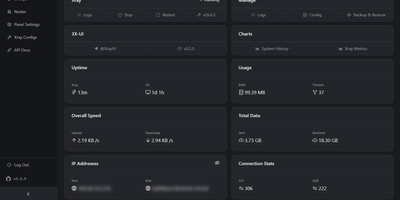
3X-UI is the most popular open-source Xray management panel, providing a full-featured web interface for deploying and monitoring proxy and VPN protocols on Linux servers. The Go backend manages Xray-core instances supporting VLESS, VMess, Trojan, Shadowsocks, WireGuard, Hysteria2, HTTP, SOCKS, Dokodemo-door, and TUN inbounds across TCP, mKCP, WebSocket, gRPC, HTTPUpgrade, and XHTTP transports secured with TLS, XTLS Vision, and REALITY. The Clients page tracks each user with individual traffic quotas, expiration dates, concurrent connection limits, and live online status indicators, while one-click share links, QR codes, and a built-in subscription server distribute configurations in multiple output formats. The multi-node architecture manages and scales deployments across multiple servers from a single panel instance. The Panel Settings page configures listen address, port, URI path, session duration, trusted proxy CIDRs, authentication, and Telegram bot integration for remote monitoring and management alerts. Outbound routing supports WARP, NordVPN, custom rules, load balancers, and proxy chaining. Xray Configs provides template-level control over the core configuration, while the API Docs page exposes a complete RESTful API with in-panel Swagger documentation. Data persists in SQLite by default or PostgreSQL for larger deployments, with database export and import from the panel. Fail2ban integration enforces per-client IP limits. On RepoCloud, deploy 3X-UI on a dedicated VPS with Docker, root SSH access, and complete control over your proxy infrastructure, all under the GPL-3.0 license.
Authelia
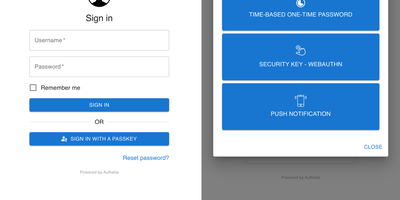
Authelia is the leading open-source SSO and multi-factor authentication server for self-hosted infrastructure. The Go backend compiles to a single binary or Docker container image, serving a TypeScript React web portal that handles first-factor username and password login, second-factor authentication via TOTP, WebAuthn FIDO2 security keys, passwordless passkeys, and Duo mobile push notifications, and an OpenID Connect 1.0 and OAuth 2.0 identity provider with device code flow, JWE encrypted ID tokens, custom claims policies, and network-scoped authorization criteria. The forward authentication model integrates with Nginx auth_request, Traefik ForwardAuth, HAProxy, Caddy, Envoy, SWAG, and Skipper reverse proxies, injecting Remote-User, Remote-Groups, and Remote-Email headers into authorized requests. Granular access control rules match subject, groups, request URI, HTTP method, and network to enforce one-factor and two-factor policies per route. The user backend supports LDAP with attribute mapping, connection pooling, and bind mode, or YAML file-based authentication with Argon2id hashed passwords. Session state stores in Redis for high availability across clustered deployments, while persistent data lives in SQLite, MySQL and MariaDB, or PostgreSQL. Brute force protection locks accounts after configurable failed attempts, and email-based identity verification handles password resets and device registration. Dark, light, and OLED themes with i18n localization customize the portal appearance. On RepoCloud, deploy Authelia on a dedicated VPS with Docker, root SSH access, and complete control over your authentication infrastructure, all under the Apache-2.0 license.
QM
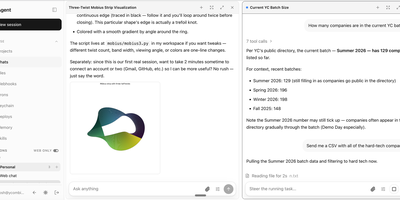
QM is Y Combinator's internal multiplayer agent infrastructure that shifts AI agents from personal assistants to shared company operating layer. The headless TypeScript core runs on Node.js with Fastify handling HTTP, Slack integration via Bolt, and a web UI built with Vite and Lit. PostgreSQL stores sessions, memory, queue state, and audit logs. Every person and every Slack channel gets an isolated sandbox with its own durable file system, installed tools that persist across runs, private memory, keychain view, permissions, and background crons. The harness-agnostic architecture routes agent tasks through Pi, OpenCode, Codex, or Claude Code without vendor lock-in, with production implementations swapping via a single wiring file. Three org-level security postures gate execution: Strict requires human approval for every tool call, Auto applies automated content screening, and Dangerous removes all pauses. Skills are scope-owned and shareable by grant, with admin-gated promotion to the entire organization and skill packs importable from Git repositories. The web apps feature lets agents spin up custom internal applications published to specific users. The qm CLI bootstraps operator-owned deployment directories with digest-pinned release images, infrastructure rendering, secret management, and live verification checks for Docker, Fly.io, or AWS ECS Fargate targets. On RepoCloud, deploy QM on a dedicated VPS with PostgreSQL persistence, Docker socket access, root SSH access, and complete control over your multiplayer agent infrastructure, all under the MIT license.
Operately
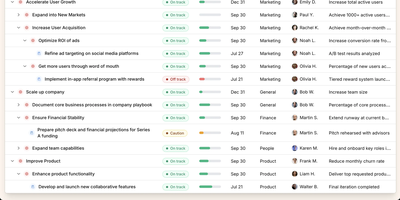
Operately is an opinionated operating system for growing companies that connects strategic goals directly to execution without the overhead of assembling separate tools. The OKR module tracks company-wide, team-level, and individual goals with measurable success conditions showing progress bars against numeric targets, timeframe deadlines, and automated progress aggregation from linked projects. Project management includes champion ownership, milestone tracking, Kanban task boards with TODO, In Progress, and Done columns, and scheduled check-ins that generate async progress updates on a configurable cadence. Team Spaces give departments organized homes for their goals, projects, documents, and discussions with configurable access controls at the space, goal, and project level. Message boards replace scattered email threads with focused project conversations, while the document and file system provides centralized content management. The Review screen aggregates everything requiring attention or approval into a single actionable view. The Elixir Phoenix backend uses Absinthe for GraphQL queries and mutations, Oban for background job processing, and Swoosh for email notifications. The React TypeScript frontend leverages Apollo Client for GraphQL state management. Full CLI and API access enables programmatic interaction, and MCP tools added in version 1.7 allow AI agents to create goals, update projects, manage tasks, and post check-ins. On RepoCloud, deploy Operately on a dedicated VPS with PostgreSQL persistence, root SSH access, and complete control over your organizational data, all under the Apache 2.0 license.
Marketing Dashboard
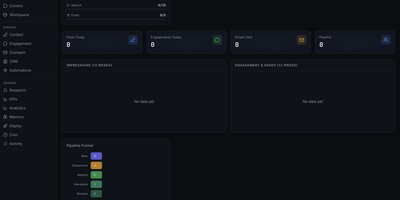
This is a marketing operations control center that replaces fragmented CRM, outreach, content, and analytics tools with a unified self-hosted interface designed for AI agent-assisted go-to-market teams. The CRM module manages leads through a configurable pipeline funnel with stages from New through Sequenced, Replied, Interested, and Booked, tracking source attribution, industry segments, company size, lead quality scores, and LinkedIn URLs per contact. Outreach sequencing supports email campaigns with pause controls, audit endpoints, suppression workflows, and engagement tracking. The content operations surface provides calendar views, content item management, performance metrics, and approval queues for editorial control. Analytics and KPI dashboards show impressions, engagement, and send volumes over configurable time periods, with optional connectors to Plausible, Google Analytics 4, X, and LinkedIn for cross-platform reporting. The OpenClaw-native agent runtime enables dynamic agent and squad discovery, workspace management, session monitoring, and communications surfaces. Automation scheduling uses cron job templates with OpenClaw-compatible schedule variants including cron expressions, every intervals, and at timestamps. The tech stack combines Next.js 16 App Router with React 19, Tailwind CSS 4, Recharts, and Zustand for state management. Authentication supports session cookies, API keys, and optional Google OAuth with role-based access controls. All state persists locally in SQLite via better-sqlite3 with no required external infrastructure. On RepoCloud, deploy Marketing Dashboard on a dedicated VPS with persistent SQLite storage, root SSH access, and complete control over your marketing operations data, all under the MIT license.
IRONSIGHT
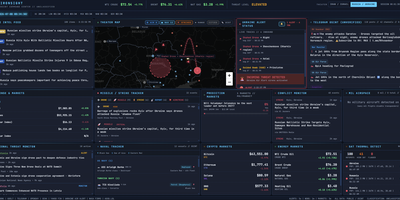
IRONSIGHT fuses over 50 publicly available intelligence sources into a single real-time dashboard that requires zero API keys and zero configuration. The Live Intel Feed aggregates 20+ RSS news sources with keyword relevance filtering from outlets including Reuters, Al Jazeera, and Kyiv Post. The Telegram OSINT module scrapes 27 channels every 60 seconds with automatic translation from Hebrew, Arabic, and Farsi. The interactive Leaflet Theater Map plots military aircraft positions via ADS-B transponder data, naval vessel locations in the Persian Gulf and Eastern Mediterranean, strike markers extracted from news and Telegram, missile trajectory arcs with range rings, and country-border overlays with a distance measurement tool. A header toggle switches the entire dashboard between Iran/Israel and Russia/Ukraine theaters, re-pointing every panel, map layer, and data feed to the selected conflict. The Israel Alert module streams live Pikud HaOref missile alerts with audio notifications, while the Conflict Monitor categorizes events into strikes, defense, diplomatic, and nuclear. Financial panels track defense contractor stocks, S&P 500, VIX, gold, Bitcoin, Ethereum, energy commodities via Yahoo Finance, and Polymarket prediction odds on conflict outcomes. NASA FIRMS satellite thermal detection flags fire and explosion signatures. The Next.js 16 App Router handles server-side data fetching for RSS and API endpoints while client-side React state management drives real-time polling updates. On RepoCloud, deploy IRONSIGHT on a dedicated VPS with persistent storage, root SSH access, and full control over your intelligence monitoring environment, all under the MIT license.
PayMe
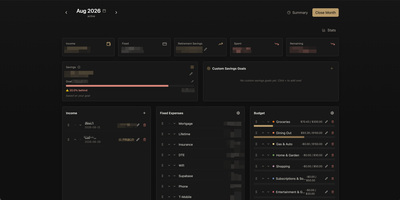
PayMe is a privacy-first personal finance dashboard that runs entirely on your own hardware with zero third-party service dependencies. The Rust backend compiled to a single binary serves a React 19 frontend built with Vite, TypeScript, and Tailwind CSS 4, storing all financial data in a local SQLite database that auto-migrates on startup. Monthly dashboards track income entries, fixed expenses like mortgage and utilities, and budget categories with real-time progress bars showing spending against configurable limits. The savings module includes goal tracking with percentage-based progress indicators, custom savings goals for targeted objectives, retirement savings projections with breakdown analysis, and projected savings calculations. Variance analysis compares actual spending against budgets across categories. Drag-and-drop reordering powered by dnd-kit lets you arrange income sources, expenses, and budget items to match your workflow. The interactive charts rendered by Recharts visualize spending trends, income patterns, and savings trajectories. Month-by-month navigation tracks financial history over time, while the Summary and Stats views aggregate data across periods. JWT-based authentication secures access, and the full OpenAPI Swagger documentation at the /swagger-ui endpoint exposes every API route for automation and integration. Docker Compose deployment creates a minimal image with the compiled Rust binary and static frontend assets, running on port 3001 behind nginx, Caddy, or Traefik reverse proxy with HTTPS. On RepoCloud, deploy PayMe on a dedicated VPS with persistent SQLite storage, root SSH access, and complete privacy over your household financial data, all under the MIT license.
Webstudio
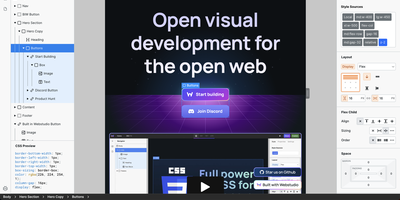
Webstudio delivers a professional-grade visual website builder that outputs semantic HTML and clean CSS without inline style pollution or JavaScript-heavy render paths. The live canvas editor provides direct manipulation of all CSS properties — flexbox, grid, spacing, typography, transforms, and filters — with real-time preview across responsive breakpoints. The component system supports reusable instances with variants and overrides, while design tokens maintain consistent colors, fonts, and spacing across the entire site. Data bindings connect to external content sources through native integrations with Strapi and Supabase, plus a generic CMS interface for any REST API backend. The Scroll Timeline API powers animations at 120 FPS off the main thread, with presets for rotate, scale, translate, opacity, color, and filter effects. Projects build as dynamic Remix applications with server-side rendering or export as static HTML, CSS, and JavaScript files. The Webstudio CLI generates Docker-ready builds that run a Node.js server on port 3000, with Nginx reverse proxy configuration for SSL termination via Let's Encrypt. The builder requires minimum 1 GB RAM and 1 CPU core for Docker builds. MCP integration enables AI agents to create and modify websites programmatically. On RepoCloud, deploy Webstudio projects on a dedicated VPS with root SSH access, persistent storage, and complete control over your hosting, custom domains, and deployment pipeline, all under the AGPL-3.0 license.
Checkcle
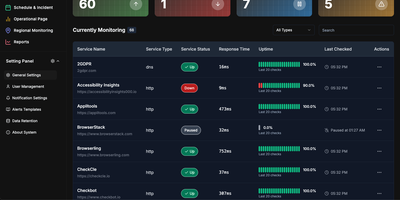
CheckCle provides a complete uptime monitoring and infrastructure observability platform that deploys with a single Docker container and stores all data in embedded SQLite via PocketBase. The Go backend runs three microservices — a service operation engine handling HTTP, HTTPS, DNS, Ping, and TCP checks at configurable intervals, a distributed regional check agent for multi-location network testing, and a server monitoring agent collecting CPU, RAM, disk usage, and network metrics via gRPC. The React frontend built with Vite, TypeScript, Tailwind CSS, and shadcn-ui subscribes to PocketBase WebSocket endpoints for real-time dashboard updates without polling. SSL and domain monitoring tracks certificate issuers, expiration dates, days remaining, and validation status. The incident management system records UP, DOWN, WARNING, and PAUSE states with full history, while scheduled maintenance windows prevent false alerts during planned downtime. Public status pages provide external stakeholders with live service health information. Health heatmaps visualize uptime performance and outage patterns over time. Notification channels include email, Telegram, Discord, and Slack, with multiple alert targets per monitored service. The one-click agent installation script supports Debian, Ubuntu, CentOS, Red Hat, Alpine, and Windows in beta. Docker deployment runs on port 8090 with a single persistent volume at /mnt/pb_data, requiring minimum 1 vCPU and 500MB RAM. On RepoCloud, deploy CheckCle on a dedicated VPS with root SSH access, persistent storage for your monitoring database, and complete control over agent endpoints and notification configurations, all under the MIT license.
Worklenz
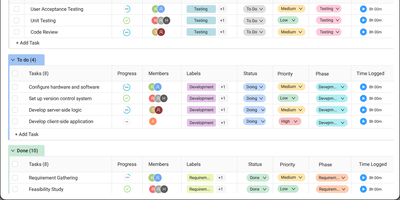
Worklenz delivers an all-in-one project management platform purpose-built for teams that bill clients for their time and expertise. The task management system supports list, Kanban board, and timeline Gantt views with priorities, due dates, assignees, labels, and subtasks. Built-in time tracking offers both start-stop timers and manual entry, logging billable hours directly against tasks and automatically aggregating time data into project-level cost reports. The resource management module provides a visual team utilization dashboard showing capacity allocation across all active projects, helping managers avoid overallocation and balance workloads. Client portals give external stakeholders direct visibility into project progress, task status, and deliverables without requiring internal account access. Financial insights track budgets versus actuals, showing project profitability, cost breakdowns, and burn rate in real time. The analytics engine generates reports on project health, team workload distribution, task completion trends, and time allocation patterns. Project templates enable one-click setup of common agency workflows with pre-configured task structures, milestones, and assignments. The React frontend uses Ant Design components with TypeScript, while the Express.js backend connects to PostgreSQL for data and Redis for caching. Docker Compose deployment includes Nginx reverse proxy with SSL/TLS support, automated database backups, health checks on all services, network isolation, and MinIO for object storage. On RepoCloud, deploy Worklenz on a dedicated VPS with root SSH access, persistent PostgreSQL storage for your project data, and complete control over client portal access and team configurations, all under the AGPL-3.0 license.
OctoBot
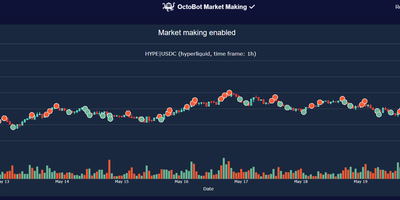
OctoBot provides a free and fully configurable cryptocurrency trading platform that runs on your own server. The bot automates investment strategies across 15+ exchanges including Binance, Coinbase, MEXC, Hyperliquid, Kucoin, OKX, and Bybit, supporting spot, futures, and perpetual markets. The AI trading system connects to any OpenAI-compatible API or local Ollama server, enabling strategies powered by ChatGPT, Llama, Mistral, or any custom model for market analysis and signal generation. TradingView integration accepts PineScript indicator signals and strategy alerts via webhooks, while built-in technical analysis covers RSI, Moving Averages, MACD, Bollinger Bands, and other standard indicators. The modular tentacle architecture allows community-developed plugins to extend strategy logic, evaluators, data sources, and exchange interfaces. The backtesting engine replays historical market data against any configured strategy, reporting profit and loss, drawdown, win rate, and trade-by-trade breakdown before committing real funds. Paper trading provides risk-free live simulation with the same execution logic as production. The web dashboard displays real-time portfolio value, open positions, trade history, and strategy performance with interactive charts. Telegram bot integration enables remote monitoring, notifications, and command execution from mobile devices. Docker deployment runs the full stack in a single container with persistent volume storage for configuration and trade data. On RepoCloud, deploy OctoBot on a dedicated VPS with root SSH access, persistent storage for your trading data and strategy configurations, and complete control over exchange API keys and AI model connections, all under the GPL-3.0 license.
FalkorDB
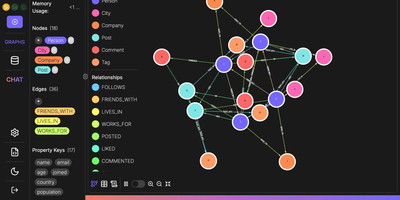
FalkorDB is the first queryable property graph database to leverage sparse adjacency matrices and linear algebra for graph traversal, replacing traditional pointer-chasing with GraphBLAS-accelerated computation. Originally the RedisGraph engine, it was relaunched as FalkorDB in 2023 and rewritten from C to Rust in 2026 for improved memory safety and performance. The database supports the OpenCypher query language with proprietary extensions, translating queries into linear algebra expressions that exploit AVX hardware acceleration. Indexing options include full-text search, vector similarity for embedding-based retrieval, and range indexing, while connectivity supports both the RESP protocol for Redis clients and the Bolt protocol for Neo4j-compatible tooling. The GraphRAG SDK enables ingestion of documents in text, PDF, and Markdown formats into knowledge graphs, with schema-guided entity extraction, hybrid retrieval combining vector and graph traversal, relationship expansion, and cited answers for LLM applications. Official client libraries cover Python, Node.js, Java, Rust, Go, PHP, and C#. Multi-tenant support handles over 10,000 concurrent graphs with zero overhead and full isolation. Docker deployment runs the falkordb/falkordb image on ports 6379 for the database server and 3000 for the built-in browser UI, with persistent volume storage and optional authentication. A production falkordb-server image excludes the browser for lighter deployments. On RepoCloud, deploy FalkorDB on a dedicated VPS with root SSH access, persistent storage for your graph data, and complete control over authentication, thread count, and memory configuration, all under the SSPLv1 license.

Wanderer
Wanderer provides a privacy-first alternative to AllTrails and Komoot, giving outdoor enthusiasts complete ownership of their GPS data on a self-hosted server. The platform accepts uploads in GPX, KML, FIT, and TCX formats, automatically extracting distance, elevation gain and loss, duration, and speed statistics to build a searchable trail catalogue. The built-in route planner uses the Valhalla routing engine to calculate hiking, cycling, and walking routes directly on the map, while MapLibre GL renders smooth vector tiles from OpenStreetMap data with configurable tile sources and overlay layers. Each trail supports rich metadata including difficulty ratings, categories, waypoints with descriptions, photo galleries, and summit log entries that track completion dates with optional GPS data. Meilisearch powers instant full-text search across trail names, descriptions, and tags, complemented by map-based spatial filtering and advanced date, distance, and elevation filters. The ActivityPub integration follows the same federation protocol as Mastodon, allowing users to follow explorers on other Wanderer instances and see their public trails, comments, and summit logs in a unified feed without requiring cross-instance accounts. The WASM-based plugin system enables third-party extensions for custom integrations. The Docker Compose stack runs three containers — SvelteKit frontend on port 3000, PocketBase backend with embedded SQLite, and Meilisearch — with startup completing in under 90 seconds. On RepoCloud, deploy Wanderer on a dedicated VPS with root SSH access, persistent storage for your trail database and uploaded photos, and complete control over routing, geocoding, and tile server configurations, all under the AGPL v3 license.

LearnHouse
LearnHouse delivers a modern open-source learning platform that replaces proprietary course builders with a self-hosted alternative shipping a rich feature set out of the box. The Tiptap-powered block editor supports videos, documents, embeds, quizzes, and file uploads in a Notion-like interface with real-time co-editing powered by Hocuspocus and Yjs CRDT synchronization over WebSocket. AI tutoring integrates Google Gemini and LlamaIndex for RAG-powered context-aware assistance that adapts to course content, while interactive Playgrounds use AI to generate simulations, diagrams, and learning exercises. The platform handles the full course lifecycle: chapters and activities organize into collections and learning paths, assignments support automated and manual grading, and code blocks execute student submissions in 30+ languages with auto-grading. Analytics dashboards track learner engagement, progress, and completion rates in real time. The backend runs on FastAPI with SQLModel and Alembic migrations against PostgreSQL 16 with pgvector for AI embeddings, while Redis handles caching and session management. The frontend builds on Next.js 16 with React 19 and Tailwind CSS v4. Deployment uses an interactive CLI wizard that configures domain, database, admin account, SSL via Let's Encrypt, and optional features like email via Resend, S3 storage, and Google OAuth, then generates a Docker Compose stack ready to start. On RepoCloud, deploy LearnHouse on a dedicated VPS with root SSH access, persistent PostgreSQL storage for your course data, and complete control over AI provider keys and branding customization, all under the AGPL v3 license.
Agenta
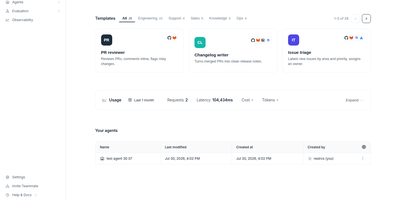
Agenta delivers a comprehensive open-source LLMOps workspace that covers the full lifecycle of AI application development — from prompt engineering through production monitoring. The platform supports 15+ model providers including OpenAI, Anthropic, Google Gemini, Mistral, Groq, Together AI, Azure, AWS Bedrock, and self-hosted models via Ollama, enabling teams to switch between providers without code changes. The prompt playground allows side-by-side comparison of different configurations, while the evaluation system offers LLM-as-a-Judge assessment, 20+ pre-built evaluators covering semantic similarity, regex matching, and factual accuracy, plus custom Python evaluators for domain-specific requirements. Teams run evaluations through both the web UI for subject matter experts and the Evaluation SDK for programmatic CI/CD integration. The observability layer captures full trace visibility across complex agentic workflows, flagging quality issues like hallucinations and off-topic responses in real time. Human annotation workflows let domain experts review and annotate LLM outputs, feeding corrections back into the evaluation loop. The architecture supports Chain of Prompts, RAG pipelines, and multi-step agent workflows, integrating with frameworks like LangChain and LlamaIndex. Self-hosting deploys via Docker Compose with Traefik for routing, requiring only a clone, environment configuration, and a single docker compose command. On RepoCloud, deploy Agenta on a dedicated VPS with root SSH access, persistent storage for evaluation datasets and traces, and complete control over model provider credentials, all under the MIT license with no usage restrictions.