nopCommerce
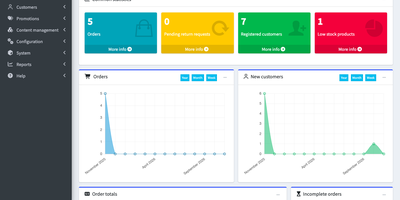
nopCommerce is a self-hosted shopping cart and merchant back office for selling physical goods, downloads, rentals, and gift cards from a storefront you fully control. The catalog covers simple, grouped, downloadable, rental, recurring, and gift card products, with categories, manufacturers, tier prices, product and specification attributes, stock tracking, and Excel import with Excel or XML export. Shoppers get a one-page checkout, wishlists, product comparison, reviews, reward points, gift card redemption, and return requests. Run several stores or outside vendors from a single back office; vendors can apply for accounts and manage their own products, orders, and shipments. Orders move through status changes, offline refunds, shipments, recurring payments, and PDF invoices, while built-in reports surface bestsellers, low stock, country sales, and top-spending customers. Multiple languages and currencies, tax and shipping providers, warehouses, pickup points, and EU Omnibus and GDPR settings support selling abroad. Discounts, affiliates, newsletters, campaigns, SEO-friendly page names, blog, news, forums, and polls cover promotion and content. Customer roles and an access control list set who can manage what, and multi-factor authentication protects sign-ins. Plugins and themes add payment gateways, social sign-in, search, and exchange rates, and the Web API plugin exposes store functions over REST for mobile apps, ERP, CRM, and accounting systems. Running on a dedicated VPS on RepoCloud with guaranteed CPU, RAM, and SSD, full root SSH access, and a browser serial console. nopCommerce Public License 4.0 licensed.
RSS-Bridge
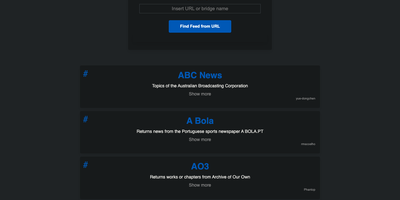
RSS-Bridge gives a feed to every website that never offered one, so social profiles, video channels, and news pages become subscriptions for any feed reader. Pick a bridge, enter a username or search term, and the generated URL returns Atom, JSON, HTML, MRSS, plaintext, or Sfeed output. Dedicated bridges cover YouTube channels and playlists, public Telegram channels, Reddit users and subreddits, Mastodon instances, Twitch channels, TikTok accounts, SoundCloud users, and Rumble channels. When a site has no bridge, CssSelectorBridge and XPathBridge scrape its pages into a feed from the CSS selectors or XPath expressions you provide. FilterBridge keeps or drops items by keyword, FeedMergeBridge folds several feeds into one stream, and FeedReducerBridge thins out noisy sources. Caching keeps upstream services from banning your server for repeated updates, and a token or HTTP basic authentication keeps a private instance closed to strangers. The enabled_bridges setting limits which bridges appear in the menu, and a failing bridge reports its error as a feed item, so your reader notifies you the moment one breaks. A new bridge is one small class file dropped into the bridges folder, and a mounted config folder carries your custom settings across container restarts. Running on a dedicated VPS on RepoCloud with guaranteed CPU, RAM, and SSD, full root SSH access, and a browser serial console. Unlicense licensed.
HeyForm
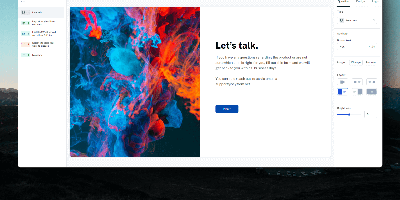
Typeform's conversational format, self-hosted: HeyForm is the open-source form builder that presents one question at a time. Forms present one question at a time, which measurably improves completion rates compared to long static pages. It supports 40+ field types, from text, email, and phone inputs to picture choices, date pickers, star ratings, signatures, and file uploads. Conditional logic shows or hides questions based on earlier answers, routes respondents to different endings, and redirects to URLs, so a single form can serve multiple flows. Completed submissions land in a results dashboard with drop-off and completion analytics, and connect outward through webhooks or integrations with Zapier, Make, Google Sheets, Notion, Airtable, and Slack. Theming covers fonts, colors, backgrounds, and custom CSS, so embedded forms look native to your site rather than like a third-party widget; the JavaScript embed library renders them inline, as popups, or full-page, with shareable standalone links as the default. Team workspaces and projects with member management let multiple teams share one instance without mixing data. Self-hosting removes per-response pricing entirely - unlimited forms and submissions for flat hosting cost - and keeps lead data, feedback, and quiz answers in your own MongoDB, simplifying GDPR compliance. The stack is a NestJS server and React webapp backed by MongoDB and KeyDB, distributed under GPLv3 as a Docker image.
LibrePhotos
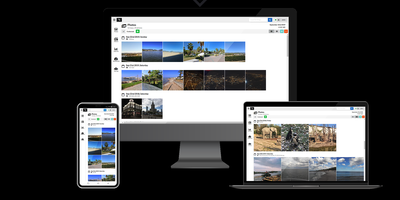
With over 8,000 GitHub stars and continuous development since 2020, LibrePhotos delivers the core intelligence of Google Photos — face recognition, object detection, semantic search, and automatic album generation — entirely on your own hardware without sending a single photo to a third-party server. The Django 5 backend processes uploaded media through a machine learning pipeline that runs face detection via the face_recognition library, clusters identified faces using scikit-learn and HDBSCAN, generates image captions through BLIP and Moondream 2, and classifies scenes using Places365 or Google's SigLIP 2 vision-language model with zero-shot classification against 900+ real-world tags. Semantic search lets you find photos by natural language queries like "sunset at the beach" without manual tagging, while metadata search filters by person, camera, lens, file type, and filesystem path. The React 18 frontend built with Vite presents a timeline view, fullscreen lightbox with slideshow mode, photo detail sidebar showing location and people, and a folder navigation view with breadcrumb paths. RAW files from any camera are converted via ImageMagick, videos processed through FFmpeg, and Live Photos paired with their RAW+JPEG counterparts as unified entries. Public album sharing via link provides fine-grained privacy controls, and duplicate detection uses perceptual hashing to identify near-identical images. Deployment runs as a single unified Docker container or via Docker Compose with Kubernetes manifests also available. Running on a dedicated VPS on RepoCloud with guaranteed CPU, RAM, and SSD, full root SSH access, and a browser serial console. MIT licensed.
Mathesar
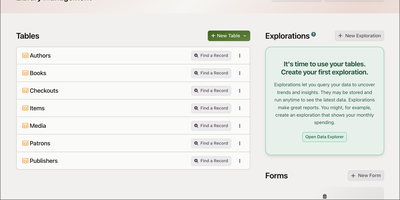
Mathesar puts a spreadsheet in front of your PostgreSQL database, letting anyone on the team browse, edit, filter, sort, and query tables without writing a line of SQL. Connect it to any existing PostgreSQL instance and immediately navigate schemas, tables, and records through an intuitive grid interface with inline editing, grouping, and summarization. The query builder joins tables across foreign key relationships, creates custom views with aggregations, and exports results to CSV. Rather than inventing its own permission layer, Mathesar maps each user or team to a native PostgreSQL role with granular schema-level and table-level privileges enforced at the database engine level, so there is never a gap between what the UI allows and what the database permits. Record summary templates display human-readable representations of linked records, making foreign key relationships immediately understandable instead of showing raw IDs. Import data from CSV files, create new tables and columns with proper PostgreSQL types including arrays, JSON, and custom domains, and modify schema structure through the web interface. Mathesar scales as well as the underlying PostgreSQL instance with no artificial limits on database size or complexity. Maintained by the Mathesar Foundation, a 501(c)(3) nonprofit, with a permanent commitment against vendor lock-in or licensing changes. Docker deployment connects to existing PostgreSQL instances or a bundled database in minutes. 5,000+ GitHub stars. GPL-3.0 licensed.
MCSManager
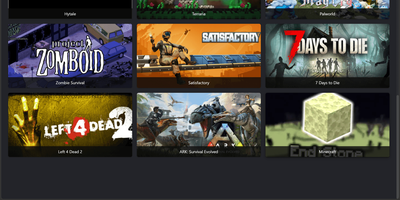
Hosting a Minecraft survival world, a Terraria server, and a Palworld host no longer means juggling SSH sessions and screen windows, because MCSManager puts every instance behind one web panel. A built-in marketplace installs game servers from ready-made templates, filtered by operating system and tagged with the Java version each one needs, while any Docker Hub image, uploaded ZIP archive, or plain process can run as an instance with its own start command, stop command, and live terminal. Docker instances get memory, CPU, port mapping, and volume settings, and each instance can auto start, auto restart, and run scheduled tasks. For Minecraft servers, the plugin and mod manager (Beta) searches Modrinth and CurseForge, and the file manager handles maps, configs, and uploads. Administrators create user accounts and assign instances to them, so friends or paying customers only see their own servers, which suits small hosting businesses that sell game servers. Extra machines join as nodes and connect to the same panel, and the drag-and-drop dashboard can be rearranged to taste. The interface supports many languages. Running on a dedicated VPS on RepoCloud with guaranteed CPU, RAM, and SSD, full root SSH access, and a browser serial console. Apache-2.0 licensed.
Uptrace
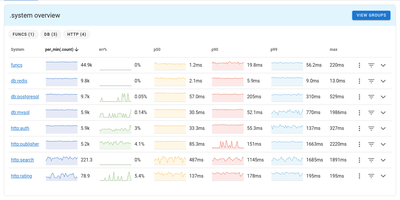
Pinpoint distributed system bottlenecks across polyglot microservices using Uptrace, an open telemetry monitoring platform that correlates traces, metrics, and logs inside a unified diagnostic dashboard. Engineers can track end-to-end request flows across polyglot microservices, inspecting database queries, third-party API calls, and internal function calls with sub-millisecond precision. The platform automatically aggregates spans into high-level latency percentiles, highlighting p50, p90, and p99 bottlenecks while calculating baseline error rates across production deployments. Integrated log correlation links log entries directly to parent trace spans, eliminating the friction of manual search across separate monitoring tools during active outages. You can construct custom dashboard views using a visual query builder, monitor cluster nodes, and map out upstream and downstream service dependencies with interactive topological graphs. Automated alerting channels notify on-call teams via Slack, Telegram, webhooks, or email whenever error budgets or metric thresholds trigger an incident. Running on a dedicated VPS on RepoCloud with guaranteed CPU, RAM, and SSD, full root SSH access, and a browser serial console. AGPL-3.0 licensed.
Flatnotes
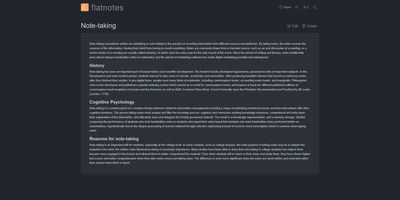
A web interface for a folder of Markdown files - Flatnotes is exactly that, and the discipline of that design is why people love it. Every note is a plain .md file in a single flat directory: no database, no proprietary format, no hierarchy to maintain, no export step if you ever leave. Edit notes in the browser or open the same files in VS Code or Obsidian, sync them with Syncthing or rsync while the app is running - the Whoosh-powered search index synchronizes incrementally, so external edits just show up. The interface is a clean Vue.js app with both WYSIWYG and raw Markdown editing modes (TOAST UI Editor), instant full-text search behind the "/" shortcut with partial-match support, wikilinks for cross-note references, and automatic tag extraction from #hashtags in note bodies. Light and dark themes and a mobile-responsive layout make it pleasant everywhere. Authentication is flexible for a personal tool: none, read-only, username/password, or TOTP two-factor. A documented REST API covers create/read/update/delete for automation. The operational story is the quiet selling point - the only state is the notes folder and a rebuildable index, so backup is copying a directory. For a personal notepad that respects your data, Flatnotes nails minimal.
Shelf
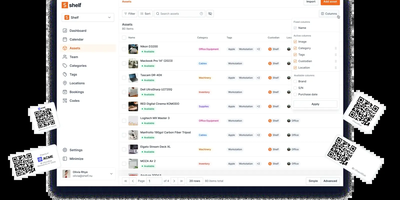
Shelf answers the three questions every equipment manager dreads — who has it, where is it, and when is it coming back — using QR-code-first tracking where every asset gets a unique scannable label, every handover is logged with timestamps and e-signed custody agreements, and every scan captures GPS coordinates displayed on a map. Built on React Router 7 with React 19, TypeScript 5, Prisma 6 ORM, and Tailwind CSS 3 with Radix UI components, the platform generates QR codes and barcodes (Code128, Code39, Datamatrix) printable on DYMO, Brother, and Zebra label printers. The custody system records every handover with user details and generates PDF custody agreements with e-signatures for high-value items, while a complete audit trail tracks responsibility from check-out to return. The visual booking calendar prevents double-bookings automatically, supports partial check-outs and returns with segmented lifecycle bars, and handles quantity-tracked consumables alongside individually serialized equipment. Asset Models enable bulk creation of identical items with shared defaults while maintaining individual QR codes and custody histories. Location tracking displays last-scanned GPS coordinates on MapTiler maps. Supabase Auth provides email and SSO authentication, pg-boss handles background job queuing, and Nodemailer delivers SMTP email. The Shelf Companion app on iOS and Android enables field scanning and bookings. Export Asset Inventory, Asset Distribution, and Custody Snapshot reports for compliance. Deploy via Docker with PostgreSQL and Supabase. Running on a dedicated VPS on RepoCloud with guaranteed CPU, RAM, and SSD, full root SSH access, and a browser serial console. AGPL v3.0 licensed.
Cleanuparr
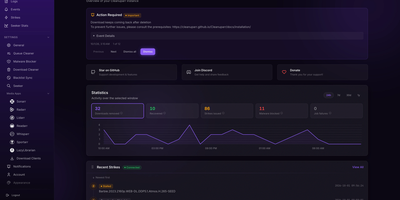
Stalled torrents, malware-laced archives, and failed imports can quietly paralyze an automated media server, and Cleanuparr eliminates those bottlenecks as an autonomous download queue manager and library seeker for the entire Servarr ecosystem. Connecting directly to Sonarr, Radarr, Lidarr, Readarr, Whisparr, Sportarr, and LazyLibrarian alongside qBittorrent, Transmission, Deluge, rTorrent, uTorrent, and SABnzbd, its configurable Queue Cleaner tracks slow transfers, stuck metadata downloads, and import failures using a strike system. Once a problematic download reaches its strike threshold or triggers the Malware Blocker against deceptive .lnk and .zipx payloads, Cleanuparr purges the offending files, blocklists the release, and instructs the media manager to search for a clean replacement. Beyond defensive queue hygiene, the built-in Seeker proactively searches your libraries for missing episodes or movies, hunts for Cutoff Unmet quality upgrades, and tracks Custom Format score distributions over time. Storage administrators can also enforce seeding duration limits, clean up orphaned torrents without breaking active cross-seed hardlinks, and quarantine unclaimed directory files before they consume disk capacity. A live web dashboard visualizes manual intervention alerts, strike histories, and searchable application logs while dispatching instant notifications through Apprise, Discord, Gotify, Notifiarr, Ntfy, Pushover, and Telegram. Running on a dedicated VPS on RepoCloud with guaranteed CPU, RAM, and SSD, full root SSH access, and a browser serial console. GPL-3.0 licensed.

WBO
A Node.js server, a large shared canvas, and a URL - WBO (Whiteboard Ophir) is collaborative whiteboarding reduced to its essence. There are no accounts and no setup - to collaborate, you send someone the board's link, and every stroke appears for all connected users in real time over WebSockets, with cursor positions shared so you can see where collaborators are working. Board state persists automatically and continuously, so a diagram drawn in today's lesson is still there next week at the same URL. Boards come in three flavors: a public free-for-all, private boards with random unguessable names, and named boards with custom URLs shared by anyone who knows the name. The tools cover teaching and brainstorming needs - pencil, straight lines, rectangles, ellipses, text annotations, eraser, a full color palette with brush sizes - and boards export as SVG or PNG. Despite the simplicity, the server is production-minded: JWT authentication gates board access with granular capabilities (open, edit, and clear as separate permissions), rate limiting caps per-client message volume, reverse-proxy and subpath deployment are supported, and OpenTelemetry provides metrics, logs, and traces. It works on tablets and touch devices, speaks multiple languages, and consumes minimal resources. AGPL-licensed.
PG Back Web
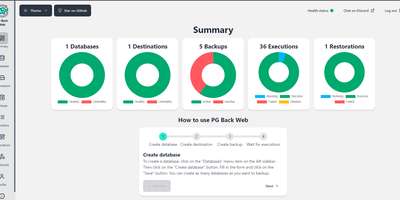
Automating PostgreSQL backup lifecycles across local volumes and S3-compatible object storage, PG Back Web gives database administrators and developers a self-hosted web console to schedule, encrypt, monitor, download, and restore database dumps without writing manual shell scripts. Instead of maintaining fragile crontab entries across individual database servers, you register PostgreSQL 13, 14, 15, 16, 17, or 18 instances in one dashboard and define recurring backup schedules with custom retention policies and timezone-aware timestamps. Each backup execution can target local directories or multiple S3 buckets across providers like AWS S3, MinIO, Backblaze B2, and Cloudflare R2, with built-in connection testing and presigned download links for rapid archive retrieval. To protect sensitive production records at rest and in transit, the platform applies PGP encryption to dump files while encrypting stored database connection strings and bucket credentials. Real-time execution logs record exact archive sizes, durations, and output streams, and the web interface lets operators trigger on-demand dumps, duplicate existing backup jobs, or run direct browser-based restorations when disaster recovery is required. Automated background health checks continuously verify connectivity to every registered PostgreSQL database and storage destination, firing configurable HTTP webhooks to Slack, Discord, or incident pipelines whenever a backup completes, fails, or changes health status. Running on a dedicated VPS on RepoCloud with guaranteed CPU, RAM, and SSD, full root SSH access, and a browser serial console. AGPL-3.0 licensed.
Mstream
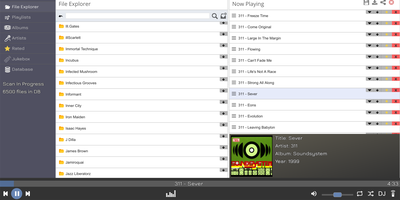
"The easiest music streaming server available" is mStream's own billing, and the claim holds up: a lightweight Node.js app that turns a folder of audio files into a private streaming service in minutes, no external database required. Its filesystem-based design is the clever part - the API mirrors your folder structure, so you can browse and play music immediately, before any library scan finishes, and your organization on disk is your organization in the app. It streams flac, mp3, wav, ogg, opus, aac, and m4a, which matters to the audiophile crowd: FLAC plays uncompressed, bit-perfect, with gapless playback for live albums and continuous mixes. The web player runs anywhere a browser does and packs personality - a Milkdrop-style visualizer (Butterchurn), playlist sharing via links, and drag-and-drop uploads straight through the file explorer. Native iOS and Android apps add the feature streaming subscriptions can't match: sync your collection to your phone for true offline playback of music you own. Multi-user support assigns separate directories and permissions per account. Resource usage is famously light - mStream is tested on multi-terabyte libraries and runs happily on a Raspberry Pi, so a small RepoCloud instance serves a lifetime's collection. GPL-licensed, with zero listening-habit telemetry.
Keila
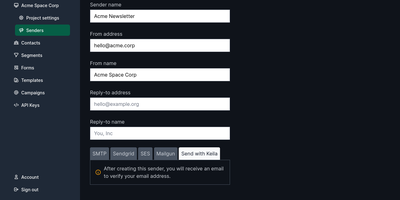
Among open-source Mailchimp alternatives, Keila has the most modern UI - built in Germany on Elixir and Phoenix (the PETAL stack), with GDPR-conscious defaults including an optional no-tracking mode, and 100% open source with no proprietary premium tier. Campaign authoring is flexible three ways: a visual block editor with multi-column layouts, Markdown with or without WYSIWYG for hybrid HTML-plus-plain- text sends, and raw MJML for hand-coded designs. The personalization system is unusually clean - every contact carries custom data as a single JSON object (populated from sign-up form fields or pushed from your CMS/CRM), and Shopify's Liquid template language renders it into fully dynamic emails. Targeting uses a visual segment editor backed by a powerful segment language for complex logic over tags, language preferences, and any custom field. Sign-up forms with custom fields grow your lists; open and click tracking measures campaigns; scheduled sending handles timing. Delivery pipes through your own SMTP or first-class integrations with AWS SES (including automated bounce handling), SendGrid, Mailgun, and Postmark. A full REST API manages contacts, campaigns, and segments, with Erlang/OTP reliability underneath. Comfortable at 100K+ subscribers. AGPL-licensed, EU-hosted project, actively developed.
FeatBit
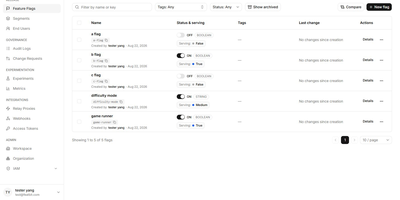
Engineering and product teams ship code to production daily with FeatBit, an enterprise feature flag and experimentation platform that controls exactly which user segments, regions, or percentage rollouts see each new capability. When a regression appears in production, operators toggle an instant kill switch, dial back canary weights from full traffic to one percent, or restrict access to internal QA accounts without redeploying containers. Reusable user segments group customers by subscription tier, device property, or custom attributes for consistent targeting across environments. Server-side and client-side SDKs for .NET, Java, Go, Python, Node.js, React, React Native, JavaScript, and OpenFeature synchronize flag states over WebSockets in under 100 milliseconds and evaluate rules locally in memory. Built-in A/B/n experimentation links flag variations to custom conversion events, click tracking, and pageview metrics so teams can validate product hypotheses with live telemetry. Scheduled rollouts, multi-step approval workflows, flag triggers, and webhook integrations with Slack, Datadog, Grafana, New Relic, and OpenTelemetry keep release operations auditable. Role-based access control and single sign-on govern every flag change. Running on a dedicated VPS on RepoCloud with guaranteed CPU, RAM, and SSD, full root SSH access, and a browser serial console. MIT licensed.
OpenRemote
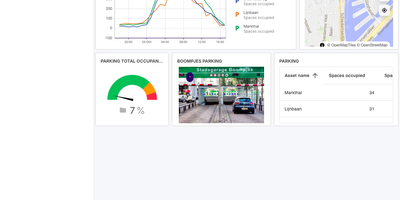
OpenRemote is an IoT platform that models every building, EV charger, solar panel, and street light as an asset in one tree, then maps, charts, and automates them from a single web dashboard. Define your own asset types, and give each attribute live readings, writable setpoints, history, and forecasts. Connect hardware with protocol agents for HTTP, MQTT, Modbus, KNX, Z-Wave, LoRaWAN, SNMP, and serial, discovering devices or importing project files where the protocol allows. Plot assets on a map with live position and heading, tint markers by attribute value, and add geofences and GeoJSON layers. Automate with When-Then rules, a drag-and-drop Flow editor, or Groovy and JavaScript rules, and run them on a schedule. Raise e-mails, push notifications, webhooks, or assignable alarms from the result. Compose shareable dashboards in Insights from nine widget types, including charts, KPIs, gauges, maps, and tables. Give each customer a realm with its own users, roles, and white-label branding. Sync edge gateways to a central instance and open them remotely through tunnels. Let devices with X.509 certificates register themselves. Read and write every attribute over REST, MQTT, or WebSocket, and let AI assistants manage assets in plain language through the MCP server. Typical projects span smart cities, building and energy management, and equipment fleets, in an interface that speaks nine languages. Running on a dedicated VPS on RepoCloud with guaranteed CPU, RAM, and SSD, full root SSH access, and a browser serial console. AGPL-3.0 licensed.
Portabase
Portabase takes a zero-trust approach to database backups: lightweight Rust/Tokio agents deploy next to each database, encrypt dumps with AES-GCM before data ever leaves the host, and poll the Next.js control plane outbound every five seconds requiring zero inbound firewall rules. This architecture contains blast radius if the dashboard is compromised while supporting ten engines with stable backup and restore: PostgreSQL 12 through 18, MySQL 5.7 through 9, MariaDB 10 and 11, MongoDB 4 through 8, SQLite 3.x, Redis 2.8+, Valkey 7.2+, Firebird 3.0 through 5.0, Microsoft SQL Server 2017 through 2022 including Azure SQL, and Docker volumes on Engine 20.10+. Encrypted backups store on configurable backends including local filesystems, any S3-compatible provider (AWS, MinIO, RustFS), Google Cloud Storage, and Azure Blob Storage. Cron-based scheduling with Grandfather-Father-Son retention policies automates backup lifecycle management, while on-demand restore targets any compatible server for cross-environment recovery. The CLI installs agents with a single command and auto-updates when new versions ship. A RESTful API with MCP server integration enables automation from CI/CD pipelines and AI agent workflows. Developed by a non-profit under Apache-2.0. 1,270+ stars and 174 releases since October 2024. Running on a dedicated VPS on RepoCloud with guaranteed CPU, RAM, and SSD, full root SSH access, and a browser serial console.
Whatomate
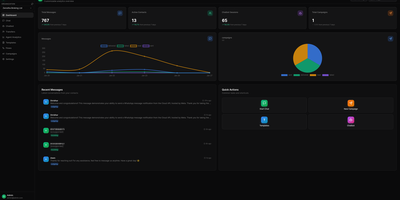
A complete WhatsApp Business Platform covering messaging, chatbot automation, and voice calling with IVR — a combination most self-hosted projects never attempt. The Fastglue/fasthttp backend processes WhatsApp Cloud API webhooks through PostgreSQL and Redis into a real-time WebSocket layer powering instant chat updates across a Vue 3 frontend built with shadcn-vue and TailwindCSS. Chatbot automation supports keyword triggers, multi-step conversation flows with branching logic, AI-powered responses from OpenAI, Anthropic, or Google models, knowledge base integration via vector stores, and seamless handoff to human agents when the bot gets stuck. The visual IVR builder uses a drag-and-drop node canvas where you wire greeting prompts, DTMF menu capture, HTTP callbacks to external APIs mid-call, business-hours routing by IANA timezone, agent team transfers with hold music, and reusable sub-flows. Every call recording streams encrypted to your S3-compatible bucket with retention you control. Multi-tenant architecture isolates organizations with separate data, roles, and API keys while a unified inbox presents both chat and call conversations to agents in a single dashboard. Meta-approved template management, bulk campaign messaging, analytics tracking, and a full REST API round out the platform. Deploy via Docker Compose with Postgres and Redis included. Running on a dedicated VPS on RepoCloud with guaranteed CPU, RAM, and SSD, full root SSH access, and a browser serial console. AGPL v3 licensed.