Jellystat
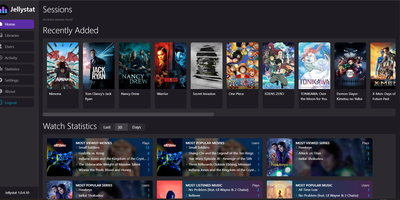
Jellystat is a self-hosted media analytics and live session monitoring dashboard for Jellyfin and Emby servers that turns raw streaming activity into detailed user, library, and playback insights. Media server administrators use the live dashboard to watch active streams in real time, inspecting transcoding status, client devices, bitrates, and playback progress as sessions happen. Every completed or partial stream is logged automatically so you can browse chronological watch histories, filter by library or stream type, and analyze peak concurrent streaming hours across the week. Dedicated library and user views break down total watch duration, play counts, and most popular movies, episodes, or music albums per account. If you already use the official Jellyfin Playback Reporting or Statistics plugins, you can import existing historical records directly into your instance without losing past data. Built-in database backup and restore tools, automatic library synchronization tasks, IP geolocation via MaxMind GeoLite, and interactive Swagger API documentation at the /swagger endpoint round out the administrative toolkit. Running on a dedicated VPS on RepoCloud with guaranteed CPU, RAM, and SSD, full root SSH access, and a browser serial console. MIT licensed.

Huntly
Capture every article you read, RSS feed you follow, X/Twitter thread you scroll past, and GitHub repository you star into one searchable, AI-enhanced personal knowledge base with Huntly. Auto-save visited web pages through the companion browser extension, extract distraction-free article text using Mozilla Readability and Defuddle, and highlight passages with inline notes that remain anchored in your library. Reconstruct multi-post X/Twitter threads automatically with embedded media preserved intact. Subscribe to RSS and Atom feeds via OPML import, organize subscriptions into custom folders, and triage unread stories alongside your read-it-later queue and hierarchical collections. Synchronize starred GitHub repositories with their README documentation and repository tags so you can filter tools by topic without leaving your dashboard. Run custom AI shortcuts to summarize long-form essays, translate foreign articles, or query your entire archive from external AI coding agents through the built-in MCP server and Agent Skills integration. Execute boolean, phrase, and bilingual fuzzy queries across every saved document or export your entire library to portable Markdown files. Running on a dedicated VPS on RepoCloud with guaranteed CPU, RAM, and SSD, full root SSH access, and a browser serial console. Apache-2.0 licensed.
Chitchatter
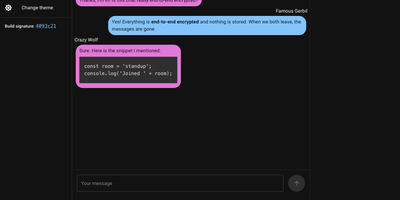
Chitchatter is a browser-based chat room for text, voice, video, screen sharing, and file transfers that exists only while its members are connected and keeps no record of what was said. Every visit starts with a random room name generated on your device, a UUID or a readable passphrase, and you invite people with the link or a QR code. Public rooms admit anyone with the link; private rooms also require a matching password. Messages support Markdown, multiline text, and code blocks, and clicking a name opens a direct conversation. Newcomers to public rooms receive the earlier conversation from peers already there, and typing indicators show who is writing. Start an audio or video call, share your screen to walk a relative through a settings problem, or hand over a file of any size, encrypted before it leaves your browser. Public-key checks verify each peer automatically, with a green lock marking everyone who passes and an icon showing whether the link is direct or relayed. Embed a room in any web page with an iframe or a web component that takes a room name, user name, and color mode. Light and dark themes are built in, and notifications and sounds announce new messages while you work in another tab. Close the tab and the transcript disappears. Running on a dedicated VPS on RepoCloud with guaranteed CPU, RAM, and SSD, full root SSH access, and a browser serial console. GPL-2.0 licensed.

OpenHAB
Over 400 technologies and thousands of smart devices from any manufacturer, unified under one roof: openHAB is the vendor-neutral home automation platform with a pluggable binding architecture. Each binding translates a device or service into openHAB's clean abstraction: Things expose Channels, Channels link to Items, and Items feed a rules engine that runs your home. That engine meets you at your skill level: Blockly gives non-programmers drag-and-drop visual logic, JS Scripting (GraalJS with the openhab-js library) is the modern text-based standard, the classic Rules DSL remains supported, and JSR223 opens the door to Python, Ruby, and Groovy. Time- and event-based triggers, scripts, notifications, and voice control compose into automations of any complexity, and users report decade-old rule sets still running rock solid. The Main UI handles configuration, semantic modeling, and now built-in charting - no external Grafana required. Built in Java on Apache Karaf's OSGi runtime and stewarded by the non-profit openHAB Foundation, it requires no cloud to function: everything runs locally, talking directly to your devices. Optional connectors bridge to Alexa, Google Assistant, and HomeKit, with iOS, Android, and web apps for control from anywhere.
Lingva Translate
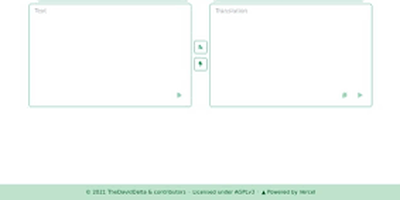
What Nitter was to Twitter and Invidious is to YouTube, Lingva Translate is to Google Translate: a privacy front-end delivering the service's full capability while cutting Google out of the loop between you and your text. Built on Next.js with TypeScript and Chakra UI, it uses the purpose-built Lingva Scraper to fetch translations from Google Translate without your browser ever touching a Google-related service - no cookies, no tracking, no account, while retaining what makes Google Translate hard to give up: 100+ languages with the translation quality of Google's production models, unlike offline engines that trade privacy for accuracy. The clean interface covers automatic source-language detection, text-to-speech audio playback for pronunciations, definitions and examples, and light/dark themes. For developers, every instance doubles as a translation API: a RESTful endpoint at /api/v1/:source/:target/:query returns JSON translations, an audio endpoint serves TTS buffers, and a full GraphQL API at /api/graphql exposes translations, audio, and language lists for richer integrations - all unmetered on your own instance. Deployment is a single stateless container with one environment variable for the site domain; defaults for theme and language pair are configurable. GPL-licensed, and popular as the translation backend for privacy-respecting apps.
Multiwoven
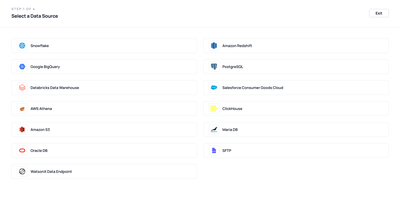
When warehouse data never reaches the CRM, ad platform, or help desk that needs it, Multiwoven is the open-source reverse ETL platform that syncs it there on a schedule. Sources include Snowflake, BigQuery, Redshift, Databricks, PostgreSQL, ClickHouse, MariaDB, Oracle, Amazon S3, and SFTP. Models define what to move: write SQL with a 100-row preview, pick tables in a visual selector, or reuse existing dbt models. Destinations span Salesforce, HubSpot, Klaviyo, Mailchimp, Zendesk, Slack, Airtable, Google Sheets, Stripe, Facebook Custom Audiences, HTTP endpoints, and vector stores such as Pinecone, Qdrant, and Weaviate. Each sync maps model columns onto destination objects like Salesforce Account, Contact, or Opportunity, then runs as a full refresh or as an incremental sync that moves only new or changed rows, optionally tracked by a cursor field. Schedules can be manual, an interval from minutes to weeks, or a cron expression. A dashboard reports sync activity, each run records its status with successful and failed row counts, and failed runs can trigger status emails. Workspaces keep sources, models, syncs, and destinations separate for each team, while Admin, Member, and Viewer roles and email invitations control access. A connector framework lets teams add sources or destinations that are not yet supported. Running on a dedicated VPS on RepoCloud with guaranteed CPU, RAM, and SSD, full root SSH access, and a browser serial console. AGPL-3.0 licensed.
Kuzzle
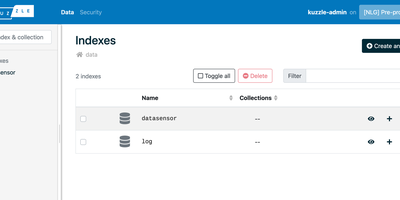
Kuzzle ships a production-ready backend from day one: data storage with Elasticsearch search, real-time pub/sub notifications, user authentication, role-based permissions, and a multi-protocol API serving HTTP, WebSocket, and MQTT simultaneously on port 7512. Rather than rebuilding these standard features from scratch for each project, you get a ready-made backend that accepts connections from web applications, mobile clients, and IoT devices through one unified API surface. Elasticsearch provides persistent document storage with full-text search, geospatial queries, and aggregation pipelines, while Redis handles internal caching and memory storage operations. The Koncorde real-time engine powers pub/sub messaging and database notifications, enabling clients to subscribe to document changes with filter conditions that trigger instant updates when matching data is created, modified, or deleted. User management includes JWT-based authentication, role-based access control with granular permissions at the controller and action level, and pluggable authentication strategies via Passport.js. The extensible plugin framework allows developing custom business logic, additional authentication providers, storage connectors, and protocol handlers. Client SDKs for JavaScript, Dart, Kotlin, and C++ accelerate frontend development, while the Kourou CLI provides command-line API access and project scaffolding. The Vue.js Admin Console offers a web interface for managing indexes, collections, documents, users, profiles, and roles. Horizontal scaling through masterless cluster mode targets 99.99% uptime without single points of failure. Running on a dedicated VPS on RepoCloud with guaranteed CPU, RAM, and SSD, full root SSH access, and a browser serial console. Apache 2.0 licensed.
Alf.io
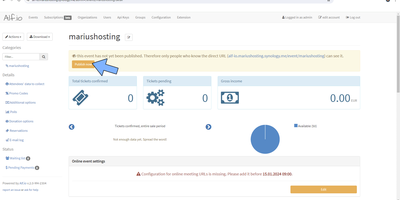
Alf.io handles the complete conference and event lifecycle from ticket distribution through check-in to financial reporting, built for organizers who refuse to surrender attendee data to third-party ticketing platforms like Eventbrite or Tito. Built on Java 17 with Spring Boot and PostgreSQL with row-level security policies, the project has earned over 1,500 GitHub stars from privacy-conscious event organizers across Europe and beyond. Payment processing supports Stripe for credit cards, Mollie for iDEAL, Bancontact, KBC/CBC, and Przelewy24, plus Revolut, PayPal, bank transfers, on-site collection, and configurable custom offline payment methods with localized instructions. Multi-tier ticket categories enable early bird, VIP, standard, and free registrations with promotional codes, group discounts, and waiting lists that automatically notify next-in-queue when cancellations occur. Customizable registration forms collect attendee data beyond standard fields, while EU VAT management validates tax IDs through the VIES web service and supports Italian e-invoicing with automatic PDF invoice generation attached to confirmation emails. The Alf.io Scan mobile app for iOS and Android performs QR code check-in at venue entrances, and the Alf.io-PI project provides Raspberry Pi-powered offline-capable check-in stations that form encrypted clusters for high-throughput badge printing at large events. Apple Wallet integration delivers digital passes via PassKit. The extensions system integrates with CRMs, accounting platforms, Slack, Telegram, and Mailjet. Multi-language support covers nine languages. Deploy via Docker with PostgreSQL. Running on a dedicated VPS on RepoCloud with guaranteed CPU, RAM, and SSD, full root SSH access, and a browser serial console. GPLv3 licensed.
GlobaLeaks
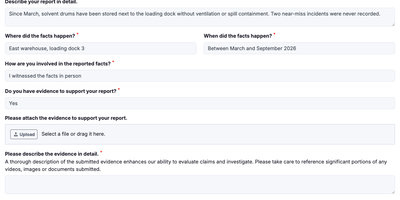
A secure drop box for tips and misconduct reports, GlobaLeaks lets organizations, newsrooms, and public institutions receive anonymous submissions and reply to the people behind them. Whistleblowers answer a questionnaire, attach files, and leave with a unique 16-digit receipt that reopens their report later for replies, comments, and the choice of whether and when to reveal their identity. Administrators build the intake form with a questionnaire builder, route reports through channels by topic or department, and host several branded whistleblowing sites from one installation in more than 90 languages. Recipients triage in a searchable inbox with labels, reminders, and customizable case statuses. Analysts, custodians, and administrators get separate roles, and the custodian role can gate access to a reporter's identity. Reports and messages are encrypted, an automatic Tor onion service gives whistleblowers an anonymous way in, two-factor authentication protects staff logins, and PGP secures email notifications. Audit logs track staff actions, and retention rules expire old reports to support GDPR duties and EU Directive 2019/1937 workflows. Running on a dedicated VPS on RepoCloud with guaranteed CPU, RAM, and SSD, full root SSH access, and a browser serial console. AGPL-3.0 licensed.
Nixopus
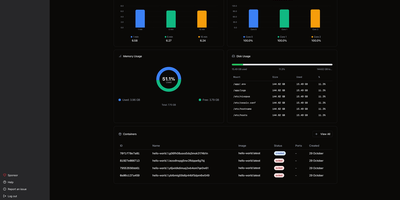
Tell an AI agent to deploy your app and watch it actually happen. Nixopus connects to your GitHub repo, analyzes the codebase to detect your framework, generates the right Docker configuration, resolves dependency conflicts, and ships the whole thing to your server with HTTPS enabled. When something breaks, the agent reads the logs, creates a pull request with a fix, and redeploys without waking you up. The chat interface lets you deploy, add custom domains, check logs, roll back, and troubleshoot in plain English from the web dashboard or directly from your VS Code or Cursor editor. Extensions bring one-click installs for 100+ self-hostable apps like Appwrite, Excalidraw, and Ollama, each showing you exactly what it runs on your server before installation. Connect multiple servers and monitor CPU, memory, disk, and running containers across your entire fleet from a single dashboard with draggable widget layouts. The built-in terminal opens SSH sessions right in the browser with split-pane support, so you can watch logs in one pane while running commands in another. Framework detection covers Next.js, Django, Rails, Go, FastAPI, and anything else that fits a container image. Every deployment gets automatic TLS via Caddy with Let's Encrypt certificates provisioned and renewed silently. Previous container images are retained so rollbacks skip the rebuild step entirely. Deploy on a dedicated VPS on RepoCloud with guaranteed CPU, RAM, and SSD, full root SSH access, and a browser serial console. AGPL-3.0 licensed.

GrandNode
GrandNode lets you run one shop, a dozen regional storefronts, or a full marketplace from a single installation, with a back office for every role involved. Each store gets its own domain, theme, currencies, languages, and settings, and a store manager panel limits staff to the catalog, orders, and customers of their own store. Outside sellers join through a vendor panel where they manage their own products and orders. The catalog handles attributes and combinations, bundles, grouped items, downloads, date-based reservations, and auctions. B2B selling adds customer groups, tier prices, sales employees, and approvals. Checkout accepts payments through plugins such as Stripe Checkout, Braintree, and cash on delivery, with shipping by fixed rate, weight, or pickup point and tax rules by country, state, or zip code. Marketing tools include coupon codes, discount rules, loyalty points, gift vouchers, customer segments, newsletter campaigns, and push notifications. Clean URLs, sitemaps, and structured data with price and availability help search engines read your products. Pages, blog posts, news, and sliders cover content, and a REST API serves headless storefronts and ERP or CRM integrations. Running on a dedicated VPS on RepoCloud with guaranteed CPU, RAM, and SSD, full root SSH access, and a browser serial console. GPL-3.0 licensed.
CoreObs
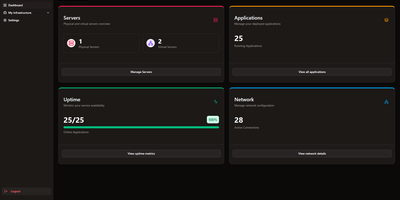
CoreObs delivers a unified self-hosted dashboard that replaces the typical combination of Uptime Kuma, Homer, and separate monitoring tools with a single interface for managing your entire server infrastructure. The Next.js frontend with shadcn components provides a modern dark-themed UI displaying server hardware metrics collected by a lightweight Go agent that leverages Glances for hardware abstraction — streaming real-time per-core CPU load, RAM utilization, NVIDIA GPU statistics, disk usage, system uptime, and load averages via WebSocket connections. The application registry tracks all self-hosted services with configurable uptime monitoring, availability history charts, and instant notifications through Discord, Telegram, Pushover, and email when services go down or recover. Quick-access links provide one-click navigation to each application's management panel directly from the dashboard. The network visualization module built on React Flow enables creating visual topology maps of your infrastructure with drag-and-drop nodes representing servers, switches, and services connected by labeled edges. Server data can be organized with tags, copied between entries, and monitored with configurable pagination and compact view modes. Deploy via Docker Compose with three containers — the Next.js web interface, the Go monitoring agent, and PostgreSQL 17 for persistent storage. Running on a dedicated VPS on RepoCloud with guaranteed CPU, RAM, and SSD, full root SSH access, and a browser serial console. MIT licensed.
Distr
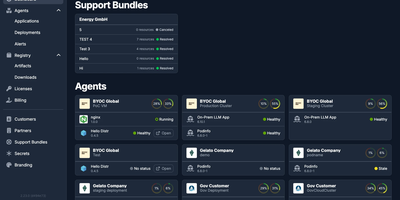
Shipping commercial software to customer-managed infrastructure demands a reliable distribution hub, and Distr provides that control plane for vendors who sell into VPCs, on-prem data centers, and air-gapped networks. Vendors define Docker Compose, Docker Swarm, or Helm applications with versions and configuration templates, then roll releases out to every customer deployment from a single vendor portal. Prebuilt deployment controllers installed in customer environments apply updates and report status, container logs, live host metrics, and alerts back, so support teams can diagnose problems without touching anyone's infrastructure. Customers get a white-labeled portal with your branding, install instructions, registry credentials, version management, and customer-initiated support bundles. A built-in OCI registry distributes Docker images, Helm charts, Zarf packages, and other artifacts with per-customer tag access, pull-through caching, and download analytics showing which customer pulls which version. Entitlements control which application versions each customer may deploy, and Ed25519-signed JWT license keys let your own software verify usage limits offline, which keeps licensing working in air-gapped sites. An OpenTofu controller provisions and reconciles BYOC cloud infrastructure, while a REST API and SDK automate onboarding, releases, and entitlements from CI pipelines. Role-based access control manages permissions across vendor and customer organizations, while the Kubernetes compatibility matrix and vulnerability scanning help validate releases before they ship. Running on a dedicated VPS on RepoCloud with guaranteed CPU, RAM, and SSD, full root SSH access, and a browser serial console. Apache-2.0 licensed.
FitTrackee
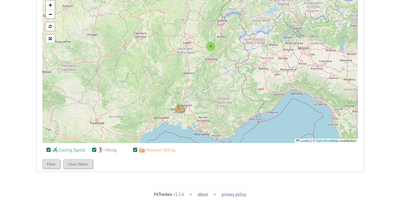
Cyclists, runners, hikers, and kayakers can log every GPS route in FitTrackee, a workout tracker where each workout stays private until shared. Upload a GPX, FIT, KML, KMZ, or TCX file and the workout appears with a map and charts. Zip archives and manual entry work too. Charts plot speed or pace, elevation, heart rate, cadence, and power on one graph or several. Each workout holds 20 photos at most, and photos with GPS coordinates appear on the map. Twenty-seven sports are available, including cycling, running, kayaking, and swimrun. Shoes, bikes, and boards each tally distance, duration, and workouts, and sports can have default equipment. The dashboard shows a monthly chart and a calendar of workouts and records, and statistics group totals by day, week, month, year, or sport. Filters narrow the workouts list by date, sport, equipment, location and radius, distance, or speed, and results can be mapped. A global map plots workouts, filtered by date and sport. Workout data, charts, map, and photos each get a visibility setting: private, followers only, or public. Follow requests need approval by default, and unwanted users can be blocked. Comments accept limited Markdown, and the five latest public workouts publish as an Atom or RSS feed. Data export bundles an account's workouts and uploaded files. Running on a dedicated VPS on RepoCloud with guaranteed CPU, RAM, and SSD, full root SSH access, and a browser serial console. AGPL-3.0 licensed.
Craftplan
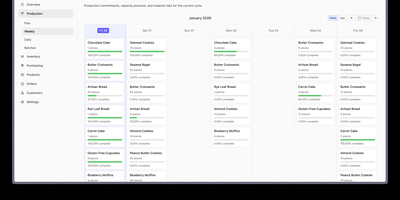
Every batch a craft business ships carries a recipe version, a cost, and a trail of ingredient lots, and Craftplan, an open-source ERP, keeps all three connected. Receiving stock against a purchase order records each supplier lot code and optional expiry date, and partial deliveries keep the order open. Customer orders appear on a delivery calendar and can generate invoices. Scheduled items wait on the production board as unbatched cards until Batch All creates one batch with a frozen copy of the recipe. Capacity warnings flag products over their daily limit, and a forecast highlights materials that will run short. Finishing a batch consumes ingredient lots earliest-expiry first, skips any lot on hold or rejected, and snapshots material, labor, and overhead costs. Recipes are versioned, so past costs never change. A blend made in-house can be stocked as its own material, with its actual yield, lot costs, and source lots intact. Allergens and nutrition facts roll up from each material through every recipe, and completed batches print A5 or compact labels with a scannable barcode. The Trace Center follows a supplier lot forward to every customer who received it, or a finished batch back to its sources. Recall mode can place the lot on hold, and the trace exports as CSV or prints for the recall file. Running on a dedicated VPS on RepoCloud with guaranteed CPU, RAM, and SSD, full root SSH access, and a browser serial console. AGPL-3.0 licensed.

DSpace
With DSpace, a library or research office can give every thesis, journal article, and dataset its own permanent web address, a searchable metadata record, and files visitors download from the archive. Content sits in a tree of communities and collections, and each collection decides who may deposit and how many review steps follow; reviewers accept a submission or reject it with a note that sends it back to the author. Embargoes hold files back until a set date, access policies limit other files to chosen groups, and sign-in works through LDAP, Shibboleth, SAML, OpenID Connect, or ORCID. Search covers metadata and the extracted full text of uploaded files, facets narrow the results, and browse pages sort by title, issue date, author, or subject. Editors can correct a published item through the submission form. Administrators inspect an audit trail and rewrite homepage news from an admin form. Entity types for people, organizations, projects, journals, and datasets link each publication to the work behind it, and DOIs can be registered through Crossref. Optional settings let authors keep an email address private on their researcher profile and download their own restricted files. Usage reports count visits, downloads, and top countries per item. REST, OAI-PMH, SWORD, and Google Scholar metadata connect the archive to harvesters, deposit tools, and search engines. Running on a dedicated VPS on RepoCloud with guaranteed CPU, RAM, and SSD, full root SSH access, and a browser serial console. BSD-3-Clause licensed.
Frappe Insights
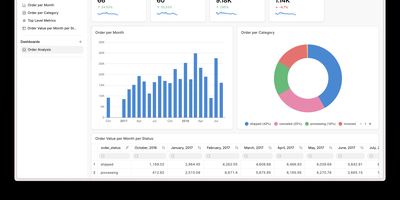
Frappe Insights delivers a self-hosted business intelligence platform where non-technical users build complex analytical queries without writing SQL. The visual query builder uses Ibis under the hood to compose optimized SQL from drag-and-drop column selections, filters, aggregations, and group-by operations — translating point-and-click interactions into performant database queries across MySQL, PostgreSQL, DuckDB, and BigQuery. The join editor provides a graphical interface for defining multi-table relationships, letting analysts connect data across schemas without understanding foreign keys or join types. The chart builder renders interactive visualizations using Apache eCharts with support for bar, line, area, pie, scatter, funnel, and pivot table chart types — each configurable with axes, colors, legends, and formatting options. Dashboards combine multiple charts into shareable views with layout customization, auto-refresh intervals, and filter propagation across widgets. Data source management handles connection pooling across multiple databases simultaneously, enabling cross-database analysis in single queries. Server scripts extend query capabilities with custom Python transformations for complex business logic that visual tools cannot express. Built on the Frappe Framework's full-stack architecture, deployment uses Docker via the official easy-install script that provisions the complete stack including MariaDB, Redis, and Nginx. Running on a dedicated VPS on RepoCloud with guaranteed CPU, RAM, and SSD, full root SSH access, and a browser serial console. AGPL-3.0 licensed.
Safebucket
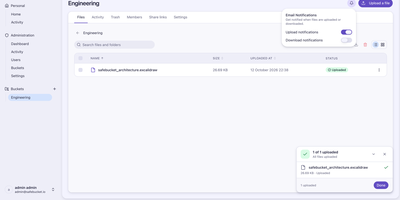
By routing file transfers directly between client browsers and S3-compatible object storage through time-limited presigned URLs, Safebucket enables organizations to share large files and folders without bottlenecking their application server. Teams organize documents into logical buckets with nested folder hierarchies, preview images, videos, audio tracks, and PDFs inside a sandboxed browser viewer, or bundle up to one hundred selected items into a single client-side ZIP download. Public Quick Share links let external recipients download files or entire folders from a browser or via command-line curl redirects, while Reverse Share turns any shared folder into a secure dropbox where guests can upload files back under size and count quotas. Every shared link supports optional password protection, expiration dates, and maximum view limits, complemented by per-file expiration timers and a soft-delete trash bin with configurable retention. Two-tier role-based access control pairs platform roles (Admin, User, and Guest) with bucket-level permissions (Owner, Contributor, and Viewer), allowing teams to invite external collaborators via challenge-verified email links. Authentication integrates with OpenID Connect identity providers and LDAP or Active Directory servers alongside TOTP multi-factor authentication. Administrators gain a four-view governance console covering platform storage metrics, user and bucket inventories, and searchable audit trails filtered by action, user, and date range. Running on a dedicated VPS on RepoCloud with guaranteed CPU, RAM, and SSD, full root SSH access, and a browser serial console. Apache-2.0 licensed.