
SnapOtter
Fifty-plus image processing tools in a single Docker container, with no Redis, no Postgres, and no external dependencies: SnapOtter is a self-hosted image toolkit. The everyday operations are all here: resize, crop, compress, watermark, vectorize, meme generation, GIF creation, and format conversion spanning 55+ input formats (including 23 camera RAW formats) to 14 output formats. What sets it apart is the local AI layer: background removal, photo upscaling and restoration, object erasing, face blurring, OCR, and canvas expansion all run on locally hosted models, so no image ever leaves your server - a hard guarantee that cloud tools like remove.bg or Canva can't make. Optional NVIDIA GPU support accelerates those AI tasks substantially when hardware is available, but everything works on CPU. A built-in layer-based editor handles composition work directly in the browser, and screenshot beautification turns plain captures into polished visuals with backgrounds, shadows, and padding - useful for docs and marketing alike. Batch operations process unlimited images simultaneously, and the full REST API with OpenAPI documentation exposes every tool for pipelines and automations: thumbnail generation on upload, bulk RAW conversion, automated watermarking. For teams processing sensitive imagery or anyone tired of per-image SaaS pricing, SnapOtter replaces a stack of subscriptions with one private container.

Ech0
Ech0 is a self-hosted personal microblog that gives you a public timeline of short posts, links, and media on your own domain, with no ads, algorithms, or subscription in the way. Write in a Markdown editor with live preview, organize posts with tags, and let links and GitHub projects unfurl into rich cards while Bilibili and YouTube videos play inline. Attach images, audio, and video to any post, browse them in an inline gallery with built-in players, and manage uploads in a visual file manager. Visitors can like, share, and comment, you moderate from the panel with captcha protection, and RSS lets readers follow without an account. Sign in with passkeys, OAuth2, or OIDC, issue scoped access tokens, and run extra accounts under Owner, Admin, and regular roles. Media can sit on local disk or any S3-compatible bucket, and snapshots, scheduled backups, and portable capsules move the whole timeline to another instance or compile it into a static site. Ech0 Copilot recaps recent posts in one click and lets you chat with your own archive, while an MCP server, webhooks, and a documented API connect AI assistants and automations. Follow live logs in a web console, administer from a terminal UI or CLI, and install it as a PWA with dark mode and multiple languages. Running on a dedicated VPS on RepoCloud with guaranteed CPU, RAM, and SSD, full root SSH access, and a browser serial console. AGPL-3.0 licensed.
Pixelle Video
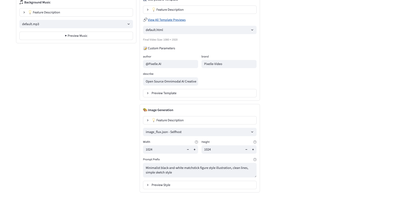
Backed by Alibaba's AIDC team and carrying over 27,700 GitHub stars, Pixelle-Video turns a single text prompt into a publish-ready short video in approximately three minutes — handling scriptwriting, image generation, voice narration, music selection, subtitle overlay, and final MP4 export in one automated pipeline. The engine supports multiple LLM backends for script generation including GPT-4, Qwen, DeepSeek, and local Ollama deployments, while image and video creation routes through either self-hosted ComfyUI workflows, cloud-based RunningHub pipelines, or direct API connections to DashScope Wan, OpenAI, Seedream, Seedance, and Kling AI. Text-to-speech synthesis uses Edge-TTS, Index-TTS, and other mainstream engines with multi-language voice profiles. Five distinct pipelines cover Quick Create, Standard, Digital Human Avatar broadcasting, Image-to-Video transformation, and Motion Transfer from reference video. The Streamlit web UI on port 8501 provides a visual workflow builder with template selection across portrait (1080x1920), landscape (1920x1080), and square formats, while the FastAPI server on port 8000 exposes a REST API with endpoints for async video generation, task polling, content scripting, TTS and image generation, template listing, and health checks. History persistence tracks all completed generations. HTML-based visual templates support static, image-overlay, and AI-video styles with customizable prompt prefixes. The modular architecture lets operators swap any atomic capability — image model, video model, TTS engine, or VLM — by editing a workflow JSON file without touching Python code. Running on a dedicated VPS on RepoCloud with guaranteed CPU, RAM, and SSD, full root SSH access, and a browser serial console. Apache 2.0 licensed.
GitNexus
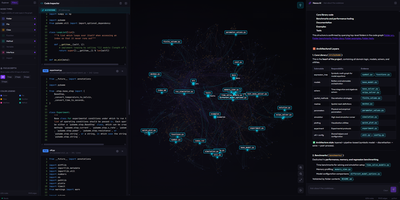
GitNexus turns any codebase into an interactive knowledge graph that maps every dependency, call chain, functional cluster, and execution flow, giving AI coding assistants the deep structural awareness they need to stop breaking things. Drop a repository URL or ZIP file into the browser-based explorer and watch Tree-sitter parsers decompose your code into a navigable property graph you can zoom, click, and query. The MCP server integrates directly with Cursor, Claude Code, Codex, Antigravity, and other editors through 16 specialized tools covering architectural queries, impact analysis, safe multi-file renames, change detection, and cross-repo contract matching. Need to know the blast radius before touching a shared utility? The impact analyzer traces every caller, implementer, and downstream consumer in milliseconds. Teams reviewing pull requests get automated blast-radius annotations powered by the same graph. The registry architecture lets a single MCP server manage multiple indexed repositories simultaneously, so switching between projects requires zero re-indexing. For visual exploration, the web interface renders interactive community-clustered graphs where you can trace execution paths, browse file trees, and chat with an AI agent grounded in the graph's structural data rather than raw file snippets. Everything runs locally; your source code never leaves the machine. Running on a dedicated VPS on RepoCloud with guaranteed CPU, RAM, and SSD, full root SSH access, and a browser serial console. PolyForm Noncommercial 1.0.0 licensed.
New API
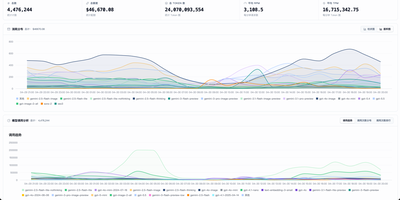
New API is a Go-powered LLM gateway that funnels over 40 AI providers, from OpenAI and Anthropic to Google Gemini, Azure, AWS Bedrock, DeepSeek, and Mistral, through a single OpenAI-compatible endpoint with intelligent routing and enterprise cost controls. Bidirectional format conversion translates between OpenAI Chat Completions, Claude Messages, and Gemini GenerateContent APIs transparently, so clients call any provider using their preferred format while the gateway handles the rest. Routing logic supports weighted random channel selection, priority-based failover, and automatic retry on provider errors to maximize uptime. The React admin dashboard shows usage charts, token consumption tracking, per-model cost breakdowns, and real-time request monitoring. Multi-tenant architecture includes three role levels, token-based authentication, per-user quota management, and a three-phase billing system with tiered pricing via a custom expression language. Multimodal support covers text completion, vision, embeddings, text-to-speech, speech-to-text, image generation, and creative task providers like Midjourney-Proxy and Suno-API. The interface ships in five languages including English, Chinese, Japanese, and French. Docker deployment runs with SQLite or MySQL for persistence. 45,000+ GitHub stars. AGPL-3.0 licensed.
VanBlog
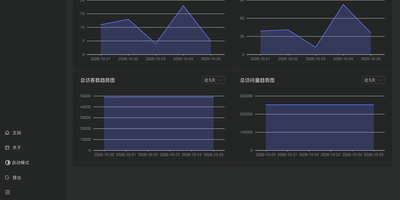
Publish a personal blog you fully own, with a Markdown writing desk, an admin dashboard, and reader-facing pages all in one install. Write posts with live preview, Mermaid diagrams, math formulas, and custom highlight blocks, then paste or upload images straight from the editor or import existing Markdown files when moving over from another platform. Posts and drafts can be managed in bulk, filed under categories and tags, and locked behind passwords for individual articles or whole categories. Readers get a table of contents, code copy buttons, search, RSS feeds, friend links, and donation links, and pages follow their light or dark preference on phones and desktops. The dashboard charts visitors and page views, with Google Analytics and Baidu Analytics as optional add-ons, while Waline comments bring email notifications and webhooks. Image storage is built in, with compression and watermarking, or can be handed to PicGo, object storage, or GitHub. Pipelines run custom code or call webhooks after selected events, custom pages and CSS, HTML, or JavaScript reshape the layout, and collaborator accounts with permissions plus API tokens let several authors share one site or feed a separate frontend. Backups, import and export, and update notices live in the admin panel, and HTTPS certificates for your domain are issued and renewed automatically. Running on a dedicated VPS on RepoCloud with guaranteed CPU, RAM, and SSD, full root SSH access, and a browser serial console. GPL-3.0 licensed.
Bracket
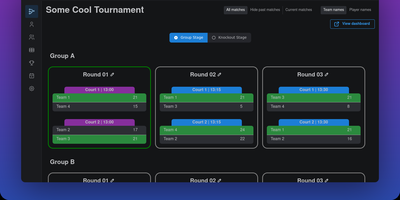
Organizers running sports leagues, gaming tournaments, and community athletics can deploy Bracket as an open-source competition control hub that coordinates multi-stage events without recurring SaaS subscription fees. Competition directors can configure multi-tier tournament topologies combining single elimination, double elimination, round-robin pools, and dynamic Swiss format brackets within a unified event schedule. An interactive calendar grid enables operators to drag and drop fixtures between designated courts, assign start times, and balance player recovery intervals across multiple playing areas. Public dashboard displays generate real-time match outcomes, court assignments, and standings boards that spectators can monitor on mobile devices or overhead venue monitors with customized team logos. Club administrators can manage multiple regional athletic organizations, register rosters through bulk CSV spreadsheet imports, and coordinate simultaneous divisions spanning amateur and championship flights. Integrated OpenAPI REST endpoints allow external scoring overlays, live stream graphic generators, and automated result bots to query match statuses or submit verified referee scorecards programmatically. Running on a dedicated VPS on RepoCloud with guaranteed CPU, RAM, and SSD, full root SSH access, and a browser serial console. AGPL-3.0 licensed.
Wizarr
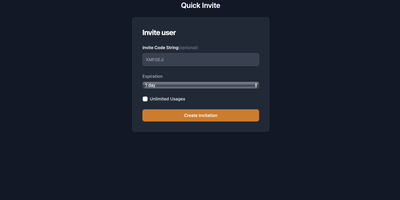
Getting non-technical friends and family onto a media server is its most tedious chore - Wizarr solves it. Instead of manually creating accounts, dictating server addresses, and explaining which app to install, you send one invite link. When the recipient clicks it, Wizarr creates their account on your server automatically - Plex, Jellyfin, Emby, Audiobookshelf, Komga, Kavita, and Romm are all supported - then walks them through a mobile-first, app-like onboarding wizard: download the right client, sign in, and learn how to request movies through your Overseerr or Ombi instance, with an optional Discord server invite along the way. Invitations are genuinely manageable: set expiration dates, usage limits, passphrases, library-scoped access tiers, and time-limited memberships that end access automatically. The wizard itself is fully customizable - Markdown-based steps managed from the admin UI, organized into pre-invite and post-invite phases (terms of service before joining, app setup after), reorderable bundles assignable to specific invitation types, and combined flows for invites spanning multiple servers. Multi-server and multi-admin support manages several backends from one dashboard, SSO support is plug-and-play, and a REST API with OpenAPI/Swagger documentation covers automation. A Flask/HTMX app in a single Docker container.
ZincSearch
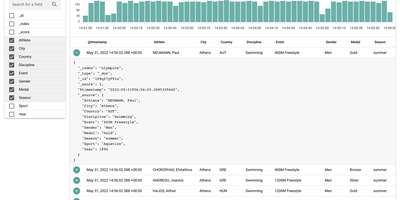
ZincSearch runs full-text search as a single Go binary that consumes a fraction of the memory and CPU that Elasticsearch demands while staying API-compatible, earning 17,800+ GitHub stars as a lightweight alternative. The bluge-powered indexing library processes documents through analyzers, tokenizers, and token filters while maintaining Elasticsearch-compatible ingestion APIs for single-record and bulk operations, letting existing pipelines connect with minimal configuration changes. Schema-less document ingestion accepts JSON payloads without predefined mappings, allowing different documents within the same index to carry different field structures while the engine automatically detects and indexes field types. An embedded Vue.js web console provides a browser-based interface for creating indexes, querying with full-text syntax, browsing results with hit highlighting, managing users, and monitoring system status. A dual API architecture exposes native ZincSearch endpoints under /api alongside Elasticsearch-compatible endpoints under /es, supporting boolean operators, wildcards, phrase matching, fuzzy search, date ranges, and aggregation pipelines including terms, histogram, date histogram, and range aggregations. Multi-tenancy with user-level access control isolates data across teams. Official SDKs for Go, Python, and Node.js provide typed client libraries for programmatic integration. Deploys via Docker or direct binary download with no external dependencies beyond disk storage. Running on a dedicated VPS on RepoCloud with guaranteed CPU, RAM, and SSD, full root SSH access, and a browser serial console. Apache 2.0 licensed.
CubeJS
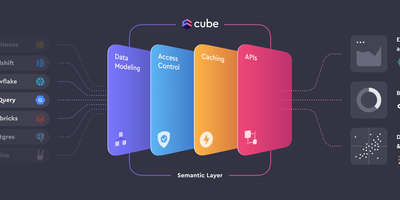
Between your databases and everything that consumes data - BI tools, embedded analytics, AI agents - sits Cube (formerly Cube.js), an open-source semantic layer. Metrics, dimensions, joins, and access rules are defined once as code in YAML, JavaScript, or Python, forming a governed data model that every downstream consumer shares, so "revenue" means the same thing in every dashboard. Caching is two-level: an in-memory cache absorbs bursts of identical queries, and declared pre-aggregations - rollup tables built in the warehouse or in Cube Store, Cube's distributed columnar engine, and refreshed in the background - deliver sub-second latency while cutting warehouse compute costs. The query planner routes each request to cache, rollup, or source automatically. Consumers connect through a Postgres-compatible SQL API (any tool that speaks Postgres works), plus REST, GraphQL, and a Meta API for model introspection. Row-level security and multi-tenancy are enforced in the layer itself, upstream of every client. Sources include Snowflake, BigQuery, Databricks, Postgres, MySQL, Presto, and Athena. Headless by design - bring your own UI.
DeepTutor
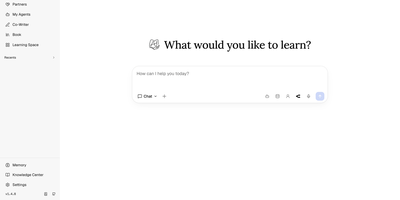
With 34,000+ GitHub stars and a v1.5 release driven by 36 merged community pull requests, DeepTutor from Hong Kong University's Data Science Lab delivers a full agent-native learning workspace that goes far beyond chatbot wrappers. Eight integrated surfaces — Chat, Deep Solve, Quiz Generation, Deep Research, Math Animator, Co-Writer, Book generation, and Mastery Practice — share a unified context so the objective follows the learner, not the tool. The platform's three-layer memory architecture (L1 working, L2 session, L3 long-term) makes personalization inspectable rather than opaque, letting users see exactly what the system remembers and why. Knowledge retrieval operates across five pluggable engines — LlamaIndex with FAISS vectors, PageIndex for page-level citations, GraphRAG for knowledge-graph traversal, LightRAG for local or server-offloaded retrieval, and linked Obsidian vaults — with document parsing via MinerU, Docling, markitdown, or PyMuPDF4LLM. Partners extend the tutoring brain to 15+ messaging platforms including Slack, Discord, Telegram, Matrix with E2EE, and Mattermost, each carrying private memory with branch, resume, and replay capabilities. Subagent integration brings Claude Code, Codex, Gemini, and Kimi directly into learning sessions. The system supports 30+ LLM providers from OpenAI and Anthropic to Ollama for fully local operation, with multi-user isolation, admin controls, and a full CLI interface. Running on a dedicated VPS on RepoCloud with guaranteed CPU, RAM, and SSD, full root SSH access, and a browser serial console. Apache 2.0 licensed.
SuperTokens
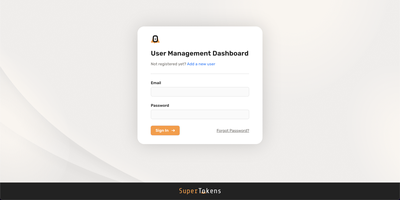
Powering authentication for over 15,000 GitHub stargazers and production deployments across startups and enterprises alike, SuperTokens delivers the complete login infrastructure that Auth0, Firebase Auth, and AWS Cognito charge premium prices for — entirely open source under Apache 2.0 with no per-user limits. The Java-based core service runs as a lightweight HTTP microservice that connects to PostgreSQL or MySQL and handles email-password login, passwordless magic links and OTP via email or SMS, social OAuth with Google, GitHub, Facebook, Apple, and any custom OIDC provider, phone-password authentication, and time-based one-time password multi-factor authentication. Session management uses rotating refresh tokens with anti-CSRF and anti-session-fixation protections, verifying tokens locally in your backend SDK without network round-trips to the core. Frontend SDKs for React, React Native, Angular, Vue, and vanilla JavaScript provide pre-built UI components for login, signup, email verification, and password reset flows, all customizable through an override system that lets you add pre- and post-API logic, custom hooks, and user event handlers. The built-in user management dashboard enables administrators to view users, reset passwords, revoke sessions, modify roles, and manage email verification status. Multi-tenancy and organization support powers B2B SaaS applications with tenant-level authentication configuration and Enterprise SSO via SAML and OIDC. Migration tools support bulk importing millions of existing password hashes, TOTP secrets, and role mappings. Running on a dedicated VPS on RepoCloud with guaranteed CPU, RAM, and SSD, full root SSH access, and a browser serial console. Apache 2.0 licensed.
Django-CRM
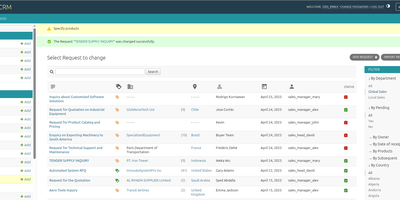
Small teams that have outgrown spreadsheets but balk at per-seat CRM pricing can run Django-CRM on their own server, with leads, deals, tasks, and email campaigns in one self-hosted system. Requests from website contact forms arrive automatically, email requests are imported from the company mailbox, and each gets a unique ticket and is matched against existing companies, contacts, and leads. When nothing matches, a new lead is created and later converted into a company and contact person. Deals carry products, payments, currencies, and price tiers, and the price list exports to Excel. Tasks can be individual or team-based with subtasks, memos can spawn tasks or projects, and participants chat and share files inside each one. Eight analytics reports cover the sales funnel, income forecasts, lead sources, conversions, and closing reasons. The built-in email client works over SMTP and IMAP, supports Gmail through OAuth 2.0, and links each message to its request, lead, or deal. Mass mailings are spread through the workday and can use additional mailboxes to protect managers' main accounts from spam filters. Web forms are protected by reCAPTCHA v3, IP geolocation fills in each requester's country and city, and VoIP callbacks and WhatsApp or Viber messages are supported. Object-level permissions control who can view, add, change, or delete each record, and the interface offers 22 languages. Running on a dedicated VPS on RepoCloud with guaranteed CPU, RAM, and SSD, full root SSH access, and a browser serial console. AGPL-3.0 licensed.
Pumpkin
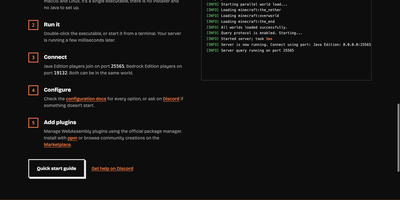
Why keep a Java runtime on the server just to host Minecraft, when Pumpkin runs from a single native executable and lets Java and Bedrock players share a world? Java Edition clients join on port 25565 and Bedrock clients on 19132, although Bedrock support is still marked work in progress. Builds exist for Windows, Linux, macOS, and Android. On launch, the console reports the worlds loaded and the server ready within milliseconds. Plugins are sandboxed WebAssembly modules that raise console permission prompts and pass signature checks, and authors can write them in Rust, Kotlin, Python, Go, C#, C/C++, D, Zig, or TypeScript. The ppm package manager searches and installs community plugins from the Pumpkin Market, and PatchBukkit loads some Bukkit and Paper plugins, with expected gaps. One pumpkin.toml file holds ports, MOTD, view distance, whitelist, authentication, compression, PvP, chat, resource packs, and world options, while chunks save in Anvil, Linear, or the native Pump format. Velocity and BungeeCord forwarding fit proxy networks, and the Query protocol plus Minecraft Server Management Protocol cover monitoring and remote administration. A public parity tracker lists every vanilla block, entity, item, and command as implemented, partial, or planned, so gaps are easy to spot before a world moves. Today it suits private survival worlds, test servers, and plugin development. It is early software, so the project advises backups. Running on a dedicated VPS on RepoCloud with guaranteed CPU, RAM, and SSD, full root SSH access, and a browser serial console. GPL-3.0 licensed.
OctoBot
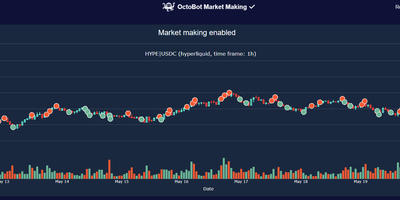
OctoBot provides a free and fully configurable cryptocurrency trading platform that runs on your own server. The bot automates investment strategies across 15+ exchanges including Binance, Coinbase, MEXC, Hyperliquid, Kucoin, OKX, and Bybit, supporting spot, futures, and perpetual markets. The AI trading system connects to any OpenAI-compatible API or local Ollama server, enabling strategies powered by ChatGPT, Llama, Mistral, or any custom model for market analysis and signal generation. TradingView integration accepts PineScript indicator signals and strategy alerts via webhooks, while built-in technical analysis covers RSI, Moving Averages, MACD, Bollinger Bands, and other standard indicators. The modular tentacle architecture allows community-developed plugins to extend strategy logic, evaluators, data sources, and exchange interfaces. The backtesting engine replays historical market data against any configured strategy, reporting profit and loss, drawdown, win rate, and trade-by-trade breakdown before committing real funds. Paper trading provides risk-free live simulation with the same execution logic as production. The web dashboard displays real-time portfolio value, open positions, trade history, and strategy performance with interactive charts. Telegram bot integration enables remote monitoring, notifications, and command execution from mobile devices. Docker deployment runs the full stack in a single container with persistent volume storage for configuration and trade data. On RepoCloud, deploy OctoBot on a dedicated VPS with root SSH access, persistent storage for your trading data and strategy configurations, and complete control over exchange API keys and AI model connections, all under the GPL-3.0 license.

Yuxi
Navigating organizational knowledge, visualizing concept graphs, and orchestrating cooperative AI agents converge inside Yuxi, an open-source multi-tenant workspace built for enterprise research and deep archive exploration. Users can upload diverse business documents including scanned PDFs, spreadsheets, and slide presentations to automatically extract structured text blocks, tables, and entity relationships for semantic querying. Knowledge teams can inspect interactive topological graph views to explore connections between company entities, cross-referencing subgraphs against original file sources. Practitioners can configure autonomous agents with specialized subagents, assigning dedicated roles for concurrent research, deep data synthesis, and code execution. Human reviewers can inspect agent thought chains in real time and evaluate interactive confirmation cards before agents execute irreversible external actions or modify shared workspace files. Operators can execute sandboxed tasks that produce downloadable reports, interactive data charts, and rendered HTML pages stored within isolated workspace file systems. Administrators can govern model endpoints, set granular permission boundaries across departments, and monitor token consumption through live system analytics. Running on a dedicated VPS on RepoCloud with guaranteed CPU, RAM, and SSD, full root SSH access, and a browser serial console. MIT licensed.
OCI Core
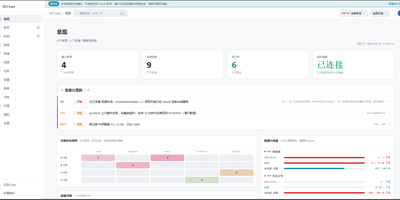
Anyone juggling several Oracle Cloud accounts knows the tab-switching ritual; OCI Core ends it by pulling every tenancy's instances into one self-hosted panel. The cross-account list shows state, shape, volumes, and public IPs for each machine, and you can start, stop, resize, rename, or terminate instances without opening Oracle's console. A creation wizard offers every shape in an availability domain, not just the free presets, while long operations such as IP swaps, resizes, and terminations run as background jobs with visible progress. Capacity hunting watches Oracle's read-only capacity reports and retries creation until a scarce shape appears, notifying you when it lands. Networking tools edit VCNs, subnets, and security rules visually, swap public IPs, enable IPv6, and manage extra network cards. Storage views resize boot and block volumes, and a rescue mode moves a broken system disk to a healthy machine for repair. Billing breaks spend down by service and region, tracks the monthly free egress allowance, and shows real usage for free-tier accounts. Accounts are checked for connectivity, quotas, and credential health, with emails, IPs, and OCIDs masked by default and revealed only on demand. Alerts reach Telegram, WeCom, DingTalk, email, or webhooks, and access is guarded by argon2id passwords, TOTP two-factor sign-in, session controls, and an audit log. Running on a dedicated VPS on RepoCloud with guaranteed CPU, RAM, and SSD, full root SSH access, and a browser serial console. MIT licensed.
Grafana Loki
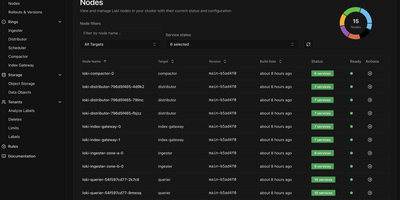
With over 28,600 GitHub stars and 450 contributors, Grafana Loki is the log aggregation system that takes the Prometheus approach to logging — indexing only metadata labels instead of full log content, making it dramatically cheaper and simpler to operate than traditional log management platforms. The label-based indexing strategy groups log streams using the same labels already applied to Prometheus metrics, enabling seamless switching between metrics and logs in Grafana dashboards without maintaining separate indexing infrastructure. Grafana Alloy, the telemetry collector replacing Promtail, scrapes and pushes logs with Prometheus-style service discovery, automatic Kubernetes Pod label extraction, and pipeline stages for parsing, filtering, and relabeling before ingestion. LogQL, the query language, combines label matchers for stream selection with regex line filters and aggregation functions, supporting rate calculations, pattern parsing, and metric generation from log data for alerting and dashboard panels. The storage architecture writes compressed log chunks and TSDB indexes to S3, GCS, Azure Blob Storage, or MinIO-compatible object stores, with configurable retention and compaction policies. Deployment modes scale from a single binary for development through monolithic high-availability mode with multiple replicas to full microservices decomposition with separate ingester, distributor, querier, query-frontend, compactor, and ruler components on Kubernetes via Helm charts. Multi-tenancy isolates data and query paths per tenant through header-based tenant ID assignment. Running on a dedicated VPS on RepoCloud with guaranteed CPU, RAM, and SSD, full root SSH access, and a browser serial console. AGPL-3.0 licensed.