Automatisch
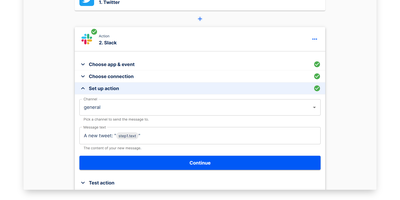
Automatisch runs your Zapier workflows on your own hardware - an open-source, self-hosted automation platform built as a direct alternative. Flows are chains of steps: one trigger (a polling or webhook event such as a new GitHub issue, a Stripe payment, or a form submission) followed by action steps that pass data downstream (post to Slack, append a Google Sheets row, update Notion). The visual builder deliberately mirrors Zapier's trigger-action model, so migrating existing Zaps requires no retraining and no programming knowledge. Roughly 60 integrations cover common business services - Slack, GitHub, Google Sheets, Notion, Stripe, Discord - and connections store credentials per service, with multiple accounts per app supported. Every execution runs on your own server: execution history, logs, and payload data never touch a third-party processor, which matters for GDPR, healthcare, and finance workloads. Error handling with retry logic, a REST API for programmatic flow management, and Docker Compose deployment round out the platform. The AGPL-3.0 Community Edition has no feature limits or per-task billing; an Enterprise Edition adds SSO, roles, and audit logs.
Shelfarr
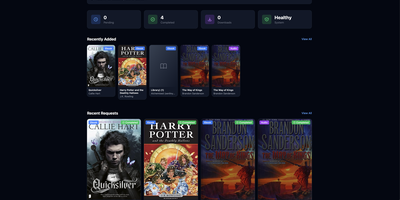
Shelfarr is the request button your book library was missing: anyone in your household can search millions of ebooks and audiobooks, request the format they want, and let automation fetch and shelve it. Discovery searches Open Library, Hardcover, and Google Books with covers, series, editions, and narrator details, so picking between the ebook and the audiobook takes a glance. Hardcover shelves and public reading lists can be previewed and requested, and following an author means their next release surfaces without a manual search. Requests wait for an admin's approval or move straight to searching, where your indexers are queried and every result is scored against your preferred formats, bitrate, and language. The winning release goes to the download client you route it to; finished files are renamed with your templates and delivered into your library's watched folders, which are told to rescan. Nothing found is not the end: searches retry with back-off and flag the request for attention instead of losing it. Family members get their own accounts with roles, two-factor authentication or single sign-on, notifications in the app or on Discord and Telegram, and admins keep manual uploads, API tokens, and download routing under their control. Running on a dedicated VPS on RepoCloud with guaranteed CPU, RAM, and SSD, full root SSH access, and a browser serial console. GPL-3.0 licensed.
Lingarr
When international movies and series arrive in a Radarr or Sonarr library without native-language captions, Lingarr automatically translates subtitle files across dozens of languages using local AI models or cloud translation engines. Connect your existing movie and television directories to scan media folders, identify missing target-language subtitles, and generate translated caption files alongside the original video streams. Administrators can configure an ordered chain of 13 translation backends, pairing a primary engine such as OpenAI, Anthropic, Gemini, DeepSeek, Mistral, xAI, or DeepL with automatic fallback to self-hosted LibreTranslate or local Ollama models whenever rate limits occur. Context-aware prompt templates inject preceding and following dialogue lines into each AI request so idioms, speaker tone, and timing remain natural across scene transitions, while batch translation mode processes multi-line blocks in a single call. From the web dashboard, users can browse indexed movies and episodes, trigger manual single-file or library-wide translations, and monitor active queues, progress percentages, and historical logs in real time. Scheduled background tasks and a documented REST API allow media servers to automate caption generation completely hands-free as new releases finish downloading. Running on a dedicated VPS on RepoCloud with guaranteed CPU, RAM, and SSD, full root SSH access, and a browser serial console. AGPL-3.0 licensed.
MySQL
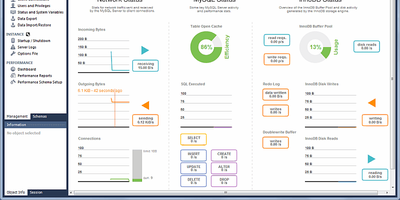
Powering Facebook, Uber, Twitter, and Booking.com, MySQL processes billions of queries daily as the world's most widely deployed open-source relational database. Its default InnoDB storage engine delivers full ACID compliance with row-level locking, crash recovery, and foreign key enforcement, making it the backbone of mission-critical e-commerce, SaaS, and financial applications. MySQL's Document Store bridges relational and NoSQL paradigms, allowing developers to work with schema-less JSON collections alongside traditional SQL tables through the X DevAPI protocol. For high availability, InnoDB Cluster combines Group Replication, MySQL Router, and MySQL Shell into an integrated solution with automatic failover, while InnoDB ClusterSet extends this across data centers for disaster recovery. The database supports multiple storage engines including MyISAM for read-heavy analytics, Memory for temporary high-speed caching, and Archive for compressed historical data. Native JSON functions like JSON_TABLE() transform document data into relational result sets, and spatial data types enable GIS applications. MySQL integrates with every major programming language through official connectors for Python, Java, Node.js, PHP, C++, and .NET, and works seamlessly with frameworks like Django, Laravel, Rails, and Spring. Replication topologies support read replicas for horizontal scaling, and the new Change Stream Applier in MySQL 26.7 enables configurable parallel transaction application with up to 1,024 workers per channel. Running on a dedicated VPS on RepoCloud with guaranteed CPU, RAM, and SSD, full root SSH access, and a browser serial console. GPLv2 licensed.
Tesserae
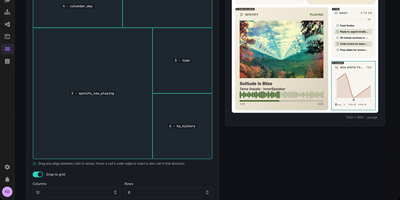
Built for e-ink screens, Tesserae composes calm wall dashboards from your calendar, weather, and Home Assistant data in a browser, then renders each frame at the panel's exact resolution. Lay out pages as a grid of cells or on a free canvas of widgets, text, and shapes, with a live preview. What you see is what paints. Dozens of bundled widgets cover weather, calendars, clocks, news, to-do lists, and photos, and a community catalog adds more widgets, themes, and templates. Frames are dithered to each panel's measured palette, so photos and gradients stay clean on Spectra 6 color, mono, and grayscale screens. One server drives a whole fleet. Each panel keeps its own dashboards, schedules, and rotations, and smart sync renders just before a battery panel wakes while quiet hours let it sleep overnight. Seeed reTerminal and XIAO panels flash from the browser, and Pimoroni Inky, Waveshare, M5Stack, TRMNL-compatible devices, and KOReader Kindles and Kobos work too. Inside Home Assistant it runs as a sidebar App. Home Assistant widgets show entities, history, energy, and cameras, and MQTT discovery turns each panel into a device with its frame, battery level, and signal. No account is needed, and update checks stay off unless you opt in. Ask Claude or any MCP client to lay out a dashboard, check a preview, and push it. Running on a dedicated VPS on RepoCloud with guaranteed CPU, RAM, and SSD, full root SSH access, and a browser serial console. AGPL-3.0 licensed.
Wag
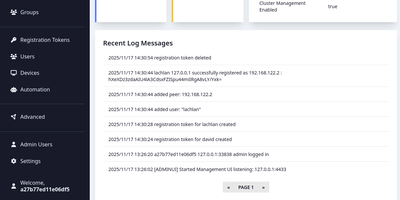
Wag is an authentication gateway for WireGuard that lets each device reach only the routes it should, and asks for a second factor before the sensitive ones open. Admins write access policies for everyone, groups, or single users, marking subnets, hosts, ports, and protocols as MFA-required, always allowed, or denied, and the most specific prefix wins, so one allowed address can sit inside a protected range. Devices join with a registration token, and the public endpoint answers with a finished WireGuard profile. Users then confirm a TOTP code, a WebAuthn security key, an OIDC single sign-on login that maps identity provider groups into Wag groups, or a PAM prompt, and repeated failures lock the account. Session lifetime and idle timeouts decide when they must prove themselves again. The browser portal lists users, devices, rules, registration tokens, and webhooks with real-time notifications, while a command line locks devices, resets MFA, and manages administrators. Webhooks turn JSON from an HR or identity system into new tokens or removed users and devices, and clients can fetch the list of guarded routes from a small API. Remote staff, contractors limited to one host, and homelabs are typical uses. When a server fails, the VPN remains reachable through clustering with witness nodes or an external etcd, and certificates arrive through ACME with HTTP-01 or Cloudflare DNS-01. Running on a dedicated VPS on RepoCloud with guaranteed CPU, RAM, and SSD, full root SSH access, and a browser serial console. BSD-3-Clause licensed.
Poweradmin
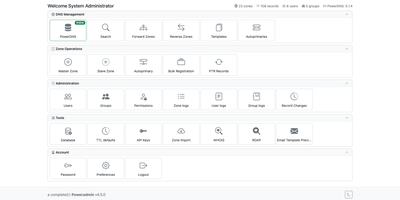
PowerDNS answers the queries; Poweradmin gives you a browser-based control panel for its zones, records, DNSSEC keys, and users, with a REST API for automation. Create master, native, and slave zones, and let zone templates stamp predefined record sets onto new ones. Edit records inline with filters, or open the optional Record Wizard for DMARC, SPF, DKIM, CAA, TLSA, and SRV. Reverse zones link to their forward zones. The batch PTR tool fills whole network ranges, bulk add takes one CSV line per record, and secondary zones can be imported over AXFR. For DNSSEC, manage keys and copy DS and DNSKEY records for your registrar; changes are applied or rectified through the PowerDNS API so signed zones stay consistent. Every record and zone edit is logged with before and after snapshots, and the logs can be filtered and exported. The panel is translated into 43 languages, including right-to-left ones. Permission templates, users, and groups control who touches which zones, sign-in works through LDAP, OIDC, or SAML, and administrators can switch on authenticator-app or email two-factor codes. API keys can be read-only, limited to chosen operations, or restricted to specific zones, and companion projects link Terraform, ExternalDNS, cert-manager, and Certbot. Dynamic DNS clients such as ddclient and inadyn update records through a dyndns2-compatible endpoint. Running on a dedicated VPS on RepoCloud with guaranteed CPU, RAM, and SSD, full root SSH access, and a browser serial console. GPL-3.0 licensed.
Tududi
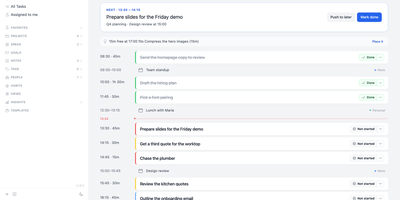
Tududi is a self-hosted planner that turns a pile of tasks into a plan for the day, keeping projects, notes, goals, and habits on a server you control. One Add box files an Inbox item, Task, Note, or Project and understands natural-language dates, recurrence, tags, projects, and people, so "every first monday #home" becomes a recurring task without opening a form. The Today page switches between planning mode, with a timeline or list beside your calendar and optional AI help to sketch the day, and doing mode, with a Next card and a hint when a free slot fits a small task. Tasks have subtasks and live in projects and areas, projects link to season or year goals, and saved views, project templates, and optional Eisenhower and Kanban boards organize the work. Habits support build or quit goals with streaks, a strength score, and a history grid, while notes offer linked pages, backlinks, and mermaid diagrams. Households and teams share projects with read-only or read-write access, assign tasks to people, and follow an Everyone board; members without email sign in through one-time links. Telegram captures tasks and can send daily summaries, CalDAV syncs with reminder apps, OIDC handles single sign-on, and an MCP server lets Claude or Cursor manage tasks. AI stays off until you enable it and add a provider; local models work too. Running on a dedicated VPS on RepoCloud with guaranteed CPU, RAM, and SSD, full root SSH access, and a browser serial console. MIT licensed.
OpenMontage
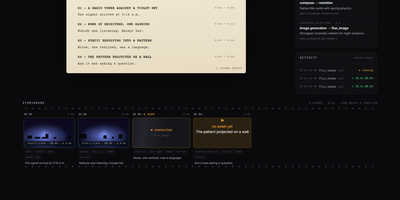
Reaching #1 on GitHub Trending with over 48,000 stars, OpenMontage is the first open-source agentic video production system — transforming AI coding assistants like Claude Code, Cursor, Copilot, Windsurf, and Codex into complete video studios that handle research, scripting, scene planning, asset generation, editing, and final rendering through natural language prompts. Twelve production pipelines cover animated explainers, cinematic trailers, documentary montages, talking heads, screen demos, podcast repurposing, character animation, localization and dubbing, avatar spokesperson videos, hybrid productions, clip factory batch processing, and animation workflows. Over 100 registered Python tools connect to 60+ providers including Kling, Runway Gen-4, Google Veo 3.1, FLUX, Google Imagen 4, ElevenLabs, and Suno AI for cloud generation, plus Piper TTS, WAN 2.1, Hunyuan, and CogVideo for fully local GPU rendering — while free footage from Archive.org, NASA, Wikimedia Commons, Pexels, and Unsplash powers the documentary montage pipeline's CLIP-indexed retrieval system for real-motion video without paid generation APIs. Two composition engines — Remotion for React-based programmatic video and HyperFrames for HTML/GSAP motion graphics — render final output with spring animations, word-level captions, kinetic typography, and SVG character rigs. A seven-dimension scored provider selector, pre-compose validation gates, post-render ffprobe self-review, slideshow risk scoring, configurable budget caps with per-action approval thresholds, and the Backlot live web dashboard for visual production monitoring enforce production-grade quality at every stage. Running on a dedicated VPS on RepoCloud with guaranteed CPU, RAM, and SSD, full root SSH access, and a browser serial console. AGPL-3.0 licensed.
AMUX
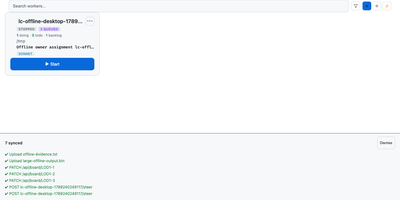
To coordinate swarms of autonomous coding agents across complex software projects, AMUX provides a concurrency-safe kanban workspace with real-time thought stream inspection and live steering controls. Engineers assign development tasks through an interactive board where autonomous worker processes claim cards using compare-and-swap mutexes to eliminate race conditions between parallel sessions. Operators monitor active reasoning streams, inspect streaming terminal outputs, and inject guidance commands mid-turn without interrupting background execution. A cryptographic origin router relays messages between agents, enabling workers to delegate sub-tasks, request automated peer code reviews, and share environment state safely. Built-in schedulers trigger recurring automated maintenance routines, dependency updates, and bug triage sweeps on cron-like timers or autonomous loop cadences. Teams can switch language models dynamically on active sessions to tackle complex architecture challenges with high-capability reasoning engines while conserving resources on routine tasks. An integrated self-healing supervisor watches over agent runtimes, automatically compacting context windows, restarting crashed terminal sessions, and resuming pending instructions seamlessly. Running on a dedicated VPS on RepoCloud with guaranteed CPU, RAM, and SSD, full root SSH access, and a browser serial console. MIT licensed.
Laminar
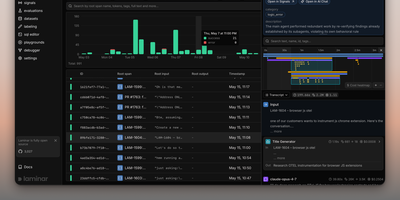
Backed by Y Combinator (S24) and processing traces from thousands of AI agents in production, Laminar is the open-source observability platform that treats agent debugging as a first-class engineering discipline rather than an afterthought. Its OpenTelemetry-native SDK auto-instruments Vercel AI SDK, LangChain, OpenAI, Anthropic, Gemini, Browser Use, Stagehand, Mastra, Pydantic AI, and the OpenAI Agents SDK with a single line of code, capturing every LLM turn, tool call, and sub-agent delegation as nested spans with full input/output data and token costs. The Signals engine lets you describe failures in plain language — "agent is stuck in a loop" or "tool returned empty results" — then reads every trace and alerts via Slack when it detects a match. A built-in debugger records runs and replays them from cache so each iteration takes seconds, designed for Claude Code, Cursor, or Codex to drive the repair loop via the MCP server or CLI. Run code-first evaluations in Python or TypeScript locally or in CI/CD pipelines, build datasets from production traces, and query everything with raw SQL through custom dashboards, the in-app editor, or your coding agent. The Rust backend delivers 20x trace compression, a custom real-time streaming engine, ultra-fast full-text search, and gRPC ingestion, while ClickHouse powers columnar analytics and PostgreSQL stores application state. Running on a dedicated VPS on RepoCloud with guaranteed CPU, RAM, and SSD, full root SSH access, and a browser serial console. Apache 2.0 licensed.
Cloudflare OS
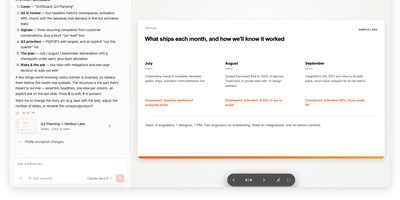
With over 7,700 GitHub stars and thousands of Cloudflare employees using it daily across every function, Cloudflare OS delivers an open-source AI workspace where every employee gets a personal agent grounded in company context, systems, and skills — not a generic chatbot but a programmable workspace that builds real applications, automates workflows, and connects to internal tools through governed access. The Code Mode agent writes and immediately executes code snippets to perform arbitrary tasks, build full-stack Gadgets with client code, server code, APIs, and durable SQLite state, debug errors, and test results within isolated sandboxes. Gadgets are private application instances running in separate sandboxes — each document, spreadsheet, or tool is its own secure runtime that cannot leak data even to attackers with access to other Gadgets. Blueprints enable sharing application code as templates that others instantiate with independent state, credentials, and resources. Gatekeepers provide security governance giving system owners precise control over what agents can see, change, and when human approval is required before actions execute. Built on Cloudflare Workers using Durable Objects for workspace persistence, Dynamic Workers for Gadget execution, and Facets for access management. Zero Trust security via Cloudflare Access verifies every user and request before granting access. Real-time collaboration lets colleagues use shared Gadgets. Deploy to your own Cloudflare account or self-host on workerd, the open-source Workers runtime, on your own servers. Running on a dedicated VPS on RepoCloud with guaranteed CPU, RAM, and SSD, full root SSH access, and a browser serial console. Apache-2.0 licensed.
Borg UI
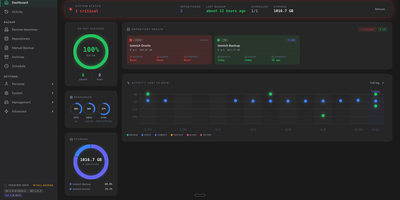
Borg UI is a self-hosted web management interface for BorgBackup that eliminates complex command-line syntax by organizing deduplicated backups, automated pruning schedules, and interactive file restorations into an intuitive graphical control center. System administrators connect local drives, remote SSH hosts, and SFTP endpoints to establish resilient storage repositories guarded by client-side encryption and cryptographic authentication. The centralized dashboard visualizes storage capacity, compression ratios, deduplication savings, and the health status of active backup jobs in real time. Configurable backup plans schedule automated cron jobs with granular retention rules, executing pre-backup database dumps and filesystem snapshots before running incremental syncs and background integrity checks. Users browse multi-version archive filesystems directly from the web browser, searching file trees and extracting individual files or entire folders without manual command line extraction. The platform orchestrates remote fleet backups by deploying SSH keys across client machines, tracking connection health, and executing non-disruptive background operations. Comprehensive alert routing dispatches real-time job status notifications, failure warnings, and storage alerts across Discord, Telegram, Slack, and email using integrated multi-channel messaging services. Running on a dedicated VPS on RepoCloud with guaranteed CPU, RAM, and SSD, full root SSH access, and a browser serial console. GNU AGPLv3 licensed.
OpenPencil
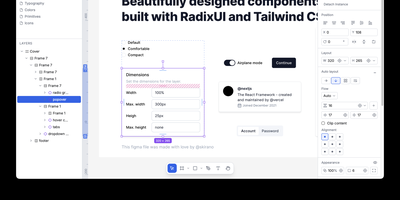
OpenPencil is the open-source design editor that reads and writes native Figma .fig files using the same Kiwi binary format — enabling bidirectional copy-paste between Figma and OpenPencil without data loss. The built-in AI assistant provides 90+ design tools through a chat interface, creating and modifying shapes, fills, strokes, auto-layout, components, variables, and boolean operations from natural language prompts, with BYOK support for Anthropic, OpenAI, Google AI, OpenRouter, Z.ai, MiniMax, and compatible endpoints. A Skia CanvasKit WASM renderer paired with Yoga WASM layout engine delivers Figma-parity rendering with flex and CSS Grid support including gap, padding, and alignment. The headless CLI inspects node trees via XPath queries, lints naming and accessibility, converts between document formats, analyzes color and typography patterns, extracts design tokens, and exports to PNG, SVG, JSX/Tailwind, and HTML. An MCP server exposes all design operations over stdio and HTTP, connecting Claude Code, Cursor, Windsurf, and Gemini CLI for AI-assisted design automation. Real-time P2P collaboration via WebRTC with Yjs CRDT synchronization requires no server and no account. The Vue SDK provides headless components for embedding the editor into custom applications. Ships as a 7 MB Tauri v2 desktop app for macOS, Windows, and Linux, or runs in any browser as a PWA. Running on a dedicated VPS on RepoCloud with guaranteed CPU, RAM, and SSD, full root SSH access, and a browser serial console. MIT licensed.
TeslaMate
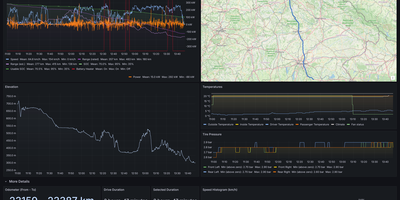
Logging every drive, charge, and idle stretch of a Tesla to a database you own, TeslaMate shows where the battery went, including degradation, vampire drain, and charging cost. Battery health comes first: the dashboard estimates usable capacity, range lost, and degradation against mileage. Idle losses come next, with Vampire Drain listing how much charge disappears during every idle period and a States view recording every online, asleep, and offline stretch. The car is left alone to fall asleep, so logging adds no extra vampire drain. Charging sessions show curves, energy added and used, efficiency, and cost, using per-location prices attached to geo-fences drawn on a map. Each drive records second-by-second speed, power, elevation, and temperature, plotted on a route map beside tire pressure and consumption charts. Trip, Drives, Efficiency, Drive Stats, Mileage, Updates, Statistics, and a lifetime driving map fill in the rest. Live vehicle data goes out over MQTT to Home Assistant, Node-RED, and Telegram, and old history imports from TeslaFi or tesla-apiscraper. Several vehicles on one Tesla account work together, addresses are looked up automatically, and the web interface offers light, dark, or system themes in 19 languages. Sign-in uses Tesla access and refresh tokens that TeslaMate encrypts with a key you set. It works best on an always-on server. Running on a dedicated VPS on RepoCloud with guaranteed CPU, RAM, and SSD, full root SSH access, and a browser serial console. AGPL-3.0 licensed.
Gitea
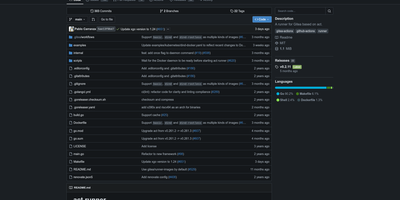
With over 57,000 GitHub stars and deployment across thousands of organizations worldwide, Gitea is the most popular self-hosted Git service, delivering a complete software development platform in a single Go binary that runs on as little as 512MB of RAM. The platform provides full repository management with pull requests featuring inline code review, branch protection rules, merge strategies including squash, rebase, and merge commit, and automated status checks through Gitea Actions. The built-in CI/CD system uses the same YAML workflow syntax as GitHub Actions and can directly reuse over 20,000 existing Actions plugins, allowing teams to migrate from GitHub with minimal pipeline rewrites using the open-source act_runner executor. The integrated package registry supports over 20 formats including npm, PyPI, Maven, NuGet, Cargo, Helm, Composer, Conda, RubyGems, Pub, and an OCI-compatible Container registry for Docker images with no additional configuration required. Project management features include issue tracking with labels, milestones, dependencies, and time tracking, alongside kanban project boards for visual workflow management. Gitea supports LFS for large file storage, built-in wiki pages per repository, webhook integrations with Slack, Discord, Telegram, Microsoft Teams, and custom HTTP endpoints, and OAuth2 authentication with LDAP, SAML, and PAM backend support. Repository mirroring enables bidirectional synchronization with GitHub, GitLab, and Bitbucket, while the comprehensive REST and GraphQL APIs power external integrations and the official tea CLI tool. Running on a dedicated VPS on RepoCloud with guaranteed CPU, RAM, and SSD, full root SSH access, and a browser serial console. MIT licensed.

Reactive Resume
With over 38,000 GitHub stars, nearly one million registered users, and over 1.3 million resumes created, Reactive Resume delivers a professional resume creation experience that rivals commercial platforms like Resume.io and Zety without collecting user data, showing advertisements, or imposing paywall restrictions. The real-time WYSIWYG editor renders changes instantly as users type, providing immediate visual feedback across all resume sections including work experience, education, skills, certifications, projects, and custom sections with typed extensions. Over fifteen professionally designed templates with full color customization, font selection, spacing adjustment, and icon style selectors ensure each resume reflects individual style preferences. The drag-and-drop system lets users move items between sections and pages freely across multi-column and full-width layouts. PDF generation produces pixel-perfect documents using a headless Chromium rendering pipeline, ensuring consistent output across all devices and print settings. Multi-language support covers over twenty languages with RTL script handling for Arabic and Hebrew. Authentication supports passkeys and multiple OAuth providers via Better Auth, while self-hosted deployment runs via Docker Compose with PostgreSQL and Browserless for PDF rendering. The import system accepts JSON Resume format, LinkedIn data exports, and PDF/DOCX files when AI integration is configured. AI-powered content suggestions using OpenAI, Google Gemini, Anthropic Claude, or local Ollama models help improve bullet points and professional summaries. A CSS editor with autocompletion allows fine-grained styling control. Running on a dedicated VPS on RepoCloud with guaranteed CPU, RAM, and SSD, full root SSH access, and a browser serial console. MIT licensed.
Baby Buddy
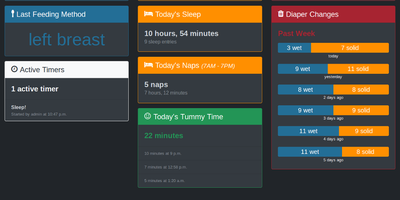
Baby Buddy is a private self-hosted child care tracker that centralizes feeding sessions, sleep cycles, diaper changes, and developmental health milestones into a collaborative dashboard for parents and caregivers. Caregivers can start quick timers on mobile devices to measure nursing intervals, bottle feedings, naps, and tummy time sessions with single-tap precision. The dashboard automatically calculates daily averages, feeding amounts, and awake windows to help families establish consistent daily sleep and feeding routines. Parents can track diaper changes by recording wetness, stool consistency, and color anomalies to spot digestive health changes early. Physical measurements including weight, height, and head circumference plot directly against World Health Organization growth curves to visualize percentile progression between pediatric visits. Multi-child profiles allow families with twins or multiple young children to switch contexts instantly and monitor individual growth timelines. Granular user permissions let parents invite nannies, babysitters, and relatives with restricted logging permissions while keeping administrative settings private. The built-in REST API and webhook system enable physical smart button clicks and home automation routines to log events instantly without opening a browser. Running on a dedicated VPS on RepoCloud with guaranteed CPU, RAM, and SSD, full root SSH access, and a browser serial console. BSD-2-Clause licensed.