Maintainerr
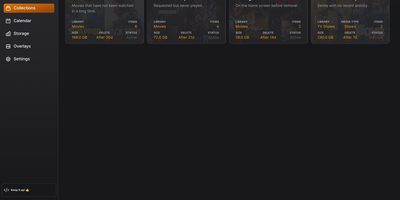
Automating media server storage reclamation, Maintainerr is an open-source library maintenance platform that identifies unwatched, abandoned, or stale movies and shows across Plex, Jellyfin, and Emby and clears them on a schedule. Storage drives fill up rapidly when household members request four-season series or high-bitrate films, watch a single episode, and abandon the rest indefinitely. Instead of forcing administrators to audit disks by hand, the rule engine evaluates metadata from your media server alongside Tautulli watch histories, Seerr and Ombi request records, and Radarr, Sonarr, or Sportarr profiles every eight hours. Matching items enter a staging collection that syncs back to your media server home screen as a Leaving Soon row, complete with dynamic poster overlays displaying the exact removal date so viewers have a grace period to finish watching. Before enabling any destructive workflow, you can run the Test Media inspector against any movie or episode to preview rule evaluations and protect favorites with global or per-collection exclusions. Once the countdown expires, the collection handler deletes or unmonitors files, updates import-list exclusions so automated lists never re-download removed titles, clears orphaned requests in Seerr and Ombi, removes leftover sidecar folders, and dispatches alerts through Discord, Slack, Telegram, Pushover, Gotify, Email, or webhooks. Running on a dedicated VPS on RepoCloud with guaranteed CPU, RAM, and SSD, full root SSH access, and a browser serial console. MIT licensed.
Documize
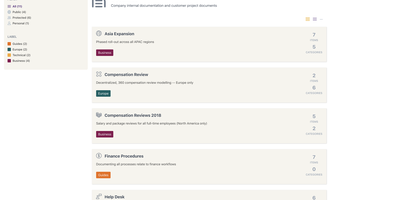
Enterprise documentation discipline without enterprise infrastructure: Documize Community is the Confluence alternative built on exactly that trade. The entire platform - Go backend, Ember.js frontend - compiles to a single executable binary for Linux, Windows, and macOS with zero runtime dependencies: no Elasticsearch, no Redis, no JVM. Point it at PostgreSQL, MySQL, MariaDB, Percona, or Microsoft SQL Server (rare in open source, decisive in Microsoft shops), and schema migrations run on launch with native full-text search on whichever engine you chose. Content organization rejects nested-folder sprawl for Spaces, categories, and labels, and the section-based composable editor mixes rich text, Markdown, code blocks, PDFs, diagrams, and embedded Jira or Trello content in one document, with reusable blocks and templates so teams start from standards rather than blank pages. It deliberately unifies internal team docs and customer-facing documentation in one system with granular space-, document-, and action-level permissions deciding who sees what. Where wikis stop, Documize continues: content approval workflows (draft, review, approve, publish), version management, lifecycle control, feedback capture, PDF export, analytics showing what gets read and ignored, activity streams, and audit logs. Keycloak, LDAP, and SSO integrate for enterprise auth. AGPL-licensed.
ScribeCrate
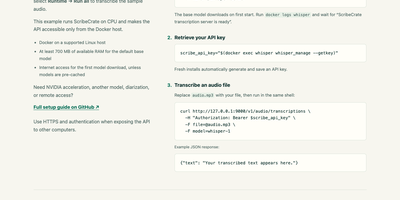
ScribeCrate is a self-hosted speech-to-text API that turns recordings into transcripts, subtitles, and English translations on your own server. It speaks the OpenAI Whisper API fluently: point any compatible client at your server's address, swap in your API key, and uploads come back as text. Ask for plain text, JSON with timestamps, or ready-to-publish SRT and WebVTT subtitle files, and for long recordings the segments can stream back over SSE as they are decoded. Turn on speaker diarization and every segment is labeled with who is speaking, which makes interview and meeting transcripts readable at a glance. Choose the model that fits the job, from tiny for quick drafts to large-v3 for maximum accuracy, and run it on a modest CPU, a Raspberry Pi class ARM board, or an NVIDIA GPU. Almost any recording works: MP3, M4A, WAV, WebM, OGG, and FLAC are all accepted, and with models cached in advance the server keeps transcribing with no internet connection at all. Running on a dedicated VPS on RepoCloud with guaranteed CPU, RAM, and SSD, full root SSH access, and a browser serial console. MIT licensed.
Lalabase
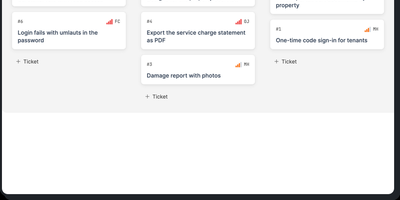
Lalabase is project management built for developers who work with clients, putting tickets, time tracking, documentation, and meetings in one workspace instead of five separate tools. Each client gets an organisation with its own projects and its own access, and roles decide exactly what clients can see. Tasks run as a list or a board with the statuses, priorities, and fields you define per project, rather than the workflow a vendor chose for you. Time tracking records several sessions per ticket, each billable on its own, with exports that go straight into the invoice. Documentation lives beside the work: notes and documents sit in the project, and a folder in your GitHub or GitLab repository becomes the project's docs automatically. Meetings keep their transcript, an AI summary, and the tasks that follow from what was actually said. When you need an answer, the AI assistant takes one question across tickets, comments, documents, hours, and meetings, and it cites the ticket, page, or conversation every answer came from. It even reads your repository's indexed code structurally, so questions about what is implemented get answered against the code. The assistant stays off until you enable it with your own provider key or a model in your own network. An MCP server and REST API let your own agents list, create, and update tickets, comment, and log time. Running on a dedicated VPS on RepoCloud with guaranteed CPU, RAM, and SSD, full root SSH access, and a browser serial console. AGPL-3.0 licensed.
NextChat
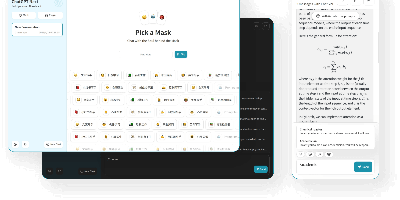
Thirteen-plus LLM providers, one unified client: NextChat (formerly ChatGPT-Next-Web) is an open-source AI chat interface built on Next.js that spans OpenAI GPT-4, Anthropic Claude, Google Gemini, DeepSeek, Groq, Azure endpoints, and self-hosted backends like Ollama, LocalAI, and RWKV-Runner. Its defining trait is minimalism - the first screen loads in about 100 KB, the desktop client is roughly 5 MB, and there is no database or user system to operate; chat history lives locally in the browser with optional WebDAV or UpStash Redis sync. The Mask system saves reusable prompt-template personas you can share and debug, long conversations auto-compress to fit context windows, and Markdown rendering covers LaTeX, Mermaid diagrams, and code highlighting with streaming responses. Plugins add web search and calculators, MCP support enables external tool calling, and Artifacts previews generated content in a separate pane. Ships as a web app, Docker image, and Tauri desktop builds for Windows, macOS, and Linux, translated into 20+ languages. MIT-licensed.

OpenPost
OpenPost is an open-source content creation and publishing suite that unifies multi-platform social scheduling, graphic design, and video editing into a single self-hosted control center. Creators can compose one primary announcement and tailor bespoke copy, media attachments, and thread structures across sixteen distinct networks including Bluesky, Mastodon, X, Threads, LinkedIn, YouTube, and Discord. The integrated browser canvas lets you design multi-slide carousels with custom typography, layer ordering, and automated background removal without juggling external design software. A built-in multitrack video suite allows you to trim footage, render subtitle captions, insert transitions, and slice clips directly by highlighting spoken words in generated transcripts. Social managers can organize campaigns through an interactive visual calendar, stagger deliveries across automated queues, and monitor unified comment streams to answer incoming audience inquiries directly from a single inbox. Teams can organize multiple independent client brands into partitioned workspaces with role-based permissions, automated repost policies, and programmable scheduling webhooks via native REST and Model Context Protocol endpoints. Running on a dedicated VPS on RepoCloud with guaranteed CPU, RAM, and SSD, full root SSH access, and a browser serial console. AGPL-3.0 licensed.
Oh My CPA
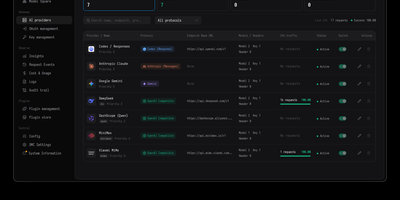
Oh My CPA gives a CLIProxyAPI gateway a proper control room, where providers, OAuth credentials, client keys, model routing, and the cost of every request are managed and watched from one self-hosted console. You add providers such as Codex, Claude, Gemini, xAI, DeepSeek, Vertex AI, and OpenAI-compatible services, each with credentials, retry and error policies, priority, weight, and an enable switch the gateway actually enforces. OAuth accounts are signed in from the console, with quota window readings, refresh schedules, and per-credential model aliases kept next to the keys they belong to. Client keys can be created, named, and revoked, and those names follow the traffic into request records and filters so you always know which key spent what. The dashboard follows request volume, token throughput, cache hit rate, and cost from the last fifteen minutes out to ninety days, with a year-long token heatmap for the long view. Insights compare keys, models, providers, and credentials against the previous period, while the live routing view shows which credential each request travelled to and whether it was rerouted. Every request stays searchable, with duration, time to first token, token breakdown, and the raw log in a detail drawer. A playground tests any routed model with text and images before your users do. Running on a dedicated VPS on RepoCloud with guaranteed CPU, RAM, and SSD, full root SSH access, and a browser serial console. MIT licensed.
Open Notebook
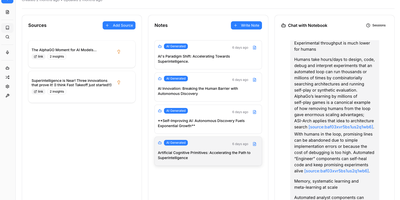
The most feature-complete open-source alternative to Google's NotebookLM — a self-hosted research platform where you upload PDFs, videos, audio files, and web pages into organized notebooks, then chat with your content, generate multi-speaker podcasts, and run semantic search across everything without sending a single byte to Google's servers. The podcast engine supports 1-4 fully customizable speakers with backstories, personalities, and expertise profiles, generating professional audio dialogue through OpenAI, ElevenLabs, Google TTS, or completely local text-to-speech via Kokoro for maximum privacy. Content processing uses token-based chunking with RAG-powered retrieval grounded in your uploaded sources, while both full-text keyword search and semantic vector search via SurrealDB enable conceptual discovery across all notebooks. The 18+ supported AI providers include OpenAI, Anthropic, Google Gemini, Groq, Ollama, LM Studio, and more — configurable per task so you can route cheap models to summarization and powerful models to analysis. Content transformations extract insights, generate summaries, create study guides, and produce structured outputs from any source material. The MCP integration connects Open Notebook to Claude Desktop, VS Code, and other MCP clients for seamless workflow integration. A full REST API on port 5055 enables complete automation of notebook management, source upload, and podcast generation. Deploy via Docker Compose with the application container, SurrealDB v2 on RocksDB, and optional TTS containers. Running on a dedicated VPS on RepoCloud with guaranteed CPU, RAM, and SSD, full root SSH access, and a browser serial console. MIT licensed.
Langfuse
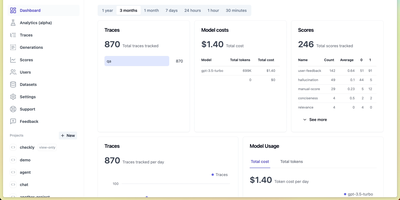
Backed by Y Combinator and trusted by over 2,300 companies processing billions of observations monthly, Langfuse is the most widely adopted open-source platform for building, monitoring, evaluating, and debugging LLM applications. The hierarchical tracing engine captures every LLM call, tool invocation, retrieval step, and agent action as nested spans based on OpenTelemetry, with automatic cost calculation, latency tracking, and token usage attribution across sessions and users. Prompt Management separates prompts from code with versioned artifacts, label-based deployments, one-click rollbacks, and runtime SDK fetching with server-side caching, while linking every generation back to its exact prompt version for attribution analytics. The evaluation system supports LLM-as-a-judge scoring, heuristic code evaluators, user feedback collection, and manual annotation workflows that run automatically on production traces or against curated datasets. The Playground enables interactive prompt testing on real production inputs with side-by-side model comparison across providers. Datasets and Experiments define test cases for systematic benchmarking with comparative result visualization. Native SDKs for Python and TypeScript provide decorator-based instrumentation, while 100+ integrations cover LangChain, LlamaIndex, OpenAI SDK, LiteLLM, Vercel AI SDK, and any OpenTelemetry-instrumented framework. The analytics dashboard surfaces cost breakdowns, quality scores, latency percentiles, and usage trends across models and prompt versions. Running on a dedicated VPS on RepoCloud with guaranteed CPU, RAM, and SSD, full root SSH access, and a browser serial console. MIT licensed.
Hoppscotch
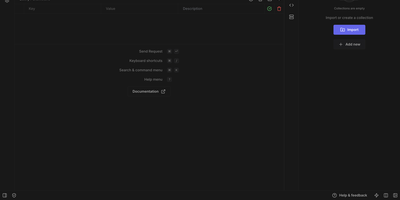
Backed by nearly 80,000 GitHub stars and recognized as one of the most popular developer tools in the open-source ecosystem, Hoppscotch delivers a complete API development platform that runs instantly in any browser with zero installation. The platform supports six protocols out of the box including REST with full HTTP method coverage, GraphQL with schema introspection and multi-column documentation, WebSocket for full-duplex communication, Socket.IO, MQTT for IoT messaging, and Server-Sent Events for real-time streaming. Request collections organize your API calls into logical groups with support for sub-folders, environment variables with scope inheritance, pre-request scripts and post-request test scripts written in JavaScript, and automatic code snippet generation in over twenty languages and frameworks. Teams can collaborate in real-time with shared workspaces, role-based access controls, and cloud synchronization across devices. Migration from Postman, Insomnia, or OpenAPI specifications happens with a single click import. The self-hosted edition deploys via Docker Compose with PostgreSQL for data persistence, supporting SSO authentication through SAML and OAuth providers, SMTP configuration with OAuth2, and admin dashboard for user management. The platform also ships as a native desktop application for macOS, Windows, and Linux with offline support, plus a CLI tool for running collections in CI/CD pipelines. A built-in proxy mode bypasses CORS restrictions during development, and an interceptor enables request debugging and response modification. Running on a dedicated VPS on RepoCloud with guaranteed CPU, RAM, and SSD, full root SSH access, and a browser serial console. MIT licensed.
SearXNG
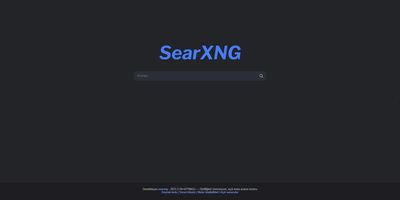
Up to 280 search services - Google, Bing, DuckDuckGo, Brave, Qwant, Startpage - aggregated without tracking or profiling: SearXNG is a privacy-respecting metasearch engine (AGPL-3.0, successor to Searx). Your instance queries the upstream engines on your behalf: your IP address, cookies, and search history never reach them, tracker parameters are stripped from result URLs, and an optional image proxy fetches thumbnails server-side so result pages leak nothing. It can even route outbound queries through Tor for full anonymity. Search is organized into categories - general, images, videos, news, maps, music, IT, science, files - with bang shortcuts for targeting specific engines, and every source can be enabled, disabled, or weighted per category in settings.yml. A plugin system adds calculators, hash tools, tracker removal, and unit conversions inline, and preferences (themes, safe search, languages, engine selection) persist in cookies rather than server-side accounts. The real argument for running your own instance rather than trusting a public one is control: you decide the logging policy (none), the engine mix, rate limiting, and who gets access - making it the default search backend for browsers, families, and teams that want Google-quality results without the profile.
EMQX
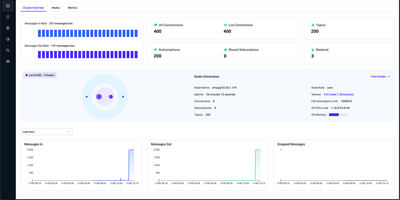
With over 16,500 GitHub stars and a track record powering connected vehicle fleets, smart city sensor networks, and industrial IoT deployments, EMQX is the MQTT messaging platform engineered to handle 100 million concurrent device connections in a single cluster while processing millions of messages per second with sub-millisecond latency. The protocol stack supports MQTT 5.0, 3.1.1, and 3.1 with full QoS 0/1/2 support, shared subscriptions, retained messages, and will messages, plus MQTT over QUIC for faster connection setup, reduced head-of-line blocking, and seamless connection migration on mobile networks. The gateway framework extends connectivity to MQTT-SN, CoAP, LwM2M, STOMP, and ExProto for bridging legacy industrial protocols. The SQL-based rule engine processes and transforms messages in real time with over 50 pre-built integrations including Kafka, PostgreSQL, MySQL, MongoDB, InfluxDB, TimescaleDB, ClickHouse, Redis, AWS Kinesis, GCP Pub/Sub, and Azure Event Hubs. The visual Flow Designer creates data processing pipelines without code. Built on Erlang/OTP with a masterless distributed architecture using Mria for state replication, the cluster separates Core nodes for data consistency and Replicant nodes for client-handling workloads. Authentication supports username/password, JWT, PSK, X.509 certificates, and LDAP with configurable ACL rules. The built-in dashboard provides real-time monitoring of connections, subscriptions, topics, message rates, and cluster health. Deployment runs via Docker, Kubernetes with the EMQX Operator, or native packages. Running on a dedicated VPS on RepoCloud with guaranteed CPU, RAM, and SSD, full root SSH access, and a browser serial console. BSL 1.1 licensed.
Gollum
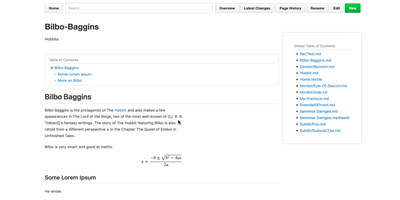
Every wiki page lives as a plain-text file in a standard Git repository, giving you full version history, branching, merging, and the freedom to edit with any text editor or IDE alongside the web interface. Originally built by GitHub's founders as the engine behind GitHub's own wiki feature, Gollum supports Markdown, AsciiDoc, reStructuredText, Org-mode, Textile, MediaWiki, Creole, and Pod markup formats with live preview rendering as you type. PlantUML and Mermaid diagrams render inline for architecture documentation, MathJax handles mathematical notation, and BibTeX integration via Pandoc provides academic citation management. YAML frontmatter controls per-page sidebars, headers, footers, and table of contents generation. CriticMarkup annotations enable editorial review workflows with tracked insertions, deletions, substitutions, and comments. Macros extend pages with dynamic content injection, file includes, and navigation helpers. The wiki maintains compatibility with GitHub and GitLab wiki repositories, so teams can clone existing platform wikis for local editing and offline access. The official Docker image at gollumwiki/gollum exposes port 4567 with volume-mounted repositories, requiring roughly 170 MB of container storage and minimal RAM. Authentication integrates via OmniAuth supporting GitHub, GitLab, Google, and other OAuth providers. Over 14,300 stars on GitHub since 2009. MIT licensed.
Actual Budget
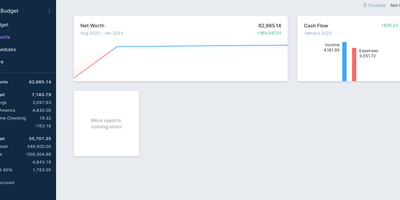
Every unit of income gets a job in Actual Budget - a local-first personal finance app built on envelope (zero-sum) budgeting, where you can only budget cash you actually have, which keeps the plan honest by construction. The data model is a SQLite file that lives on your device and works fully offline; the self-hosted Node.js sync server adds background multi-device synchronization using CRDT-based distributed-systems machinery, browser and mobile access as an installable web app, and automated backups. Optional end-to-end encryption makes the synced data unreadable even to the server hosting it. Transactions enter three ways: manual entry, file import (CSV, QIF, OFX, QFX, CAMT.053), or automatic bank syncing through GoCardless for EU/UK banks and SimpleFIN for US/Canada. Built-in YNAB4 and nYNAB importers migrate complete budget histories, and reports, schedules for recurring transactions, and rule-based transaction cleanup handle the day-to-day. A fully featured local API lets developers script custom importers and automation against their own data. 100% free, open source, and 26k stars strong.
Revel
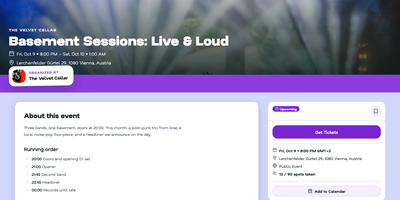
Yoga studios, comedy clubs, choirs, and bands use Revel to sell tickets, memberships, and season passes from their own server with no platform fee. Studios and clubs sell monthly or yearly memberships through Stripe and offer series passes that cover a class pack, a course, or a season, with wallet cards that a door scan verifies. Venues design seat maps with sectors, individual seats, and accessible seats, and buyers pick seats on an interactive map while the seats are held at checkout. Bands and DJs sell their own shows with no promoter in between, set pay-what-you-can tiers, open presales to invitation-link holders, and export every buyer's name and email. Communities that vet who comes screen requests with questionnaires reviewed automatically, manually, or both, and keep private guest lists, invitation-only events, and a fuzzy-matched blacklist. Buyers check out a multi-tier cart without an account, using discount codes and fixed-price, free, or pay-at-the-door tiers. Tickets arrive as QR PDFs or Apple Wallet and Google Wallet passes, and door staff check guests in by scanning. Organizers run waitlists with time-limited offers, announcements, reminders, and a Telegram bot for RSVPs and invitations. Revenue and VAT reports export as XLSX or PDF, and VIES checks buyer VAT IDs. The web app speaks English, German, Italian, French, Spanish, and Portuguese. Running on a dedicated VPS on RepoCloud with guaranteed CPU, RAM, and SSD, full root SSH access, and a browser serial console. MIT licensed.
iDURAR
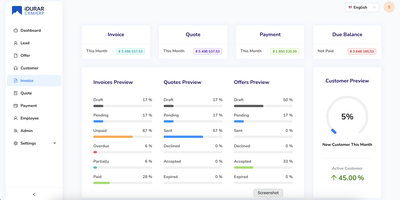
Quote to cash in one web application - create quotes, convert them to invoices, record payments, track customers: iDURAR is an open-source ERP and CRM platform for small and medium-sized businesses. Built on the MERN stack (MongoDB, Express, React, Node.js) with Ant Design components and Redux state management, it presents a clean SaaS-style interface that needs little onboarding. Core modules cover invoice management with PDF generation and email delivery, payment recording against invoices, quote and proforma handling, customer records, and accounting views over the resulting data. Multi-currency support and localization make it usable for internationally operating teams. Because the whole stack is JavaScript with an API-first backend, extending it - custom fields, new modules, integrations - is approachable for any Node/React developer rather than requiring a specialist ERP skill set. Deployment is straightforward via Docker with a MongoDB instance. Licensed under AGPL-3.0 with free commercial use; a hosted enterprise version exists but the self-hosted edition is fully functional.
uMap
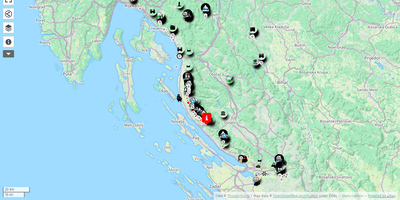
uMap turns OpenStreetMap into a personal mapmaking canvas: draw markers, lines and polygons in the browser, layer your own data over detailed street maps, and embed the finished map in any website. Each map is built from data layers you can style independently, choosing marker shapes, colors, icons and popups that show names, descriptions, photos or videos when clicked. You can sketch points of interest by hand or batch import whole datasets in GeoJSON, GPX, KML or OSM format, then let clustering group dense markers or a heatmap reveal where things concentrate. Backgrounds come from a choice of OpenStreetMap based tile layers, so the same map can sit on a street plan or a cycling map depending on the audience. Finished maps embed with a snippet of HTML, stay interactive inside the page, and can be downloaded or shared by link with read only access for viewers. Permissions decide who owns, edits or only views each map, and with real time collaboration switched on, several editors can draw on the same map simultaneously and watch each other's changes appear live. A slideshow mode turns layers into a guided story, stepping viewers through places in order with text and media attached to each stop. Running on a dedicated VPS on RepoCloud with guaranteed CPU, RAM, and SSD, full root SSH access, and a browser serial console. AGPL-3.0 licensed.
ClassicPress
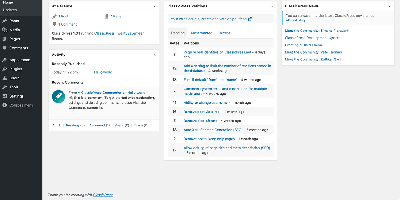
WordPress without Gutenberg: ClassicPress, the community-led fork, keeps the TinyMCE classic editor as the default and strips the block editor and Full Site Editing out of core entirely. The result is roughly half WordPress's size - obsolete libraries like jQueryUI, Thickbox, and Flash support are gone, replaced by native HTML5 elements and modern alternatives like SortableJS - which translates to a measurably faster admin and a leaner attack surface. Forked from WordPress 6.2, it remains compatible with the vast plugin and theme ecosystem targeting that lineage (anything not requiring blocks generally works, helped by a blocks-compatibility mode), and the PHP-first WordPress API developers have used for over a decade works unchanged - no React required to extend your CMS. The fork adds its own improvements: built-in media categories and tags with bulk editing, revision management that lets you prune database bloat, native HTML5 dialogs for accessible touch-friendly menus, and recent releases bring APCu object-cache support, vanilla-JS core widgets, and performant translations. Governance is democratic and community-driven rather than corporate. For content sites, business sites, and blogs where the classic editing workflow is the feature, ClassicPress is stability as a philosophy.