Bazarr
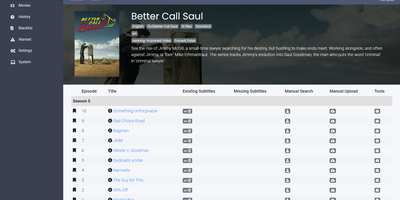
Subtitles are the one chore Sonarr and Radarr leave behind - Bazarr finishes the *arr media stack by automating them. It connects to both via their APIs and mirrors their libraries - it doesn't scan disk itself, it manages exactly what your *arr apps index. For every monitored episode and movie it checks existing internal and external subtitles against your language profiles, then hunts missing ones across dozens of providers - OpenSubtitles.com, Podnapisi, Addic7ed, Subscene, and many regional sources - covering 184 subtitle languages including forced/foreign-dialogue tracks. Matching is smarter than filename guessing: releases are compared by release group and source, some providers support exact file-hash matching, and every downloaded subtitle gets a percentage score. Set a minimum score per Sonarr/Radarr connection and Bazarr rejects weak matches; enable upgrades and it replaces previously downloaded subtitles when better ones surface. Out-of-sync files get fixed too - automatic subtitle synchronization realigns timing after download, triggered only below a configurable score threshold so good subs aren't touched. Per-show and per-movie language configuration, download history, manual on-demand search, and adaptive searching that throttles provider API calls round it out, all behind a clean Sonarr-style web UI written in Python. If your library serves multilingual viewers, this removes the last manual step.
RankMe
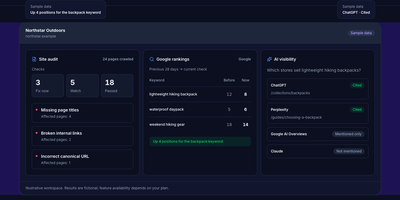
RankMe puts the whole SEO workbench on your own server: audits, rankings, keywords, backlinks, and AI visibility without a per-seat subscription deciding what you may check. Crawl a site and it runs 26 automated checks, returning a plain-language report sorted into Fix now, Watch, and Passed, where each finding names the page, explains in one sentence why it matters, and tells you how to fix it, with an optional AI summary on top. Rank tracking follows Google organic positions over time plus Bing, YouTube, and Amazon, watches SERP features, fires confirmed-drop alerts, and maps local rankings on a geogrid. Keyword research covers volume, difficulty, trends, and SERP-overlap clustering, while Search Console data feeds cannibalization reports and connects to GA4, PageSpeed Insights, and CrUX for performance context. Backlink profiles, link-gap analysis, toxic-link review, and competitor discovery show who links to rivals and which content earns it. A dedicated AI visibility module tracks prompts in AI Overviews and LLM answers and measures share of voice in a weekly digest. Agencies get PDF and CSV exports, scheduled white-label client reports, read-only share links, a REST API, and an MCP server, with alerts delivered by email, Slack, or signed webhook across seven interface languages. Running on a dedicated VPS on RepoCloud with guaranteed CPU, RAM, and SSD, full root SSH access, and a browser serial console. AGPL-3.0 licensed.
Scira
Scira is an AI search engine that breaks complex research questions into sub-tasks, retrieves grounded answers from live sources, and cites every claim with clickable links to the original evidence. Formerly known as MiniPerplx and now backed by nearly 12,000 GitHub stars, the platform implements agentic research planning where language models decompose queries, select appropriate tools, retrieve information in parallel, and synthesize responses with inline citations. Seventeen distinct search modes cover Web, Academic, Extreme, X (Twitter), Reddit, GitHub, Stocks, Crypto, YouTube, and Prediction markets, each activating a curated subset of the 28 built-in tools. The Extreme mode deploys a deep research agent with multi-step planning, parallel source retrieval, code execution in sandboxed Daytona environments, and R2 artifact storage for generated charts. Model routing spans 50+ AI providers through a unified configuration layer supporting OpenAI, Anthropic, Google, xAI Grok, and custom models, with per-mode model assignment based on task requirements. The web search tool supports Exa, Tavily, and Firecrawl as interchangeable providers via a Strategy pattern. Lookouts schedule recurring research agents on cron schedules that monitor topics, track changes, and email summaries using Upstash QStash for reliable execution. PostgreSQL stores chat history, user preferences, and custom instructions while Redis handles caching and rate limiting. Running on a dedicated VPS on RepoCloud with guaranteed CPU, RAM, and SSD, full root SSH access, and a browser serial console. AGPL-3.0 licensed.
OneDev
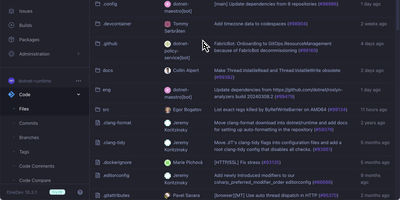
With over 15,100 GitHub stars and seven years of battle-tested production use, OneDev replaces entire DevOps toolchains — GitLab, Jenkins, Jira, Artifactory — with a single Java application that runs comfortably on a 1-core 2GB server for medium-sized projects. The platform unifies Git hosting with ANTLR-powered language-aware code search and symbol navigation, pull request workflows with configurable branch protection rules and required reviewers, and customizable issue tracking with scripted state transitions that automatically advance issues when code is committed, builds pass, or deployments complete. The GUI-based CI/CD editor creates pipelines without writing YAML, supporting typed parameters, matrix builds, job templates, cache management, and artifact publishing in a single visual interface. Jobs execute via Docker containers, bare metal shell, Kubernetes pods, or distributed agent pools, with web terminal access for live debugging and the ability to pause running jobs for inspection. Built-in package registries handle Docker images, npm packages, Maven artifacts, NuGet libraries, PyPI wheels, and RubyGems without external infrastructure. AI users can be assigned to issues and pull requests to autonomously implement features, review code, fix CI/CD failures, and resolve merge conflicts. The automated Kanban board supports rule-based card movement, time tracking, timesheets, and service desk ticket creation via email. Cluster deployment enables project replication across servers for high availability and horizontal distribution for scalability. Running on a dedicated VPS on RepoCloud with guaranteed CPU, RAM, and SSD, full root SSH access, and a browser serial console. MIT licensed.
Cusdis
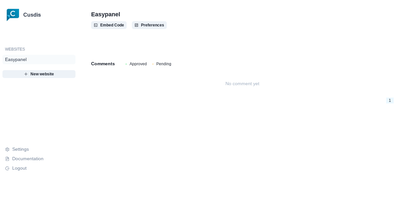
Comments for small sites without Disqus's baggage: Cusdis is a lightweight, privacy-first, open-source comment system for embedding under blog posts and articles. The embedded JavaScript SDK is about 5 KB gzipped (Disqus is roughly 24 KB), sets no cookies, runs no tracking, and does not require readers to create an account or sign in before commenting. Integration is two lines: a container div with your app ID and an async script tag, with ready-made adapters for common frameworks and static site generators. Moderation is approval-based - new comments stay hidden until you approve them from the dashboard, and email notifications include a Quick Approve link that approves or replies to a comment from your phone without logging in. A webhook fires on every new comment for integrations like Telegram notifications. The widget ships with built-in i18n and dark mode. The stack is TypeScript and Next.js with a Prisma data layer, deployable via Docker with PostgreSQL. Deliberately minimalist: no ads, no reader profiling, and your comment data lives in your own database.
Wavelog
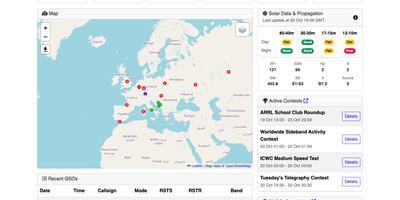
Whether operating from a home shack, a portable Parks on the Air activation, or a multi-operator club station, Wavelog gives amateur radio operators a browser-accessible logbook for recording and confirming QSO contacts from anywhere. Real-time transceiver frequency and mode data flow directly into the Live QSO logging interface from Hamlib, FLRig, and WSJT-X through the companion WavelogGate helper or REST API endpoints. An integrated DX Cluster and visual band waterfall display active spots filtered by continent, band, and DXCC status so operators can click a spot and QSY their rig immediately. Built-in two-way synchronization handles QSL confirmations and log uploads across Logbook of The World (LoTW), eQSL, QRZ.com, HRDLog, ClubLog, and the QO-100 DX Club alongside ADIF 3.1.8 and Cabrillo file imports and exports. Interactive Maidenhead grid maps, satellite pass tracking, and automated progress matrices for over 20 international awards (including DXCC, WAS, WAC, WAZ, IOTA, SOTA, POTA, and WWFF) show exactly which bands and modes still need confirmation. Dedicated contest logging windows and role-based club station permissions let teams work the same event simultaneously without log conflicts. Running on a dedicated VPS on RepoCloud with guaranteed CPU, RAM, and SSD, full root SSH access, and a browser serial console. MIT licensed.
Cinephage
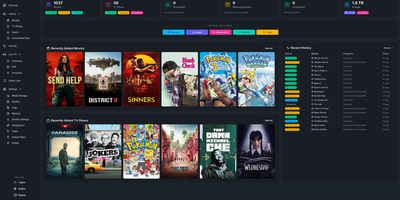
Cinephage puts your movies, series, live TV, subtitles, indexers, and download clients into one self-hosted media command center instead of a stack of separate automation services. Browse and organize libraries from a responsive interface that works on desktop and mobile, with file scanning and metadata matching keeping titles identified correctly. Search across configured indexers, compare releases with quality profiles and custom scoring rules, and send chosen downloads to your client without repeating setup for each media type. Let monitoring tasks watch for missing episodes, upgraded releases, and newly aired content, while the blocklist stops failed releases from coming back. Pull subtitles from multiple providers with language profiles, create dynamic smart lists from list sources or custom queries, and add matching titles automatically. Generate streaming links as .strm files for players such as Jellyfin, Emby, and Kodi, try live TV channels with guide data where configured, and receive library update notifications in your media server. Running on a dedicated VPS on RepoCloud with guaranteed CPU, RAM, and SSD, full root SSH access, and a browser serial console. GPL-3.0 licensed.
Quant-UX
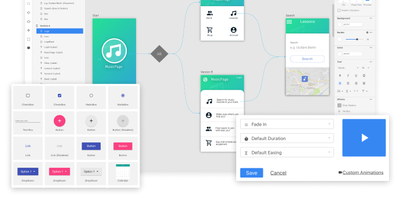
Most design tools stop at prototyping; Quant-UX also measures how real users actually perform with the prototype. The visual editor creates prototypes that behave like real apps - functional input widgets, animations, form validation, data binding across screens, and business logic modeled with REST requests and decision elements. Design systems are first-class, with components, design tokens, and master screens; if you design elsewhere, drop in image files or import from Figma. Testing is a shared link or QR code - no installs on the tester's side. Define user tasks up front, and Quant-UX records every session: click heatmaps show where users found (or missed) actionable elements, user journey graphs expose lost users, drop-off charts reveal where tasks stall, and success rates and task KPIs are extracted automatically into a dashboard. An A/B test operator wires two design variants into one prototype and compares task duration, success rate, and interaction counts. In-prototype surveys collect qualitative feedback alongside the numbers, and an AI assistant generates prototype fragments like styled forms on request. The RepoCloud deployment runs the full stack - frontend, backend, and WebSocket server containers over MongoDB - so all test recordings and research data stay on your infrastructure.
Tryton
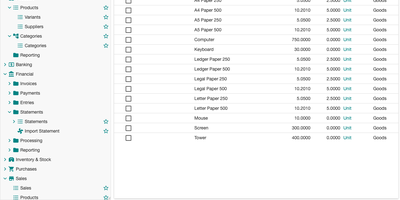
In Tryton, an invoice knows its shipment and a production order knows its stock, since accounting, inventory, purchasing, and sales are modules of one ERP rather than separate programs exchanging exports. Financial accounting posts customer and supplier invoices, reconciles bank statements imported from SEPA or configured CSV formats, manages dunning and direct debits, and produces Factur-X electronic invoices, while analytic accounting splits results across cost centers. Stock tracks goods through warehouses and locations with lots, shipments, inventories that warn when counts drift beyond tolerance, and automatic period closing, and production consumes bill-of-material inputs into finished goods with quantity checks. Sales quotations become orders, shipments, and invoices without retyping; purchases calculate real supplier lead times; point of sale records lot numbers at the till; subscriptions bill recurring services on schedule. Multi-company installations share the same database with per-company wizards, tax rules can be defined per organization for European trade, and parties, products, carriers, currencies, and customs duties are managed as shared reference data. Access happens through the browser web client, a desktop client, or scripting and REST libraries, so integrations read and write the same business objects your staff see. Running on a dedicated VPS on RepoCloud with guaranteed CPU, RAM, and SSD, full root SSH access, and a browser serial console. GPL-3.0-or-later licensed.
Alf.io
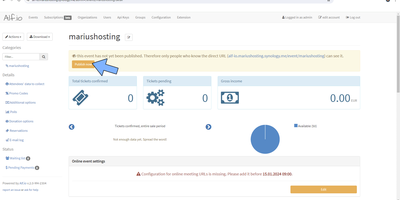
Alf.io handles the complete conference and event lifecycle from ticket distribution through check-in to financial reporting, built for organizers who refuse to surrender attendee data to third-party ticketing platforms like Eventbrite or Tito. Built on Java 17 with Spring Boot and PostgreSQL with row-level security policies, the project has earned over 1,500 GitHub stars from privacy-conscious event organizers across Europe and beyond. Payment processing supports Stripe for credit cards, Mollie for iDEAL, Bancontact, KBC/CBC, and Przelewy24, plus Revolut, PayPal, bank transfers, on-site collection, and configurable custom offline payment methods with localized instructions. Multi-tier ticket categories enable early bird, VIP, standard, and free registrations with promotional codes, group discounts, and waiting lists that automatically notify next-in-queue when cancellations occur. Customizable registration forms collect attendee data beyond standard fields, while EU VAT management validates tax IDs through the VIES web service and supports Italian e-invoicing with automatic PDF invoice generation attached to confirmation emails. The Alf.io Scan mobile app for iOS and Android performs QR code check-in at venue entrances, and the Alf.io-PI project provides Raspberry Pi-powered offline-capable check-in stations that form encrypted clusters for high-throughput badge printing at large events. Apple Wallet integration delivers digital passes via PassKit. The extensions system integrates with CRMs, accounting platforms, Slack, Telegram, and Mailjet. Multi-language support covers nine languages. Deploy via Docker with PostgreSQL. Running on a dedicated VPS on RepoCloud with guaranteed CPU, RAM, and SSD, full root SSH access, and a browser serial console. GPLv3 licensed.
D-Tale
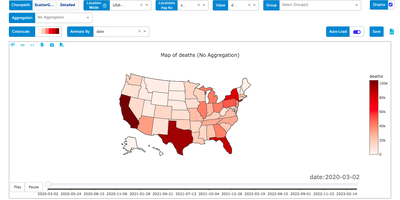
If your data lives in a pandas DataFrame, D-Tale gives it a spreadsheet-style grid, a column profiler, and a chart builder in the browser, started with one call from a notebook or script. In the grid you sort, filter, and edit cells inline, lock, hide, reorder, rename, or reformat columns from their menus, and open a Describe view with each column's distribution, summary statistics, outliers, and missing values, while highlight modes color dtypes, outliers, and numeric ranges across the whole table. Correlation matrices, a predictive power score, and duplicate reports sit beside dataframe functions that add numeric, binned, date, random, and type-converted columns, and Merge & Stack combines dataframes, including ones uploaded from Excel files. The chart builder draws line, bar, stacked, pie, wordcloud, heatmap, 3D scatter, surface, and map charts with grouping and aggregation, exports them as standalone HTML, and a network viewer graphs relationships between nodes. Whatever you build in the interface can be exported as reproducible Python code, and data can be saved as CSV or TSV. Launch it from Jupyter, Google Colab, Kaggle, a terminal, or the command line with a CSV path, protect it with optional authentication, and choose light or dark themes and English or Chinese. Running on a dedicated VPS on RepoCloud with guaranteed CPU, RAM, and SSD, full root SSH access, and a browser serial console. LGPL-2.1 licensed.

LinkAce
Preventing silent link rot across research libraries, LinkAce captures, indexes, and permanently archives web discoveries into searchable multi-user collections with automated Wayback Machine snapshots. Curators bookmark articles, documentation, tools, and media using custom browser bookmarklets or quick-add input fields that automatically scrape page titles and metadata descriptions. The built-in link monitor continuously checks saved endpoints for HTTP status anomalies, alerting curators whenever destinations move, throw server errors, or vanish from the live internet. For long-term preservation, the system dispatches automated backup requests to the Internet Archive Wayback Machine to capture historical copies of critical research material. Curators organize their library using nested lists and granular tag hierarchies, switching seamlessly between compact tables, detailed reading feeds, and visual card layouts. Teams and households can create separate user accounts to collaborate on shared collections, delegating read-only or editing privileges per list. The platform also generates individualized RSS feeds for public or private bookmark streams, synchronizes external data through a tokenized REST API, and dispatches automated database dumps to AWS S3 storage buckets. Running on a dedicated VPS on RepoCloud with guaranteed CPU, RAM, and SSD, full root SSH access, and a browser serial console. GPL-3.0 licensed.
Endurain
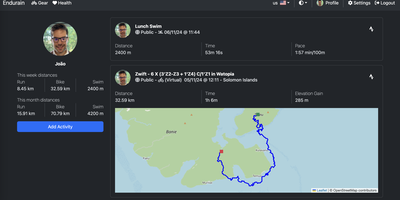
A personal Strava on your own server: Endurain is a self-hosted fitness platform that keeps your complete workout history, GPS routes, and health data out of a vendor's cloud. It ingests the standard device formats (.gpx, .tcx, and preferred .fit with full sensor data) via manual or bulk upload, and syncs directly with Strava and Garmin Connect so migrating years of history is straightforward - Garmin sync covers activities, gear, and body composition. The dashboard shows activity feeds with weekly and monthly statistics, routes on maps, and distance, speed, and training-volume trends over time, with definable goals that update automatically. Gear tracking is notably deep: log wetsuits, bicycles, shoes, racquets, skis, and snowboards, assign default gear per activity type, and track individual components like bike chains against replacement mileage. Multi-user support with admin and user roles, follower features, per-activity privacy settings, and configurable sign-up (email verification, admin approval) make it usable for clubs and coaches as well as individuals. Auth is serious for a fitness app: MFA TOTP, OIDC/SAML SSO, and email-based password resets via Apprise. The stack is Vue.js over a Python FastAPI backend with PostgreSQL, plus weight, steps, and sleep logging, imperial/metric units, multi-language support, and third-party app integration.
OpenAgentCore
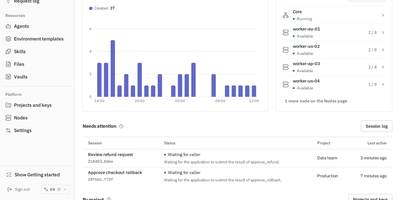
OpenAgentCore puts Codex, Claude Code, and MiniMax Code behind one self-hosted Agents API, so your applications start agent sessions through the official OpenAI SDK while the work runs on machines you control. Set OPENAI_BASE_URL to your installation and issue a Project API key, and the same client code that talks to OpenAI now talks to your Core. Each session runs a native harness, exactly as it runs on a developer's machine, with the model provider, model ID, and protocol you configure per harness or per session. Choose where sessions execute: microsandbox nodes you operate, Docker, E2B, or a self-hosted workstation, VM, or container connected by the oac-daemon with a credential scoped to one environment. Idle microsandbox sessions release their compute and resume on a compatible node with workspace files intact, so long investigations do not rent a machine while they sleep. The Web console walks operators through setup, tracks sessions and turns, manages models and credentials, and issues keys, while the separate Core API serves operators and the Agents API serves applications. Durable execution state in PostgreSQL keeps events, results, and schedules recoverable across restarts. Sandbox providers, workspace filesystems, harnesses, and model providers all plug in through defined protocols, so every layer can be replaced on its own. Running on a dedicated VPS on RepoCloud with guaranteed CPU, RAM, and SSD, full root SSH access, and a browser serial console. MIT licensed.
Mstream
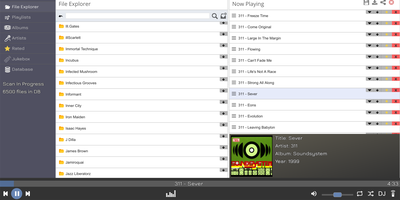
"The easiest music streaming server available" is mStream's own billing, and the claim holds up: a lightweight Node.js app that turns a folder of audio files into a private streaming service in minutes, no external database required. Its filesystem-based design is the clever part - the API mirrors your folder structure, so you can browse and play music immediately, before any library scan finishes, and your organization on disk is your organization in the app. It streams flac, mp3, wav, ogg, opus, aac, and m4a, which matters to the audiophile crowd: FLAC plays uncompressed, bit-perfect, with gapless playback for live albums and continuous mixes. The web player runs anywhere a browser does and packs personality - a Milkdrop-style visualizer (Butterchurn), playlist sharing via links, and drag-and-drop uploads straight through the file explorer. Native iOS and Android apps add the feature streaming subscriptions can't match: sync your collection to your phone for true offline playback of music you own. Multi-user support assigns separate directories and permissions per account. Resource usage is famously light - mStream is tested on multi-terabyte libraries and runs happily on a Raspberry Pi, so a small RepoCloud instance serves a lifetime's collection. GPL-licensed, with zero listening-habit telemetry.
ParadeDB
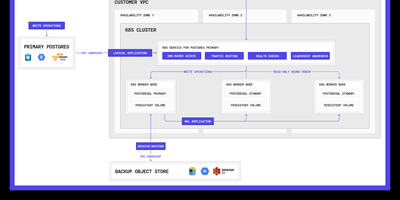
ParadeDB turns the Postgres you already run into a full search and analytics engine, so your application data, full-text search, vector retrieval, and aggregations all live in one database. Create one ParadeDB index over a table and you can run relevance-ranked BM25 queries with tokenizers, phrase matching, highlighting, and Top-K retrieval using plain SQL. The same index stores pgvector embeddings, so similarity search composes with text predicates and filters, and hybrid queries fuse both rankings when a question needs keywords and meaning at once. Aggregations push into the index too: ordinary GROUP BY queries accelerate, and Elasticsearch-style JSON aggregations return facets, histograms, percentiles, and cardinality for filterable search interfaces. Because the index updates in the same transaction as your writes, search results are never stale and there is no ETL pipeline, sync job, or second system to babysit. JOINs against the rest of your schema keep working, since search is just another index inside your system of record. Teams typically retire a separate search cluster while keeping sub-second relevance search, semantic retrieval for AI features, and faceted analytics on the data they already store. Running on a dedicated VPS on RepoCloud with guaranteed CPU, RAM, and SSD, full root SSH access, and a browser serial console. AGPL-3.0 licensed.
Jotty
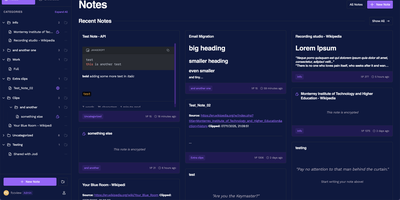
No external database cluster to babysit, no proprietary cloud lock-in, and no bloated workspace hierarchy: Jotty stores every note, checklist, and Kanban board as plain Markdown and JSON files inside a single folder on your server. Need a quick grocery list with nested categories, progress bars, and drag-and-drop reordering? Spin one up in seconds, or flip any list into a multi-column Kanban project board with custom statuses, due-date calendar views, and a built-in time tracker. Write technical documentation in a TipTap-powered WYSIWYG and Markdown editor featuring syntax-highlighted code blocks, GitHub-flavored callouts, embedded Draw.io and Excalidraw diagrams, and OpenPGP client-side encryption for sensitive records. Connect ideas across your workspace using Obsidian-compatible wikilinks, inline mention suggestions, backlinks, and an interactive 2D and 3D knowledge graph that maps relationships between tasks and notes. Share individual notes or live Kanban boards publicly via customizable read-only links, or start the optional Model Context Protocol (MCP) companion container so AI assistants like Claude and Cursor can query your notes and check off items through your scoped REST API key. Running on a dedicated VPS on RepoCloud with guaranteed CPU, RAM, and SSD, full root SSH access, and a browser serial console. AGPL-3.0 licensed.

RSSMonster
Staying on top of hundreds of RSS feeds is impossible when every reader just dumps articles in chronological order. RSSMonster takes a different approach: it evaluates, scores, and prioritizes every article so the signal rises above the noise. The three-pane reading interface automatically marks articles as read when you scroll past them, while the built-in quality scoring engine rates content by freshness, originality, trust, and attention metrics. Compose advanced search expressions using field operators like star:true, quality:>0.6, hot:true, and date filters like @today or @lastweek, then save those expressions as persistent Smart Folders for one-click access to curated views. Semantic event clustering groups related articles across sources so you see one coherent story instead of fifteen duplicates. Connect your favorite mobile client through the Fever API (supporting Reeder for iOS) or the Google Reader API (compatible with News+, FeedMe, Vienna RSS, and ReadKit). The AI chat assistant powered by the Model Context Protocol lets you ask questions about your feed content and get summarized answers. Import your existing subscriptions via OPML, switch between light and dark themes, and install the app as a Progressive Web App for offline reading. On RepoCloud, deploy RSSMonster on a dedicated VPS with root SSH access, full data ownership, and persistent storage under the MIT license.