SendPortal
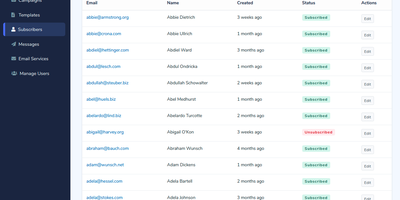
SendPortal is a self-hosted email marketing platform for building subscriber lists, sending campaigns, and tracking exactly what happens to every message after it leaves your server. Grow the list three ways: add contacts one by one, import them in bulk from CSV, or push them through the API, which creates or updates subscribers by email address and attaches tags. Tags and custom segments organize audiences, sending product updates to power users and sale announcements to everyone else. A campaign pairs a subject line, which can insert first name, last name, and email placeholders, with an optional HTML template holding content, unsubscribe, and browser view placeholders. Automatic CSS inlining at dispatch keeps designed emails rendering properly in inboxes that ignore style sheets. Send a test email to yourself before anything goes out, then choose immediate delivery or schedule the campaign for later. Pick Queue Draft to review messages before they leave, or Send Automatically when the audience and content are already right. Open and click tracking, bounce records, and unsubscribe events then flow back through provider webhooks into per campaign reports and a searchable message log. Run several brands or clients side by side in separate workspaces inside one interface. Delivery runs through Amazon SES, Postmark, SendGrid, Mailgun, Mailjet, or your own SMTP server, so deliverability stays with providers built for it. Running on a dedicated VPS on RepoCloud with guaranteed CPU, RAM, and SSD, full root SSH access, and a browser serial console. MIT licensed.
Tiddlywiki
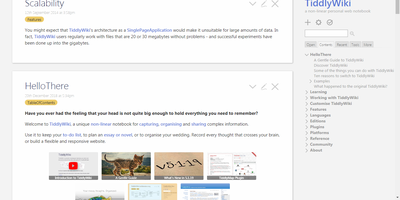
The entire wiki - content, code, and interface - is built from "tiddlers," small addressable units of information that link, transclude, tag, and filter into each other: TiddlyWiki is a non-linear personal notebook with a design philosophy unlike anything else in this catalog. Instead of pages in a hierarchy, you compose views by pulling tiddlers together on demand, which is why researchers, zettelkasten practitioners, and GTD devotees have sworn by it for two decades. The whole application is JavaScript, and the UI itself is written in hackable WikiText - customization goes as deep as rewriting the interface from inside the wiki. Self-hosting runs the Node.js version, which upgrades the classic single-HTML-file architecture in the ways that matter for a server: every tiddler is stored as an individual text file (Git-friendly, organizable), edits save through the HTTP API from any modern browser including phones, and one installation can serve multiple wikis blending shared and unique content. The plugin ecosystem covers graph visualizations, themes, languages, and hundreds of community extensions, declared per-wiki in a simple tiddlywiki.info file; the newer MultiWikiServer plugin adds multi-user accounts and tiddler sharing. Your notes stay usable for decades, independent of any corporation - the project's founding promise. BSD-licensed.

II-Agent
II-Agent is an autonomous AI agent platform that ranked first on the GAIA benchmark by combining multi-step task planning with a full-stack execution environment spanning research, coding, browsing, and content creation. The platform runs a React frontend on port 1420 backed by FastAPI on port 8000, with PostgreSQL for persistence, Redis for task queuing, and MinIO for S3-compatible file storage, all deployable via Docker Compose. Users switch between Anthropic Claude, OpenAI GPT, and Google Gemini mid-conversation using bring-your-own-key authentication. Task domains include deep research with source triangulation, website and mobile app generation from prompts, storybook creation with illustrations, video and image generation via Google Veo and Imagen, presentation building with live collaborative editing, and document manipulation covering PDF extraction, Excel formulas, Word editing, and PowerPoint creation. Built-in connectors integrate Gmail, Slack, GitHub, Notion, Google Calendar, Discord, Dropbox, and Canva for workflow automation. A sandboxed code interpreter runs Python while browser automation with vision capabilities handles web interactions. Custom skills let teams package and reuse workflows. Context management handles up to 120,000 tokens with intelligent window sizing. 3,400+ GitHub stars. Apache-2.0 licensed.
PeaNUT
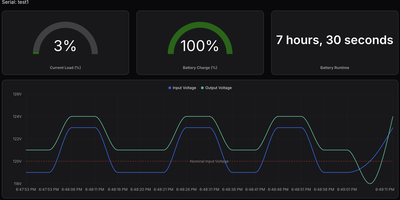
When a power outage hits your server rack, deciphering raw command-line output from Network UPS Tools should not stand between you and a safe shutdown; PeaNUT wraps your NUT servers in a real-time web dashboard that monitors battery charge, load capacity, and voltage telemetry across every uninterruptible power supply on your network. Operators can connect multiple local or remote NUT servers into a single interface and switch between devices with one click. Live gauges track battery percentage, estimated runtime, real power draw in watts, and apparent power in volt-amperes. Interactive line charts plot input and output voltage alongside load fluctuations over time. Need to test a battery or silence an alarm? You can execute instant UPS hardware commands, edit writable device variables, or open a browser-based terminal directly to the underlying NUT daemon without leaving the web interface. Configuration works either through the visual settings panel or a declarative YAML file, protected by built-in account authentication. For broader infrastructure observability, you can stream time-series power data to InfluxDB v2, scrape the native Prometheus metrics endpoint into Grafana, query the REST and WebSocket APIs, or embed live UPS status cards inside Homepage and Glance dashboards. Running on a dedicated VPS on RepoCloud with guaranteed CPU, RAM, and SSD, full root SSH access, and a browser serial console. Apache-2.0 licensed.
Live Helper Chat
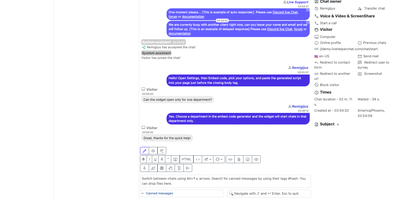
Add a live support desk to any website with Live Helper Chat, where visitors talk to operators or bots and you own every transcript. Site owners paste a generated embed snippet into any page, and the start-chat fields are customizable. Chats are routed by department, language, location, or custom attributes, wait in a priority queue, and move between agents. Operators, departments, and simultaneous chats are unlimited. Agents watch a visitor type before the message is sent, read pages visited and time on site in the online visitors list, and send proactive invitations to people who linger. Voice, video, and screen sharing run through Jitsi or Agora, and a screenshot shows what the visitor sees. Bot designers chain triggers and actions in a visual builder, call ChatGPT, Gemini, Ollama, Rasa, or any REST API, and hand the conversation to a person when needed. Incoming email becomes tickets beside chats, and extensions connect Telegram, WhatsApp, Facebook Messenger, and Twilio SMS. Staff answer from the browser, a desktop app, a Chrome extension, or iOS and Android apps. Management tools include roles, groups, statistics, transcripts, and an archive, and extensions add two-factor login, LDAP, and single sign-on. It suits banks, healthcare teams, universities, and game studios that must keep chat data in house. Running on a dedicated VPS on RepoCloud with guaranteed CPU, RAM, and SSD, full root SSH access, and a browser serial console. Apache-2.0 licensed.
PsiTransfer
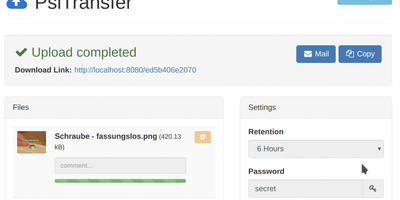
Upload files, get a share link, let it expire: PsiTransfer is a self-hosted WeTransfer with no accounts, no logins, and no third-party cloud with size caps and metadata harvesting. The engineering focus is large files over imperfect networks. Uploads use the tus.io resumable protocol, so a dropped connection on a multi-gigabyte video resumes exactly where it stopped once you're back online; downloads support HTTP range headers for the same resilience, and everything streams, so file size is bounded by your disk rather than memory. Files organize into upload buckets with retention you control: expire after a set time (up to weeks) or after a one-time download, with automatic cleanup when links lapse. Recipients need nothing installed - they open the link, preview files in modal views, and grab everything as a zip or tar.gz archive with one click. Buckets can be password-protected (AES-encrypted download lists), and security-through-obscurity is done properly: bucket URLs use hashed UUID tokens and stored filenames are replaced with UUIDs. An optional admin page (enabled by setting an admin password) lists bucket information and storage. The Vue.js frontend ships under 100 KB gzipped and is fully responsive. Honest caveat from the author: no end-to-end payload encryption yet. BSD-licensed, Docker-ready.

DroppedNeedle
Self-hosted music requests, no Lidarr install needed: DroppedNeedle searches MusicBrainz, drives your own slskd or Usenet setup, and files only verified, tagged tracks in your library. Request a whole album or a single track, then retry or cancel from a dedicated requests page. The engine queries slskd, or SABnzbd with Newznab indexers or Prowlarr, and scores every candidate before anything downloads. Files must pass checks for readable tags, a sane duration, and an optional AcoustID fingerprint match. Close calls park for admin review. Failed requests are searched again until a verified copy arrives. Quality floors per format and storage caps keep the library tidy, and better copies replace old ones. The built-in player queues Jellyfin, Navidrome, Plex, local files, and YouTube previews with shuffle, a 10-band equalizer, and embedded lyrics. Prefer your own app? Symfonium, Finamp, Feishin, and other Subsonic or Jellyfin clients connect with revocable app passwords. Discovery rows draw on ListenBrainz and Last.fm history and global charts, and a weekly mix can queue up to five missing albums. Follow artists for new-release alerts, or add Ticketmaster or Skiddle keys for gig listings in cities you choose. Import Spotify playlists, or drag in a zip of music you bought. Admin, Trusted, and User roles decide whether a request starts at once or waits for approval. Running on a dedicated VPS on RepoCloud with guaranteed CPU, RAM, and SSD, full root SSH access, and a browser serial console. AGPL-3.0 licensed.
TimeTagger
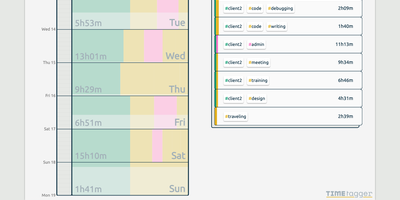
Freelancers, consultants, and solo workers get an accurate record of their hours from TimeTagger, a time tracker that logs tagged tasks on an interactive timeline and summarizes them as billable reports. Press S, type a description, and hit Enter to start the clock without the mouse, or drag across the timeline to log finished work. Hashtags in a description become autocompleting tags, with no projects to set up. Renaming a tag updates every record that uses it. Drag a record's edges to fix its times, then zoom the timeline out to a week or month with mouse, touch, or arrow keys. An overview panel totals time per tag combination for the selected range, and the Report button saves it as a client-ready PDF or a CSV with decimal hours. Daily, weekly, and monthly targets track progress toward your goals, and an optional Pomodoro timer alternates work and break periods with an alarm and a notification. Settings add a dark theme, local date notations, a Monday-to-Friday week, and a day offset for night shifts. The interface adapts from desktop to phone, installs as a progressive web app, works offline, and syncs records across devices once the connection returns. A web API and a command-line client let you query, create, and update records from scripts or the terminal. Running on a dedicated VPS on RepoCloud with guaranteed CPU, RAM, and SSD, full root SSH access, and a browser serial console. GPL-3.0 licensed.
LiveCodes
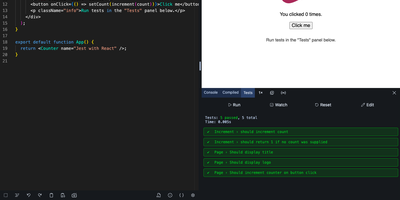
Try an idea in React, Svelte, Python, or SQL without installing anything: LiveCodes is a browser-based playground where code compiles, runs, and previews the moment you type it. Starter templates open ready-made projects for most of the 90+ supported technologies. The desktop editor brings completion, multi-cursor editing, Emmet, and Vim or Emacs bindings, while a lighter touch-friendly editor takes over on phones and tablets. Packages from npm, deno.land/x, jsr, and GitHub import straight into your code, and a console, compiled-code viewer, and test runner show what happens behind the preview. Bring projects in from GitHub gists, GitLab snippets, JS Bin, or zip files, then share them as links or QR codes, export them as HTML, JSON, or zip archives, or send them to CodePen and JSFiddle. Deploy a project to a public URL on GitHub Pages, sync your work across devices, or broadcast your editor and result live to a classroom. An embed builder and SDKs for JavaScript, React, Vue, Svelte, Solid, Preact, and web components place playgrounds inside documentation pages, and prefilled code makes every example editable. Projects stay private by default. Local assets, snippets, themes, and dark or light modes tailor the workspace to each person. Running on a dedicated VPS on RepoCloud with guaranteed CPU, RAM, and SSD, full root SSH access, and a browser serial console. MIT licensed.
prest
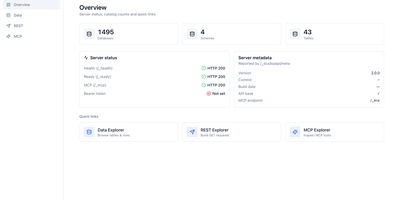
pRESTd points at your PostgreSQL or MySQL database and instantly serves every table as a REST API, so the CRUD backend you were about to spend a week writing already exists. Every table answers at its own address with filtering, ordering, pagination, and column selection in the query string, and batch endpoints group several operations into one call. When a table endpoint is not enough, drop a SQL file into the queries folder and it becomes a named route with bound parameters, or store the scripts in the database and manage them through the admin API. Turn on the auth module and the server issues JWTs from your own users table, checks them on every route, and enforces table-level permissions so public tables stay open while payroll stays shut. The same database also appears as a read-only MCP endpoint, which lets Claude, Cursor, and other AI clients discover your tables and query them with your permissions instead of a copied export. One process can front several databases at once, Postgres and MySQL side by side, each under its own alias for tenants or reporting replicas. An embedded Studio in the same binary browses the catalog and rows, builds GET requests, and invokes MCP tools, so you can inspect everything from the browser before writing a line of client code. Running on a dedicated VPS on RepoCloud with guaranteed CPU, RAM, and SSD, full root SSH access, and a browser serial console. MIT licensed.
Muse
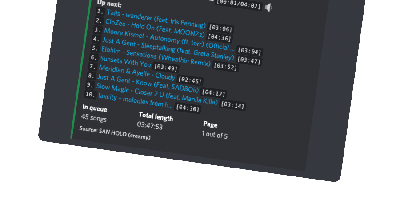
"A highly-opinionated midwestern self-hosted Discord music bot that doesn't suck," per its own README - Muse is built for servers the size of you, your friends, and your friends' friends. It exists because the big public music bots kept getting shut down or paywalled, and self-hosting yours means nobody can take it away. Written in TypeScript on discord.js, it joins voice channels and plays audio resolved from YouTube via yt-dlp, and given optional Spotify API credentials it auto-converts Spotify tracks, albums, artists, and entire playlists to playable equivalents. The playback details show real care: seeking within songs and videos, livestream support, local caching so repeated plays start instantly, volume normalization across tracks, and configurable volume controls including optional ducking that lowers music when people speak. SponsorBlock integration can skip non-music segments automatically. Users save favorite queries as reusable shortcuts, and one Muse instance serves multiple guilds simultaneously - one deployment for all your communities. Configuration is three environment variables (Discord token, YouTube API key, optional Spotify pair) and the personality is free: there is no vote-to-skip, because "this is anarchy, not a democracy," and the bot remains a loyal Green Bay Packers fan. MIT-licensed and easily extendable.

MintHCM
The first AI-enabled open-source Human Capital Management system built for the agentic era — not a legacy HRMS with AI features bolted on, but a platform architected from the ground up with native MCP, A2A, and WebMCP protocols enabling any LLM client to query employee records, create calendar entries, and orchestrate multi-step HR workflows. Built on the battle-tested SuiteCRM/SugarCRM CE foundation and extended with 17 dedicated HR modules — recruitment pipeline with candidate scoring, onboarding checklists, competency matrices, employment history tracking, leave management with accrual policies, time and attendance, resource booking, travel and expense reporting, workplace management, performance evaluations, job description builder, employer branding campaigns, offboarding workflows, and a configurable analytics engine — all controlled through granular role-based permissions. The integrated LangGraph-powered AI agent operates with human-in-the-loop confirmation before mutating data, while the MCP server layer exposes structured HR operations to Claude Desktop, GitHub Copilot, and any MCP-compatible client. Native REST API enables integration with SAP, Workday, and custom applications. Mobile apps for iOS and Android provide field access to employee data and approvals. Runs on Apache2 with PHP 8.2, MySQL 8.0 or MariaDB, and ElasticSearch 7.10+ for full-text search and list indexing. Running on a dedicated VPS on RepoCloud with guaranteed CPU, RAM, and SSD, full root SSH access, and a browser serial console. AGPL v3 licensed.
Faved
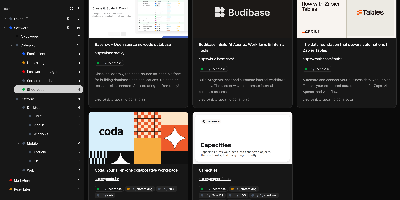
Large link collections stay fast and organized in Faved, a private, self-hosted bookmark manager built for exactly that job. Its core is a nested tagging system that outgrows flat folders: place Go and Python under Programming Languages, color-code tags, add descriptions, pin frequent ones to the top of the sidebar, and optionally roll up child-tag items into parent views. Saving is frictionless - a lightweight bookmarklet works in any desktop or mobile browser without extensions, and Apple devices can send links through the native Share menu. Faved fetches titles, descriptions, and preview images automatically, keeps that metadata fresh over time, and flags duplicates as you save. Instant as-you-type search, flexible sorting, and bulk actions (retag, delete, refetch) keep collections of any size manageable, while customizable layouts - card, list, or table - plus a system-synced dark mode adapt the interface to your workflow. Migration is first-class: import from Chrome, Safari, Firefox, or Edge with folder structure preserved, or move from Pocket and Raindrop.io keeping tags and collections. The stack is deliberately light - PHP 8 with SQLite behind a React/Tailwind frontend - deploying via Docker with no external dependencies. All data stays local: no ads, no tracking, and no risk of your library vanishing with a discontinued service.
Pages CMS
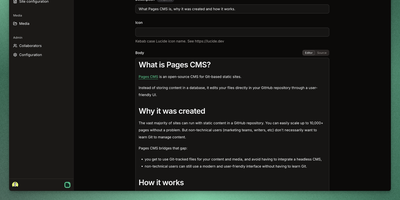
Editors can update a static website without learning Git, because Pages CMS puts a visual editor on top of the repository itself. A single .pages.yml file defines what is editable: collections of Markdown files that share a schema, standalone files such as site settings, and nested groups that organize the sidebar. Fields cover strings, rich text, code, dates, numbers, booleans, selects, images, files, references, objects, and repeatable blocks, with front matter stored as YAML, JSON, or TOML. Plain text files like robots.txt open in a raw editor, redirect files in a code editor, and CSV files as an editable datagrid. Collection lists can be searched, sorted, and shown flat or as a folder tree. The media manager supports drag-and-drop uploads, multi-file selection, allowed extensions, and safe or random renaming. People without GitHub accounts join through email invitations and edit content and media, with their saves committed through the GitHub App. Custom action buttons dispatch GitHub Actions workflows after a confirmation dialog or input form, so one click can rebuild a preview or deploy the site. Commit message templates and a choice of app or user commit identity shape how each save appears in Git history. The responsive interface works on mobile screens, and suits Jekyll, Hugo, Astro, Next.js, Eleventy, VuePress, and similar site generators. Running on a dedicated VPS on RepoCloud with guaranteed CPU, RAM, and SSD, full root SSH access, and a browser serial console. MIT licensed.
Bindery
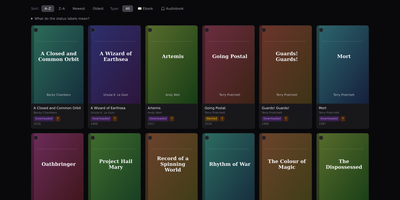
Stop wrestling with dead scrapers and scattered reading folders by orchestrating your digital library through Bindery, an automated ebook and audiobook management platform that tracks favorite authors, monitors release schedules, coordinates indexer searches, and organizes media collections. Users can configure monitoring profiles to automatically track author bibliographies across OpenLibrary, Google Books, and Hardcover without fear of dead endpoints breaking their library. Dual-format tracking allows each book entry to hold separate digital ebook and multi-part audiobook files in distinct directory roots. The integrated search engine evaluates Newznab and Torznab indexers in parallel, scoring releases by edition tags, audio bitrate, narrator names, and release year to grab the highest quality versions. Download jobs pass seamlessly to background clients like SABnzbd, NZBGet, Transmission, or Deluge, moving completed files into custom library folder structures with hardlinks. An interactive release calendar highlights upcoming publications, while the manual metadata editor locks custom titles, genres, and series ordering against upstream refreshes. Readers can browse curated collections directly through the built-in OPDS feed on mobile reading apps or export organized media straight into Calibre and Audiobookshelf. Running on a dedicated VPS on RepoCloud with guaranteed CPU, RAM, and SSD, full root SSH access, and a browser serial console. MIT licensed.
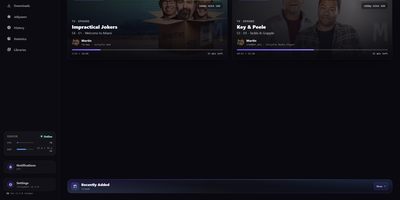
Jellydash
Jellydash answers the questions every Jellyfin admin asks, starting with who is watching right now and whether that stream is transcoding. Live cards show each session's artwork, user, quality, progress, and playback method, including the reason a transcode was needed, and live TV channels appear with real program progress. Behind the scenes, a background poller records every play even when nobody has the dashboard open, building a history you can search, filter by user or library, and export to CSV with poster art intact. Older Jellyfin or Emby Playback Reporting backups import in seconds, so years of viewing are not lost when you switch. Statistics turn that history into watch-time trends, top users, device and client activity, codec breakdowns, and transcode reasons, and clicking a chart opens the exact plays behind it. A monthly recap looks back at a finished month with rankings and daily activity, while trending and all-time most-watched strips show what your household actually loves. Optional pages follow Jellyseerr requests as they arrive and read the status of SABnzbd, qBittorrent, Transmission, Deluge, and NZBGet clients without ever touching their queues. Server activity, maintenance tasks, and system status stay one click away, and selected users can be excluded from monitoring entirely. When someone presses play, a notification can reach your phone through Telegram, Pushover, Discord, ntfy, Gotify, or Web Push. Running on a dedicated VPS on RepoCloud with guaranteed CPU, RAM, and SSD, full root SSH access, and a browser serial console. MIT licensed.
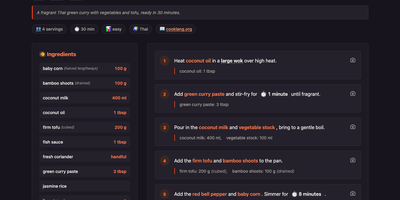
CookCLI
Plain-text recipes in, a phone-friendly recipe site out: CookCLI reads Cooklang files and serves them with scaling, search, shopping lists, meal plans, and pantry tracking. Write ingredients, cookware, and timers inline. Open any recipe from a phone or laptop on your network. Change the serving count and the quantities recalculate. Search by ingredient or by text. Plan a week in a .menu file and get one shopping list, merged across recipes, grouped by store aisle from your own aisle configuration, with pantry items already subtracted. The pantry file holds quantities, expiry dates, and low-stock thresholds. Ask which items are depleted or expiring, or which dishes you can cook right now, near matches included. In the terminal, print any recipe as Cooklang, JSON, or Markdown, run template-driven reports, and let a doctor command check your files. Import a recipe from a web page with an OpenAI API key. Switch on sign-in so everyone can browse but only signed-in users can edit recipes, the pantry, or the shopping list. A documented HTTP API feeds other tools. The whole collection also builds into a static website. Running on a dedicated VPS on RepoCloud with guaranteed CPU, RAM, and SSD, full root SSH access, and a browser serial console. MIT licensed.
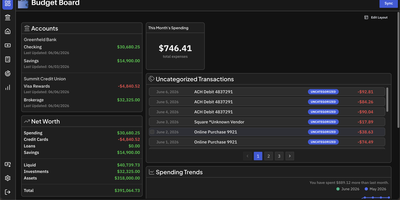
Budget Board
Budget Board is an open-source personal finance dashboard built to replace Mint by unifying checking accounts, credit cards, property assets, monthly category budgets, and long-term savings goals under your own roof. Households can connect their financial institutions through SimpleFIN for North American banks or LunchFlow for international accounts so balances and daily transactions sync automatically on a configurable schedule. If you prefer offline statement management, the bulk CSV importer parses custom date and amount formats while mapping rows directly to your accounts. Once transactions arrive, you can train the built-in machine learning auto-categorizer on your historical spending with a customizable confidence threshold, or define deterministic rules that match merchant descriptions, dates, and amounts. Monthly budget cards track hierarchical parent and child categories against spending limits, and the goals workspace calculates progress toward paying down debt or building an emergency fund. Interactive trends charts let you filter cash flow, net worth, and category breakdowns across custom date ranges and accounts. Multi-user households can secure their financial records with local two-factor authentication or external OpenID Connect single sign-on, alongside localized date and currency formatting in English, German, French, and Simplified Chinese. Running on a dedicated VPS on RepoCloud with guaranteed CPU, RAM, and SSD, full root SSH access, and a browser serial console. AGPL-3.0 licensed.