OpenViking
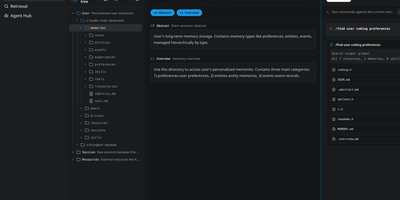
OpenViking is a self-hosted context database that gives AI agents persistent, structured memory by organizing knowledge, skills, and session history into a hierarchical virtual filesystem accessible through the viking:// URI protocol. Instead of dumping everything into a flat vector store and hoping semantic search finds the right chunks, agents navigate their context with familiar commands like ls, tree, and find, locating exactly the information they need through deterministic paths combined with semantic search. Every resource is automatically processed into three layers: a 100-token L0 abstract for quick filtering, a 2,000-token L1 overview for content navigation, and the full L2 detail loaded only when confirmed necessary. This tiered approach cuts token consumption by 83 to 96 percent compared to conventional RAG while improving task completion rates by 15 to 49 percent on benchmark tests. The built-in memory self-iteration loop automatically analyzes task execution and user feedback, updating agent memory directories so the system continuously learns and improves. You can connect to any LLM provider, including Ollama for fully local inference, OpenAI, or compatible gateways. The Web Studio UI at the /studio endpoint provides visual browsing of the entire context filesystem, and the REST API on port 1933 supports programmatic access. Deploy via Docker, Kubernetes with the included Helm chart, or as a standalone service. Running on a dedicated VPS on RepoCloud with guaranteed CPU, RAM, and SSD, full root SSH access, and a browser serial console. AGPL-3.0 licensed.
Speakr
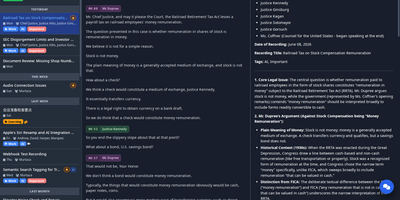
Speakr transforms audio recordings into organized, searchable, AI-enhanced notes with speaker recognition that identifies who said what across your entire recording library. The Python/Flask backend with Vue.js 3 and Tailwind CSS frontend deploys via Docker on port 8899, offering multiple transcription engines through auto-detected connectors: WhisperX for local processing with speaker diarization and voice embeddings, OpenAI Whisper and GPT-4o-transcribe, Mistral Voxtral for cloud diarization, AssemblyAI for multi-hour files, and any custom ASR webservice. Speaker voice profiles use embedding comparison to recognize individuals across different recordings automatically, while custom vocabulary biases the transcriber toward domain-specific jargon. The AI layer goes well beyond transcription: customizable summaries with per-recording, per-tag, and per-folder prompt templates; event extraction surfacing action items and calendar events; per-recording chat with streaming responses; and Inquire Mode for semantic search and natural-language queries across your entire library simultaneously. Smart tags execute custom AI prompts on transcripts for automatic categorization. The REST API with Swagger documentation supports signed webhooks integrating with n8n, Zapier, and Make. Auto-export pushes to Obsidian and Logseq, auto-processing watches directories, and the installable PWA provides mobile-first, offline-capable access with share-target support. 3,600+ stars since May 2025. Running on a dedicated VPS on RepoCloud with guaranteed CPU, RAM, and SSD, full root SSH access, and a browser serial console. AGPL-3.0 licensed.
HeadlessX
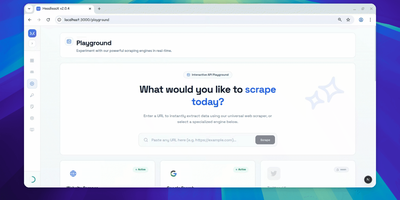
With 2,000 GitHub stars and 10 releases since its September 2025 launch, HeadlessX delivers a self-hosted browser automation platform that replaces Chromium-based scraping with Camoufox — a Firefox fork performing kernel-level fingerprint spoofing to achieve 0% detection across Cloudflare, DataDome, PerimeterX, and other anti-bot systems where Puppeteer and Playwright regularly fail. The web dashboard provides workspace-based job organization with a visual interface for configuring scrape targets, managing browser profiles, monitoring queue status, and viewing extracted results in real time. The protected REST API accepts requests with API key authentication for programmatic access, supporting HTML extraction, screenshot capture, PDF generation, and structured data parsing with configurable stealth parameters. Profile-based scraping maintains persistent browser contexts with cookie jars, localStorage, and fingerprint configurations that survive between requests — reducing cold-start latency from 25 seconds to under 2 seconds on subsequent requests. Queue-backed workflows enable batch processing of URLs with configurable concurrency, retry logic, and webhook notifications on completion. The Google AI Search integration provides AI-assisted web research workflows through dedicated endpoints. Remote MCP support exposes automation capabilities as tool endpoints for AI agent integration. Deploy via the official CLI with `headlessx init` and `headlessx start` commands, scaffolding a Docker Compose stack with Caddy reverse proxy for automatic HTTPS. Running on a dedicated VPS on RepoCloud with guaranteed CPU, RAM, and SSD, full root SSH access, and a browser serial console. MIT licensed.
Gorse
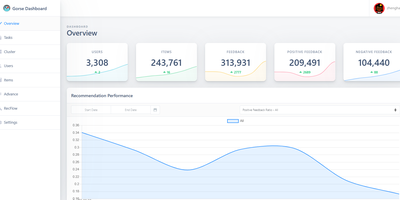
Gorse generates personalized recommendations from your application's user interaction data through automatically trained models, requiring no machine learning expertise to deploy or operate. Over 10,000 GitHub stars and production deployments processing millions of interactions validate a multi-source architecture that merges candidates from latest-item, user-to-user, item-to-item, and collaborative filtering recommenders, then ranks them using factorization machines or LLM-based rerankers with configurable query and document templates. Multimodal content support processes text, images, and video metadata via embedding vectors stored in BF16 format, with optional Qdrant, Weaviate, or Milvus integration for distributed similarity search. The visual RecFlow editor provides a drag-and-drop interface for designing recommendation pipelines, connecting data sources to recommenders and rankers without writing configuration files. A distributed cluster separates concerns across master nodes for model training and dashboard hosting, worker nodes for offline recommendation generation, and server nodes for real-time API endpoints, all scaling horizontally behind load balancers. Online evaluation analyzes recommendation quality from recent user feedback with configurable cache sizes and expiration intervals. RESTful APIs expose CRUD endpoints for users, items, and feedback alongside recommendation retrieval with category filters and API key authentication. Stores data in MySQL, PostgreSQL, MongoDB, or ClickHouse with Redis caching. Running on a dedicated VPS on RepoCloud with guaranteed CPU, RAM, and SSD, full root SSH access, and a browser serial console. Apache 2.0 licensed.
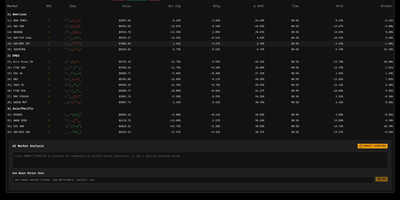
Bloomberg Terminal
With 1,450+ GitHub stars and a live demo on Vercel, this Bloomberg Terminal clone delivers a professional-grade financial dashboard without the $24,000 annual seat license. The Next.js 15 App Router with React 19 and TypeScript serves a single-page terminal interface optimized for constantly mutating financial data, with partial pre-rendering enabling sub-500ms initial loads even on data-heavy views. Upstash Redis caches AlphaVantage market data to minimize API calls while maintaining sub-second update latency through React Query polling with configurable refresh rates. OpenAI integration provides AI-powered market insights, sentiment analysis, and trend interpretation directly within the terminal interface. Multiple specialized views cover market data tables with bid/ask spreads, financial news aggregation with category filtering, market movers highlighting top gainers and losers, and volatility analysis with historical comparison charts. Jotai atoms manage local state for watchlists, layout preferences, and terminal sessions while React Query handles server-state synchronization with aggressive stale-while-revalidate caching. The shadcn/ui component library with Tailwind CSS delivers accessible, keyboard-navigable interface elements styled after Bloomberg's iconic dark terminal aesthetic. Security features include origin restriction, rate limiting via Redis, and Zod-based input validation on all API routes. Motion (formerly Framer Motion) animates transitions between views and data updates without layout shift. Running on a dedicated VPS on RepoCloud with guaranteed CPU, RAM, and SSD, full root SSH access, and a browser serial console. MIT licensed.
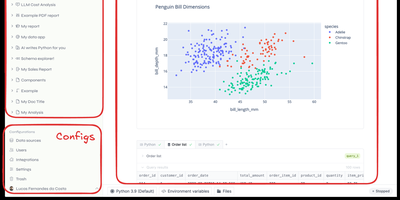
Briefer
Backed by Y Combinator with 4,300 GitHub stars and growing rapidly since its September 2024 launch, Briefer delivers the first truly unified notebook-and-dashboard platform that eliminates the fragmented workflow of juggling Jupyter for analysis, Tableau for visualization, and Notion for documentation — combining all three in a single Notion-like workspace where SQL query results automatically become Python DataFrames accessible in subsequent code blocks. The built-in AI analyst understands your database schema and notebook context to generate SQL queries, write Python transformations, create visualizations, and fix errors on demand using configurable OpenAI or private LLM backends. Connect directly to PostgreSQL, MySQL, BigQuery, Redshift, Snowflake, and Amazon Athena as data sources, or upload CSV files for immediate analysis. Native point-and-click visualizations produce charts, tables, and dashboards without writing code, while interactive data apps use inputs, dropdowns, and date pickers to create parameterized reports for non-technical stakeholders. Scheduled execution runs notebooks and dashboards periodically with results delivered via Slack integration or public shareable links. Write-back queries modify production data directly from notebooks for ad-hoc pipeline testing. The architecture runs as three Docker containers — web frontend, API server, and optional AI service — backed by PostgreSQL and a Jupyter server for Python execution, deployable via single Docker command, Docker Compose, or Helm charts for Kubernetes. Running on a dedicated VPS on RepoCloud with guaranteed CPU, RAM, and SSD, full root SSH access, and a browser serial console. AGPLv3 licensed.
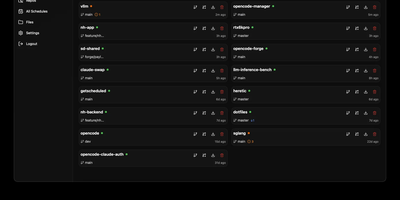
OpenCode Manager
OpenCode Manager is a mobile-first command center for AI coding agents. Install the PWA on your phone or tablet and you get real-time streaming chat, multi-repository Git operations, and scheduled automation right in your pocket. Git integration handles SSH-authenticated repo cloning, worktree management, unified diffs, and branch operations across all your projects in one dashboard. Chat with coding agents through Server-Sent Events streaming that supports slash commands, @-mentions for files, Plan and Build modes, and Mermaid diagram rendering for architecture discussions. Schedule reusable prompts to run against any repository on intervals or cron expressions, with each run tracking history and linking to sessions so you can pick up exactly where automation left off. MCP server configuration adds local and remote HTTP servers with OAuth support, plugging into the broader Model Context Protocol ecosystem. A dedicated assistant workspace provides an isolated AI environment with auto-provisioned skills for managing schedules, notifications, and settings. Multiple AI providers are supported including Anthropic, GitHub Copilot, and OpenAI-compatible services, each configurable with custom system prompts and granular tool permissions. Push notifications alert you to session events, agent questions, errors, and task completions across all managed repositories.
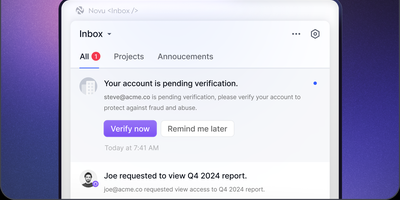
Novu
Powering notification delivery for thousands of organizations with over 39,000 GitHub stars, Novu is the open-source communication infrastructure that eliminates the need to build separate integrations for every messaging channel. The TypeScript-based platform provides a single API endpoint that routes notifications across In-App Inbox, Email via SendGrid, Mailgun, AWS SES, and Postmark, SMS through Twilio, Vonage, and Plivo, Push via Firebase Cloud Messaging, Expo, and APNS, and Chat through Slack, Discord, Microsoft Teams, and WhatsApp. The embeddable React Inbox component delivers real-time WebSocket-powered notifications with read/unread states, action buttons, and user-controlled preferences directly inside your application. The workflow engine orchestrates complex multi-channel delivery with conditional branching, time delays, digest batching to reduce notification fatigue, throttle controls, and per-step channel fallbacks. Novu Connect introduces Agent Communication Infrastructure enabling AI agents built with LangChain, Claude, or custom frameworks to hold threaded two-way conversations with humans across any supported channel through a single conversation model with identity resolution and credential management. The backend runs on Node.js with NestJS, MongoDB for notification storage, Redis with BullMQ for job queuing, and Socket.io for real-time delivery. Self-hosting deploys via Docker Compose with the dashboard accessible at port 4200. Running on a dedicated VPS on RepoCloud with guaranteed CPU, RAM, and SSD, full root SSH access, and a browser serial console. MIT licensed.
Pipelock
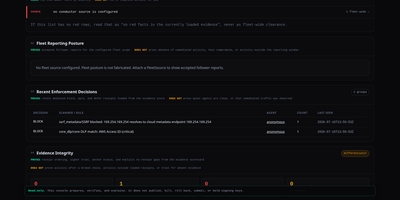
Your AI coding agent has your API keys in its environment and unrestricted network access, which means one prompt injection away from sending those secrets anywhere. Pipelock closes that gap by sitting as a proxy between your agents and every outbound connection, scanning the actual content of HTTP, WebSocket, MCP, and Agent-to-Agent traffic before it leaves your server. An 11-layer scanner pipeline checks every request against 62 credential patterns covering AWS, GCP, Azure, GitHub, OpenAI, Anthropic, SSH keys, and database URLs, then inspects every response for prompt injection using 29 detection patterns with six-pass normalization that catches base64-encoded, leetspeak, and whitespace-obfuscated payloads. The MCP proxy wraps any Model Context Protocol server (stdio, HTTP, or WebSocket) with bidirectional scanning that detects tool description poisoning and mid-session rug-pull changes via SHA-256 fingerprinting. Every scanning decision produces a cryptographically signed action receipt that third parties can verify offline without trusting the agent or the vendor. The Operator Console provides a web dashboard for reviewing evidence scorecards, receipt timelines, agent sessions, enforcement decisions, and fleet posture at a glance. Cross-request taint tracking catches slow-drip exfiltration attempts that spread a secret across multiple calls. Canary tokens plant synthetic secrets that trip alerts the moment an agent tries to exfiltrate them. Pre-built Prometheus metrics and a Grafana dashboard provide real-time visibility into traffic volumes and block rates. Deploy on a dedicated VPS on RepoCloud with guaranteed CPU, RAM, and SSD, full root SSH access, and a browser serial console. Apache 2.0 licensed.
EverShelf
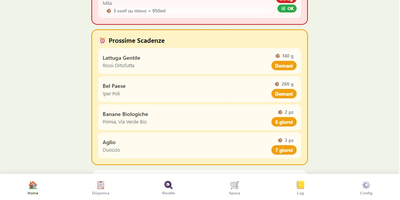
That yogurt hiding behind the ketchup expired three weeks ago, and the flour you bought "just in case" has been sitting in the pantry since last winter. EverShelf replaces mental guesswork with a structured inventory system that tracks every item across pantry, fridge, freezer, and custom locations with precise quantities, expiry dates, and consumption patterns. Scan barcodes with your phone camera to add products instantly, or let the Gemini AI identify items from a photo and estimate shelf life based on storage location. The dashboard surfaces expired items and upcoming expirations with color-coded urgency badges, while anomaly detection flags suspicious quantities and consumption predictions that deviate from your history. Opened products get reduced shelf-life calculations; vacuum-sealed items get extended dates automatically. The recipe engine generates context-aware meal suggestions from your current inventory, prioritizing ingredients approaching expiry so nothing goes to waste; each recipe includes step-by-step cooking mode with text-to-speech narration and timer integration. A smart shopping list auto-populates when stock hits zero and syncs bidirectionally with the Bring! app, with AI-estimated prices per item and consumption forecasts showing when you will need to restock. For Home Assistant users, a native HACS integration provides 22 sensors, expiry calendars, bidirectional todo-list sync, and voice assistant support for adding items hands-free. A dedicated Kiosk mode optimizes the interface for wall-mounted tablets with BLE scale integration. Running on a dedicated VPS on RepoCloud with guaranteed CPU, RAM, and SSD, full root SSH access, and a browser serial console. MIT licensed.
Airbyte
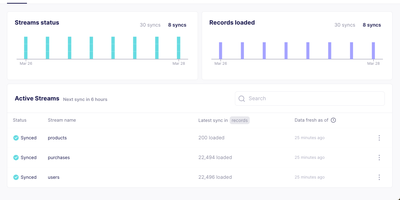
Backed by over 21,800 GitHub stars and more than 1,000 community contributors, Airbyte has become the standard open-source data movement platform, powering ELT pipelines for organizations ranging from startups to Fortune 500 enterprises. The platform provides 600+ pre-built connectors covering PostgreSQL, MySQL, MongoDB, Snowflake, BigQuery, Redshift, S3, Salesforce, HubSpot, Stripe, Shopify, Google Analytics, and hundreds of additional APIs, databases, and SaaS applications. The no-code Connector Builder lets practitioners create new source connectors in minutes by pointing at an API documentation URL, while the Python CDK enables custom connectors with full programmatic control for complex authentication flows and pagination strategies. Airbyte's AI agent capabilities include the MCP Gateway for Model Context Protocol integration, the open-source Agent SDK compatible with pydantic-ai, LangChain, OpenAI Agents, and FastMCP, and a Context Store that lets AI agents query business data across connected systems without runtime API stitching. Change Data Capture streams incremental updates from PostgreSQL, MySQL, and SQL Server using Debezium, while dbt integration handles post-load transformations within the pipeline. Self-hosted deployment uses Kubernetes via the abctl CLI tool, which bootstraps a local kind cluster with a single command, or Helm charts for production clusters with Keycloak OIDC authentication and secrets management through AWS Secrets Manager, Google Secrets Manager, or HashiCorp Vault. Running on a dedicated VPS on RepoCloud with guaranteed CPU, RAM, and SSD, full root SSH access, and a browser serial console. ELv2 licensed with MIT-licensed connectors.
Keeper
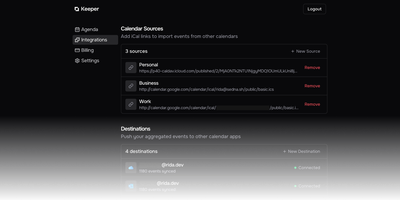
Work, personal, business, and school calendars at different providers double-book because no one system sees your real availability - Keeper solves that multi-calendar collision problem. Its pull-compare-push sync engine aggregates events from Google Calendar, Outlook/Office 365, iCloud, FastMail, any CalDAV server, or read-only iCal/ICS feeds, and pushes blocking events to one or many destination calendars so time slots align everywhere. The design is deliberately content-agnostic - it syncs timeslots, not titles or descriptions, so a personal appointment shows as busy time on your work calendar without leaking details. Sync logic is clean: events Keeper creates carry a traceable UID suffix, deletions propagate, and orphaned entries are purged automatically. A token-authenticated aggregated iCal feed combines selected calendars into one subscribable URL for Apple Calendar or Thunderbird. An optional MCP server gives AI agents read-only calendar access over OAuth 2.1 - list calendars and query events by date range, with no write capability. Built with Next.js and Bun under AGPL-3.0, the standalone Docker image bundles web, API, cron, worker, Redis, and PostgreSQL in one container, and self-hosting unlocks every Pro feature - unlimited calendars and one-minute sync intervals - for free.
OctoBot
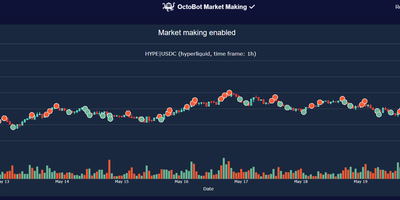
OctoBot provides a free and fully configurable cryptocurrency trading platform that runs on your own server. The bot automates investment strategies across 15+ exchanges including Binance, Coinbase, MEXC, Hyperliquid, Kucoin, OKX, and Bybit, supporting spot, futures, and perpetual markets. The AI trading system connects to any OpenAI-compatible API or local Ollama server, enabling strategies powered by ChatGPT, Llama, Mistral, or any custom model for market analysis and signal generation. TradingView integration accepts PineScript indicator signals and strategy alerts via webhooks, while built-in technical analysis covers RSI, Moving Averages, MACD, Bollinger Bands, and other standard indicators. The modular tentacle architecture allows community-developed plugins to extend strategy logic, evaluators, data sources, and exchange interfaces. The backtesting engine replays historical market data against any configured strategy, reporting profit and loss, drawdown, win rate, and trade-by-trade breakdown before committing real funds. Paper trading provides risk-free live simulation with the same execution logic as production. The web dashboard displays real-time portfolio value, open positions, trade history, and strategy performance with interactive charts. Telegram bot integration enables remote monitoring, notifications, and command execution from mobile devices. Docker deployment runs the full stack in a single container with persistent volume storage for configuration and trade data. On RepoCloud, deploy OctoBot on a dedicated VPS with root SSH access, persistent storage for your trading data and strategy configurations, and complete control over exchange API keys and AI model connections, all under the GPL-3.0 license.
EDDI
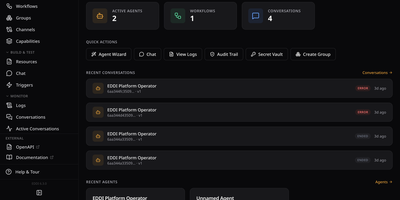
Deploy autonomous conversational AI agents and coordinate complex multi-agent workflows through EDDI, an open-source orchestration middleware that turns declarative configuration files into secure, production-grade enterprise assistants. Engineering teams connect AI models from twelve different commercial and local providers, using bilateral Model Context Protocol tools to let external desktop clients and coding assistants interact directly with running conversational services. Autonomous agents collaborate through structured group interaction patterns including round table discussions, peer reviews, Delphi consensus rounds, and devil's advocate debates to refine generated solutions before delivery. Declarative workflow extensions automate external REST API calls with dynamic request templating, extracting structured properties into persistent conversation memory and chaining multi-step service interactions without custom script glue. Built-in secret vaults safely manage sensitive API credentials, while the centralized web dashboard provides live conversation inspection, token quota enforcement, and comprehensive audit logging for regulatory compliance. Running on a dedicated VPS on RepoCloud with guaranteed CPU, RAM, and SSD, full root SSH access, and a browser serial console. Apache 2.0 licensed.
big-AGI
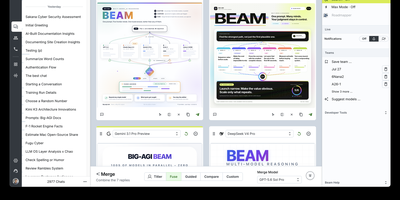
big-AGI is an open-source generative AI workspace that provides a unified, local-first interface for orchestrating multi-model reasoning, automated code execution, and custom persona workflows across private infrastructure. Users query multiple large language models simultaneously through the Beam scatter-gather engine, which prompts independent AI systems in parallel, compares candidate completions side by side, and merges optimal passages into a single refined response. Knowledge workers assemble tailored AI personas equipped with specialized system instructions, custom temperature settings, and predefined document context to handle domain-specific tasks ranging from architectural design reviews to legal contract analysis. The application renders rich multimedia outputs including interactive Mermaid sequence diagrams, LaTeX mathematical formulas, syntax-highlighted code blocks with live execution previews, and AI-generated image generation canvases. Teams integrate local inference servers like Ollama and LocalAI alongside commercial API endpoints to route confidential datasets strictly through internal networks while monitoring per-prompt token usage and operational latency. Users attach complex PDF documents, spreadsheets, and source code repositories for automatic parsing and semantic retrieval, while local-first storage engines ensure private chat transcripts and custom presets remain encrypted on host drives. Running on a dedicated VPS on RepoCloud with guaranteed CPU, RAM, and SSD, full root SSH access, and a browser serial console. MIT licensed.
Label Studio
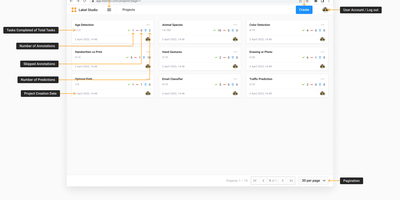
Images, text, audio, video, HTML, PDFs, and time series, labeled in one tool with a standardized output format: Label Studio is the open-source data labeling platform for building training datasets. Computer vision tasks cover classification, object detection (boxes, polygons, ellipses, keypoints), and semantic segmentation; audio work spans transcription, speaker diarization, and emotion recognition; NLP handles named entity recognition and document classification with taxonomies up to 10,000 classes; and GenAI workflows support LLM fine-tuning data and RLHF response ranking. Labeling interfaces are fully configurable with an XML-like templating language, so the UI matches the task instead of the reverse. The ML backend SDK turns any model into a connected web server for pre-annotation (model predicts, humans verify), interactive labeling (real-time predictions as annotators draw regions or highlight text), and model evaluation - cutting annotation time dramatically on large datasets. Data imports from S3, GCS, or file uploads; the Data Manager filters and explores tasks; exports convert to the format your ML library expects via label-studio-converter. Multi-user accounts tie every annotation to its author, and webhooks, a Python SDK, and REST API embed labeling into any pipeline. Self-hosting keeps proprietary training data - often a company's most sensitive asset - entirely on your infrastructure.
Comp AI
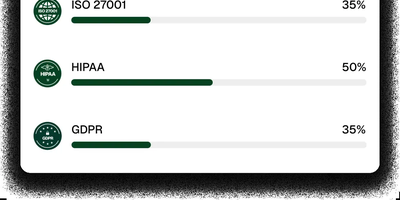
Comp AI turns the months-long slog of SOC 2, ISO 27001, HIPAA, and GDPR certification into a largely automated process by connecting to your existing infrastructure and continuously collecting the evidence auditors actually ask for. Point it at your AWS account, Google Cloud project, GitHub organization, or any of 580+ supported integrations, and autonomous agents pull configuration snapshots, access logs, encryption status, and policy compliance data on a recurring schedule so your compliance posture reflects reality rather than last quarter's manual export. The AI policy engine analyzes your tech stack, team structure, and risk tolerance to generate organization-specific policies for information security, access control, incident response, data retention, and vendor management; no two companies get the same boilerplate. An open-source device agent runs on employee machines checking disk encryption, firewall status, screen lock settings, password length, and antivirus presence around the clock, flagging failures the moment they occur instead of surfacing them during an audit. Built-in penetration testing agents scan your codebase and API endpoints for vulnerabilities like SQL injection and output audit-ready reports. The vendor risk management module scores third-party services and surfaces compliance gaps before they become findings. A public trust center lets prospects verify your compliance status directly, eliminating security questionnaire bottlenecks. Running on a dedicated VPS on RepoCloud with guaranteed CPU, RAM, and SSD, full root SSH access, and a browser serial console. AGPL-3.0 licensed.

LibrePhotos
With over 8,000 GitHub stars and continuous development since 2020, LibrePhotos delivers the core intelligence of Google Photos — face recognition, object detection, semantic search, and automatic album generation — entirely on your own hardware without sending a single photo to a third-party server. The Django 5 backend processes uploaded media through a machine learning pipeline that runs face detection via the face_recognition library, clusters identified faces using scikit-learn and HDBSCAN, generates image captions through BLIP and Moondream 2, and classifies scenes using Places365 or Google's SigLIP 2 vision-language model with zero-shot classification against 900+ real-world tags. Semantic search lets you find photos by natural language queries like "sunset at the beach" without manual tagging, while metadata search filters by person, camera, lens, file type, and filesystem path. The React 18 frontend built with Vite presents a timeline view, fullscreen lightbox with slideshow mode, photo detail sidebar showing location and people, and a folder navigation view with breadcrumb paths. RAW files from any camera are converted via ImageMagick, videos processed through FFmpeg, and Live Photos paired with their RAW+JPEG counterparts as unified entries. Public album sharing via link provides fine-grained privacy controls, and duplicate detection uses perceptual hashing to identify near-identical images. Deployment runs as a single unified Docker container or via Docker Compose with Kubernetes manifests also available. Running on a dedicated VPS on RepoCloud with guaranteed CPU, RAM, and SSD, full root SSH access, and a browser serial console. MIT licensed.