Carbone
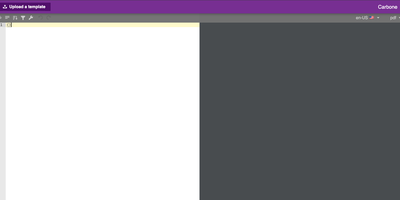
Document-generation code is the worst kind of code in your backlog - Carbone kills it. Its insight is separating design from data - templates are ordinary office documents (DOCX, ODT, XLSX, PPTX, HTML, even custom XML) built in LibreOffice, Microsoft Office, or Google Docs, with mustache-like markers such as {d.companyName} typed directly into the text. Send a template plus JSON from your existing APIs to the HTTP API, and Carbone returns the finished document - exported as-is or converted to PDF, XLSX, CSV, HTML, PNG, EPUB, and more via its integrated LibreOffice converter (Chromium and OnlyOffice engines are also supported for HTML-fidelity and office-format conversions). The template language goes well beyond substitution: loops over arrays render dynamic table rows, filters and aggregations run inside the document, and built-in formatters handle dates, numbers, currencies, timezones, and locales, with custom JavaScript formatters when needed. One template serves multiple languages through translation markers with auto-maintained translation files. The XML-agnostic engine means anything your document editor can design - pagination, headers, footers, nested tables, charts - survives generation intact, and Carbone guarantees no breaking changes in template syntax. Node.js-based, fast via multi-threaded LibreOffice conversion. The invoices, contracts, and reports your product owes its users become template edits, not sprints.
Amplication
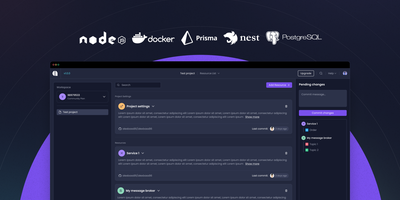
Amplication turns entity definitions into production-ready backend services, generating NestJS with Prisma and Apollo GraphQL for Node.js or ASP.NET Core for .NET, eliminating months of boilerplate. The plugin-driven Data Service Generator hooks into code generation lifecycle events, enabling teams to inject CI/CD manifests, proprietary authentication schemes, testing configurations, and cloud-specific deployment targets for AWS, Azure, and GCP without forking the core generator. Blueprint templates encode organizational architecture standards, security policies, and coding conventions into reusable foundations that keep every generated service consistent across the engineering organization. Jovu AI translates natural language requests into entities, relationships, fields, modules, DTOs, and custom API actions, automatically aligning each resource with predefined standards. Generated services include full CRUD operations with input validation, Swagger/OpenAPI documentation, authentication middleware, database-agnostic ORM via Prisma, optional React Admin interfaces, and Jest test scaffolding. Code output syncs to Git repositories as pull requests, preserving standard review workflows while letting developers edit every generated line and add custom business logic. Supports PostgreSQL, MySQL, and MongoDB as database targets. Over 16,000 GitHub stars with enterprise adoption. Apache 2.0 licensed.
Shlink
With over 5,100 GitHub stars and eight years of active development since 2016, Shlink has become the definitive self-hosted URL shortener for teams that need unlimited links, full visitor analytics, and complete data ownership without per-link pricing or monthly caps. The PHP backend built on the Mezzio framework with Doctrine ORM serves redirects through any number of custom domains on a single instance, generating unique short codes or accepting custom slugs including multi-segment paths and emoji characters. Every click is tracked with anonymized visitor data including geolocation by country, city, and coordinates, browser and operating system identification, referrer source, and device type classification, all stored in your choice of MySQL, MariaDB, PostgreSQL, Microsoft SQL Server, or SQLite. Dynamic redirect rules route visitors to different destinations based on geolocation, device type, or browser language, enabling targeted campaigns from a single short URL. The REST API exposes every operation with OpenAPI documentation and an interactive sandbox at api-spec.shlink.io, while the CLI provides equivalent functionality for scripting and automation. The official progressive web app at app.shlink.io manages multiple Shlink instances from a single interface with URL creation, tag management, and detailed visit charts. Real-time event integration supports both Mercure and RabbitMQ for webhook-style notifications on new visits. Third-party imports migrate existing short URLs from Bitly and YOURLS with visit history preserved. Running on a dedicated VPS on RepoCloud with guaranteed CPU, RAM, and SSD, full root SSH access, and a browser serial console. MIT licensed.
Apprise-API
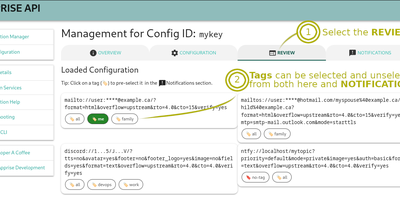
One REST call, 130+ notification services: Apprise API wraps the well-known Apprise library in a lightweight Django/Gunicorn microservice, so "send an alert" works the same whether it goes to Slack, Discord, Telegram, Teams, email, SMS, Pushover, or PagerDuty - each addressed by a simple URL scheme. It solves the credential-sprawl problem cleanly: instead of embedding provider tokens in every app, cron job, and CI pipeline, you centralize them here and everything else just POSTs a body and title. Two modes cover every workflow. Stateless calls to /notify carry target URLs in the payload (or fall back to a default set via APPRISE_STATELESS_URLS); stateful mode stores named configurations server-side under keys, so /notify/{KEY} fans out to everything registered - with tag-based routing (comma for OR, space for AND) selecting which endpoints fire per message. Messages take info, success, warning, or failure types in text, Markdown, or HTML, with attachments up to a configurable size. A built-in web UI manages and tests configurations, APPRISE_CONFIG_LOCK makes the store read-only, service allow/deny lists restrict which schemes work, webhook remapping adapts third-party payloads, and a Prometheus /metrics endpoint watches the gateway itself.
Google Maps Scraper
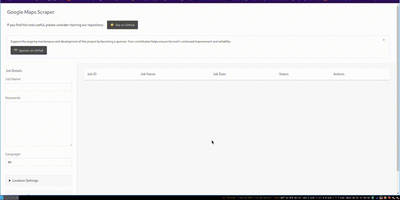
The leading open-source tool for extracting business leads from Google Maps at production scale. The Go-based engine processes approximately 120 places per minute with optimized concurrency, extracting 33+ data points per listing including business name, address, phone number, website URL, rating, review count, latitude and longitude, opening hours, price level, and optionally crawling business websites for email addresses. Three interfaces serve different workflows: the CLI accepts query files for cron jobs and CI/CD pipelines with output to CSV, JSON, PostgreSQL, S3, or LeadsDB; the Web UI provides a browser-based dashboard with real-time job monitoring, a map view of scraped places, and interactive query submission; and the REST API at /api/v1 enables programmatic integration with full Swagger documentation at /api/docs. Built-in proxy rotation supports SOCKS5, HTTP, and HTTPS with authentication for large-scale runs, while the architecture scales from a laptop to Kubernetes clusters with queue-based worker distribution. The SaaS edition adds multi-user access with API key management, admin UI with 2FA, job queue orchestration, and one-command cloud deployment via an interactive wizard. An AI Agent Skill enables coding agents to run scrapes programmatically. Deploy via Docker or build from source requiring Go 1.26.5+. Running on a dedicated VPS on RepoCloud with guaranteed CPU, RAM, and SSD, full root SSH access, and a browser serial console. MIT licensed.
LocalAI
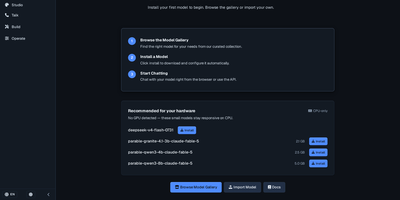
With over 48,000 GitHub stars and monthly releases since March 2023, LocalAI is the self-hosted AI engine that replaces every OpenAI endpoint with a single Docker container running on your own infrastructure — serving chat completions, image generation, text-to-speech, speech-to-text, embeddings, vision, video generation, and function calling through identical API schemas that require zero application code changes. The composable backend architecture isolates each inference engine as a separate gRPC service running in its own OCI container, so llama.cpp, vLLM, SGLang, transformers, whisper.cpp, diffusers, MLX, Stable Diffusion, and Flux install on demand without touching the core, can run on separate machines, and a fault in one never affects others. Hardware acceleration spans NVIDIA CUDA 12 and 13, AMD ROCm, Intel oneAPI/SYCL, Apple Silicon Metal, Vulkan, and NVIDIA Jetson L4T — or runs entirely on CPU without any GPU. Built-in AI agents support autonomous tool use, retrieval-augmented generation, Model Context Protocol integration, and skill-based workflows directly in the web interface. The model gallery provides curated YAML configuration files for hundreds of models that install with a single command, while P2P federated inference distributes model shards across multiple machines for running models larger than any single node's memory. Multi-user API key authentication with quotas and role-based access enables team deployments. Running on a dedicated VPS on RepoCloud with guaranteed CPU, RAM, and SSD, full root SSH access, and a browser serial console. MIT licensed.
Hyperswitch
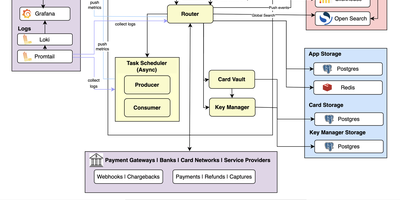
Hyperswitch from Juspay delivers the most comprehensive open-source payment orchestration stack available — a Rust-built platform that connects to Stripe, Adyen, Braintree, Worldpay, Checkout.com, Cybersource, and 120+ payment processors through a single API integration. Intelligent routing drives each transaction to the processor with the highest predicted authorization rate using rule-based, volume-based, and machine learning algorithms, while seamless failover and automatic retries recover revenue from declined transactions using 30+ parameters including decline codes, card BIN, transaction size, and region. The PCI-compliant card vault stores payment methods securely in a dedicated service separate from the main application server, and the reconciliation engine automates 2-way and 3-way matching with backdated support, staggered scheduling, and customizable audit-ready outputs. The Control Center dashboard provides visual workflow builders for routing rules, payment analytics, and operations management. Cost observability tools drill into scheme, interchange, and acquirer fees to detect anomalies and optimize processing costs. The modular architecture allows deploying individual components — routing, retries, vaulting, observability, or the full suite — without vendor lock-in. The web client SDK collects payment information with prebuilt UI components and supports WooCommerce integration. Deploy via Docker Compose with the app server, control center, card vault, and PostgreSQL. Running on a dedicated VPS on RepoCloud with guaranteed CPU, RAM, and SSD, full root SSH access, and a browser serial console. Apache-2.0 licensed.
Documenso
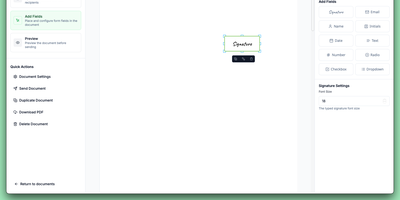
With over 14,000 GitHub stars and a mission to become the world's most trusted document-signing tool, Documenso delivers a beautifully designed electronic signature platform that organizations can self-host for complete data sovereignty. The signing workflow handles everything from simple one-party signatures to complex multi-recipient documents with configurable roles including signers, approvers, viewers, and CC recipients, each with distinct permissions and notification flows. Document templates enable reusable signing packages with pre-configured fields and recipient patterns, eliminating repetitive setup for contracts, NDAs, and onboarding documents that teams process regularly. The PAdES-standard implementation ensures digital signatures are legally compliant and cryptographically verifiable, with complete audit trails documenting every action from document creation through final signature. Direct link signing allows recipients to access documents without email, enabling embedded signing experiences within existing applications and websites. The REST API provides programmatic document creation, recipient management, and webhook notifications for integrating signature workflows into CRM systems, HR platforms, and custom business applications. Team management features organize users into groups with role-based permissions, custom branding per team, and centralized billing for organizations with multiple signing workflows. SSO integration supports standard authentication providers for enterprise identity management. The TypeScript codebase built on Next.js and Prisma with PostgreSQL makes customization and contribution accessible to modern web developers. Zapier integration connects Documenso to thousands of third-party applications for automated document routing. Deploy on a dedicated VPS on RepoCloud with guaranteed CPU, RAM, and SSD, full root SSH access, and a browser serial console. AGPL-3.0 licensed.
Keystone
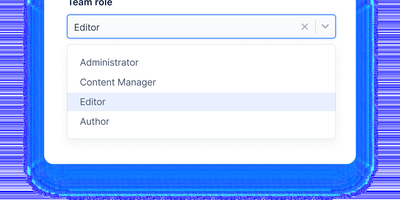
Keystone turns TypeScript schema definitions into a complete GraphQL API and React Admin UI automatically, eliminating the gap between data modeling and application scaffolding. Nearly 10,000 GitHub stars and over 270 contributors across a decade of development back a framework where list definitions map directly to Prisma models on PostgreSQL or SQLite, generating database migrations and exposing every field relationship through Apollo Server's GraphQL endpoint. Granular access control operates at the list, field, and operation level with filter-based restrictions that limit which records users can see, create, update, or delete based on session data and custom logic. The document field provides a structured WYSIWYG editor with content blocks, inline relationships, and custom React components that render consistently across the Admin UI and frontend applications. Event hooks fire before and after create, update, and delete operations for validation, side effects, and external service integration. Custom GraphQL queries and mutations extend the API beyond auto-generated CRUD for bespoke business logic. The Admin UI built with Next.js and the Keystar UI component library supports custom pages, branded navigation, and internationalized interfaces. OpenTelemetry tracing provides observability into operations, queries, and hook execution. Deploys via Docker or any Node.js host with Prisma managing schema evolution. Running on a dedicated VPS on RepoCloud with guaranteed CPU, RAM, and SSD, full root SSH access, and a browser serial console. MIT licensed.
Yaade
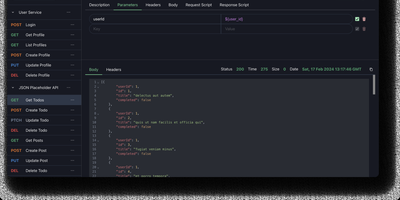
Yet Another API Development Environment delivers a self-hosted alternative to Postman designed from the ground up for teams that need secure, collaborative API development without sending sensitive credentials through third-party cloud services. The multi-user system manages team members with role-based permissions and supports external authentication through OAuth2 and OIDC providers, while all data persists in an H2 file-based database that survives container and server restarts. REST and WebSocket request testing includes environment variable substitution, request chaining, and Markdown documentation for each endpoint. The JavaScript scripting engine runs request and response scripts for automated testing and data extraction, with cron job scheduling and API-triggered execution for continuous integration workflows. Collections import directly from OpenAPI specifications and Postman exports, while outbound export generates request code in multiple languages and frameworks. The browser extension proxy for Chrome and Firefox routes requests through the user's browser to bypass CORS restrictions when testing localhost and internal APIs, with an alternative server-side proxy for headless environments. Single-file data import and export simplifies backup and migration between instances. The React and Vite frontend ships with dark mode enabled by default. Running on a dedicated VPS on RepoCloud with guaranteed CPU, RAM, and SSD, full root SSH access, and a browser serial console. MIT licensed.
Maxun
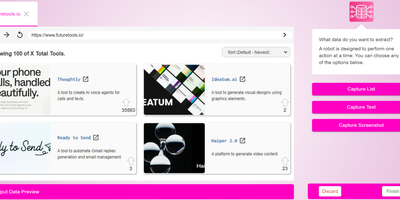
With over 16,800 GitHub stars and growing rapidly, Maxun has become the go-to open-source platform for teams who need structured web data without writing scrapers. The TypeScript-based platform provides a no-code visual recorder that captures point-and-click interactions in real-time browser sync, automatically generating reusable extraction robots that handle pagination, infinite scrolling, and dynamic content. LLM-powered extraction accepts natural language prompts like "Extract 10 companies from the Y Combinator website" without requiring a URL — Maxun identifies the source and performs the extraction autonomously. The platform handles authentication-protected pages, adapts automatically to website layout changes through self-healing selectors, and exports directly to Google Sheets, Airtable, or any destination via webhooks. Robots run on configurable schedules with cron-based timing, turning any website into a perpetually fresh RESTful API endpoint. The crawl engine discovers and processes linked pages across entire domains with configurable depth and URL filtering, while the search capability runs automated queries across multiple engines. Official Node.js and Python SDKs provide programmatic control over robot creation, execution, and data retrieval, with MCP integration enabling direct connection to AI tools like Claude. The n8n community node enables workflow automation without custom code. Running on a dedicated VPS on RepoCloud with guaranteed CPU, RAM, and SSD, full root SSH access, and a browser serial console. AGPLv3 licensed.
Directus
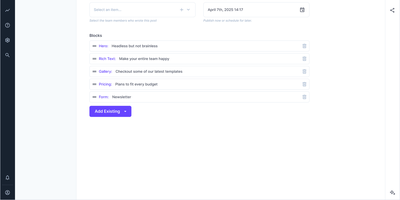
With 37,000 GitHub stars and over 45 million downloads powering 500,000+ deployed projects, Directus is the most widely adopted open-source backend platform that connects to your existing SQL database without requiring schema migrations or data duplication. Point it at PostgreSQL, MySQL, MariaDB, MS SQL, SQLite, OracleDB, or CockroachDB and it instantly generates production-ready REST and GraphQL APIs complete with filtering, sorting, pagination, field selection, and relational queries — all derived from your actual schema with zero configuration. The visual Studio provides a full no-code management interface where non-technical teammates create content, manage assets, build dashboards, and configure access policies without engineering involvement. Field-level granular permissions govern every API request and Studio action through composable policies applied to roles, users, and AI agents identically. A built-in AI Assistant writes copy, translates content across languages, creates records, and routes items for review directly within the Studio interface. The native Model Context Protocol server connects Claude Desktop, Cursor, ChatGPT, or any MCP-compatible tool to your live data governed by the same access policies. Real-time WebSocket subscriptions push collection changes instantly for collaborative editing and live dashboards. Extensibility covers custom endpoints, hooks, interfaces, displays, layouts, modules, and operations. Deploy via Docker with environment-variable configuration or use Directus Cloud for managed hosting. Running on a dedicated VPS on RepoCloud with guaranteed CPU, RAM, and SSD, full root SSH access, and a browser serial console. BSL-1.1 licensed with free self-hosting.
Hoppscotch
Backed by nearly 80,000 GitHub stars and recognized as one of the most popular developer tools in the open-source ecosystem, Hoppscotch delivers a complete API development platform that runs instantly in any browser with zero installation. The platform supports six protocols out of the box including REST with full HTTP method coverage, GraphQL with schema introspection and multi-column documentation, WebSocket for full-duplex communication, Socket.IO, MQTT for IoT messaging, and Server-Sent Events for real-time streaming. Request collections organize your API calls into logical groups with support for sub-folders, environment variables with scope inheritance, pre-request scripts and post-request test scripts written in JavaScript, and automatic code snippet generation in over twenty languages and frameworks. Teams can collaborate in real-time with shared workspaces, role-based access controls, and cloud synchronization across devices. Migration from Postman, Insomnia, or OpenAPI specifications happens with a single click import. The self-hosted edition deploys via Docker Compose with PostgreSQL for data persistence, supporting SSO authentication through SAML and OAuth providers, SMTP configuration with OAuth2, and admin dashboard for user management. The platform also ships as a native desktop application for macOS, Windows, and Linux with offline support, plus a CLI tool for running collections in CI/CD pipelines. A built-in proxy mode bypasses CORS restrictions during development, and an interceptor enables request debugging and response modification. Running on a dedicated VPS on RepoCloud with guaranteed CPU, RAM, and SSD, full root SSH access, and a browser serial console. MIT licensed.
OmniRoute
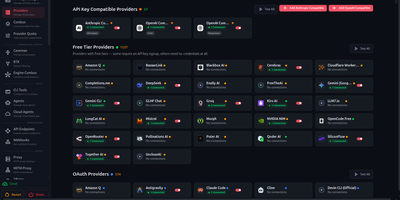
OmniRoute is an AI gateway, aggregating 338 LLM providers including OpenAI, Anthropic Claude, Google Gemini, DeepSeek, Kimi, MiniMax, and GLM into a single OpenAI-compatible endpoint at localhost:20128. The gateway catalogs over 1,200 models across 90 free-tier providers and 40 free-forever providers, automatically rotating through tier-1, tier-2, and tier-3 fallback chains when any provider exhausts its quota or returns errors. RTK plus Caveman stacked token compression reduces eligible context by 15 to 95 percent before forwarding requests, cutting API costs dramatically without degrading output quality. OmniRoute exposes its full routing engine through a built-in MCP server with 104 tools across 31 scopes over stdio, HTTP, and SSE transports, plus an A2A protocol server with six autonomous agent skills and JSON-RPC 2.0 streaming. The gateway integrates directly with Claude Code, Cursor, GitHub Copilot, Codex CLI, OpenCode, and Cline through standard base-URL configuration. Seventeen routing strategies include latency-optimized, cost-minimized, and auto-scoring modes that evaluate candidates on success rate, context fit, model fitness, quota state, and circuit-breaker health. The Next.js dashboard provides real-time provider status, usage analytics, combo chain configuration, and model catalog browsing via a responsive PWA. Running on a dedicated VPS on RepoCloud with guaranteed CPU, RAM, and SSD, full root SSH access, and a browser serial console. MIT licensed.

Open-Meteo
High-resolution weather forecasts became a free commodity because of Open-Meteo - and this deployment puts the whole open-source engine on your own infrastructure. The public open-meteo.com service aggregates national weather models (NOAA GFS, DWD ICON, ECMWF, Meteo-France, and others) into one consistent JSON interface; self-hosting gives you that same API without rate limits, third-party dependency, or usage metering. The architecture is two cooperating services: the API server exposes forecast endpoints fully compatible with Open-Meteo query parameters - latitude, longitude, hourly and daily variables like temperature, precipitation, wind, and radiation - while a background sync worker downloads fresh weather model data on a configurable interval into a shared persistent volume at /app/data, so forecasts stay current and survive restarts without re-downloading. You control which weather models to mirror, which variables to store, how much historical depth to keep, and how often to refresh - meaning a lean deployment can sync only the model and region you actually query. Responses are plain HTTP/JSON, so integration with dashboards, Home Assistant-style automations, agricultural monitoring, IoT fleets, or any application takes minutes. For anyone making thousands of forecast calls a day, replacing a metered weather API with your own instance turns a recurring bill into a flat infrastructure cost.
SuperTokens
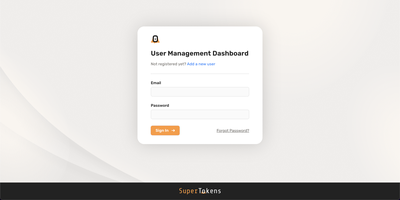
Powering authentication for over 15,000 GitHub stargazers and production deployments across startups and enterprises alike, SuperTokens delivers the complete login infrastructure that Auth0, Firebase Auth, and AWS Cognito charge premium prices for — entirely open source under Apache 2.0 with no per-user limits. The Java-based core service runs as a lightweight HTTP microservice that connects to PostgreSQL or MySQL and handles email-password login, passwordless magic links and OTP via email or SMS, social OAuth with Google, GitHub, Facebook, Apple, and any custom OIDC provider, phone-password authentication, and time-based one-time password multi-factor authentication. Session management uses rotating refresh tokens with anti-CSRF and anti-session-fixation protections, verifying tokens locally in your backend SDK without network round-trips to the core. Frontend SDKs for React, React Native, Angular, Vue, and vanilla JavaScript provide pre-built UI components for login, signup, email verification, and password reset flows, all customizable through an override system that lets you add pre- and post-API logic, custom hooks, and user event handlers. The built-in user management dashboard enables administrators to view users, reset passwords, revoke sessions, modify roles, and manage email verification status. Multi-tenancy and organization support powers B2B SaaS applications with tenant-level authentication configuration and Enterprise SSO via SAML and OIDC. Migration tools support bulk importing millions of existing password hashes, TOTP secrets, and role mappings. Running on a dedicated VPS on RepoCloud with guaranteed CPU, RAM, and SSD, full root SSH access, and a browser serial console. Apache 2.0 licensed.
Agent Gateway
Backed by the Linux Foundation with contributions from AWS, Cisco, IBM, Microsoft, Red Hat, and Shell, Agentgateway is the first data plane built from the ground up for AI agent workloads — providing a unified Rust-based proxy that handles conventional HTTP and gRPC traffic alongside MCP tool servers, A2A agent communication, and LLM inference endpoints through a single deployment. The LLM gateway routes requests to OpenAI, Anthropic, Gemini, AWS Bedrock, and other providers through an OpenAI-compatible unified API with per-tenant budget controls, spend tracking, prompt enrichment, load balancing across multiple model endpoints, and automatic failover when providers experience outages. The MCP gateway federates multiple tool servers behind one endpoint, supporting stdio, HTTP/SSE, and Streamable HTTP transports with built-in OAuth authentication compliant with the MCP auth specification, integrating Auth0 and Keycloak out of the box. OpenAPI integration exposes existing REST APIs as MCP-native tools without code changes, enabling legacy services to participate in agent workflows. Policy-based RBAC controls which agents access which tools, while OpenTelemetry integration provides distributed tracing across agent communication chains. Deploy as a standalone binary with flat YAML configuration or on Kubernetes using the built-in controller with Gateway API support for declarative infrastructure-as-code management. Running on a dedicated VPS on RepoCloud with guaranteed CPU, RAM, and SSD, full root SSH access, and a browser serial console. Apache 2.0 licensed.
GPT Load
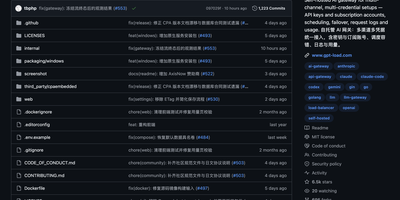
GPT Load has become the go-to self-hosted AI gateway for teams managing multiple LLM provider credentials behind a single URL. The Go-built proxy transparently preserves native API formats for OpenAI Chat Completions, OpenAI Responses, Anthropic Messages, and Google Gemini — applications swap one base URL and keep their existing SDK integration untouched. Twenty built-in channels cover official APIs (OpenAI, Anthropic, Gemini, xAI), cloud platforms (Azure OpenAI, AWS Bedrock, Google Vertex AI), model services (DeepSeek, Moonshot AI, SiliconFlow, Zhipu AI, Alibaba Cloud, Volcengine, OpenRouter, Groq), and subscription accounts (Codex, Claude, Antigravity, Grok) using the same credential management, scheduling, and health system. The intelligent key pool rotates among valid credentials using atomic counters for fair high-concurrency distribution, automatically blacklists failing keys after configurable thresholds, and recovers them via scheduled health checks — all transparent to clients. Weighted load balancing distributes traffic across multiple upstream endpoints while per-credential proxies route individual keys through different egress paths. The Vue 3 management dashboard provides real-time statistics, group configuration, key testing, request logs with full debugging context, per-model cost estimates, and route inspection. Docker deployment exposes the management interface and proxy on port 3001 with SQLite by default, MySQL or PostgreSQL optional, and Redis for distributed leader-follower cluster scaling. Running on a dedicated VPS on RepoCloud with guaranteed CPU, RAM, and SSD, full root SSH access, and a browser serial console. MIT licensed.