Hoppscotch
Backed by nearly 80,000 GitHub stars and recognized as one of the most popular developer tools in the open-source ecosystem, Hoppscotch delivers a complete API development platform that runs instantly in any browser with zero installation. The platform supports six protocols out of the box including REST with full HTTP method coverage, GraphQL with schema introspection and multi-column documentation, WebSocket for full-duplex communication, Socket.IO, MQTT for IoT messaging, and Server-Sent Events for real-time streaming. Request collections organize your API calls into logical groups with support for sub-folders, environment variables with scope inheritance, pre-request scripts and post-request test scripts written in JavaScript, and automatic code snippet generation in over twenty languages and frameworks. Teams can collaborate in real-time with shared workspaces, role-based access controls, and cloud synchronization across devices. Migration from Postman, Insomnia, or OpenAPI specifications happens with a single click import. The self-hosted edition deploys via Docker Compose with PostgreSQL for data persistence, supporting SSO authentication through SAML and OAuth providers, SMTP configuration with OAuth2, and admin dashboard for user management. The platform also ships as a native desktop application for macOS, Windows, and Linux with offline support, plus a CLI tool for running collections in CI/CD pipelines. A built-in proxy mode bypasses CORS restrictions during development, and an interceptor enables request debugging and response modification. Running on a dedicated VPS on RepoCloud with guaranteed CPU, RAM, and SSD, full root SSH access, and a browser serial console. MIT licensed.
Tolgee
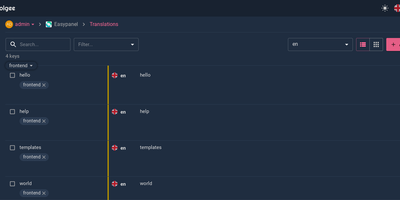
Hold Alt/Option, click any string in your running app, and edit the translation in place: Tolgee is an open-source localization platform built the way developers wish translation worked - changes save straight to the platform with no hunting through JSON or PO files. In-context editing works even in production via the Tolgee Tools browser extension, which injects credentials without touching source code, so a client or colleague with zero coding skills can translate the product inside the product. The SDKs (React, Angular, Vue, Svelte, plus iOS and Android) extract context from each UI element and capture one-click screenshots, giving both human translators and machines the surrounding meaning that raw string files lose. Autonomous translation uses that context: new keys are instantly filled from translation memory or machine translation (DeepL, Google Translate, AWS Translate), with optional human review afterward - shipping no longer waits on a translation agency. A CLI handles import/export, a REST API covers automation, a Figma plugin bridges design, and an MCP server lets AI coding assistants search keys, create translations, and trigger machine translation without leaving the editor. Self-hosting this Crowdin/Phrase/Lokalise alternative keeps every string, screenshot, and API key on your infrastructure.
Screego
With over 10,000 GitHub stars and a reputation forged in the frustration of laggy corporate screen sharing, Screego delivers what Microsoft Teams and Zoom screen share consistently fail to provide: instant, high-resolution screen streaming that lets remote colleagues actually read your code. Built on WebRTC peer-to-peer connections, Screego transmits screen data directly between browsers without routing through centralized servers, achieving sub-second latency and native-resolution quality that makes pair programming and code reviews genuinely productive. The server component, written in Go with a TypeScript frontend, deploys as a single binary or Docker container with minimal configuration — set your external URL, generate a secret key, and you're live. An integrated TURN server handles NAT traversal automatically, eliminating the need for separate STUN/TURN infrastructure, with configurable UDP port ranges and support for external TURN servers when scaling beyond a single instance. Authentication supports three modes — requiring login for all actions, only for TURN connections, or none — with user management via simple credential files. Rooms are created instantly and support multiple simultaneous viewers, with system and tab audio sharing available for demonstrations that need sound. The architecture supports reverse proxy deployment behind Nginx, Caddy, or Apache with automatic TLS termination, and recent releases added riscv64 architecture support alongside existing amd64 and arm64 builds. Running on a dedicated VPS on RepoCloud with guaranteed CPU, RAM, and SSD, full root SSH access, and a browser serial console. GPL-3.0 licensed.
Weblate
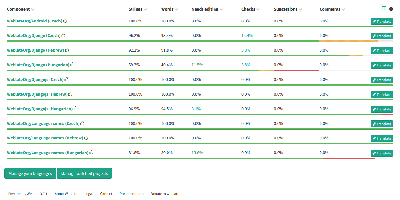
Over 2,500 open-source projects and companies in more than 165 countries localize with Weblate - the libre continuous localization platform and the standard self-hosted answer to Crowdin and Lokalise. Its defining trait is that translations live in the same version control as your code: Weblate talks directly to Git and Mercurial, pulls new source strings automatically via webhooks, and pushes finished translations back either as direct commits or as pull/merge requests on GitHub, GitLab, Gitea, Bitbucket, Azure DevOps, Gerrit, or Pagure. Every translator is properly credited in the commit history. For translators, it is a full computer-aided translation tool: translation memory, glossaries, customizable quality checks that catch placeholder and formatting mistakes, propagation of identical strings across components, and automatic suggestions from machine translation services - DeepL, Amazon Translate, LibreTranslate, and others, with per-service priorities and support for custom Python engines. It handles the format zoo (gettext PO, JSON, YAML, Android XML, iOS strings, and dozens more) and supports crowdsourced workflows with granular access control, workspaces, two-factor authentication, and reviewer approval steps. A REST API, CLI client, and add-on system automate everything else. Built on Python/Django, GPL-licensed, with no per-string or per-seat pricing when self-hosted.
OnlyOffice
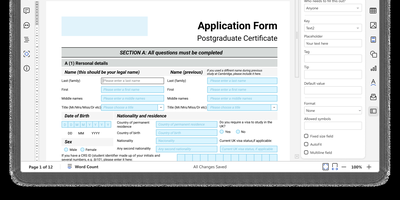
With 6,800 GitHub stars and over a decade of development since its 2014 release, ONLYOFFICE Docs delivers a self-hosted Microsoft Office replacement with pixel-perfect OOXML rendering and real-time collaborative editing supporting both Fast (character-by-character) and Strict (manual save) co-authoring modes. The suite encompasses five full-featured editors — Document Editor for DOCX/ODT/EPUB/HTML, Spreadsheet Editor with 500+ functions and pivot tables, Presentation Editor with animations and transitions, Form Creator for fillable PDF forms with field validation, and PDF Editor for annotation and conversion — all operating within a unified web interface. Format support spans 50+ types including DOCX, XLSX, PPTX, ODT, ODS, ODP, PDF, CSV, RTF, TXT, and Markdown with server-side conversion between any supported pair. The JavaScript plugin API enables extending editor functionality through a marketplace of ready-made plugins for ChatGPT integration, speech-to-text, OCR, Zotero citations, and Thesaurus. Ready-to-use connectors integrate with Nextcloud, ownCloud, Seafile, Moodle, Odoo, Confluence, SharePoint, Alfresco, Liferay, and Chamilo, while WOPI protocol compliance enables integration with any WOPI-compatible platform. JWT authentication secures all API communications between host applications and the document server. Deploy via Docker with a single command or DEB/RPM packages on Ubuntu, Debian, CentOS, or RHEL. Running on a dedicated VPS on RepoCloud with guaranteed CPU, RAM, and SSD, full root SSH access, and a browser serial console. GNU AGPL v3 licensed.
Rallly
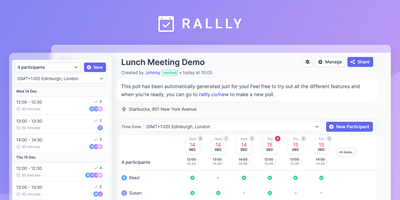
What Doodle did before ads and paywalls took over: Rallly (three L's) lets you propose a few dates, share a link, and watch an availability grid fill in - no email threads, no forced accounts, no "$6.95/month to remove ads." The availability grid makes the winning slot obvious at a glance, comments on each poll keep the "I can do Tuesday if we start late" discussion attached to the decision instead of buried in chat, and email notifications fire as votes and comments arrive. When consensus lands, finalize the winning option and everyone gets notified. The stack is modern TypeScript - Next.js, tRPC, Prisma over PostgreSQL, Tailwind - with a clean, genuinely mobile-friendly UI, dark mode, and community translations in 10+ languages. Self-hosting means unlimited polls and unlimited participants with meeting data on your server rather than a scheduling SaaS. It pairs naturally with Cal.com: Rallly answers "which time works for everyone?", Cal.com handles "book a slot on my calendar." AGPL-licensed.
Macro
Macro merges email, team chat, collaborative documents, task management, CRM, and video calls into one keyboard-driven application where AI agents operate across the entire workspace with shared team memory, replacing the Slack plus Notion plus Linear plus Superhuman plus HubSpot stack with a single deployment. The email module provides a multi-account unified inbox with keyboard shortcuts, shared team inboxes, and Gmail integration. Team messaging offers channels and direct messages designed for technical discussions with threaded conversations. The task system draws from Linear with board and list views tightly integrated with channels, email threads, and AI agents. Real-time collaborative documents use CRDT synchronization via Loro for conflict-free editing with Markdown-native formatting and @mention linking. A 2D canvas board embeds @links to tasks, files, and emails for visual project planning. AI agents access unified team-level memory spanning all workspace modules, taking autonomous actions across email, chat, tasks, and documents through MCP-compatible tool interfaces. Video calls include recording, transcription, and automatic logging to team memory. The CRM module tracks customers and contacts with custom properties, email synchronization, and data enrichment. Eighty-plus Rust microservices on the Axum framework handle backend operations while a SolidJS static SPA delivers the frontend with instant search and real-time collaboration. Docker Compose deployment provisions the complete service stack with PostgreSQL, Redis, OpenSearch, and FusionAuth authentication. Running on a dedicated VPS on RepoCloud with guaranteed CPU, RAM, and SSD, full root SSH access, and a browser serial console. AGPL-3.0 licensed.
Answer
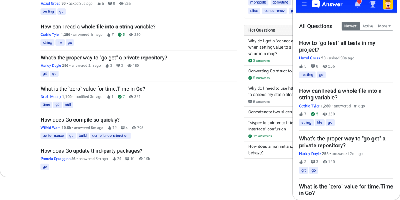
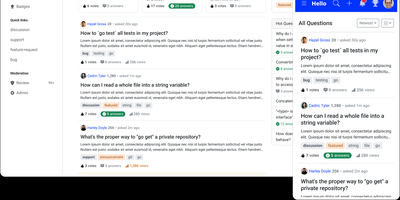
Run a Stack Overflow of your own: Apache Answer brings the question-and-answer format in-house, maintained under the Apache Software Foundation with an Apache-2.0 license. You use it to run a community forum, product help center, or internal knowledge base where content lives as questions and answers rather than wiki pages. It ships the mechanics that make that format work: voting, accepted answers, a reputation system with privilege levels, tagging, full-text search with filters, revision history on every edit, and admin/moderator/user roles. Content is written in Markdown with real-time preview and code syntax highlighting. A plugin system covers OAuth login (Google, GitHub), S3 storage, external search backends like Algolia, and Akismet anti-spam, and a REST API exposes platform data for integration. The backend is Go, the frontend React, and it runs against SQLite, MySQL, or PostgreSQL. Self-hosting replaces per-seat tools like Stack Overflow for Teams with a flat-cost instance where you own all the content.
Apache Answer
Graduated as an Apache Software Foundation Top-Level Project with over 15,500 GitHub stars and 100,000+ Docker Hub downloads, Apache Answer delivers the structured Q&A platform that Stack Overflow and Discourse popularized — fully self-hosted under Apache 2.0 with zero vendor lock-in. The Go backend with React frontend serves questions, answers, and knowledge articles with real-time Markdown preview using CommonMark syntax, inline @mentions to ping domain experts, and transparent revision history tracking every edit. Version 2.0 introduced AI workflows including an integrated AI assistant that helps draft and improve answers, a Model Context Protocol server for connecting AI agents to your knowledge base, API key management, and editor plugin support for extending the writing experience. Advanced search filters by tags, usernames, scores, and date ranges, while real-time suggestions surface relevant existing questions as users type to reduce duplicates. The reputation system rewards quality contributions with configurable privilege thresholds, and admin/moderator/user roles control access across the platform. A plugin architecture enables community-built extensions for third-party OAuth login, caching backends, search engines, and storage providers. Theming supports custom layouts, dark mode, and responsive design across devices, with content available in 15+ languages translated by the community. Bulk user import, email domain restrictions, and content access controls secure the platform for enterprise deployment. Running on a dedicated VPS on RepoCloud with guaranteed CPU, RAM, and SSD, full root SSH access, and a browser serial console. Apache 2.0 licensed.
OpenPencil
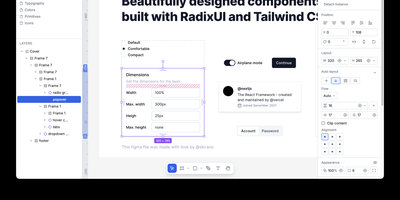
OpenPencil is the open-source design editor that reads and writes native Figma .fig files using the same Kiwi binary format — enabling bidirectional copy-paste between Figma and OpenPencil without data loss. The built-in AI assistant provides 90+ design tools through a chat interface, creating and modifying shapes, fills, strokes, auto-layout, components, variables, and boolean operations from natural language prompts, with BYOK support for Anthropic, OpenAI, Google AI, OpenRouter, Z.ai, MiniMax, and compatible endpoints. A Skia CanvasKit WASM renderer paired with Yoga WASM layout engine delivers Figma-parity rendering with flex and CSS Grid support including gap, padding, and alignment. The headless CLI inspects node trees via XPath queries, lints naming and accessibility, converts between document formats, analyzes color and typography patterns, extracts design tokens, and exports to PNG, SVG, JSX/Tailwind, and HTML. An MCP server exposes all design operations over stdio and HTTP, connecting Claude Code, Cursor, Windsurf, and Gemini CLI for AI-assisted design automation. Real-time P2P collaboration via WebRTC with Yjs CRDT synchronization requires no server and no account. The Vue SDK provides headless components for embedding the editor into custom applications. Ships as a 7 MB Tauri v2 desktop app for macOS, Windows, and Linux, or runs in any browser as a PWA. Running on a dedicated VPS on RepoCloud with guaranteed CPU, RAM, and SSD, full root SSH access, and a browser serial console. MIT licensed.
Papermark
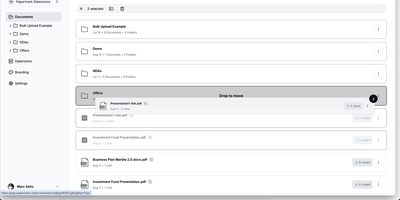
With nearly 9,000 GitHub stars and adoption by over 60,000 companies across 100 countries, Papermark is the open-source DocSend alternative that turns document sharing into a data-rich conversation between you and your viewers. Every shared document generates page-by-page analytics showing exactly which pages capture attention, how long viewers spend on each section, where they drop off, and whether they return for a second look, with real-time notifications the moment a document is opened. Virtual data rooms support unlimited folders with drag-and-drop organization, bulk uploads, granular per-viewer permissions, dynamic watermarking that stamps each page with the viewer's identity, and NDA gating that requires agreement before access. Custom branding applies your logo, colors, and custom domain to every shared link and download page, while email verification and password protection add authentication layers. The AI Data Room Copilot lets viewers chat with uploaded documents, ask questions, and receive contextual summaries directly within the data room interface. The developer platform exposes 43 REST API operations covering data rooms, documents, folders, links, visitors, and analytics, with an MCP server for AI agent integration and a CLI for automation. Built on Next.js with TypeScript, Prisma ORM, PostgreSQL, NextAuth.js authentication, and shadcn/ui components. Running on a dedicated VPS on RepoCloud with guaranteed CPU, RAM, and SSD, full root SSH access, and a browser serial console. AGPLv3 licensed.
Jitsi Meet
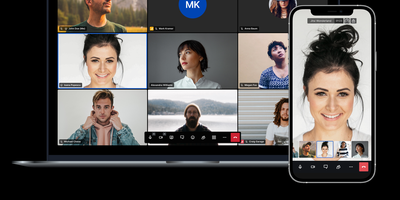
Backed by nearly 30,000 GitHub stars and powering millions of meetings through meet.jit.si, Jitsi Meet is the open-source video conferencing platform that runs entirely in the browser with no plugins or downloads required. The WebRTC-based architecture delivers HD audio and video through the Jitsi Videobridge selective forwarding unit, while Prosody handles XMPP signaling and Jicofo manages conference focus and orechestration. End-to-end encryption uses AES-GCM 128-bit keys exchanged via the Olm protocol, protecting audio, video, and screen sharing through the Insertable Streams API in Chromium-based browsers. Moderators can split participants into breakout rooms with individual password protection, enable lobby waiting rooms for admission control, set meeting passwords, and track speaker statistics with per-participant talk time metrics. Virtual backgrounds leverage TensorFlow.js body segmentation with WebGPU and WebGL acceleration, automatically adapting quality through device tier detection. Server-side recording and YouTube live streaming run through Jibri, while Jigasi provides a SIP gateway for PSTN dial-in and speech-to-text transcription. The platform includes in-meeting chat with private conversations, polls, raise-hand functionality, emoji reactions, and tile and speaker view layouts. Mobile applications for iOS and Android complement the web client, and both web and native SDKs enable embedding video conferences into custom applications. Running on a dedicated VPS on RepoCloud with guaranteed CPU, RAM, and SSD, full root SSH access, and a browser serial console. Apache-2.0 licensed.
MateClaw
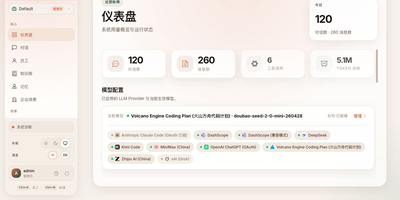
MateClaw delivers a multi-agent AI platform where digital employees run as persistent team members with roles, goals, and accumulated skills rather than stateless chat completions. The Spring Boot backend on Spring AI Alibaba provides ReAct iterative reasoning and Plan-and-Execute decomposition on a StateGraph runtime, with parallel delegation between employees and dynamic context pruning for multi-step tasks. Five career templates ship ready (Product Researcher, Customer Support, Knowledge Curator, Data Analyst, Executive Assistant) while custom employees inherit configurable backstories, pixel-art avatars, and dedicated tool bindings. The MCP integration supports stdio, SSE, and Streamable HTTP transports with per-employee tool isolation preventing capability bleed between agents. ACP bridges bring Claude Code, Codex, and other coding agents in as first-class employees. Workflow orchestration composes multiple employees and system actions into publishable linear DSL processes with seven step modes: sequential, fan_out, collect, conditional, await_approval, dispatch_channel, and write_memory. The trigger system wires cron schedules, webhooks, channel messages, employee lifecycle events, content matches, and workflow completions to automated flows. The Admin Runtime Console provides real-time visibility into running employees with token usage tracking and one-click force-recycle. Spring Boot Actuator monitoring, full audit trail, and per-channel error isolation deliver production-grade reliability. Running on a dedicated VPS on RepoCloud with guaranteed CPU, RAM, and SSD, full root SSH access, and a browser serial console. Apache-2.0 licensed.
Cloudflare OS
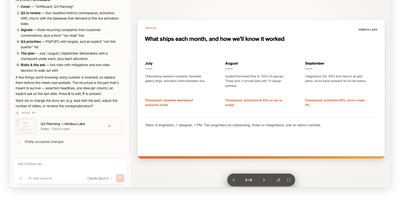
With over 7,700 GitHub stars and thousands of Cloudflare employees using it daily across every function, Cloudflare OS delivers an open-source AI workspace where every employee gets a personal agent grounded in company context, systems, and skills — not a generic chatbot but a programmable workspace that builds real applications, automates workflows, and connects to internal tools through governed access. The Code Mode agent writes and immediately executes code snippets to perform arbitrary tasks, build full-stack Gadgets with client code, server code, APIs, and durable SQLite state, debug errors, and test results within isolated sandboxes. Gadgets are private application instances running in separate sandboxes — each document, spreadsheet, or tool is its own secure runtime that cannot leak data even to attackers with access to other Gadgets. Blueprints enable sharing application code as templates that others instantiate with independent state, credentials, and resources. Gatekeepers provide security governance giving system owners precise control over what agents can see, change, and when human approval is required before actions execute. Built on Cloudflare Workers using Durable Objects for workspace persistence, Dynamic Workers for Gadget execution, and Facets for access management. Zero Trust security via Cloudflare Access verifies every user and request before granting access. Real-time collaboration lets colleagues use shared Gadgets. Deploy to your own Cloudflare account or self-host on workerd, the open-source Workers runtime, on your own servers. Running on a dedicated VPS on RepoCloud with guaranteed CPU, RAM, and SSD, full root SSH access, and a browser serial console. Apache-2.0 licensed.
Kan
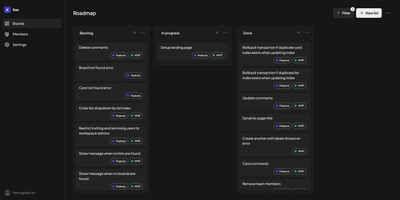
What Trello fans wanted Trello to stay: Kan (kan.bn) is a minimalist, frills-free kanban board capturing the original vision before the enterprise pivots - and then adds the things 2025 actually demands. The core is exactly right: drag-and-drop cards across lists, labels and filters to find work fast, comments for discussion on cards, checklists, a detailed activity log tracking every change, and reusable board templates. Workspaces gather your team with member invites and role management, and board visibility controls decide who can view or edit each board. Migration is first-class: a built-in Trello importer brings existing boards over, so switching costs an afternoon, not a quarter. The standout differentiator is the bundled Model Context Protocol server exposing 46 tools across workspaces, boards, lists, cards, comments, checklists, labels, and members - meaning Claude Desktop, Cursor, Copilot, or any MCP client can read and manage your boards in natural language: "move everything assigned to me into Done" becomes a sentence, not a click marathon. The stack is modern TypeScript - Next.js, tRPC, Drizzle ORM over PostgreSQL, Better Auth (credentials or OAuth), Tailwind - with optional SMTP email and S3 file storage. Unlimited boards, lists, and cards; AGPL-licensed.
Leantime
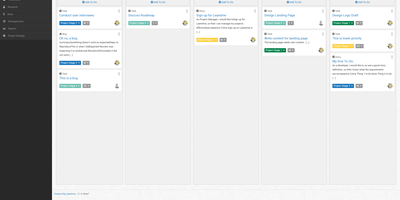
"As simple as Trello but as feature-rich as Jira" is how the Leantime team frames its goals-focused project management system for non-project managers - built from the ground up with ADHD, autism, and dyslexia in mind, with behavioral science shaping customizable dashboards, time blocking, low-cognitive-load prioritization, and Kanban, list, table, Gantt, and calendar views so each person works the way their brain does. The PHP application (AGPL, Laravel Blade frontend) connects strategy to execution: tasks with unlimited subtasks and dependencies roll up into milestones on a timeline, sprints and retrospectives handle iteration, and strategy-level blueprint boards - Lean Canvas, SWOT, risk analysis, goal and metric tracking - keep the "why" attached to the work. Knowledge lives alongside: wikis and docs, idea boards, comments on everything, file storage on S3 or local disk, even screen and webcam recording. Time tracking with timesheets supports estimation and client billing. Admin features are serious for an OSS tool: per-project permissions, two-factor auth, LDAP and OIDC single sign-on, Slack, Mattermost, and Discord integrations, a plugin system, and an expanding API that now powers a mobile app. Recent releases added multi-collaborator task assignment and low-vision accessibility improvements. Available in 20+ languages.
Orbit
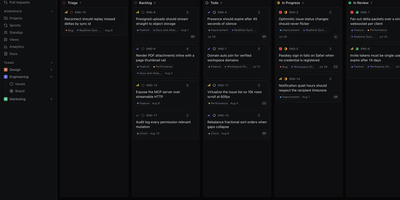
Orbit is a free, realtime project management platform that unifies issue tracking, kanban boards, sprint cycles, and collaborative documents into a keyboard-driven workspace with native AI agent integration. Engineers can manage backlog items across customizable kanban boards, execute timeboxed sprint cycles with automated burndown charts, and link pull requests directly to the tasks they resolve. Team members compose specifications and meeting notes in rich-text documents with nested collections, inline comment threads, public sharing links, and self-contained interactive web pages that render alongside active project milestones. The built-in standup board aggregates workspace activity into an interactive kanban filtered to individual assignees, while comprehensive analytics dashboards report issue throughput, scope modifications, churn rates, and team distributions. Autonomous coding assistants connect directly through the integrated Model Context Protocol server to inspect project status, triage incoming tickets, file detailed bug reports, and trigger automated notifications across workspace channels. Custom views allow teams to filter issues by priority, estimate, or assignee and save shared workspace perspectives for recurring planning sessions. Running on a dedicated VPS on RepoCloud with guaranteed CPU, RAM, and SSD, full root SSH access, and a browser serial console. Apache-2.0 licensed.
XWiki
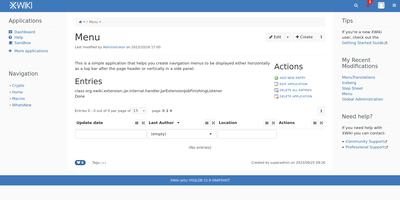
With over 140,000 code commits, 1,200+ GitHub stars, and continuous development since 2004 spanning more than two decades of active maintenance through version 18.6.0 released in July 2026, XWiki operates as a second-generation wiki platform that goes beyond static pages by enabling teams to build custom collaborative applications directly inside wiki pages using structured data forms and in-page scripting. The Java backend runs on Apache Tomcat with PostgreSQL, MySQL, or Oracle database storage, serving a responsive web interface with a WYSIWYG editor featuring real-time collaborative editing, link and macro editors, user mentions, inline comments, annotations, and complete version history with diff comparison. The App Within Minutes extension lets non-developers create custom data-driven applications using drag-and-drop form builders that generate filterable live tables for structured data browsing without writing code. Over 900 extensions from the built-in Extension Manager add functionality including blogs, task trackers, forums, diagram editors, and Confluence migration tools. Enterprise integration features include LDAP and Active Directory authentication, SAML and OIDC single sign-on, fine-grained per-page and per-space permissions with nested page hierarchies, and multi-wiki support for hosting multiple independent wikis from a single installation. The RESTful API provides programmatic access to pages, spaces, objects, attachments, and properties with XML and JSON representations. Office document import converts Word and Excel files directly into wiki pages while PDF export generates formatted documents from wiki content. Running on a dedicated VPS on RepoCloud with guaranteed CPU, RAM, and SSD, full root SSH access, and a browser serial console. LGPL-2.1 licensed.