NanoClaw
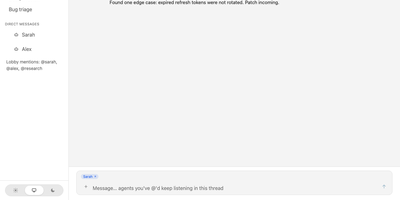
NanoClaw delivers a radically simple alternative to OpenClaw — a single Node.js process and a handful of files that provide the same core functionality with true container-level security isolation. Agents execute inside Docker containers on Linux or Apple Containers on macOS, where even root access inside the sandbox cannot reach the host filesystem. The platform natively runs Claude Code via Anthropic's official Claude Agent SDK, with drop-in alternatives including OpenAI Codex, OpenRouter via OpenCode, Google, DeepSeek, and local open-weight models via Ollama — configurable per agent group. Multi-channel messaging connects WhatsApp, Telegram, Discord, Slack, Microsoft Teams, iMessage, Matrix, Google Chat, Webex, Linear, GitHub, WeChat, and email via Resend, installed on demand through skill commands. Each agent group receives its own CLAUDE.md memory file, isolated filesystem, container sandbox, and session state — a prompt injection in one group cannot exfiltrate data from another. The OneCLI Agent Vault handles credentials so agents never hold raw API keys, while approval-gated self-modification allows agents to request new packages or MCP servers that administrators must authorize. Scheduled tasks run recurring jobs inside containers with message delivery back to users. The setup script handles dependencies, authentication, and container configuration through Claude Code conversation. Deploy on any Docker-capable Linux server. Running on a dedicated VPS on RepoCloud with guaranteed CPU, RAM, and SSD, full root SSH access, and a browser serial console. MIT licensed.
Memoh
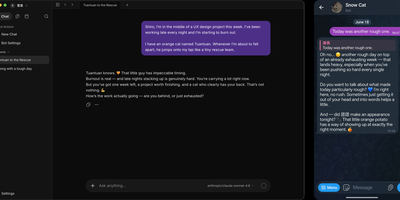
Memoh delivers an open-source multi-agent platform where every AI agent gets its own computer — not a chat window but a fully isolated container with dedicated filesystem, desktop environment, browser, network stack, and persistent long-term memory that survives across sessions, days, and platforms. The containerd-based runtime ensures each bot operates in complete isolation with snapshot and data import/export capabilities. The memory engine uses LLM-driven fact extraction with hybrid retrieval combining dense embeddings via Qdrant, sparse vectors, and BM25, plus 24-hour context loading and automatic compaction — with Mem0 and OpenViking as drop-in alternatives. Ten communication channels connect agents to users through Telegram, Discord, Lark, QQ, Matrix, WeCom, WeChat, Email, Web UI, and group chats with cross-platform identity binding. MCP tool calling enables agents to interact with external services, while browser automation drives GUI workflows for web research and data extraction. Agent hosting supports running external coding agents like Codex and Claude Code inside Memoh workspaces via ACP with per-bot configuration. Scheduled tasks run without human triggers, and agents proactively reach out when needed. The web dashboard built with Vue 3 and Tailwind CSS provides streaming chat, tool call visualization, file management, model and provider configuration, and bot lifecycle management. Deploy via Docker Compose with PostgreSQL, Qdrant, sparse service, and the Go backend server. Running on a dedicated VPS on RepoCloud with guaranteed CPU, RAM, and SSD, full root SSH access, and a browser serial console. AGPL-3.0 licensed.
Arcane
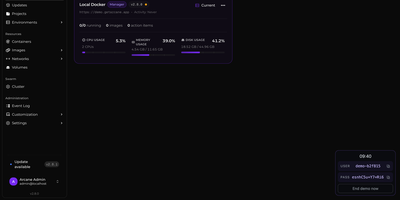
Arcane gives you a single polished dashboard to manage Docker containers, images, volumes, networks, and Compose projects across unlimited remote hosts. The SvelteKit frontend paired with a Go backend delivers real-time resource monitoring with historical graphs, container lifecycle controls including shell exec and live log streaming, and one-click Docker Compose deployment with Git repository synchronization for version-controlled stack definitions. The manager-agent architecture connects remote environments via Direct TCP on port 3553 or Edge mode where agents initiate outbound gRPC/WebSocket connections through NAT and firewalls without requiring inbound ports, all secured with mTLS certificates. Vulnerability scanning identifies security issues in running container images directly from the interface. The backup system enables scheduled container snapshots with configurable retention for disaster recovery. Network and volume administration includes visual relationship mapping between services, and the responsive interface supports dark/light themes with full mobile optimization and community-driven internationalization via Crowdin. 6,500+ stars and 89 releases since April 2025 reflect a rapid development cadence. Running on a dedicated VPS on RepoCloud with guaranteed CPU, RAM, and SSD, full root SSH access, and a browser serial console. BSD-3-Clause licensed.
Dockhand
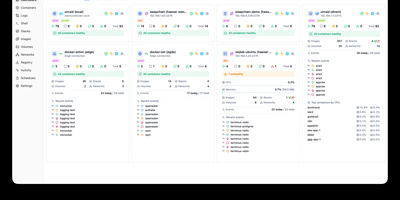
Dockhand is a Docker management platforms, offering a modern alternative to Portainer with free OIDC SSO and vulnerability scanning that competitors gate behind paid tiers. Real-time container management provides start, stop, restart, and remove operations with live resource monitoring across CPU, memory, and network usage on a dashboard with real-time metrics. The visual Docker Compose editor enables stack creation and modification with syntax highlighting, while Git integration deploys stacks directly from repositories with webhooks and auto-sync for GitOps workflows. Vulnerability scanning powered by Grype and Trivy analyzes container images against CVE databases, with configurable auto-update scheduling that can trigger updates based on vulnerability severity criteria. The Hawser Go agent enables management of remote Docker hosts in Standard mode for LAN environments or Edge mode using outbound WebSocket connections for hosts behind NAT, firewalls, or dynamic IPs without exposing inbound ports. Interactive terminal sessions provide shell access into running containers, while the file browser enables uploading, downloading, and editing files directly within containers. Image management includes registry browsing, pull operations, and layer inspection alongside network and volume administration. The security-focused architecture builds its own OS layer from scratch using Wolfi packages via apko with every package explicitly declared. Running on a dedicated VPS on RepoCloud with guaranteed CPU, RAM, and SSD, full root SSH access, and a browser serial console. BSL 1.1 licensed, converting to Apache 2.0 in 2029.
WoodPecker CI
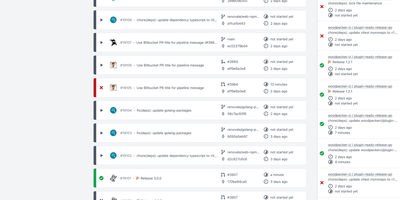
With 7,300+ GitHub stars and active releases through version 3.17, Woodpecker CI is the community-driven fork of Drone CI that kept the entire platform open source under Apache 2.0 — delivering a lightweight, container-native CI/CD engine that runs on minimal resources while providing enterprise-grade pipeline automation. Every pipeline step executes in an isolated Docker container, ensuring reproducible builds with zero host contamination and clean teardown after each run. Define workflows in simple YAML configuration files with step dependencies, conditional execution via when filters, service containers for databases and caches, and matrix builds that test across multiple language versions, platforms, or database engines simultaneously. Deep forge integration connects to GitHub, GitLab, Gitea, Forgejo, and Bitbucket via OAuth and webhooks, triggering pipelines on push, pull request, tag, deployment, and cron events. The plugin ecosystem inherits compatibility with the Drone plugin library — over 100 plugins for Docker builds, S3 uploads, SSH deployment, Slack and Telegram notifications, Helm deployments, and more. The server-agent architecture separates the web UI, API, and scheduler from pipeline execution, enabling horizontal scaling by adding agents across multiple machines or architectures including ARM. Secrets management supports global, organization, and repository-level scopes with approval workflows for forked repository pipelines. The admin web UI provides user management, agent monitoring, and queue control. Docker Compose deployment provisions the complete stack in under five minutes. Running on a dedicated VPS on RepoCloud with guaranteed CPU, RAM, and SSD, full root SSH access, and a browser serial console. Apache 2.0 licensed.
Maintenant
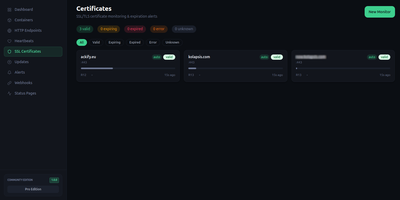
Maintenant replaces three to five separate monitoring tools with a single Go binary that consolidates container discovery, endpoint monitoring, SSL tracking, resource metrics, and public status pages without requiring any external database. The embedded Vue 3 frontend serves on port 8080 immediately after deployment, auto-discovering Docker containers and Kubernetes pods through direct socket and API access without configuration. HTTP and TCP endpoint monitoring validates availability with configurable intervals, while TLS certificate tracking alerts before expiration across all monitored domains. Resource metrics collect CPU, RAM, network throughput, and disk usage per container with real-time Server-Sent Events streaming to the dashboard. Heartbeat and cron monitoring accepts pings from external scheduled jobs, triggering alerts on missed check-ins via webhook callbacks and Discord notifications. The built-in alert engine supports escalation rules and notification batching. Public status pages expose component health to end users without authentication, customizable per monitored service. Network security insights analyze exposed ports, container privilege levels, and host configuration to produce a posture score. Update intelligence scans OCI registries to detect available container image updates with digest comparison. The REST API with SSE broker enables automation, and the integrated MCP server provides tooling for AI assistant integration. SQLite in WAL mode stores all data with zero operational overhead. Running on a dedicated VPS on RepoCloud with guaranteed CPU, RAM, and SSD, full root SSH access, and a browser serial console. AGPL-3.0 licensed.
dyrector.io
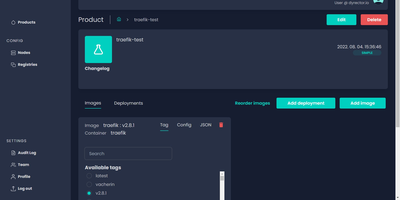
dyrector.io gives teams a visual web interface for deploying and managing containerized applications across Docker, Kubernetes, and Podman environments, replacing repetitive CLI commands and YAML editing with point-and-click configuration. Lightweight Go agents installed on target infrastructure communicate with the central TypeScript platform, enabling deployments to AWS, GCP, Azure, and on-premises servers without requiring infrastructure migration. Unified configuration screens eliminate redundant YAML editing across environments with support for all three container runtimes. Version management lets teams configure OCI-compatible container images once and deploy them as versioned releases with auto-generated changelogs and release notes. Multi-instance deployment enables simultaneous rollouts to multiple nodes with environment-specific configuration overrides, secret management, and instant test environment provisioning from any branch. The fine-grained RBAC system controls user access at project and environment levels, while audit logging tracks every deployment action. Registry integrations support Docker Hub, GitLab, GitHub, Google, and Azure container registries for image sourcing. ChatOps notifications integrate with Slack, Discord, and Microsoft Teams for deployment status alerts. Scheduled releases and workflow support enable automated deployment pipelines triggered by CI events via the REST API with JWT authentication. Running on a dedicated VPS on RepoCloud with guaranteed CPU, RAM, and SSD, full root SSH access, and a browser serial console. Apache 2.0 licensed.
Dockge
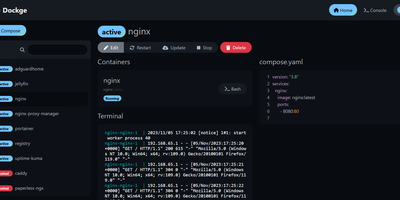
Created by the developer behind Uptime Kuma and carrying over 23,000 GitHub stars, Dockge brings the same clean, reactive design philosophy to Docker Compose stack management with a web interface that makes Portainer's compose handling feel like editing YAML in a terminal over SSH. The interactive editor provides syntax highlighting, inline validation, and a live preview of your compose.yaml files while keeping every stack stored as a standard file on disk in /opt/stacks by default, meaning you can seamlessly switch between the web UI and the docker compose CLI without lock-in or proprietary database formats. Real-time WebSocket updates stream pull progress, container start/stop transitions, and build output directly to the browser with no polling delays. The built-in web terminal opens a shell session inside any running container for quick debugging, while the docker-run-to-compose converter transforms single-container run commands into proper compose.yaml definitions with one click. Multi-agent support introduced in version 1.4.0 connects multiple Docker hosts to a single Dockge dashboard, enabling centralized management of stacks distributed across different servers. Image update detection shows which stacks have newer versions available, and one-click updates pull the latest images and recreate containers without manual intervention. The stack is a single Docker container running on Node.js with Socket.IO for reactivity and stores no external database. Running on a dedicated VPS on RepoCloud with guaranteed CPU, RAM, and SSD, full root SSH access, and a browser serial console. MIT licensed.
Rancher
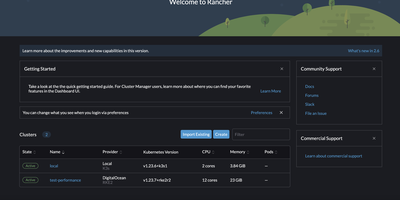
Used by over 30,000 teams and 650+ enterprise customers managing more than 5.2 million containers, Rancher has earned recognition as a Leader in the Gartner Magic Quadrant for Container Management and the Forrester Wave for Multicloud Container Platforms. The platform provides a single pane of glass for provisioning, upgrading, and securing Kubernetes clusters across Amazon EKS, Google GKE, Microsoft AKS, RKE2, K3s, and any CNCF-conformant distribution. Multi-Cluster Management enables centralized authentication via Active Directory, LDAP, SAML, GitHub, and OpenID Connect with granular role-based access control at the cluster, project, and namespace levels. Fleet, the built-in GitOps engine, delivers continuous deployment across hundreds of clusters simultaneously using Helm charts, Kustomize, or raw YAML manifests from any Git repository. The integrated app catalog provides one-click deployment of Prometheus monitoring, Grafana dashboards, Longhorn persistent storage, Istio service mesh, and hundreds of community Helm charts. Rancher supports air-gapped installations for disconnected environments, CIS benchmark scanning for security compliance, and automated backup and restoration of cluster configurations. The dashboard offers real-time workload monitoring, log aggregation, pod shell access, and namespace-scoped resource quotas. Cluster templates enforce organizational standards through Helm-based provisioning policies that ensure consistent configurations across environments. Running on a dedicated VPS on RepoCloud with guaranteed CPU, RAM, and SSD, full root SSH access, and a browser serial console. Apache 2.0 licensed.
Harbor
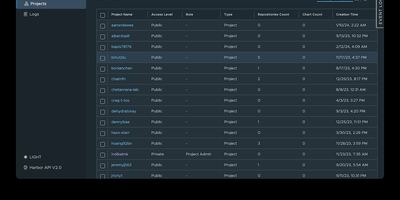
The first container registry to reach CNCF graduated status with over 29,000 GitHub stars since VMware open-sourced it in 2016, Harbor transforms the basic Docker Distribution into a hardened enterprise registry with vulnerability scanning, supply chain signing, multi-datacenter replication, and project-level access control out of the box. Trivy scans every pushed image against the NVD, GitHub Advisory Database, and distribution-specific vulnerability feeds, with scan-on-push policies that block deployment of images exceeding configurable severity thresholds. Artifact signing through Cosign keyless signatures and Notation enforces content trust policies ensuring only cryptographically verified images reach production clusters. Policy-based replication synchronizes images and Helm charts between Harbor instances across multiple datacenters using repository, tag, and label filters with automatic retry and bandwidth throttling — enabling hybrid-cloud and disaster-recovery topologies. The RBAC model isolates projects with per-project quotas, robot accounts for CI/CD automation, webhook notifications, and audit logging that tracks every pull, push, delete, and configuration change. LDAP, Active Directory, and OIDC authentication integrate with existing identity providers, while the proxy cache transparently caches images from Docker Hub, Quay, and other upstream registries to reduce pull latency and rate-limit exposure. The RESTful API with embedded Swagger UI, tag retention policies, garbage collection scheduling, and immutable artifact rules complete the lifecycle management. Deploy via Docker Compose or Helm Chart on Kubernetes. Running on a dedicated VPS on RepoCloud with guaranteed CPU, RAM, and SSD, full root SSH access, and a browser serial console. Apache 2.0 licensed.
GitLab
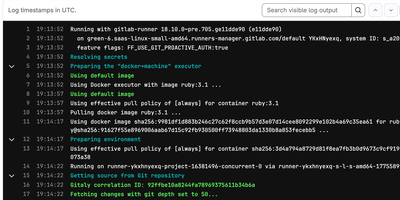
Used by over 100,000 organizations and ranked first in the Gartner Magic Quadrant for DevOps Platforms, GitLab is the open-core DevSecOps platform that delivers the complete software development lifecycle — from planning and source code management through CI/CD, security scanning, and monitoring — in a single self-managed application. The built-in CI/CD engine executes pipelines defined in YAML with parallel jobs, directed acyclic graph scheduling, multi-project pipelines, and auto-scaling runners on Docker, Kubernetes, or bare metal. Merge requests provide inline code review with approval rules, code owners, merge trains for serialized merging, and five merge strategies including fast-forward and semi-linear history. The integrated container registry stores Docker images alongside code, while the package registry supports npm, Maven, NuGet, PyPI, Conan, Go, and generic packages. Issue boards with epics, milestones, and labels enable agile planning, while the built-in wiki and GitLab Pages provide documentation hosting and static site publishing. Security scanning in the Community Edition includes basic SAST, secret detection, and container scanning running as pipeline jobs. The Omnibus installer bundles Rails, Puma, Gitaly, Workhorse, Nginx, PostgreSQL, Redis, Sidekiq, and Prometheus into a single package installable in minutes, while Docker and Helm chart options support containerized and Kubernetes deployments. GitLab Duo AI assists with code suggestions, merge request summaries, and vulnerability resolution. Running on a dedicated VPS on RepoCloud with guaranteed CPU, RAM, and SSD, full root SSH access, and a browser serial console. MIT licensed.
Kite
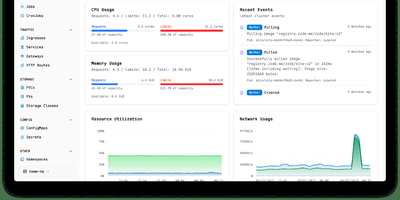
With nearly 3,000 GitHub stars and 14 releases since its June 2025 launch, Kite delivers a lightweight Kubernetes dashboard that replaces the fragmented workflow of switching between kubectl, Lens, and separate monitoring tools with a unified multi-cluster management platform. The dashboard automatically discovers clusters from kubeconfig files and supports independent Prometheus configurations per cluster, providing real-time CPU, memory, and network charts alongside live pod log streaming with filtering and search. A built-in web terminal opens shells directly into pods and nodes without kubectl port-forward, while the Monaco-based YAML editor offers syntax highlighting and validation for in-place resource editing. The integrated AI agent, powered by OpenAI or Anthropic models via native Go SDK integrations, translates natural language into precise client-go API calls — querying cluster health, analyzing pod logs, scaling deployments, patching resources, and cleaning up failed jobs — all operating strictly within the logged-in user's RBAC permissions. Enterprise governance includes OAuth 2.0 single sign-on, multi-factor authentication, FIDO2 passkeys, granular role-based access control with per-namespace permissions, and comprehensive audit logging. Helm chart management enables browsing, installing, and upgrading releases directly from the UI, while the Docker registry integration provides quick image tag selection. Deploy via a single Docker container with SQLite or use the official OCI Helm chart with PostgreSQL or MySQL for production. Running on a dedicated VPS on RepoCloud with guaranteed CPU, RAM, and SSD, full root SSH access, and a browser serial console. Apache 2.0 licensed.
Headlamp
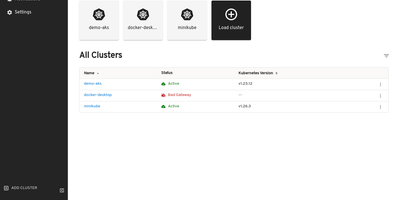
The Kubernetes project's own answer to cluster management UIs: maintained under SIG UI governance, Headlamp's roadmap tracks Kubernetes releases and its design philosophy reflects community needs rather than a vendor's product strategy. The React interface provides full read-write capabilities adapted to each user's RBAC permissions — delete, scale, edit, and restart buttons appear only when the authenticated user holds the corresponding cluster role, preventing accidental unauthorized actions. Multi-cluster support surfaces workloads across development, staging, and production from a single view without context switching. The plugin architecture drives extensibility through a curated catalog: an AI Assistant plugin answers natural-language cluster queries and performs operations via configurable LLM keys, Flux handles GitOps, Karpenter manages nodes. Integrated terminals provide browser-based exec access to running pods, live log streaming follows container output with filtering, and the YAML editor displays inline Kubernetes API documentation alongside resource definitions. Deployment creation forms let you configure containers, environment variables, volumes, and replicas without writing manifests. Side-by-side cluster comparison views surface differences in workload distribution. Works with any distribution: EKS, GKE, AKS, Minikube, Docker Desktop. Helm chart installation via the Headlamp repository with images on GitHub Container Registry. Running on a dedicated VPS on RepoCloud with guaranteed CPU, RAM, and SSD, full root SSH access, and a browser serial console. Apache-2.0 licensed.
Gitness
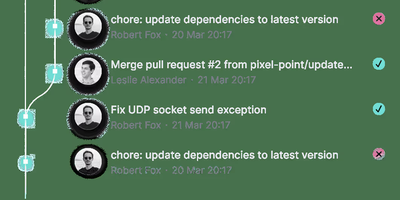
With 37,400+ GitHub stars and active daily development by the Harness engineering team, Gitness is the open-source developer platform that ships Git hosting, container-native CI/CD pipelines, a Docker-compatible artifact registry, and cloud developer environments in a single Go binary consuming approximately 100 MB of RAM — compared to GitLab's 4+ GB minimum footprint. Born as the next generation of Drone CI, Gitness inherits Drone's battle-tested pipeline engine while adding complete source code management with pull requests featuring threaded code review comments, suggested changes, required reviewer approvals, and merge strategies including squash and rebase. Branch protection rules enforce mandatory pull requests, minimum peer reviews, passing status checks, and force-push blocking. Pipelines use Drone-compatible YAML syntax with stages, steps, and service containers, triggered automatically on code changes with results displayed directly in pull request checks. The built-in container registry eliminates the need for separate Harbor or Docker Registry deployments, supporting Docker image push and pull plus Helm chart storage. Gitspaces provide on-demand remote development environments configured via industry-standard devcontainer.json files. Encrypted secrets management with Gitleaks-powered secret scanning blocks commits containing hardcoded credentials. One-click migration imports existing GitHub Organizations and GitLab Groups, automatically converting GitHub Actions and GitLab CI pipelines to Gitness YAML. The REST API with OpenAPI specification enables programmatic management of all resources. Running on a dedicated VPS on RepoCloud with guaranteed CPU, RAM, and SSD, full root SSH access, and a browser serial console. Apache 2.0 licensed.
ToolHive
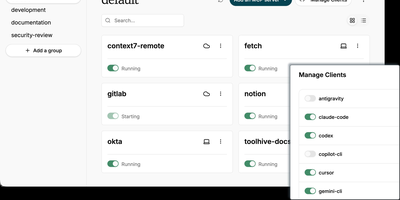
ToolHive is an open-source MCP server management platform that lets you run, secure, and orchestrate Model Context Protocol servers in isolated containers, giving AI agents structured access to tools like GitHub, databases, and cloud services without exposing host credentials or network. Every server launches inside its own sandboxed container with a minimal permission file, network access filtering, and encrypted secrets management, preventing misbehaving connectors from reaching beyond their defined scope. The built-in registry provides a catalog of vetted servers you can install with one command, while custom images and package-manager references let you onboard proprietary connectors without writing Dockerfiles. Platform teams deploy the Kubernetes operator to declare MCP servers as cluster resources using Custom Resource Definitions, with automated lifecycle management and multi-namespace isolation. The Virtual MCP Server gateway aggregates multiple backends behind a single endpoint, centralizing OIDC authentication, tool filtering, and composite cross-server workflows so clients connect once instead of juggling separate URLs. An MCP Optimizer analyzes tool schemas via semantic search and surfaces only relevant tools per request, cutting token consumption by up to 85%. OpenTelemetry traces and Prometheus metrics deliver full visibility into tool execution, latency, and request audit trails across every managed server. Running on a dedicated VPS on RepoCloud with guaranteed CPU, RAM, and SSD, full root SSH access, and a browser serial console. Apache 2.0 licensed.
Tugtainer
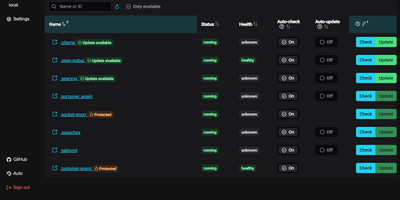
Tugtainer delivers a visual command center for Docker environments that automates container image updates, monitors registry releases, and manages application lifecycles across multiple servers without command-line intervention. System administrators can inspect running containers across all connected hosts, trigger immediate image pulls, and configure automated cron schedules for recurring health and registry checks. Flexible update policies allow teams to flag production databases as notification-only while automatically updating stateless web applications whenever new image tags publish. When updating linked services, the platform analyzes Docker Compose project definitions and custom dependency labels to stop and restart containers in strict dependency order, preventing broken network links and orphaned volume mounts. Administrators can authenticate private container registries, browse image layers and tags, and view real-time container log streams directly within the browser console. Automated pruning jobs continuously reclaim server disk space by deleting obsolete, untagged images and dangling build layers after successful deployments. Multi-channel alerting integrates with over fifty notification providers, delivering real-time update summaries and error warnings directly to Discord, Telegram, Slack, and email webhooks. Running on a dedicated VPS on RepoCloud with guaranteed CPU, RAM, and SSD, full root SSH access, and a browser serial console. MIT licensed.
Dagger
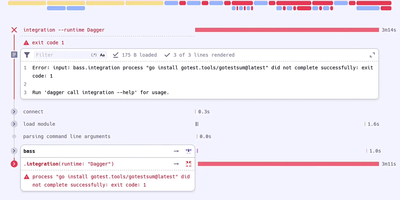
With 16,100 GitHub stars and created by Solomon Hykes (co-founder of Docker), Dagger eliminates proprietary YAML DSLs from CI/CD by letting developers write pipelines as real programs in their preferred language — then executing them identically on a laptop, in GitHub Actions, in GitLab CI, or on any machine with a container runtime. The BuildKit-based Dagger Engine runs every pipeline operation inside OCI containers, constructing a directed acyclic graph where each node is cached by default, parallelized automatically, and produces bit-for-bit reproducible outputs regardless of execution environment. Native SDKs generated from the GraphQL API schema provide Go, Python, TypeScript, PHP, Java, .NET, Elixir, and Rust developers with full type safety, IDE autocomplete, and the ability to unit-test CI pipelines using the same testing frameworks as application code. The module ecosystem enables cross-language composition where a Python team can invoke a Go team's build functions without learning Go, while filesystems, secrets, git repositories, and network tunnels are passed between functions as strongly-typed objects. Pipeline operations cache at container-layer granularity with content-addressed deduplication, and the interactive REPL enables step-by-step pipeline debugging with live container inspection. Host dependencies are explicit and strictly typed, eliminating implicit environment coupling that causes "works on my machine" failures. Running on a dedicated VPS on RepoCloud with guaranteed CPU, RAM, and SSD, full root SSH access, and a browser serial console. Apache 2.0 licensed.
Drydock
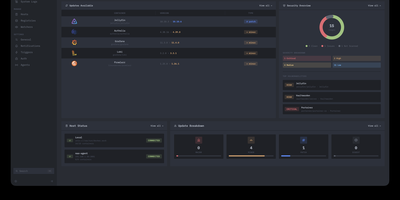
Deploying container updates without blind surprises is what Drydock delivers through a monitor-first inspection plane that evaluates image registries, scans CVE vulnerabilities, and automates rollbacks across distributed Docker infrastructure. Systems engineers track container fleets across twenty-three public and private registries including Docker Hub, GitHub Container Registry, Harbor, and Quay using cursor-based pagination and semver classification. The integrated Update Bouncer runs Trivy and Grype static scanners against incoming candidate layers, blocking deployments that fail configurable CVE severity policies while verifying cryptographic signatures through cosign. Operators configure declarative update schedules with stabilization countdown gates that hold back brand-new releases until defined burn-in periods elapse. When updates execute, Drydock creates pre-upgrade container snapshots and evaluates post-launch container health checks, instantly restoring previous image digests and network configs if failures occur. Distributed Portwing edge agents stream live container output and system logs over encrypted WebSockets, allowing central consoles to coordinate remote daemon updates without opening inbound host firewall ports. Automated event triggers dispatch granular notifications and update payloads across seventeen communication channels including Slack, Discord, Telegram, and Home Assistant MQTT brokers. Running on a dedicated VPS on RepoCloud with guaranteed CPU, RAM, and SSD, full root SSH access, and a browser serial console. AGPL-3.0 licensed.