BillionMail
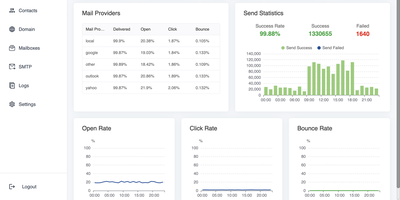
With over 15,000 GitHub stars accumulated since its February 2025 launch, BillionMail delivers the rare combination of a production mail transfer agent and a full email marketing suite in a single self-hosted package — eliminating the monthly per-subscriber fees charged by Mailchimp, SendGrid, and similar platforms. The Go-based architecture bundles Postfix for SMTP transmission, Dovecot for IMAP and POP3 mailbox access, Rspamd for intelligent spam filtering and greylisting, and RoundCube for browser-based webmail, all orchestrated through Docker Compose with PostgreSQL for persistent storage and Redis for queue management and caching. The marketing engine supports unlimited subscriber lists with tag-based segmentation, scheduled campaign sends, A/B subject line testing, and both HTML and drag-and-drop visual template editors for crafting responsive emails without coding. Real-time analytics dashboards track sent volume, deliverability rate, open rate, click-through rate, and bounce reasons, while the platform provides step-by-step DNS record configuration wizards for SPF, DKIM, and DMARC to maximize inbox placement. A transactional email API exposes REST endpoints for single and batch sending, enabling integration with CRM systems, e-commerce platforms, and custom applications. Auto-provisioned free SSL certificates, Fail2ban brute-force protection, and privacy-first architecture with zero third-party tracking ensure secure operation. The platform installs in under eight minutes via a single shell script and supports SMTP on port 25, SMTPS on 465, submission on 587, IMAP on 143/993, and POP3 on 110/995. Running on a dedicated VPS on RepoCloud with guaranteed CPU, RAM, and SSD, full root SSH access, and a browser serial console. AGPLv3 licensed.
Dittofeed
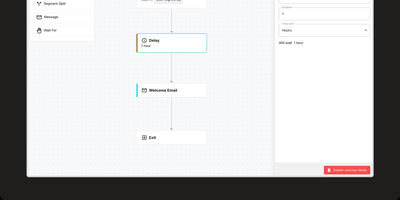
Automate transactional and marketing messages across email, SMS, mobile push, WhatsApp, Slack, and custom webhooks from a single visual journey canvas. Dittofeed provides the capabilities of Customer.io or Braze while keeping customer PII within your own infrastructure and eliminating volume-based pricing entirely. The drag-and-drop journey builder creates multi-trigger automations with branching logic, wait nodes, random cohort splits for A/B testing, and local timezone delivery without writing code. User segments combine trait conditions, event history, and array-based filtering through AND/OR operators with real-time evaluation. Template authoring supports both a low-code visual editor and direct HTML/MJML input, with templates reusable across journeys and one-off broadcasts. Data flows in through Segment integration, Reverse ETL connections, or the REST API with Web, Node.js, and React Native SDKs. Message delivery routes through SendGrid, Amazon SES, Twilio, or SignalWire with per-channel analytics tracking opens, clicks, bounces, and unsubscribes. Authentication supports Keycloak, AWS Cognito, and GCP OAuth for enterprise SSO. Embeddable iframe and headless React components let SaaS platforms white-label journey builders into their own products. Deploy on RepoCloud with a dedicated VPS for full GDPR compliance under the MIT license.
Keila
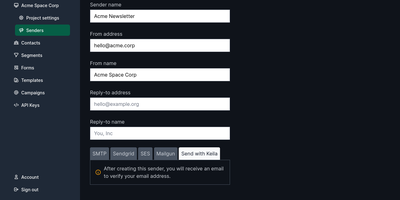
Among open-source Mailchimp alternatives, Keila has the most modern UI - built in Germany on Elixir and Phoenix (the PETAL stack), with GDPR-conscious defaults including an optional no-tracking mode, and 100% open source with no proprietary premium tier. Campaign authoring is flexible three ways: a visual block editor with multi-column layouts, Markdown with or without WYSIWYG for hybrid HTML-plus-plain- text sends, and raw MJML for hand-coded designs. The personalization system is unusually clean - every contact carries custom data as a single JSON object (populated from sign-up form fields or pushed from your CMS/CRM), and Shopify's Liquid template language renders it into fully dynamic emails. Targeting uses a visual segment editor backed by a powerful segment language for complex logic over tags, language preferences, and any custom field. Sign-up forms with custom fields grow your lists; open and click tracking measures campaigns; scheduled sending handles timing. Delivery pipes through your own SMTP or first-class integrations with AWS SES (including automated bounce handling), SendGrid, Mailgun, and Postmark. A full REST API manages contacts, campaigns, and segments, with Erlang/OTP reliability underneath. Comfortable at 100K+ subscribers. AGPL-licensed, EU-hosted project, actively developed.
Warmbly
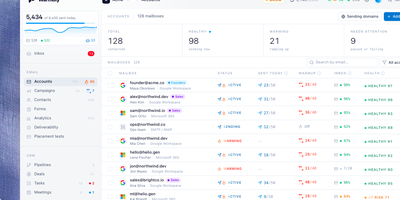
Cold outreach dies in the spam folder long before a prospect reads it, and Warmbly is the open-source platform that keeps your mailboxes warm, capped, and credible while campaigns run from the accounts you already own. Connect Google Workspace, Microsoft 365, or any SMTP and IMAP mailbox, and Warmbly checks SPF and DMARC records, scores mailbox health, then warms each account gradually, starting near 10 messages a day and ramping toward a 40-per-day ceiling instead of blasting from day one. Campaigns run as multi-step sequences spread across many mailboxes, with per-mailbox daily caps, minimum spacing between sends, and weekday sending windows, so volume grows without one account absorbing all the risk. Opens, clicks, bounces, and complaints stream into a deliverability view with suppression handling, while every reply from every mailbox lands in one unified inbox your whole team can work in real time. A built-in CRM tracks contacts, pipelines, deals, tasks, and meetings next to the conversations that created them. Visual playbooks react the moment a reply, booking, bounce, or warmup dip arrives: branch on intent or confidence, let an AI step read the reply and act only with the actions you allow, open the deal, post to Slack, update HubSpot or Pipedrive, and test the whole path on a canvas before it goes live. Running on a dedicated VPS on RepoCloud with guaranteed CPU, RAM, and SSD, full root SSH access, and a browser serial console. Apache-2.0 licensed.
Mautic
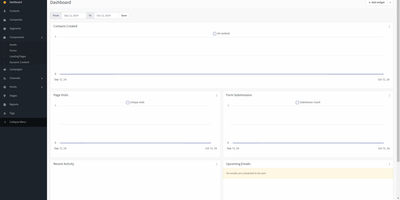
A campaign engine wrapped around a contact database: Mautic, the largest open-source marketing automation platform, replaces HubSpot or Marketo without per-contact pricing. Contacts arrive through forms, landing pages, imports, or the REST API and flow into segments: dynamic filters that update automatically from behavior, custom profile fields, or point scores. Segments decide who qualifies; campaigns decide what happens. The drag-and-drop Campaign Builder composes multi-step workflows from actions, positive/negative decision trees, and conditions (field values, tags, device type, segment membership, point thresholds), with static or relative delays, a Jump-to-Step action for moving contacts between branches, and handoffs that push contacts into CRMs or entirely different campaigns. Messaging covers email, SMS, and web/app push out of the box, with A/B testing and a drag-and-drop email builder; dynamic website content swaps page sections per known contact. Lead scoring assigns points for clicks and visits with decay for inactivity, while stages track funnel position. Native integrations cover Salesforce, HubSpot, Zoho, and Dynamics, plus a full REST API for custom sync. It runs on PHP and MySQL with cron jobs processing campaigns and segment rebuilds - self-hosting keeps your entire contact database and behavioral history under your control.
Django-CRM
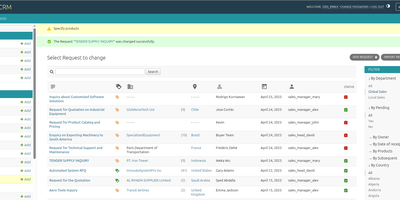
Small teams that have outgrown spreadsheets but balk at per-seat CRM pricing can run Django-CRM on their own server, with leads, deals, tasks, and email campaigns in one self-hosted system. Requests from website contact forms arrive automatically, email requests are imported from the company mailbox, and each gets a unique ticket and is matched against existing companies, contacts, and leads. When nothing matches, a new lead is created and later converted into a company and contact person. Deals carry products, payments, currencies, and price tiers, and the price list exports to Excel. Tasks can be individual or team-based with subtasks, memos can spawn tasks or projects, and participants chat and share files inside each one. Eight analytics reports cover the sales funnel, income forecasts, lead sources, conversions, and closing reasons. The built-in email client works over SMTP and IMAP, supports Gmail through OAuth 2.0, and links each message to its request, lead, or deal. Mass mailings are spread through the workday and can use additional mailboxes to protect managers' main accounts from spam filters. Web forms are protected by reCAPTCHA v3, IP geolocation fills in each requester's country and city, and VoIP callbacks and WhatsApp or Viber messages are supported. Object-level permissions control who can view, add, change, or delete each record, and the interface offers 22 languages. Running on a dedicated VPS on RepoCloud with guaranteed CPU, RAM, and SSD, full root SSH access, and a browser serial console. AGPL-3.0 licensed.
Notifuse
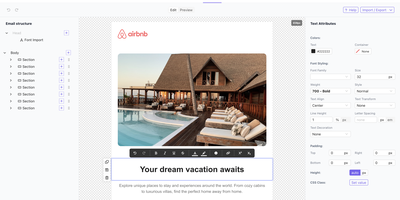
Marketing campaigns and transactional mail from one open-source platform: Notifuse is a modern, self-hosted alternative to Mailchimp, Brevo, and Klaviyo without per-email or per-contact pricing. Built with Go and React on PostgreSQL, it separates concerns cleanly: a drag-and-drop visual builder composes responsive templates from MJML components with Liquid variables like {{ contact.first_name }} and per-template version history; campaigns add A/B testing across subject lines, content, and send times; and a REST transactional API serves application-triggered mail. Delivery routes through your choice of provider - Amazon SES, Mailgun, Postmark, SendGrid, SparkPost, Mailjet, or plain SMTP - with multi-provider failover. Contacts carry custom fields and a full activity timeline (messages, profile changes, webhook events), and real-time segmentation builds dynamic rules over properties, activity, and subscriptions. Event-driven automations create behavioral sequences, a notification center gives recipients self-service preference management, and an S3-compatible file manager handles images with CDN delivery. Multi-tenant workspaces with isolated databases and custom domains suit agencies. Open and click tracking report engagement in real time.
MailCheap
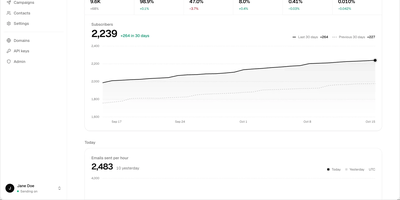
MailCheap is a newsletter app you host yourself that writes, sends, and publishes your issues while charging you only for the emails you actually send, not for subscribers who never open anything. Write in an editor with slash commands, images, and content boxes, or send Markdown and HTML emails through the API, then work through a pre-send review that flags subject, preview text, unsubscribe link, and sender problems first. Bring your audience with you: CSV exports from beehiiv, Substack, Mailchimp, Kit, MailerLite, Buttondown, Ghost, and EmailOctopus import with each reader's status and signup date intact. Imports clean themselves, dropping invalid, misspelled, duplicate, throwaway, and spam-trap addresses, and a server-wide never-email list keeps known bad addresses out of every future import, signup, and send. Sending protects your domain: new contacts receive issues in paced steps, sends pause when bounce or complaint rates climb, and Gmail spam rates are watched daily. Every issue becomes a page on your newsletter's website, with a signup form, author page, share images, and a sitemap. Run up to three newsletters per account, each with separate contacts and campaigns, and follow subscribers over time with open and click reports by inbox provider. AI agents can do anything the dashboard can through the MCP server, and scripts get the same reach through the REST API, with sending marked irreversible so agents ask first. Running on a dedicated VPS on RepoCloud with guaranteed CPU, RAM, and SSD, full root SSH access, and a browser serial console. AGPL-3.0 licensed.
SendPortal
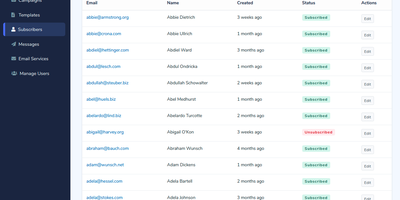
SendPortal is a self-hosted email marketing platform for building subscriber lists, sending campaigns, and tracking exactly what happens to every message after it leaves your server. Grow the list three ways: add contacts one by one, import them in bulk from CSV, or push them through the API, which creates or updates subscribers by email address and attaches tags. Tags and custom segments organize audiences, sending product updates to power users and sale announcements to everyone else. A campaign pairs a subject line, which can insert first name, last name, and email placeholders, with an optional HTML template holding content, unsubscribe, and browser view placeholders. Automatic CSS inlining at dispatch keeps designed emails rendering properly in inboxes that ignore style sheets. Send a test email to yourself before anything goes out, then choose immediate delivery or schedule the campaign for later. Pick Queue Draft to review messages before they leave, or Send Automatically when the audience and content are already right. Open and click tracking, bounce records, and unsubscribe events then flow back through provider webhooks into per campaign reports and a searchable message log. Run several brands or clients side by side in separate workspaces inside one interface. Delivery runs through Amazon SES, Postmark, SendGrid, Mailgun, Mailjet, or your own SMTP server, so deliverability stays with providers built for it. Running on a dedicated VPS on RepoCloud with guaranteed CPU, RAM, and SSD, full root SSH access, and a browser serial console. MIT licensed.