Apache NiFi
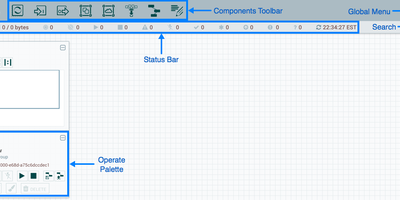
Deployed at thousands of enterprises across financial services, healthcare, government, and telecommunications, Apache NiFi is the industry-standard platform for building automated data pipelines through a visual drag-and-drop browser interface that requires zero coding for common integration patterns. The flow-based programming model connects over 300 built-in processors covering relational databases via ExecuteSQL and PutDatabaseRecord, Apache Kafka with PublishKafka and ConsumeKafka, HTTP endpoints through InvokeHTTP and ListenHTTP, cloud storage for AWS S3, Azure Blob, and Google Cloud Storage, SFTP/FTP file transfers, and JSON, XML, CSV, and Avro transformations. Data provenance tracking logs every routing decision, transformation, and delivery for every FlowFile, creating a searchable lineage graph from source to destination with full content replay capability for auditing and debugging. Guaranteed delivery uses configurable backpressure thresholds, prioritized queuing with latency or throughput optimization, and automatic retry with exponential backoff, ensuring no data loss even during downstream outages. The zero-leader clustering architecture distributes processing across nodes with automatic load balancing, while site-to-site protocol enables secure data transfer between NiFi instances across network boundaries. Security includes OpenID Connect and SAML 2.0 single sign-on, role-based access control with fine-grained policies per component, and TLS encryption for all communication. Custom processors can be written in Java and packaged as NAR bundles, or implemented directly in Python through the native scripting framework. Running on a dedicated VPS on RepoCloud with guaranteed CPU, RAM, and SSD, full root SSH access, and a browser serial console. Apache 2.0 licensed.
Mage
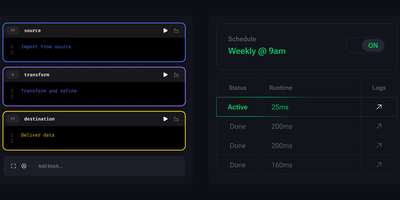
Backed by 8,700+ GitHub stars and designed as a modern alternative to Apache Airflow, Mage delivers the open-source data pipeline platform that combines the interactive flexibility of notebooks with production-grade orchestration in a single self-hosted environment accessible at port 6789. The modular block architecture lets data engineers compose pipelines from Python, SQL, and R code blocks with instant data previews, live execution logs, and visual debugging at each step. Over 100 prebuilt integrations connect sources and destinations including PostgreSQL, MySQL, Snowflake, BigQuery, Redshift, S3, Kafka, MongoDB, Amplitude, Salesforce, and Stripe with parallel stream synchronization for high-throughput data movement. Batch pipelines run on cron schedules or event triggers while streaming pipelines process real-time data from Kafka, Kinesis, and RabbitMQ with stream mode reducing memory usage by approximately 90 percent compared to batch processing. Native dbt integration builds, tests, and runs dbt models directly inside the pipeline editor alongside custom transformation blocks. Spark, Snowpark, and Databricks runtimes handle large-scale distributed processing. AI-assisted development generates code, fixes errors, and optimizes queries within the notebook interface. Monitoring dashboards track pipeline health with integrations to Datadog, Prometheus, New Relic, and OpenTelemetry. Terraform templates deploy production environments to AWS, GCP, or Azure with two commands, while Helm charts support Kubernetes clusters. Running on a dedicated VPS on RepoCloud with guaranteed CPU, RAM, and SSD, full root SSH access, and a browser serial console. Apache 2.0 licensed.
Airbyte
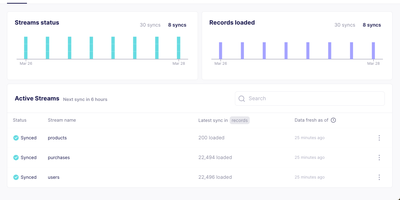
Backed by over 21,800 GitHub stars and more than 1,000 community contributors, Airbyte has become the standard open-source data movement platform, powering ELT pipelines for organizations ranging from startups to Fortune 500 enterprises. The platform provides 600+ pre-built connectors covering PostgreSQL, MySQL, MongoDB, Snowflake, BigQuery, Redshift, S3, Salesforce, HubSpot, Stripe, Shopify, Google Analytics, and hundreds of additional APIs, databases, and SaaS applications. The no-code Connector Builder lets practitioners create new source connectors in minutes by pointing at an API documentation URL, while the Python CDK enables custom connectors with full programmatic control for complex authentication flows and pagination strategies. Airbyte's AI agent capabilities include the MCP Gateway for Model Context Protocol integration, the open-source Agent SDK compatible with pydantic-ai, LangChain, OpenAI Agents, and FastMCP, and a Context Store that lets AI agents query business data across connected systems without runtime API stitching. Change Data Capture streams incremental updates from PostgreSQL, MySQL, and SQL Server using Debezium, while dbt integration handles post-load transformations within the pipeline. Self-hosted deployment uses Kubernetes via the abctl CLI tool, which bootstraps a local kind cluster with a single command, or Helm charts for production clusters with Keycloak OIDC authentication and secrets management through AWS Secrets Manager, Google Secrets Manager, or HashiCorp Vault. Running on a dedicated VPS on RepoCloud with guaranteed CPU, RAM, and SSD, full root SSH access, and a browser serial console. ELv2 licensed with MIT-licensed connectors.
Evolution API
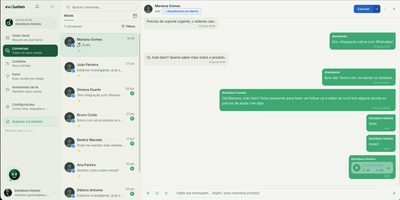
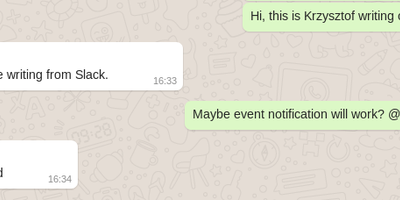
Evolution API gives your applications a production-ready REST interface to WhatsApp, supporting both free Baileys-based Web connections and Meta's official Business Cloud API from the same server. With 9,200+ stars and 7,100+ forks, it is the most widely deployed WhatsApp integration layer available. Each installation handles unlimited isolated instances (one per phone number) with independent auth, webhooks, and database separation via Prisma ORM against PostgreSQL or MySQL, cached through Redis. Message types include text, images, audio, video, documents, contacts, locations, interactive buttons, list messages, carousel cards, and PIX payment links through unified endpoints. Native integrations connect to Typebot for chatbot flows, Chatwoot for multi-agent support, Dify and OpenAI for AI conversations, N8N and Flowise for workflow automation, and RabbitMQ, Kafka, or SQS for enterprise event streaming. Socket.io delivers real-time message and connection events. Amazon S3 or MinIO handles media offloading. The Evolution Manager v2 dashboard provides visual instance creation, QR code scanning, connection monitoring, and integration configuration without touching the API directly. Docker Compose bundles the server, PostgreSQL, and Redis with environment-variable-driven setup. Running on a dedicated VPS on RepoCloud with guaranteed CPU, RAM, and SSD, full root SSH access, and a browser serial console. Apache 2.0 licensed.
Matterbridge
With over 7,500 GitHub stars and 140 contributors, Matterbridge is the Go-powered chat bridge that connects over 20 messaging platforms through a single TOML configuration file, letting teams communicate across platform boundaries without forcing anyone to switch applications. The gateway architecture routes messages bidirectionally between any combination of Discord, Slack, Telegram, Matrix, IRC, Mattermost, Microsoft Teams, XMPP, Rocket.Chat, Nextcloud Talk, Keybase, Mumble, Twitch, WhatsApp, VK, Gitter, Zulip, ssh-chat, and Harmony, with transparent username and avatar spoofing so bridged messages appear native on each platform. Message edits and deletes propagate across bridges, file attachments and inline images transfer between protocols, threading and reply context is preserved where platforms support it, and private group bridging enables confidential cross-platform conversations. Multiple independent gateways can run simultaneously, each bridging different channel sets with different protocol combinations. The REST API enables third-party integrations and custom bridges without modifying the Matterbridge codebase, while the tengo scripting engine allows inline message transformation and filtering. Game chat support bridges Minecraft and Counter-Strike server chat into messaging platforms. Deployment runs as a single static Go binary with zero dependencies, or as the official Docker image with the configuration file mounted as a volume. Running on a dedicated VPS on RepoCloud with guaranteed CPU, RAM, and SSD, full root SSH access, and a browser serial console. Apache-2.0 licensed.
Scrumboy
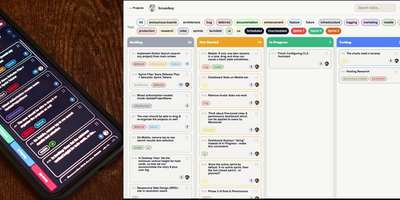
Scrumboy is a Kanban and sprint management tool that ships as a single Go binary backed by SQLite, deploys in under ten seconds via Docker, and uniquely integrates with AI coding agents through a standards-compliant MCP JSON-RPC endpoint. The dual-mode architecture supports Full mode with bootstrapped authentication, TOTP two-factor auth, OIDC/SSO integration through Keycloak, Authentik, Auth0, or Entra ID, role-based access control across Owner, Admin, User system tiers plus per-project Maintainer, Contributor, and Viewer roles, and Anonymous mode that generates instant shareable boards accessible via unique URLs with zero signup requirement. Custom workflows allow user-defined lane configurations per project including designated "Done" lanes, while sprints with configurable one or two-week cycles include board-level sprint filtering and the ability to disable and re-enable sprint tracking without losing history. Real-time Server-Sent Events power instant multi-user board updates, and outbound webhooks deliver JSON payloads to registered URLs when domain events fire with HMAC signature verification. The MCP endpoint at /mcp/rpc enables native integration with Cursor, Claude Code, and other AI agents through OAuth 2.1 with PKCE authorization, while API access tokens support CLI automation and CI/CD pipelines. Additional capabilities include VoiceFlow voice commands, per-project sticky-note walls, Markdown and Mermaid diagram support in task notes, append-only audit trails, VAPID Web Push notifications, SMTP password reset, Trello import, JSON backup with merge/replace/copy strategies, and 22-language internationalization. Running on a dedicated VPS on RepoCloud with guaranteed CPU, RAM, and SSD, full root SSH access, and a browser serial console. AGPL v3.0 licensed.
Fynt
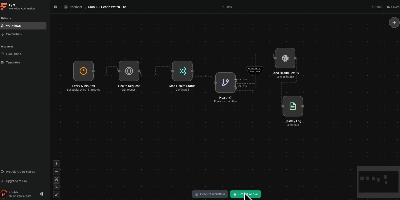
A clean alternative to n8n and Zapier that puts AI-native workflows front and center, Fynt is the MIT-licensed workflow automation platform where you drag nodes onto a React Flow canvas, wire them together with typed connections, and let a distributed BullMQ engine execute them — with every step streamed live to your browser over WebSockets so you never wonder what happened inside a run. The node library spans triggers (manual, webhook, cron scheduling), AI providers (OpenAI, Anthropic, and Gemini with structured output parsing), service integrations (GitHub webhooks, Notion databases, Slack channels, Discord bots, arbitrary HTTP endpoints), logic gates (conditional branching, filtering, data transformation), and utility nodes (delay, logging, payload mapping). The execution architecture separates concerns across three services: a Next.js 16 web application serving the React 19 workflow builder and tRPC API, a BullMQ worker processing jobs with node-level retries and checkpointing for crash-safe execution, and a dedicated WebSocket relay server broadcasting real-time run events via Redis Pub/Sub. All stored credentials are encrypted at rest using AES-256-GCM with per-credential initialization vectors. The full-stack deploys as a single Docker Compose stack (web, worker, realtime, PostgreSQL, Redis) or individually via pnpm workspaces in a Turborepo monorepo. Authentication is handled through better-auth with configurable OAuth providers. Running on a dedicated VPS on RepoCloud with guaranteed CPU, RAM, and SSD, full root SSH access, and a browser serial console. MIT licensed.