Grocy
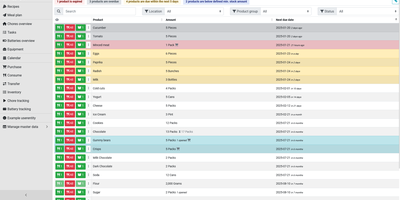
Grocy is a household management system, bringing ERP-grade inventory tracking to kitchens, pantries, and homes worldwide. The stock management system tracks products with expiration dates, best-before dates, and opened tracking, while barcode scanning via USB readers or device cameras with Open Food Facts product lookup enables rapid item entry. Minimum stock amounts trigger automatic shopping list entries so frequently used products never run out, and multiple shopping lists can be maintained and shared across household members. Recipe management links ingredients directly to stock inventory, showing at-a-glance fulfillment status and a Due Score that highlights recipes best suited for consuming items approaching expiration. The meal planner organizes daily meals across customizable time periods and adds all missing ingredients to shopping lists with one click. Chore tracking schedules recurring household tasks with assignment to specific members, due date tracking, and completion history logging. Battery management monitors charge cycles for household devices with configurable reminder intervals. Custom fields and userfields extend any entity with additional data, while feature flags disable unused modules to simplify the interface. The RESTful API with integrated Swagger UI at the /api endpoint exposes every operation the web frontend uses, enabling third-party integrations with home automation systems. Running on a dedicated VPS on RepoCloud with guaranteed CPU, RAM, and SSD, full root SSH access, and a browser serial console. MIT licensed.
Bigcapital
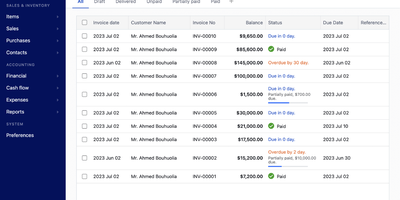
Bigcapital gives small and medium businesses a complete double-entry accounting, invoicing, and inventory management platform they can self-host for free, replacing the per-seat subscriptions of QuickBooks, Xero, and Wave. Every transaction records debits and credits across your chart of accounts, automatically generating balance sheets, profit and loss statements, trial balances, general ledger reports, journal entries, accounts receivable and payable summaries, cash flow analysis, inventory valuation, and inventory summary reports. Sales invoicing supports recurring schedules, customer payment tracking, estimate-to-invoice conversion, and configurable GST/VAT tax rates. Purchase invoicing handles vendor bills with expense categorization for payroll, rent, and operational costs. The inventory module tracks stock levels using FIFO and average cost methods, automatically adjusting quantities on every sale or purchase and providing reorder alerts. Multi-currency accounting converts transactions at real-time exchange rates and consolidates them under customer or vendor profiles with detailed currency reports. The platform deploys via Docker Compose with multi-tenant isolation giving each organization its own separate database, requiring as little as 2GB RAM for the complete production stack. A headless REST API with Postman collections lets developers embed the accounting engine into external applications for programmatic transaction management. Role-based permissions control access for team members and invited accountants across organizations. Running on a dedicated VPS on RepoCloud with guaranteed CPU, RAM, and SSD, full root SSH access, and a browser serial console. AGPL-3.0 licensed.
NodeDR Restaurant POS
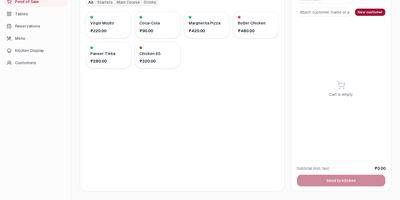
OrderRestro runs an entire restaurant from one server on the premises: tills take orders, the kitchen watches tickets arrive, tables fill and clear, and the books close at night, all without a subscription, and it keeps working when the internet drops. Billing covers dine-in and takeaway with merged bills, discounts, gift cards, tips, and refunds, and it taxes under India GST, US sales tax, EU VAT, or Spanish IVA, with UPI QR payments confirmed by an audible alert. A visual floor plan follows every table while reservations and a waitlist manage the door, and guests scan a table QR code to order, add modifiers, call the waiter, or request the bill. Kitchen tickets route to the right station on the display system with preparation tracking, and the menu supports modifier groups, combos, seasonal menus, and scheduled availability. Ingredient inventory with recipe costing, purchase orders, goods receiving, and waste tracking keeps food costs honest, and accounting closes cash nightly with variance checks, profit and loss, a balance sheet, and bank reconciliation. Staff clock in and out, shifts are scheduled with clash checks, payroll comes from clocked hours, and loyalty points, memberships, coupons, and happy-hour campaigns keep regulars returning. Delivery runs on zones with fees, minimums, and driver assignment, chains switch branches and transfer stock between them, and eighteen reports export to print, CSV, Excel, or PDF. Running on a dedicated VPS on RepoCloud with guaranteed CPU, RAM, and SSD, full root SSH access, and a browser serial console. AGPL-3.0 licensed.
Homebox
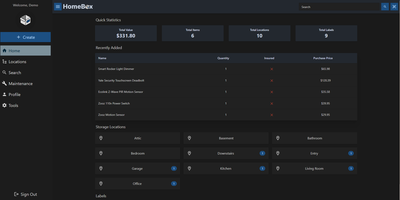
With over 7,000 GitHub stars and active community maintenance through version 0.26.0 released in June 2026, Homebox fills the gap between inadequate spreadsheets and overcomplicated enterprise asset management by providing a purpose-built inventory system designed specifically for home users, families, and small groups. The Go backend with SQLite storage deploys as a single Docker container consuming under 50MB of RAM at idle, running on hardware as modest as a Raspberry Pi while the responsive web interface adapts seamlessly across desktops, tablets, and smartphones. The entity-based architecture introduced in v0.26 unifies items and locations into a shared structure supporting custom fields, attachments, entity types, and reusable templates for consistent data entry across inventory categories. QR code generation creates printable labels that scan with any smartphone camera to instantly display item details, photos, serial numbers, and associated documents. Warranty tracking records purchase dates, prices, and expiration dates while maintenance scheduling sends reminders for recurring service tasks. Location hierarchies organize items spatially with nested sub-locations, and flexible label tagging enables cross-cutting categorization beyond physical placement. Multi-user support shares collections with family members or roommates with OIDC single sign-on integration for Active Directory, Okta, and other identity providers. CSV import and export handles bulk operations, while the full REST API enables automation and third-party integrations. Collection-level ZIP export packages complete inventories with attachments for backup or migration. Running on a dedicated VPS on RepoCloud with guaranteed CPU, RAM, and SSD, full root SSH access, and a browser serial console. AGPL-3.0 licensed.
Apache OFBiz
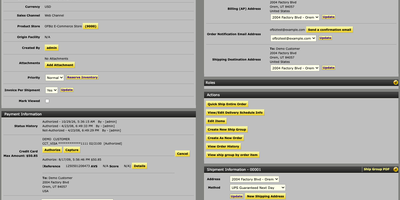
Apache OFBiz is the enterprise resource planning system a company installs when accounting, inventory, orders, and the factory floor must all agree with each other in real time. One shared data model connects the modules, so a sales order entered by the CRM team immediately reserves stock in the warehouse, schedules a pick list, and posts the receivable to the general ledger when it ships. The catalog manager handles unlimited stores, categories, and product variants with price rules and a promotion engine, and the built-in e-commerce storefront and point of sale sell from the same inventory your warehouse counts. Manufacturing plans production with bills of materials, routings, and MRP runs that propose purchase orders for missing raw materials, then costs every job as it moves through the shop. Accounting is proper double-entry: accounts receivable and payable, invoicing, payments, fixed assets with depreciation, budgets, and financial reports across multiple organizations. Facility tools manage several warehouses with lot and serial tracking, receiving, returns, and physical inventory counts, while the HR module keeps positions, contracts, expenses, and performance reviews. Party management unifies customers, suppliers, and employees into one record, REST and service APIs expose every function to integrations, and project and work effort tools track tasks against orders. Running on a dedicated VPS on RepoCloud with guaranteed CPU, RAM, and SSD, full root SSH access, and a browser serial console. Apache-2.0 licensed.
Odoo
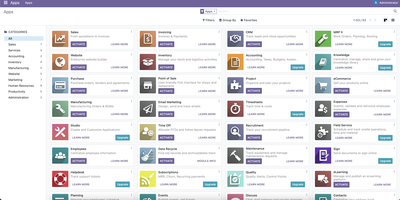
Roughly 40 integrated business apps forming a full ERP: Odoo's open-source suite runs companies end to end. The Community Edition, licensed LGPL-3.0, ships roughly 40 apps covering CRM, sales, invoicing, basic accounting (journals, chart of accounts, taxes, reconciliation), inventory and warehouse management with multi-step routes, manufacturing with BOMs and work orders, purchasing, project management, timesheets, HR, a website builder, and eCommerce. Each app works standalone, but they share one PostgreSQL database and one data model, so a confirmed sale updates stock, triggers procurement, and posts invoices without integration glue. The modular design means you enable only the apps you need and extend with 40,000+ community modules from the Odoo app store covering nearly any vertical requirement. Inventory supports multi-warehouse stock, reordering rules, and lot and serial tracking with barcode-ready operations; manufacturing ties BOMs, work orders, and work-center routing directly to sales demand and stock levels; and the website builder sells straight from your product catalog with payment provider integrations. You can start with just CRM and invoicing on day one and switch on inventory or eCommerce later - new apps integrate with existing data instantly because the schema is shared. The server is Python with an XML/JavaScript view layer, and because data lives in plain PostgreSQL there is no proprietary format: you can query, back up, migrate, and extend business data directly, with unlimited users and no per-seat licensing - where enterprise ERP pricing is per user per month, headcount here costs nothing.
Snipe-IT
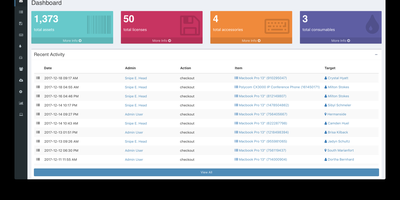
Trusted by thousands of organizations worldwide with over 14,700 GitHub stars, Snipe-IT has been the gold standard in open-source IT asset management since 2013. Built on Laravel 12 with PHP 8.2+, it provides a comprehensive web-based platform for tracking every physical and digital asset in your organization — from laptops and servers to software licenses, accessories, consumables, and components. The check-in/check-out system assigns assets to users with full audit trails, digital signature acceptance, and automated email notifications for checkouts, approaching deadlines, expiring warranties, and low inventory. License management handles multi-seat software with seat-by-seat tracking, compliance monitoring, and expiration alerts. Custom fields let you capture organization-specific metadata, while the advanced search engine supports logical operators including and/or conditions, exact matching with is:value, fuzzy exclusions with not:value, and null checks. SCIM 2.0 integration synchronizes users, groups, locations, companies, and managers from identity providers like Azure Entra ID and Okta. Enterprise authentication supports LDAP, Active Directory, Google Secure LDAP, and SAML 2.0 single sign-on. The reporting dashboard generates custom asset reports with saved templates, depreciation schedules, and audit logs. QR code labels enable instant mobile asset lookup via barcode scanners. The full-featured JSON REST API powers custom integrations, with community-built SDKs, MCP servers, and third-party mobile apps including SnipeMate and Snipe-Scan. Deploy via Docker Compose with MariaDB 11 in minutes. Running on a dedicated VPS on RepoCloud with guaranteed CPU, RAM, and SSD, full root SSH access, and a browser serial console. AGPL-3.0 licensed.
jshERP
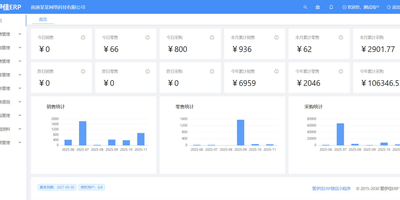
jshERP lets a small or midsize business, from a shop to a wholesaler, run purchasing, stock, sales, and money from one place instead of scattered spreadsheets. A purchase requisition becomes a purchase order, then a receipt that raises stock. A sales order becomes an outbound delivery that lowers it, or a purchase order when more must be bought in. Retail sales, returns, and serial-number scanning run through the same stock. Products sit in a category tree up to three levels deep, with barcodes, images, multiple attributes, customer-specific prices, and a base unit plus up to three secondary units. Transfers move goods between warehouses, assembly and disassembly merge and split products, and shelf locations record where each item sits. Other receipts and issues cover opening stock, stocktake corrections, and scrapped goods, while moving-average cost keeps valuation current. Finance logs income, expenses, receipts, payments, transfers, and prepayments against settlement accounts, and customer and supplier reconciliation reports export to Excel. Reports track stock levels, low-stock alerts, in-out statistics, and purchase and sales summaries, and the home page totals yesterday's and retail sales. Roles limit access down to single menus and buttons and can mask prices. A tenant model runs several businesses on one installation, and the interface switches among 73 languages. Running on a dedicated VPS on RepoCloud with guaranteed CPU, RAM, and SSD, full root SSH access, and a browser serial console. Apache-2.0 licensed.
InvenTree
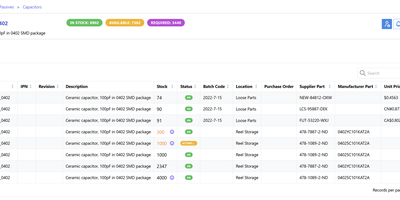
InvenTree is an inventory management system for electronics manufacturers, makerspaces, and small-to-medium businesses. The hierarchical part categorization system organizes components into unlimited nested categories, while stock items tracked across cascading locations and sub-locations provide instant visibility into current inventory levels, with optional serial number tracking for individual item traceability and acceptance testing. Intelligent BOM management calculates sub-part requirements, validates availability against current stock, supports multi-format BOM upload including KiCad integration, and generates detailed bills of materials with full database enrichment. Build orders consume BOM-allocated stock to produce assembled parts with step-by-step work order tracking, while purchase orders manage supplier relationships with pricing history, lead times, and automatic stock receipt processing. The modern React frontend built with Mantine, TanStack Query, and Zustand provides responsive data tables, tree-select navigation, a preview drawer, and a snippet editor. The extensible plugin system supports 19 mixin types including BarcodeMixin for scanner integration, LabelPrintingMixin for Zebra and Brother printers, AppMixin for custom database tables, and ScheduleMixin for periodic background tasks. Companion mobile apps on Android and iOS provide barcode scanning and stock operations in the warehouse. Docker Compose deploys with PostgreSQL, MySQL, or MariaDB backends behind any reverse proxy. Running on a dedicated VPS on RepoCloud with guaranteed CPU, RAM, and SSD, full root SSH access, and a browser serial console. MIT licensed.
eLabFTW
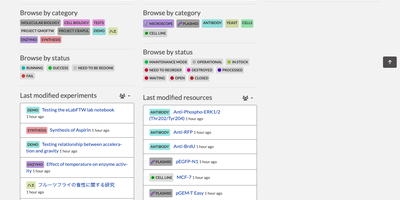
For research teams that need to show what was recorded and when, eLabFTW® is an electronic lab notebook that keeps experiments, lab inventory, and equipment bookings in one shared, searchable system. Each experiment holds rich-text notes, tables, images, checkable steps, custom metadata fields, tags, statuses, and attached files. Templates turn a protocol you repeat into a one-click starting point. A separate resource database catalogs antibodies, plasmids, cell lines, chemicals, and instruments, and typing # in an experiment links straight to any of them. Compounds import from PubChem by CID or CAS number, arriving with formulas, identifiers, and hazard data. The inventory tree maps buildings and their sub-locations, records where each container is stored, and tracks quantity and unit. Book a microscope by dragging a slot on the scheduler, and permissions decide who may reserve what. Entries can be signed with Ed25519 keys and timestamped through RFC 3161 authorities such as DFN, Digicert, and GlobalSign, or anchored on the Bloxberg blockchain; a timestamp archive can never be edited or deleted. Export to PDF, ZIP, CSV, JSON, or .eln archives, and import .eln or CSV files when moving from spreadsheets or another notebook. Users sign in locally or through SAML2 or LDAP, and an API with per-user keys lets instruments and scripts read and write entries. Running on a dedicated VPS on RepoCloud with guaranteed CPU, RAM, and SSD, full root SSH access, and a browser serial console. AGPL-3.0 licensed.
Attic
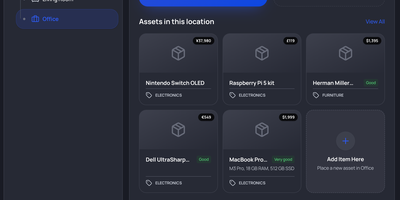
Somewhere in your home sits a box nobody has opened since the move, and Attic is the self-hosted home inventory that turns its contents from a mystery into a searchable record. You catalog appliances, tools, electronics, books, games, and furniture as assets, each with photos, receipts, manuals, purchase date and price, condition, and warranty dates attached. Nested locations mirror the house itself, rooms containing cupboards containing boxes, with photo galleries so you recognize a storage space on sight. Categories carry their own custom fields, inherited by subcategories, so electronics can demand a serial number while books ask for an ISBN. Items stored inside other items, like tools in a toolbox, are tracked as asset contents and move with their container. Collections group a game library or a moving box across locations, while tags label anything that needs repair or is out on loan. Adding stock is fast: import plugins pull metadata and cover images from Google Books, TMDB, BoardGameGeek, IGDB, and Rebrickable for LEGO sets. Search combines full-text with nested match-all and match-any filters, and saved searches pin to the sidebar as shortcuts. A history timeline records repairs and maintenance per asset, and the dashboard totals purchase value across currencies while flagging expiring warranties. OIDC single sign-on, scoped API keys, a REST API, and an MCP server connect Attic to scripts and agents. Running on a dedicated VPS on RepoCloud with guaranteed CPU, RAM, and SSD, full root SSH access, and a browser serial console. MIT licensed.
Kept
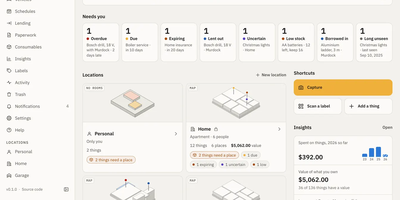
Kept is a self-hosted home inventory that answers where things are, what they are, and what is due. Locations, rooms, shelves, and boxes nest inside each other, so moving a box moves everything in it, and each location can be viewed as a list, a grid, or a 3D map with pins for low stock, loans, and due items. Every thing gets a short ID and a QR code for label sheets or roll printers, and scanning a label opens the box. Capture a thing, receipt, or whole room from the installable phone web app, offline too; an AI provider you choose, including Ollama, then suggests details for you to confirm. Receipts, manuals, and warranties attach to items, reminders arrive in the app, by email, by push, or in a calendar feed, and an insurance report exports photos, serials, and receipts. Lending tracking, vehicle readings and services, moving-house box lists, and stocktakes cover the rest of the household, with shared locations and roles for everyone you live with. An assistant answers questions like where the HDMI cable is, and an MCP endpoint lets Claude or other AI agents add and move things, with changes waiting for your approval. Nightly backups and imports from Homebox and CSV round it out. Running on a dedicated VPS on RepoCloud with guaranteed CPU, RAM, and SSD, full root SSH access, and a browser serial console. AGPL-3.0 licensed.
Carbon ERP
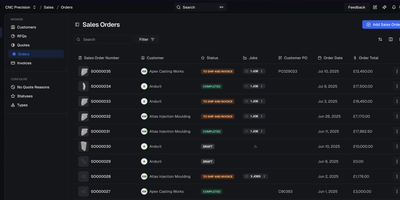
Carbon delivers a unified manufacturing operating system that eliminates the integration tax of running separate ERP, MES, and QMS platforms. The Remix and TypeScript frontend paired with Supabase PostgreSQL backend provides full-stack type safety from database schema to React components, with real-time subscriptions pushing production floor updates to every connected client. The built-in MCP server exposes 1,374 operations across 15 modules through three discovery tools, enabling AI agents to interact with manufacturing data while respecting attribute-based access control. Nested bill of materials with unlimited depth supports complex assemblies, while the MRP engine calculates material requirements across multi-level structures with configurable lead times and safety stock. The configurator handles configure-to-order scenarios with rule-based variant generation. Full lot and serial traceability from receiving through shipping satisfies AS9100, ISO 13485, CFR Part 11, and ITAR compliance requirements. Custom fields extend any entity without schema modification, and the app framework lets integrators build domain-specific modules that plug into the core navigation, permissions, and data layer. Typed API clients for TypeScript, Python, C#, and cURL enable programmatic access to every manufacturing operation. Docker-based local development boots Postgres, Redis, Inngest, and the application stack with a single CLI command. Running on a dedicated VPS on RepoCloud with guaranteed CPU, RAM, and SSD, full root SSH access, and a browser serial console. AGPL-3.0 licensed.
Aureus ERP
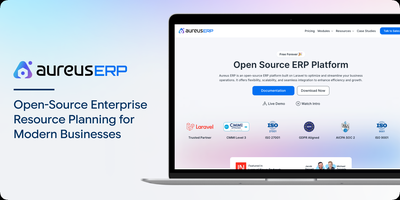
With over 11,500 GitHub stars, 20 contributors, and nine releases through version 1.4.0 in May 2026, Aureus ERP has established itself as the modern Laravel-powered alternative to legacy ERP systems like Odoo and ERPNext by packaging accounting, inventory, manufacturing, HR, sales, procurement, and project management into a modular MIT-licensed platform where you install only the plugins your business actually needs. Built on Laravel 13 with FilamentPHP 5 admin panels and TailwindCSS, each module installs via a single Artisan command that automatically resolves dependencies, runs migrations, seeds default data, and generates role-based permissions through Filament Shield integration. The Accounts module defines chart of accounts, journals, ledgers, currencies, and fiscal structures while the Accounting module handles journal entries, financial reports, period closing, and reconciliation workflows. Inventory management provides warehouse operations with stock tracking, transfers, and adjustments while Manufacturing handles bills of materials, manufacturing orders, work orders, and work center scheduling. The Sales module manages pipeline stages and opportunity tracking while Purchases handles procurement workflows and vendor management. HR capabilities span employee management, recruitment with applicant tracking, leave management through Timeoffs, and employee hour tracking via Timesheets. The Projects module provides planning and task management with the Maintenance module covering preventive and corrective equipment maintenance with calendar views. Docker deployment pulls a single image bundling PHP, MySQL, Apache, and Node.js for immediate browser access. Running on a dedicated VPS on RepoCloud with guaranteed CPU, RAM, and SSD, full root SSH access, and a browser serial console. MIT licensed.
Rackpad
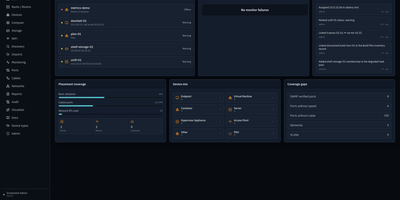
Every cable, switch port, VLAN, and rack unit in a homelab or small server room gets a documented place in Rackpad, a self-hosted inventory and operations workspace. Rack elevations show mounted gear, including paired half-width appliances. Switch-panel port maps and aggregate ports show what is patched where. Cables carry type, length, and color, editable in bulk. VLANs, subnets, DHCP scopes, reservations, and zones sit in one Networks workspace, with gateway and DNS protection and a mismatch review for IP assignments. Storage topology follows drives, bays, and pools that span several devices. Wi-Fi controllers, access points, hypervisor hosts, and virtual machines have pages of their own, and Proxmox and Hyper-V hosts can be imported after review. Discovery scans a subnet or any CIDR and stages every finding in an inbox. Per-device checks over ICMP, TCP, HTTP, HTTPS, and SNMP raise alerts by email, Discord, or Telegram. Everything feeds a movable topology map. Markdown runbooks attach to devices, and an audit log records every change. Admin, editor, and viewer roles control access, and OpenID Connect login is optional. Running on a dedicated VPS on RepoCloud with guaranteed CPU, RAM, and SSD, full root SSH access, and a browser serial console. MIT licensed.
Nautobot
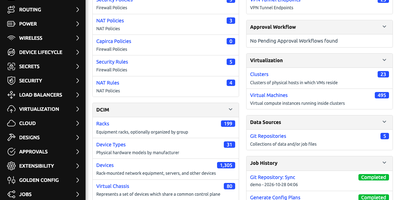
From the first rack to the last circuit, Nautobot is the open-source network source of truth that records what your network should look like and runs automation against it. Built-in models cover locations, racks, devices, interfaces, cables, VLANs, VRFs, IP prefixes, circuits, and contacts, so one searchable record replaces the spreadsheet and the wiki. Teams encode their own standards with custom fields, user-defined relationships, computed fields, and validation rules. Config contexts attach JSON or YAML data, such as syslog servers, to devices by location, role, platform, or tag. Jobs run your own automation code from the web UI, REST API, or command line, on a schedule, or through hooks when an object changes, with approvals and logs built in. Query the data over REST or GraphQL, and let the GraphiQL editor autocomplete a device and interface query you can save inside Nautobot. When an object is created, updated, or deleted, webhooks notify outside systems, with Jinja2-templated bodies and HMAC SHA-512 signatures. Git repositories can carry export templates, Jobs, and config contexts too, so YAML data and Jinja2 templates get pull request review before Nautobot syncs them. Open-source Apps add Golden Configuration for config backup, compliance, and remediation, Device Lifecycle for hardware tracking, SSoT for syncing other systems, and ChatOps. Object permissions and change logging keep a shared instance auditable. Running on a dedicated VPS on RepoCloud with guaranteed CPU, RAM, and SSD, full root SSH access, and a browser serial console. Apache-2.0 licensed.
ERPNext
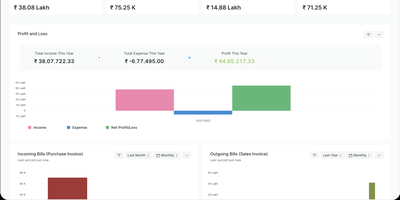
With over 37,800 GitHub stars and active development since its first release in 2008, ERPNext is the most-starred open-source ERP system — delivering accounting, inventory management, manufacturing, CRM, project tracking, asset management, HR, and point-of-sale capabilities through a unified web interface built on the Frappe Framework's metadata-driven architecture. The accounting module handles multi-company consolidation, multi-currency transactions, tax templates for GST and VAT, bank reconciliation, and automated journal entries with real-time profit and loss, balance sheet, and cash flow reporting. Manufacturing covers production planning with multi-level bill of materials, work order scheduling, capacity planning, subcontracting, and quality inspection at each production stage. Inventory tracks stock across multiple warehouses with batch and serial number tracing, automatic reorder levels, landed cost calculations, and perpetual inventory valuation using FIFO or moving average methods. The CRM module manages leads, opportunities, and customer communication with email integration, while project management tracks tasks, timesheets, and Gantt-based scheduling with budget controls. Custom applications extend functionality through the Frappe ecosystem without forking the core codebase, and the REST API enables integration with payment gateways, shipping providers, and third-party services. Deployable via Docker Compose or the bench CLI tool with MariaDB and Redis. Running on a dedicated VPS on RepoCloud with guaranteed CPU, RAM, and SSD, full root SSH access, and a browser serial console. GPL-3.0 licensed.
Open Mercato
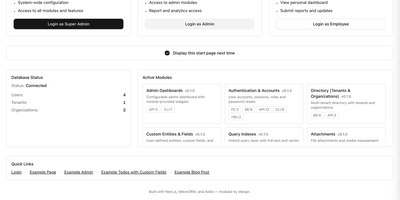
Your next business system does not need a year of scaffolding: Open Mercato hands you a running CRM, ERP, and commerce back office, and your team builds only the logic that makes your company different. Deals and pipelines live next to the product catalog, so a quote pulls real variants, price lists, and stock without swivel-chair exports. Orders flow into invoices, shipments, and payments in one motion, while warehouse lots and stock movements keep fulfillment honest about what can actually ship today. Customers and partners stop emailing your team for status: the self-service portal takes B2B orders, shows tracking, and files warranty claims directly. When a record needs a field nobody planned for, an administrator adds the custom entity from the panel, no migration deploy, and shapes its lifecycle with per-tenant workflows and business rules. Every change lands as an auditable command with an author attached, so mistakes get undone, sensitive columns get encrypted per tenant, and several companies share one install without seeing each other's data. Storefronts and mobile apps plug into generated REST APIs with OpenAPI documentation, attachments turn searchable through OCR, and AI coding agents extend the system because the architecture conventions are written down for them. Running on a dedicated VPS on RepoCloud with guaranteed CPU, RAM, and SSD, full root SSH access, and a browser serial console. MIT licensed.