Univer Workspace
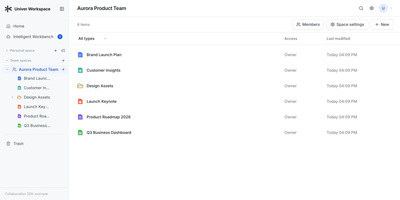
A budget model, the launch document that explains it, and the slides that present it can live side by side in one self-hosted office workspace that people and AI agents edit together. Personal and Team Spaces organize Sheets, Docs, Slides, relational Bases, and Boards, with Recent, Trash, file import, and export views keeping everyday housekeeping close at hand. Sharing follows role and node aware access control, including anonymous viewing, so a single table or document can be opened to a reader without exposing the whole space. Data and references stay connected across artifacts as the workspace changes, which keeps a figure corrected in a sheet consistent with the document that quotes it. The Workspace Agent drafts and revises content in isolated Worktrees, verifies its own changes, and hands the result to a person for review before anything reaches the trunk. Several review rounds can happen while humans keep editing in the Browser, and nothing merges until someone approves it. The Workspace CLI connects existing agents to your deployment, so automation can create content, inspect data, render screenshots and PDFs, and run layout checks before review. Sign-in accepts passwords, GitHub, Discord, or application OAuth, and files move in and out as XLSX, DOCX, PPTX, and CSV without a separate conversion project. Running on a dedicated VPS on RepoCloud with guaranteed CPU, RAM, and SSD, full root SSH access, and a browser serial console. Apache-2.0 licensed.

Piwigo
With over 3,800 GitHub stars and continuous development since 2002 spanning 24 years of active maintenance through version 16.4.0 released in May 2026, Piwigo has proven itself as one of the most battle-tested self-hosted photo gallery platforms available, trusted by professional photographers managing 150,000+ high-resolution images alongside small teams sharing event photos. The PHP backend with MySQL or MariaDB storage serves a responsive web interface that organizes photos into hierarchical albums with nested sub-albums, tag-based categorization, and smart albums generated dynamically from search criteria. Batch management tools handle bulk uploads, metadata editing, tag assignment, and album moves across thousands of images simultaneously. User permission controls define access at the album level with configurable public, private, and group-restricted visibility, while guest access allows public galleries without authentication. Image processing via ImageMagick or PHP GD generates multiple thumbnail sizes, watermarks, and responsive derivatives automatically. The plugin ecosystem with over 200 community-built extensions adds functionality from EXIF metadata display and GPS mapping to social sharing, download controls, and Lightroom synchronization for desktop workflow integration. The REST Web API with personal API key authentication enables programmatic album creation, photo uploads, and metadata queries from external applications. Mobile apps for iOS and Android provide on-the-go upload and browsing capability. Docker deployment via the official container or traditional LAMP installation on any hosting provider. Running on a dedicated VPS on RepoCloud with guaranteed CPU, RAM, and SSD, full root SSH access, and a browser serial console. GPL-2.0 licensed.

Suite Docs
An open-source alternative to Notion and Google Docs developed jointly by France's DINUM and Germany's ZenDiS that prioritizes data sovereignty, real-time collaboration, and structured knowledge management. The Yjs-powered CRDT engine provides live cursors, presence indicators, and inline comments enabling teams to edit simultaneously without conflicts, while BlockNote.js renders a clean block-based editing experience with rich text formatting, Markdown shortcuts, and drag-and-drop content organization. Hierarchical sub-documents create wiki-style knowledge bases where documentation nests naturally into navigable structures, and a dedicated slide mode transforms any document into a presentation without separate tooling. The document API separates content from metadata with distinct endpoints for formatted content, raw content streams, and document properties. Optional AI integration connects to configurable language models for writing assistance, summarization, and content generation directly within the editor. Access control supports granular permissions per document with team sharing, public links, and invitation flows. DOCX import brings existing documents into the platform while maintaining formatting fidelity. The Django backend serves a REST API with PostgreSQL storage, Redis caching, and S3-compatible media handling. Deploy via Docker Compose, Kubernetes with the official Helm chart, Nix, or YunoHost on your own infrastructure. Running on a dedicated VPS on RepoCloud with guaranteed CPU, RAM, and SSD, full root SSH access, and a browser serial console. MIT licensed.
Excalidraw
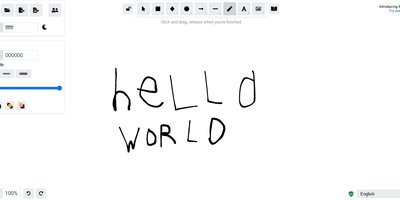
Half the architecture sketches on the internet trace back to Excalidraw - the MIT-licensed virtual whiteboard whose hand-drawn aesthetic made technical diagramming feel approachable, at roughly 85,000 GitHub stars. The infinite canvas offers rectangles, ellipses, diamonds, arrows with smart binding and labels, free-draw, text, images, and an eraser, with full undo/redo, zoom, dark mode, and keyboard-first ergonomics. Community shape libraries add thousands of pre-built elements - AWS architecture icons, flowchart stencils, UI wireframe kits - and everything exports to PNG, SVG, the clipboard, or the open .excalidraw JSON format that keeps drawings diffable and portable. Live collaboration works on a share-a-link model with live cursors and a laser pointer for presenting, and it is end-to-end encrypted by design: the room key travels in the URL hash, which never reaches the server, so the WebSocket relay only ever sees ciphertext. The architecture is remarkably light - the app is a static bundle served by Nginx, drawings persist locally in the browser, and the stateless excalidraw-room relay handles multiplayer - so a self-hosted deployment gives unlimited boards and collaborators with near-zero resource cost, replacing per-editor whiteboard subscriptions.
Tick Stock Panel
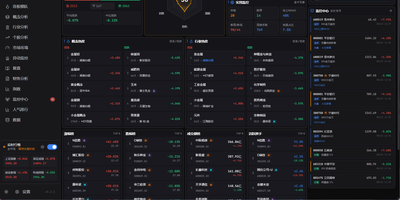
Screen equities against dozens of technical indicators, backtest algorithmic trading strategies, and spot intraday market anomalies using Tick Stock Panel, a self-hosted quantitative analysis workbench. Traders can filter entire exchanges across technical indicators including moving averages, relative strength index, and Bollinger bands with near-instantaneous execution. The platform provides a full backtesting environment where users test customized entry and exit rules, account for simulated slippage and commission fees, and review streamed performance metrics. Dedicated monitoring modules track intraday volume spikes, price breakouts, and multi-day limit streaks with automated alert dispatching to messaging channels and voice announcements. Users can explore individual stock profiles featuring multi-dimensional technical breakdowns, financial balance sheets, and automated event post-mortems generated via integrated language models. Visual factor mining tools allow analysts to discover uncorrelated signals and assemble composite portfolio screens without external database overhead. An interactive dashboard aggregates sector rotations, hot concept heatmaps, and customizable watchlists into modular operational views. Running on a dedicated VPS on RepoCloud with guaranteed CPU, RAM, and SSD, full root SSH access, and a browser serial console. MIT licensed.

GEOFlow
Built for brands that want AI search engines to quote them, GEOFlow is an open-source admin system that turns approved knowledge into reviewed articles and publishes them across every site you run. Load documents or import trusted web pages into knowledge bases that are chunked into evidence units, with optional semantic planning and vector retrieval. Combine them with title libraries (AI can draft up to 100,000 titles), keywords, images, authors, and prompts, then set a task's generation limits, cadence, and publishing scope. Chat and embedding models connect through OpenAI-compatible endpoints or native Gemini, with automatic fallback to the next model when a call fails. Each draft passes an AI quality gate that checks evidence, citations, advertising rules, and publishing context, records scores with source locations and revision advice, and holds risky articles for a human reviewer. Approved articles appear on the built-in site with SEO metadata, Open Graph, Schema, sitemaps, and llms.txt, or travel to hosted subdomain sites, GEOFlow Agent packages, WordPress through its REST API, or any HTTP endpoint. A manual publishing workbench and Chrome assistant cover platforms that need a person, while analytics track traffic, AI crawlers, and brand visibility in generative engines. An API, command-line tool, and agent skill support automation. Running on a dedicated VPS on RepoCloud with guaranteed CPU, RAM, and SSD, full root SSH access, and a browser serial console. AGPL-3.0 licensed.
Centrifugo
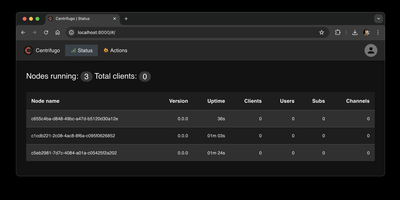
Benchmarked at one million concurrent WebSocket connections and 30 million delivered messages per minute on a single server, Centrifugo is a self-hosted real-time messaging server that integrates with any backend language — Node.js, Python, Go, Ruby, PHP, Java — without requiring architectural changes to your existing application. It handles persistent connections over WebSocket, HTTP-streaming, Server-Sent Events, gRPC, and experimental WebTransport, routing messages through a channel-based PUB/SUB model with automatic reconnection recovery that replays missed messages from hot channel history. Built-in horizontal scaling operates through Redis (including Redis Cluster, AWS ElastiCache, Valkey, KeyDB, and DragonflyDB), NATS, or PostgreSQL brokers, allowing multi-node deployments without external message queues. The server provides JWT-based authentication using HMAC or RSA keys, granular channel permissions, online presence tracking showing who is currently subscribed to a channel, and an RPC proxy that forwards client calls to your backend over HTTP or gRPC. The embedded ReactJS admin web interface displays real-time connection statistics, node information, and provides an interactive API console for publishing messages, managing subscriptions, and inspecting channel history. Official client SDKs are available for JavaScript, Dart, Go, Swift, and Java, with unidirectional transports requiring no SDK at all. Centrifugo also supports delta updates to minimize bandwidth, connection event proxying, and Prometheus-compatible metrics for Grafana monitoring. Running on a dedicated VPS on RepoCloud with guaranteed CPU, RAM, and SSD, full root SSH access, and a browser serial console. Apache 2.0 licensed.
Hyperswitch
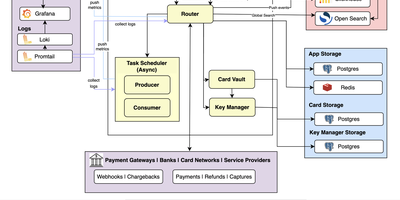
Hyperswitch from Juspay delivers the most comprehensive open-source payment orchestration stack available — a Rust-built platform that connects to Stripe, Adyen, Braintree, Worldpay, Checkout.com, Cybersource, and 120+ payment processors through a single API integration. Intelligent routing drives each transaction to the processor with the highest predicted authorization rate using rule-based, volume-based, and machine learning algorithms, while seamless failover and automatic retries recover revenue from declined transactions using 30+ parameters including decline codes, card BIN, transaction size, and region. The PCI-compliant card vault stores payment methods securely in a dedicated service separate from the main application server, and the reconciliation engine automates 2-way and 3-way matching with backdated support, staggered scheduling, and customizable audit-ready outputs. The Control Center dashboard provides visual workflow builders for routing rules, payment analytics, and operations management. Cost observability tools drill into scheme, interchange, and acquirer fees to detect anomalies and optimize processing costs. The modular architecture allows deploying individual components — routing, retries, vaulting, observability, or the full suite — without vendor lock-in. The web client SDK collects payment information with prebuilt UI components and supports WooCommerce integration. Deploy via Docker Compose with the app server, control center, card vault, and PostgreSQL. Running on a dedicated VPS on RepoCloud with guaranteed CPU, RAM, and SSD, full root SSH access, and a browser serial console. Apache-2.0 licensed.

Wealthfolio
Wealthfolio is a portfolio tracker offering a complete wealth management platform where financial data never leaves your infrastructure. Built on Rust with an Axum HTTP server, Diesel ORM, and SQLite storage, paired with a React 19 and Vite frontend, version 3.6 tracks stocks, ETFs, mutual funds, crypto, and cash savings across unlimited accounts with unified holdings. The performance engine calculates time-weighted returns (TWR), internal rate of return (IRR), volatility, maximum drawdown, and benchmark comparisons against the S&P 500 and custom indices, scoped per-account or across the entire portfolio. Net worth tracking monitors assets including real estate, vehicles, collectibles, and precious metals alongside liabilities, with stale-valuation warnings for items not updated in 90+ days. The spending module categorizes transactions automatically, supports multi-currency credit cards, builds budgets with monthly targets and rollovers, and generates narrative insights. A built-in AI assistant answers portfolio questions, suggests asset classifications, and imports transactions conversationally — bring your own API key from OpenAI, Anthropic, or use local LLMs. The addon system provides sandboxed extensions with granular permission declarations across 16 capability domains. CSV import maps broker exports with per-broker recipes for Interactive Brokers, Schwab, Fidelity, and dozens more. Market data streams from Yahoo Finance with automatic currency conversion. Running on a dedicated VPS on RepoCloud with guaranteed CPU, RAM, and SSD, full root SSH access, and a browser serial console. AGPL-3.0 licensed.
LLM Wiki v2
Instead of burying your documents in a vector index you cannot inspect, LLM Wiki v2 files them into a Markdown wiki you can read, browse, and question. Drop text, Markdown, or PDF files anywhere on the page and each one is catalogued automatically, filed into a folder that says what it holds, and linked to the notes it relates to. Ask a question and the answer cites the exact notes it used, with clickable sources you can open, verify, and correct. New documents update the note on their subject instead of piling up as disconnected chunks, so what you teach it stays taught. A small classifier routes filing and questions through the folder tree, keeping the wiki quick and cheap as it grows, and you can browse the tree, follow see-also links, move or delete notes, and watch the tokens spent by both the model and the classifier. Connect OpenRouter, OpenAI, Gemini, a local Ollama, or any compatible endpoint, and expose the same wiki to Claude Code or Codex as long-term memory they can recall from and write to. Because every note is plain Markdown in a folder you own, the whole knowledge base can live in git beside your other files. Running on a dedicated VPS on RepoCloud with guaranteed CPU, RAM, and SSD, full root SSH access, and a browser serial console. AGPL-3.0 licensed.
Mere Medical
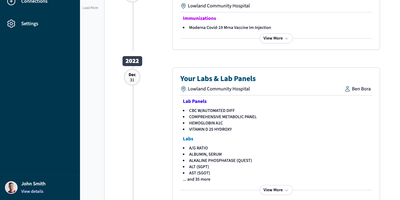
Mere Medical pulls the records from every hospital and clinic patient portal you use into one date-ordered timeline, so lab panels, immunizations, and procedures from different systems sit side by side. Each timeline card shows its facility and, when recorded, the provider, and expands with View More; a Jump To index leaps between years. The Summary tab condenses bookmarked labs, medications, conditions, immunizations, care plans, and allergies onto one dashboard whose cards can be dragged into any order or hidden. Lab results are graphed over time wherever the units line up, and a search bar finds specific entries by keyword. Connections sync from Epic MyChart, Oracle Health (Cerner), Veradigm, DrChrono, eClinicalWorks Healow, athenahealth, and NextGen, and several sources can feed one profile at once. Everything lives on your device, so records stay searchable offline and no account sign-in is needed; an optional password encrypts them at rest. Separate user profiles hold each person's records, and JSON export and import make backups simple. Experimental AI features add semantic search that links a phrase like high blood sugar to related labs, plus a Mere Assistant that answers plain-language questions about your records using local Ollama models or an OpenAI key. Install it on a phone or desktop home screen for quick access in the waiting room. Running on a dedicated VPS on RepoCloud with guaranteed CPU, RAM, and SSD, full root SSH access, and a browser serial console. MIT licensed.
Dolt
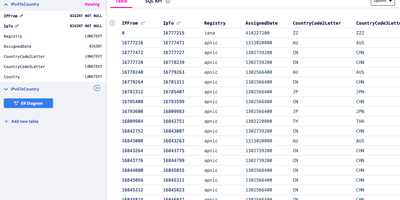
Dolt is a SQL database that versions your tables the way Git versions files, so every row carries a history you can branch, diff, merge, and roll back. The command line mirrors Git command for command: dolt init, add, commit, checkout, log, and blame operate on tables instead of files, and merges happen cell by cell, with conflicting cells landing in dolt_conflicts tables you resolve by choosing ours or theirs. Run dolt sql-server and the same database answers on the MySQL wire protocol, so the mysql client, TablePlus, DataGrip, and your existing application drivers connect unchanged, while stored procedures like DOLT_CHECKOUT and DOLT_MERGE and system tables like dolt_diff and dolt_log put version control inside SQL itself. Teams push and pull databases through remotes on DoltHub, S3, GCS, or a filesystem, fork a database to test a risky migration, and cherry-pick the good commits back. AI agents get their own branches to write into, and a human reviews the row-level diff before anything merges to main. Data publishers ship corrections as commits subscribers can pull, and analysts query any historical snapshot with AS OF instead of restoring backups. Running on a dedicated VPS on RepoCloud with guaranteed CPU, RAM, and SSD, full root SSH access, and a browser serial console. Apache-2.0 licensed.
CaseCite
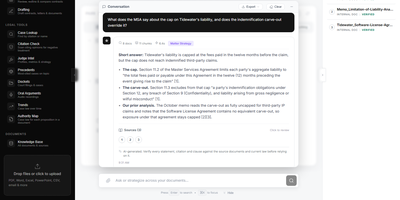
CaseCite puts a law firm's own files under questioning, returning cited answers, contract reviews, and drafted agreements without surrendering a single document to an outside legal platform. Ask a question across the indexed corpus and receive answers tied to the exact source passage, then narrow the search to selected files or a folder when only those should count. For bigger questions, deep research lays out a plan of sub-questions you can edit first, verifies every quote against its source, and keeps a step log of what was searched. Contracts can be analyzed, questioned one at a time, or compared clause by clause across two to four agreements against a baseline, with redlines exported as native Word tracked changes. Tabular review extracts the fields you define from hundreds of contracts at once, shows the supporting passage and estimated cost beside each value, and exports to Excel or CSV. Drafting starts from up to four precedent documents, and long agreements get a section plan for your approval before each section is written and reconciled. Each client engagement lives in its own matter workspace with controlled access and an activity feed, while case lookup, citation checking, judge analytics, dockets, oral arguments, and authority maps cover the caselaw side. Running on a dedicated VPS on RepoCloud with guaranteed CPU, RAM, and SSD, full root SSH access, and a browser serial console. Apache 2.0 licensed.
Blinko
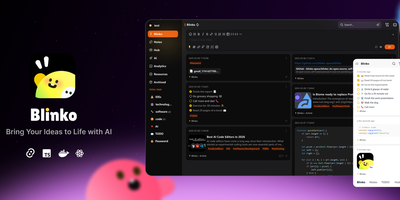
Capture fleeting thoughts as interactive flash cards and transform unorganized notes into an AI-searchable personal brain with Blinko. Users can jot down rapid notes, format rich markdown documents with code snippets and task lists, and attach multimedia files through a responsive web interface. An integrated retrieval-augmented generation engine indexes every note into vector embeddings, allowing users to query their entire personal archive using conversational natural language. You can connect local Ollama models or remote providers such as OpenAI, DeepSeek, Anthropic, and Grok to summarize lengthy entries and suggest hierarchical classification tags automatically. The interactive daily review interface presents random cards to help review, organize, or archive older insights before they are forgotten. Built-in tools include an integrated global music player for focused writing sessions, custom RSS feed ingestion, and password-protected note sharing with configurable expiration dates. Running on a dedicated VPS on RepoCloud with guaranteed CPU, RAM, and SSD, full root SSH access, and a browser serial console. GPL-3.0 licensed.
DB-GPT
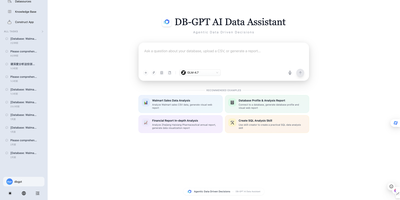
DB-GPT lets a team talk to its data: ask a business question in plain English, and an AI agent plans the work, writes the SQL, runs it, and hands back charts and a written report. Connect MySQL, PostgreSQL, SQL Server, ClickHouse, DuckDB, Doris, StarRocks, or MaxCompute, or drop in CSV and Excel files, including several at once. Every step appears in a live task view with its query, result table, code, and console output, and the agent pauses to ask clarifying questions, with answer options, when the data cannot settle the matter. Reusable skills package proven procedures, including CSV analysis, SQL analysis, and financial report analysis, and a skill creator helps write new ones. Code executes in a sandbox, parallel sub-agents split larger jobs, and an agentic knowledge-base search answers questions over uploaded documents. Scheduled tasks run saved conversations on a cron timetable with on/off switches and execution history, while MCP connectors link tools like Notion, Linear, Tavily, and GitHub. Pick OpenAI, DeepSeek, Qwen, SiliconFlow, Ollama, or vLLM for the model, then use the application and AWEL workflow tools to build data apps of your own. Running on a dedicated VPS on RepoCloud with guaranteed CPU, RAM, and SSD, full root SSH access, and a browser serial console. MIT licensed.
Grimoire
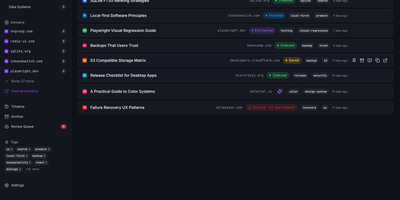
Grimoire captures, extracts, and indexes the content behind your bookmarks so you can search what pages actually say, not just their titles and URLs. The ingestion pipeline accepts links from the web UI, REST API, MCP server, browser bookmarklet, or bulk import, then fetches each page and extracts readable content using specialized parsers for GitHub repos, GitHub issues, StackOverflow threads, YouTube transcripts, PDFs, and standard web articles. Everything stores locally in SQLite with file-based content archives. Search operates in three modes: FTS5 keyword matching for exact terms, semantic embedding search for meaning-based retrieval using vector similarity, or a hybrid ranking mode combining both. Optional AI providers including OpenAI, Ollama, Anthropic, DeepSeek, and any OpenAI-compatible endpoint generate automatic tags, summaries, and embeddings without being required for core functionality. The interface built with React 18, Vite, TypeScript, Tailwind CSS, and Radix UI supports categories, nested tags, notes, archive and trash states, read-later flags, and multi-user isolated spaces. A single Bun-powered Hono process serves both the compiled frontend and the REST API on port 3210, requiring only one Docker container and a SQLite volume. Backup and restore export bookmarks, content, settings, and metadata as portable ZIP archives. Nearly 3,000 GitHub stars reflect growing adoption among developers and researchers. Running on a VPS on RepoCloud with guaranteed CPU, RAM, and SSD, full root SSH access, and a browser serial console. MIT licensed.
Flowsint
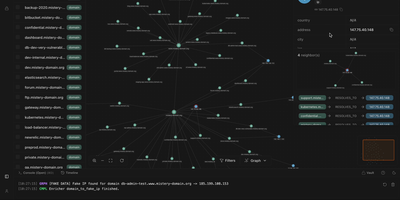
Flowsint turns scattered OSINT leads, like a domain, a username, an email, or a crypto wallet, into one interactive graph that you expand with a right click. Drop an entity on the canvas, run an enricher, and the results appear as new nodes with their relationships already drawn in. Over 30 built-in enrichers cover subdomain discovery, WHOIS and historical records, DNS and ASN lookups, IP geolocation, username searches with Maigret and Sherlock, breach checks for emails and phone numbers, Gravatar profiles, website crawling for contacts and tracking codes, and Ethereum wallet transactions and NFT transfers. Chain enrichers into flows so each output feeds the next step, then replay the same flow on any entity of that type. Missing a source? Write an enricher template in YAML, or describe the API in plain language and let the built-in AI draft it, with API keys kept in an encrypted vault instead of config files. Custom entity types, aliases, tags, JSON import and export, and basic role-based access control make it workable for small teams, and an n8n connector pipes findings into alerts and reports. Double-click the canvas to add items fast, or alt-drag between nodes to link them. Every graph stays on your own server, and no default accounts exist. Running on a dedicated VPS on RepoCloud with guaranteed CPU, RAM, and SSD, full root SSH access, and a browser serial console. Apache-2.0 licensed.
Coroot
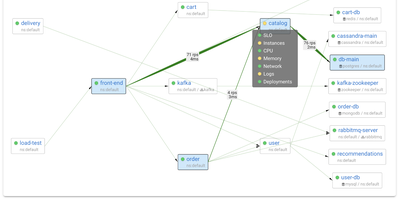
Coroot uses eBPF to capture metrics, distributed traces, logs, and continuous CPU profiles directly from the Linux kernel, delivering full observability without any application code changes, SDKs, or sidecars. From the first minute of deployment, an automatically generated service map covers every microservice, database, message queue, and external dependency with request rate, error rate, and latency measurements. When a service breaches its SLO, AI-powered inspections analyze telemetry across all dimensions to pinpoint the root cause and send a single consolidated alert with findings, replacing the flood of fragmented notifications typical of traditional monitoring. Deployment tracking automatically discovers Kubernetes rollouts and compares each release against the previous one to detect performance regressions, resource spikes, and cost impacts without CI/CD pipeline integration. Continuous profiling captures CPU flame graphs down to the line of code with negligible overhead. Integrated cost monitoring tracks cloud spending across AWS, GCP, and Azure, attributing expenses to individual services and deployments. Coroot supports Prometheus, OpenTelemetry, and ClickHouse as data sources and works identically on Kubernetes clusters, virtual machines, and bare-metal hosts. 7,700+ GitHub stars. Apache-2.0 licensed.