Univer Workspace
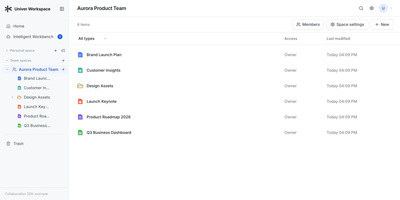
A budget model, the launch document that explains it, and the slides that present it can live side by side in one self-hosted office workspace that people and AI agents edit together. Personal and Team Spaces organize Sheets, Docs, Slides, relational Bases, and Boards, with Recent, Trash, file import, and export views keeping everyday housekeeping close at hand. Sharing follows role and node aware access control, including anonymous viewing, so a single table or document can be opened to a reader without exposing the whole space. Data and references stay connected across artifacts as the workspace changes, which keeps a figure corrected in a sheet consistent with the document that quotes it. The Workspace Agent drafts and revises content in isolated Worktrees, verifies its own changes, and hands the result to a person for review before anything reaches the trunk. Several review rounds can happen while humans keep editing in the Browser, and nothing merges until someone approves it. The Workspace CLI connects existing agents to your deployment, so automation can create content, inspect data, render screenshots and PDFs, and run layout checks before review. Sign-in accepts passwords, GitHub, Discord, or application OAuth, and files move in and out as XLSX, DOCX, PPTX, and CSV without a separate conversion project. Running on a dedicated VPS on RepoCloud with guaranteed CPU, RAM, and SSD, full root SSH access, and a browser serial console. Apache-2.0 licensed.
UseAgent
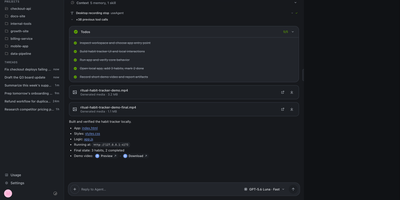
Hand a task to an AI teammate the way you would hand it to a person: describe the work, then follow along and step in when it matters. UseAgent runs Claude Code, Codex, OpenCode, and Pi inside isolated Linux workspaces, each with your repositories, a terminal, a real browser, and a desktop you can open and take over. Start work from the web app, by mentioning an agent in Slack, or through the API, and get pull requests, documents, spreadsheets, presentations, and research back as usable files. Four engines share one thread and one event format, so you can compare how Claude Code and Codex each handled the same bug, then switch engines on the next reply without losing history, files, or memory. Risky operations pause at approval gates, and a decision resumes the run with a one-shot, argument-bound capability instead of blanket trust. Every step, tool call, and approval is stored as an append-only event log in your Postgres, replayable after the fact and durable across restarts mid-task. Teach the workspace your procedures by importing versioned skills from GitHub and pinning playbooks to tasks, while knowledge pages and optional team memory stay beside the work, inspectable and correctable. Recurring tasks run on schedules with full history. Provider keys stay on your server and never enter an agent sandbox. Running on a dedicated VPS on RepoCloud with guaranteed CPU, RAM, and SSD, full root SSH access, and a browser serial console. AGPL-3.0 licensed.