django CMS
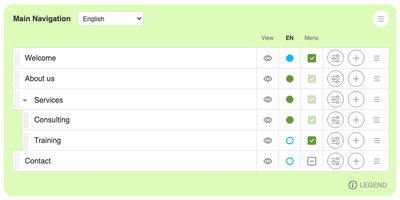
Click the pencil on a live page, change a headline or drop in an image, and publish: that is django CMS, an open-source content management system built around editing in place. A structure board lists every plugin on a page as a draggable tree, so layouts get rearranged without touching code. Plugins cover rich text with tables and links, pictures from a media library with sizing, margin, and visibility settings, and nested containers, and rules limit where each plugin may appear. With versioning enabled, every edit is a draft that can be previewed, compared visually or in source against an earlier version, discarded, or published, and publishing can be reserved for editors. Each page carries a translation per language with its own title and slug, and a language menu adds translations or copies plugins from another language. The page tree manages navigation as a hierarchy with drag-and-drop ordering, per-language status dots, and a menu toggle per page. Page permissions can let a legal team edit one branch of the tree and nothing else, and one settings file can serve several domains by hostname. Apphooks mount whole applications, such as a news section, on a page that editors place in the tree, and reusable aliases keep footers and banners in one place. Running on a dedicated VPS on RepoCloud with guaranteed CPU, RAM, and SSD, full root SSH access, and a browser serial console. BSD-3-Clause licensed.
Deploy