Memoh
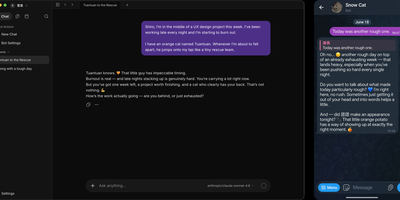
Memoh delivers an open-source multi-agent platform where every AI agent gets its own computer — not a chat window but a fully isolated container with dedicated filesystem, desktop environment, browser, network stack, and persistent long-term memory that survives across sessions, days, and platforms. The containerd-based runtime ensures each bot operates in complete isolation with snapshot and data import/export capabilities. The memory engine uses LLM-driven fact extraction with hybrid retrieval combining dense embeddings via Qdrant, sparse vectors, and BM25, plus 24-hour context loading and automatic compaction — with Mem0 and OpenViking as drop-in alternatives. Ten communication channels connect agents to users through Telegram, Discord, Lark, QQ, Matrix, WeCom, WeChat, Email, Web UI, and group chats with cross-platform identity binding. MCP tool calling enables agents to interact with external services, while browser automation drives GUI workflows for web research and data extraction. Agent hosting supports running external coding agents like Codex and Claude Code inside Memoh workspaces via ACP with per-bot configuration. Scheduled tasks run without human triggers, and agents proactively reach out when needed. The web dashboard built with Vue 3 and Tailwind CSS provides streaming chat, tool call visualization, file management, model and provider configuration, and bot lifecycle management. Deploy via Docker Compose with PostgreSQL, Qdrant, sparse service, and the Go backend server. Running on a dedicated VPS on RepoCloud with guaranteed CPU, RAM, and SSD, full root SSH access, and a browser serial console. AGPL-3.0 licensed.
Hindsight
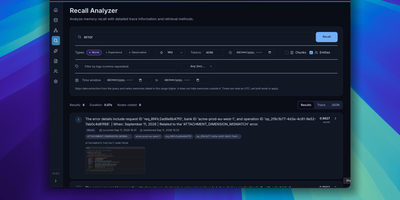
Memory that survives the session: Hindsight extracts facts, entities, and timestamps from everything an AI agent retains, then lets the agent search or reason over it later. Adding it to an existing LLM client takes a two-line wrapper, and more than 60 integrations cover Claude Code, Cursor, LangGraph, CrewAI, and n8n. Every bank also exposes its own MCP endpoint. Retain sends text, images, or files through an LLM that extracts facts, timestamps, entities, and relationships. Recall runs semantic, keyword, graph, and temporal searches in parallel, merges them with reciprocal rank fusion, reranks with a cross-encoder, and trims to a token budget. Reflect reasons across memories for questions that need synthesis, shaped by per-bank skepticism, literalism, and empathy traits. In the background, related facts consolidate into observations that keep exact quotes and proof counts and are refined, never silently overwritten. Mental models and wiki-style knowledge pages hold standing answers that rewrite themselves as the bank learns. Each user, agent, or project gets an isolated bank with no cross-bank leakage, and Memory Defense redacts or blocks secrets and PII against 45 patterns. The Control Plane adds a Recall Analyzer with traces, a memory constellation graph, and a knowledge page editor. Extraction and reasoning can run on 25+ LLM providers, including local Ollama and llama.cpp. Running on a dedicated VPS on RepoCloud with guaranteed CPU, RAM, and SSD, full root SSH access, and a browser serial console. MIT licensed.
Cognee
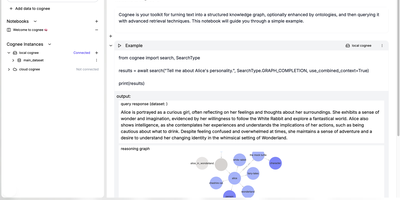
Cognee gives AI agents persistent long-term memory that survives across sessions, replacing the traditional stack of separate graph, vector, and session databases with a unified engine running on a single PostgreSQL instance. The memory-native API exposes four verbs (remember, recall, forget, and improve) enabling agents to persist context, retrieve cited answers, prune outdated knowledge, and self-improve from feedback. Under the hood, Cognee combines pgvector embeddings with a PostgreSQL-native graph store and cognitive-science-grounded ontology generation, delivering hybrid retrieval that fuses semantic similarity, structural graph traversal, and lexical search in a single query. Integrations span Claude Code, Cursor, LangGraph, OpenAI Agents, and any MCP-compatible client through a dedicated MCP server on port 8001, while the Python and TypeScript SDKs provide direct programmatic access. The platform supports swappable backends including Neo4j, FalkorDB, Qdrant, ChromaDB, Weaviate, Milvus, and LanceDB for teams with existing infrastructure. Built-in OpenTelemetry tracing, an experimental dashboard with knowledge graph visualization, multi-tenant user isolation, and audit trails ensure production readiness. Deploy via Docker Compose with optional profiles for PostgreSQL, Neo4j, Redis, and the web frontend. Reached v1.0 in April 2026 with 30,000+ stars. Running on a dedicated VPS on RepoCloud with guaranteed CPU, RAM, and SSD, full root SSH access, and a browser serial console. Apache 2.0 licensed.
TencentDB Agent Memory
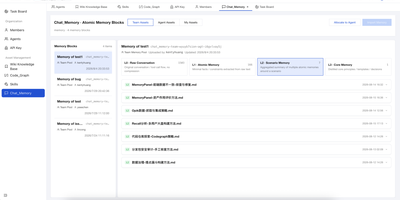
TencentDB Agent Memory provides a team-level memory hub that transforms AI agent conversations, documents, and codebases into four governed, shareable memory assets: Chat Memory for conversation history, Skills extracted from completed tasks, LLM-Wiki built from document ingestion, and Code-Graph generated from codebase analysis. The four-tier semantic pyramid structures long-term memory from L0 raw conversation capture through L1 episodic extraction and L2 scenario aggregation to L3 persona synthesis, enabling hierarchical drill-down via node and result references instead of flat vector recall. The Node.js Gateway sidecar handles capture, extraction, storage, recall, and pipeline scheduling through RESTful HTTP v2 endpoints on port 8420, while the Memory Proxy intercepts Anthropic-format API calls to inject team memory context into Claude Code, CodeBuddy, and other coding agents transparently. Local SQLite with the sqlite-vec extension provides the default storage backend with hybrid BM25 keyword plus vector embedding plus reciprocal rank fusion retrieval requiring zero external API dependencies. Teams manage ownership, versions, status, visibility, usage counts, and agent bindings through the Memory Hub dashboard with role-based access control separating System Admin and team-level Admin and Member permissions. Official TypeScript and Python SDKs provide programmatic access for custom framework integration beyond the built-in OpenClaw plugin and Hermes Agent adapter. Running on a dedicated VPS on RepoCloud with guaranteed CPU, RAM, and SSD, full root SSH access, and a browser serial console. MIT licensed.