NanoClaw
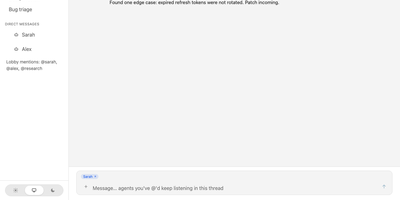
NanoClaw delivers a radically simple alternative to OpenClaw — a single Node.js process and a handful of files that provide the same core functionality with true container-level security isolation. Agents execute inside Docker containers on Linux or Apple Containers on macOS, where even root access inside the sandbox cannot reach the host filesystem. The platform natively runs Claude Code via Anthropic's official Claude Agent SDK, with drop-in alternatives including OpenAI Codex, OpenRouter via OpenCode, Google, DeepSeek, and local open-weight models via Ollama — configurable per agent group. Multi-channel messaging connects WhatsApp, Telegram, Discord, Slack, Microsoft Teams, iMessage, Matrix, Google Chat, Webex, Linear, GitHub, WeChat, and email via Resend, installed on demand through skill commands. Each agent group receives its own CLAUDE.md memory file, isolated filesystem, container sandbox, and session state — a prompt injection in one group cannot exfiltrate data from another. The OneCLI Agent Vault handles credentials so agents never hold raw API keys, while approval-gated self-modification allows agents to request new packages or MCP servers that administrators must authorize. Scheduled tasks run recurring jobs inside containers with message delivery back to users. The setup script handles dependencies, authentication, and container configuration through Claude Code conversation. Deploy on any Docker-capable Linux server. Running on a dedicated VPS on RepoCloud with guaranteed CPU, RAM, and SSD, full root SSH access, and a browser serial console. MIT licensed.
PicoClaw
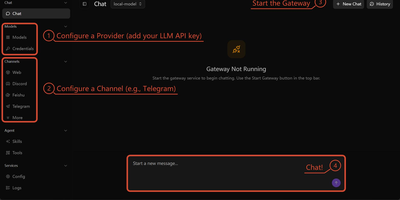
An 8MB Go binary that boots in under one second, uses less than 10MB of RAM, yet delivers full AI agent capabilities across 16+ chat platforms simultaneously. PicoClaw connects to Telegram, Discord, Matrix, IRC, Slack, WeCom, DingTalk, WeChat, LINE, and QQ while supporting LLM providers spanning OpenAI, Anthropic, Gemini, DeepSeek, AWS Bedrock, Azure, and local models via Ollama. Native Model Context Protocol support enables standardized tool integration, and the built-in smart routing engine directs simple queries to lightweight models to reduce API costs while sending complex tasks to capable models. Tool capabilities include secure shell execution, filesystem access, web search, cron scheduling for recurring tasks, and sub-agent spawning with status tracking. Gateway mode transforms PicoClaw into a full AI backend with REST API endpoints accessible from any client. The Skills system loads hierarchical behavior definitions from SKILL.md files, enabling customizable agent personalities and workflows. Compiles for x86_64, ARM64, ARMv7, RISC-V, MIPS, and LoongArch, making it deployable on hardware as cheap as a $10 Sipeed LicheeRV Nano. Achieved nearly 30,000 stars within six months of its February 2026 release. Running on a dedicated VPS on RepoCloud with guaranteed CPU, RAM, and SSD, full root SSH access, and a browser serial console. MIT licensed.