SerpBear
Unlimited domains, unlimited keywords, daily Google position checks with stored history and trend charts: SerpBear is an open-source search engine rank tracker. Retrieval works through your choice of third-party SERP APIs - ScrapingAnt, ScrapingRobot, SerpApi, SearchApi, HasData - or your own proxy IP pool, and a flexible scrape-strategy system (Basic, Custom, or Smart, set globally or per domain) works around Google's removal of the 100-results-per-page parameter by choosing how many pages to check per keyword. Google Search Console integration adds real visit counts, impressions, and click-through rates per tracked keyword and surfaces top-performing pages and countries; Google Ads integration supplies monthly search volumes and auto-generates keyword ideas from your site's content. Email notifications report position changes daily, weekly, or monthly, a built-in REST API feeds dashboards and reporting tools, and data exports to CSV. Built with Next.js on SQLite, deployed via Docker, installable as a PWA on mobile - with no per-keyword or monthly SaaS fees.
Spoolman
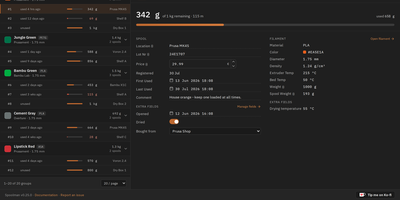
Running out of filament mid-print ruins multi-hour 3D printing jobs, and Spoolman solves this by tracking every gram of plastic across your entire workshop in a centralized, self-hosted inventory database. Connected directly to Klipper, Moonraker, Mainsail, Fluidd, OctoPrint, and OctoEverywhere, the service deducts filament weight automatically over live WebSockets as your extruders run. You can import manufacturer specifications from the community SpoolmanDB catalog, filter your library by color similarity or material type, and organize spools on a drag-and-drop board grouped by storage location or custom fields. A built-in label designer generates printable QR code sheets containing spool metadata, while NFC and RFID tag scanning lets you tap a physical roll against an ESPHome reader or Android phone to pull up its record immediately. Multi-printer workshops can monitor concurrent consumption from several machines simultaneously, expose inventory metrics to Prometheus and Home Assistant, and query stock levels through a Model Context Protocol (MCP) server. Running on a dedicated VPS on RepoCloud with guaranteed CPU, RAM, and SSD, full root SSH access, and a browser serial console. MIT licensed.
Kite
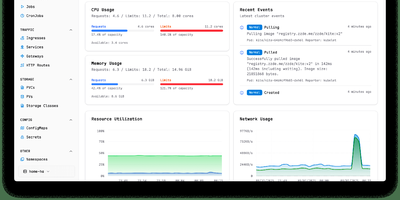
With nearly 3,000 GitHub stars and 14 releases since its June 2025 launch, Kite delivers a lightweight Kubernetes dashboard that replaces the fragmented workflow of switching between kubectl, Lens, and separate monitoring tools with a unified multi-cluster management platform. The dashboard automatically discovers clusters from kubeconfig files and supports independent Prometheus configurations per cluster, providing real-time CPU, memory, and network charts alongside live pod log streaming with filtering and search. A built-in web terminal opens shells directly into pods and nodes without kubectl port-forward, while the Monaco-based YAML editor offers syntax highlighting and validation for in-place resource editing. The integrated AI agent, powered by OpenAI or Anthropic models via native Go SDK integrations, translates natural language into precise client-go API calls — querying cluster health, analyzing pod logs, scaling deployments, patching resources, and cleaning up failed jobs — all operating strictly within the logged-in user's RBAC permissions. Enterprise governance includes OAuth 2.0 single sign-on, multi-factor authentication, FIDO2 passkeys, granular role-based access control with per-namespace permissions, and comprehensive audit logging. Helm chart management enables browsing, installing, and upgrading releases directly from the UI, while the Docker registry integration provides quick image tag selection. Deploy via a single Docker container with SQLite or use the official OCI Helm chart with PostgreSQL or MySQL for production. Running on a dedicated VPS on RepoCloud with guaranteed CPU, RAM, and SSD, full root SSH access, and a browser serial console. Apache 2.0 licensed.
Wakapi
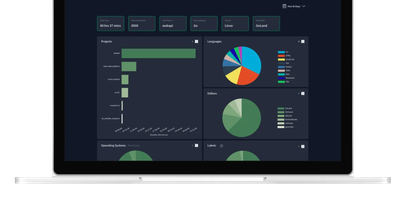
Its author, a student and WakaTime fan, didn't want to pay $9/month for data about his own keystrokes - so Wakapi was born, a self-hosted, WakaTime-compatible backend for coding statistics. The compatibility is the killer design decision: the official WakaTime plugins for VS Code, JetBrains IDEs, Vim, and dozens of other editors work unmodified - just point the plugin's API URL at your Wakapi instance with your personal key, and heartbeats flow to your server instead of a third party's. Duration inference matches WakaTime's own algorithm, with a configurable timeout (10 minutes by default). From that stream Wakapi builds statistics and plots across projects, languages, editors, hosts, and operating systems, plus the fun extras: public leaderboards (optionally login-gated, with configurable aggregation windows), badges for GitHub readmes, and weekly email reports. A REST API serves your data programmatically, Prometheus export feeds your existing Grafana, and a WakaTime relay mode can mirror heartbeats to both services during migration - with one-click import of historical WakaTime data. Written in Go, it is lightning fast and light enough for the smallest instance, storing to SQLite, PostgreSQL, or MySQL, with configurable data retention for GDPR peace of mind. Deliberately smaller than WakaTime, deliberately yours.
Dockhand
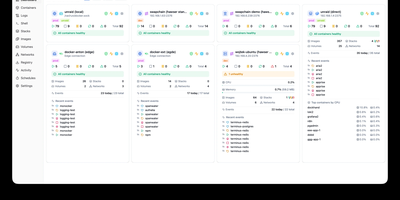
Dockhand is a Docker management platforms, offering a modern alternative to Portainer with free OIDC SSO and vulnerability scanning that competitors gate behind paid tiers. Real-time container management provides start, stop, restart, and remove operations with live resource monitoring across CPU, memory, and network usage on a dashboard with real-time metrics. The visual Docker Compose editor enables stack creation and modification with syntax highlighting, while Git integration deploys stacks directly from repositories with webhooks and auto-sync for GitOps workflows. Vulnerability scanning powered by Grype and Trivy analyzes container images against CVE databases, with configurable auto-update scheduling that can trigger updates based on vulnerability severity criteria. The Hawser Go agent enables management of remote Docker hosts in Standard mode for LAN environments or Edge mode using outbound WebSocket connections for hosts behind NAT, firewalls, or dynamic IPs without exposing inbound ports. Interactive terminal sessions provide shell access into running containers, while the file browser enables uploading, downloading, and editing files directly within containers. Image management includes registry browsing, pull operations, and layer inspection alongside network and volume administration. The security-focused architecture builds its own OS layer from scratch using Wolfi packages via apko with every package explicitly declared. Running on a dedicated VPS on RepoCloud with guaranteed CPU, RAM, and SSD, full root SSH access, and a browser serial console. BSL 1.1 licensed, converting to Apache 2.0 in 2029.
Papermerge
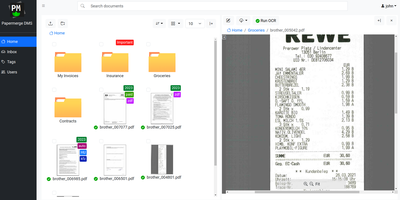
Receipts, contracts, and letters that arrive as pixels rather than text: Papermerge is a document management system built specifically for scanned documents. Upload a PDF, TIFF, JPEG, or PNG and OCR runs automatically, with a real-time status indicator beside the document title; under the hood it drives OCRmyPDF and Tesseract, supporting 130+ languages and producing a new document version with a selectable, searchable text layer you can download. Full-text search runs across everything, with multiple search-engine backends (Xapian by default). The interface deliberately mimics a modern desktop file browser: dual-panel commander, drag and drop, hierarchical folders, and colored tags on documents and folders. Page management fixes what scanners get wrong - delete blank pages, rotate, reorder, merge, extract, and move strayed pages between documents, powered by PikePDF. Document types act as categories, each with its own custom metadata fields, so invoices carry vendor and amount while contracts carry parties and dates. Versioning preserves every state of a document. Multi-user support includes groups, group ownership, permission management, and document/folder sharing between users and groups, and an OpenAPI-compliant REST API automates ingestion from scanners or scripts. Apache-licensed, ideal for long-term digital archives.
Homarr
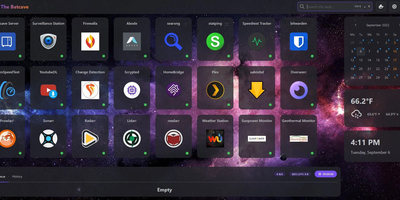
A single pane of glass for every service you run, arranged by drag-and-drop with no YAML or JSON files: Homarr is the modern dashboard for self-hosted infrastructure. Its grid system arranges apps, widgets, and bookmarks on desktop or touch, backed by an icon picker with over 11,000 icons. What separates Homarr from static launchers is 50+ live integrations: Plex, Jellyfin, and Emby media stats, the *arr suite (Sonarr, Radarr) with a unified release calendar, download clients, Pi-hole and AdGuard Home controls, Proxmox, Home Assistant, OPNsense, and Unifi monitoring. Widgets update in real time over WebSockets (tRPC and Redis under the hood), and a built-in search queries thousands of data points across connected services. Custom widgets extend the reach to any HTTP API without code: define endpoint, auth, and refresh interval in the management UI, then render responses as stat grids, tables, progress bars, status indicators, action buttons, or full custom JSX layouts - with an AI-prompt helper for generating templates. Multi-user support is first-class: credentials, OIDC, or LDAP sign-on, groups with granular permissions, and secrets encrypted with AES-256-CBC. A robust background-job system scales it from a Raspberry Pi homelab to deployments serving hundreds of users.
2FAuth
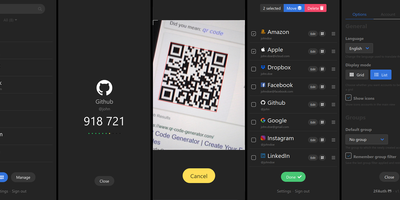
2FAuth generates TOTP, HOTP, and Steam Guard codes from any web browser, freeing your two-factor authentication from dependence on a single smartphone or app. Lose your phone, switch devices, or sit at a desktop computer, and your 2FA codes remain accessible through the web interface. The Laravel and Vue.js application stores account secrets in an encrypted SQLite database that backs up as a single file. Adding accounts works through camera-based QR scanning or manual secret key entry for services that only provide text codes. Group organization with drag-and-drop sorting keeps large collections navigable, categorized however you prefer. WebAuthn authentication with FIDO2 hardware keys protects vault access with phishing-resistant passwordless login, meaning the tool that secures your accounts is itself secured by the strongest available method. Automatic screen lock triggers after configurable idle time, and OTP obfuscation dots out generated codes until you tap to reveal them, preventing shoulder surfing in shared spaces. The REST API enables browser extensions and external applications to request codes programmatically. Import compatibility with Google Authenticator, Aegis, and 2FAS ensures painless migration without re-enrolling every account from scratch. PWA installation places 2FAuth on your device home screen for native-app-like instant access. Runs on a dedicated RepoCloud VPS with guaranteed resources and full root SSH access. AGPL-3.0 licensed.

Koha
Circulation desk, cataloging workbench, acquisitions office, serials room, and public catalog all share one roof in Koha, an open-source library system that scales across school libraries, branch networks, and consortia. Staff search the catalog with facets for availability, authors, holding libraries, and item types, then open a record to see its cover, subjects, classification numbers, and every copy with its call number, status, and barcode. Catalogers edit MARC 21 or UNIMARC records field by field, copy records in via Z39.50 and SRU searches, and link authorities automatically. At the desk, staff check out, check in, and renew items, work with holds, bookings, and claims, and see overdue warnings and outstanding charges beside each patron. Circulation and fine rules vary by library, patron category, and item type. Acquisitions handles vendors, baskets, budgets, and funds. Serials track subscriptions and issue receiving. A guided report wizard, SQL reports, and statistics wizards summarize circulation and collections. Patrons search the public catalog, place holds, save lists, tag and rate titles, and suggest purchases. Staff tools design notices and slips, print patron cards, set holiday calendars, and import or batch-edit patrons. SIP2 serves self-checkout kiosks, OAI-PMH sets share records, and a REST API exposes patrons, holds, checkouts, and biblios. Lending continues during outages with offline circulation. Running on a dedicated VPS on RepoCloud with guaranteed CPU, RAM, and SSD, full root SSH access, and a browser serial console. GPL-3.0 licensed.
Arkon
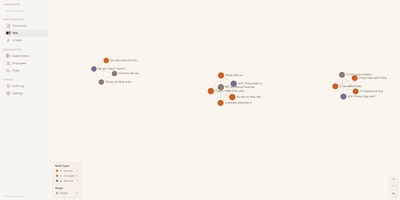
With 1,200+ GitHub stars since its April 2026 launch, Arkon provides an enterprise-grade knowledge management layer that turns scattered organizational documentation into AI-accessible structured context. The platform runs as a centralized MCP server, compiling your SOPs, policies, technical docs, and institutional knowledge into a versioned wiki with draft-approval workflows, then serving that wiki to Claude Desktop, Claude.ai, Cursor, and any MCP-compatible client through a single permission-scoped endpoint. OAuth 2.1 with PKCE authentication eliminates manual token management — employees authenticate through a browser login while the system discovers endpoints automatically via RFC 8414. The RBAC v2 system supports custom roles with granular permissions, department-scoped AI Skills, workspace isolation, and comprehensive audit logging so every query and access event is traceable. RAG retrieval powered by pgvector embeddings enables AI clients to search across all organizational documents with source attribution, while the AI Skills system lets teams define reusable instruction sets scoped to specific departments or roles. The architecture runs seven Docker containers coordinated by Compose: PostgreSQL with pgvector for embeddings and metadata, Redis for caching, MinIO for document storage, a FastAPI backend, two ARQ async workers for embedding generation and document processing, and a Next.js frontend portal accessible on port 3119. API keys are encrypted at rest with Fernet, and no telemetry leaves the deployment. Running on a dedicated VPS on RepoCloud with guaranteed CPU, RAM, and SSD, full root SSH access, and a browser serial console. PolyForm Internal Use licensed.
iTop
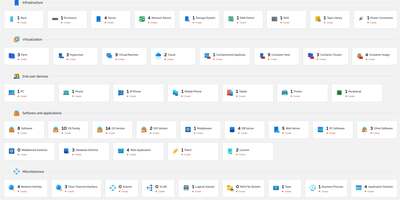
Keep every ticket tied to the servers, applications, and contracts it affects with iTop, an IT service management platform that joins a configuration management database (CMDB) to a helpdesk. Agents work user requests, incidents, problems, known errors, and changes through ITIL-style life cycles, and SLA targets for time to own and time to resolve move a ticket to an escalated status when a deadline passes. The CMDB models infrastructure, virtualization, end-user devices, software, and business applications, and its impact analysis graph shows what a failing server would take down. A service catalog of services and subcategories, backed by customer and provider contracts, feeds a user portal where employees and customers submit requests from a mosaic, tree, or list, follow progress, add comments and attachments, and reopen resolved tickets. Administrators bulk-load inventory from CSV, run consistency audits to catch data-quality problems, synchronize records from external sources, and connect other tools through REST web services. Sign-in works with local accounts, LDAP, or CAS, with optional two-factor authentication through authenticator apps, email codes, or recovery codes, and the console offers dark, high-contrast, and color-blind-friendly themes. Running on a dedicated VPS on RepoCloud with guaranteed CPU, RAM, and SSD, full root SSH access, and a browser serial console. AGPL-3.0 licensed.
DOMjudge
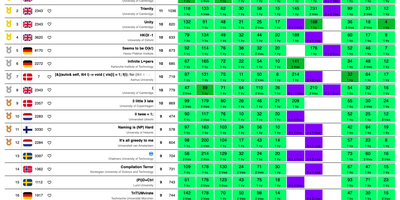
Built for ICPC-style programming contests, DOMjudge takes team submissions, judges them in a restricted sandbox, and posts a live scoreboard. Each team gets its own page. There they read the problem set, submit source code from the browser or a command line client, follow verdicts, and send clarification requests. Judges see every submission, judging run, and output diff. They verify results and rejudge a single submission or everything for a language, problem, team, or judgehost. Administrators schedule activation, start, freeze, end, and unfreeze times, import teams, categories, affiliations, and problems in bulk, and watch a traffic-light status for every team. The public scoreboard freezes for the final stretch and exports as a static HTML page. Judgehosts compile and run each solution with time and memory limits in languages such as C, C++, Java, Python, Kotlin, Go, and Haskell, with custom validators and interactive problems when a task calls for them. Balloon runners get a delivery queue. Clarifications sort into categories. Open contests accept self-registration. The Contest API and event feed connect external scoreboards, and a shadow mode compares results against another system. Running on a dedicated VPS on RepoCloud with guaranteed CPU, RAM, and SSD, full root SSH access, and a browser serial console. GPL-2.0 licensed.
I Hate Money
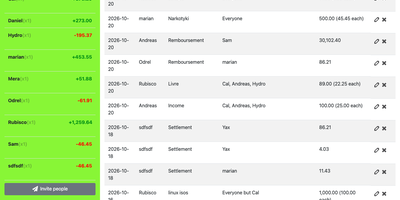
When vacations, shared apartments, and group events turn into a tangle of receipts and awkward IOUs, I Hate Money restores harmony with a dead-simple shared budget manager that requires zero user accounts for invited participants. Organizers create a project protected by a private code and share a single link with friends, roommates, or travel companions, allowing everyone to log expenses immediately from any desktop or mobile browser. Each bill entry records who paid, when the purchase happened, what it covered, and which members benefited, supporting both equal splits and custom weighted shares for participants who stayed longer or consumed more. Built-in multi-currency conversion lets international travelers record bills in foreign currencies and convert them automatically into the project default currency. Newly added expense filtering and direct reimbursement bill creation on the Settle screen calculate the minimum number of transfers required to square every balance, while Monthly spending statistics, JSON or CSV exports, and a REST API keep group finances transparent. Running on a dedicated VPS on RepoCloud with guaranteed CPU, RAM, and SSD, full root SSH access, and a browser serial console. BSD-3-Clause licensed.
Poweradmin
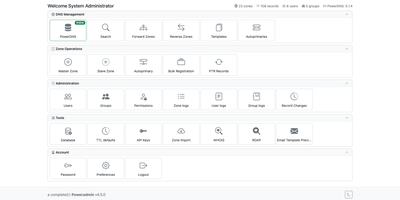
PowerDNS answers the queries; Poweradmin gives you a browser-based control panel for its zones, records, DNSSEC keys, and users, with a REST API for automation. Create master, native, and slave zones, and let zone templates stamp predefined record sets onto new ones. Edit records inline with filters, or open the optional Record Wizard for DMARC, SPF, DKIM, CAA, TLSA, and SRV. Reverse zones link to their forward zones. The batch PTR tool fills whole network ranges, bulk add takes one CSV line per record, and secondary zones can be imported over AXFR. For DNSSEC, manage keys and copy DS and DNSKEY records for your registrar; changes are applied or rectified through the PowerDNS API so signed zones stay consistent. Every record and zone edit is logged with before and after snapshots, and the logs can be filtered and exported. The panel is translated into 43 languages, including right-to-left ones. Permission templates, users, and groups control who touches which zones, sign-in works through LDAP, OIDC, or SAML, and administrators can switch on authenticator-app or email two-factor codes. API keys can be read-only, limited to chosen operations, or restricted to specific zones, and companion projects link Terraform, ExternalDNS, cert-manager, and Certbot. Dynamic DNS clients such as ddclient and inadyn update records through a dyndns2-compatible endpoint. Running on a dedicated VPS on RepoCloud with guaranteed CPU, RAM, and SSD, full root SSH access, and a browser serial console. GPL-3.0 licensed.
Request Tracker
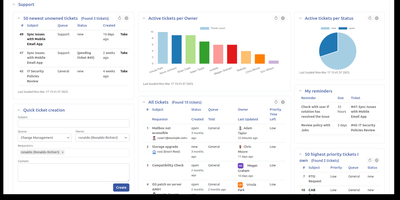
Email-driven ticketing for IT, support, and operations teams: Request Tracker turns every message sent to support@, helpdesk@, or security@ into a tracked ticket with an owner, a priority, a due date, and a complete audit trail. Staff reply to customers and comment privately to colleagues from the web interface or straight from their inbox, while requestors follow their own tickets in a self-service portal. Lifecycles built in a visual editor define custom statuses, transitions, and rights per queue, and scrips fire notifications or automated actions whenever a ticket changes. Service level agreements honor business hours, escalations trigger as deadlines approach, and scheduled tickets recreate recurring chores such as monthly patch windows. A transaction query builder, saved searches, charts, and drag-and-drop dashboards turn ticket history into reports that export to CSV or arrive by email on a schedule. Asset catalogs track laptops, licenses, and servers beside the tickets that mention them, and an Articles knowledge base feeds canned answers into replies. Time worked is logged per ticket with a My Week timesheet, approvals route sensitive requests to the right people, and PGP or S/MIME protects email in both directions. A REST2 API, a command-line client, and more than 400 extensions connect RT to the rest of your tooling. Running on a dedicated VPS on RepoCloud with guaranteed CPU, RAM, and SSD, full root SSH access, and a browser serial console. GPL-2.0 licensed.
Zot
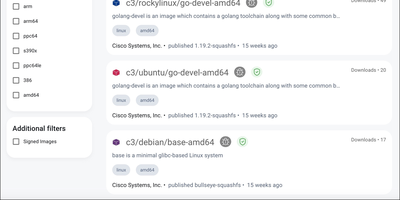
Think of Zot as the registry equivalent of a well-run warehouse: OCI images and artifacts come in, get cataloged, checked, and shipped back out to any compliant client. The bundled web interface lets you browse repositories and tags, inspect image details, and copy ready-made pull commands for Docker, Podman, and Skopeo instead of memorizing registry URLs. Sync extensions mirror upstream registries such as Docker Hub on a schedule or on demand, which keeps air-gapped and rate-limited environments supplied without manual image ferrying. Scrubbing walks the storage in the background comparing blocks against their SHA-256 checksums, so silent bit-rot gets caught by the registry instead of by a failed production deploy. Signature verification with Cosign and Notation checks that images came from who they claim, search answers queries across the catalog, and CVE scanning flags vulnerable images before they spread. Prometheus metrics, a management API, and webhook events cover the operations side, while the minimal image strips everything but the distribution spec for embedded or high-security deployments. Running on a dedicated VPS on RepoCloud with guaranteed CPU, RAM, and SSD, full root SSH access, and a browser serial console. Apache-2.0 licensed.

Chibisafe
Turn any server into a high-speed media vault and file-sharing hub with Chibisafe, a self-hosted upload platform built for chunked large-file transfers, organized albums, and instant desktop screenshot workflows. Users drag and drop photos, videos, archives, or documents into the browser uploader, where multi-gigabyte files are automatically split into chunks to prevent network drops from ruining an active transfer. Uploaded media renders inside a responsive masonry or list gallery with in-browser video and audio previews, custom file tags, search filtering, and one-click shareable links. Organizers group related uploads into folders and public albums, mark sensitive collections with content warnings before loading, and publish syntax-highlighted text snippets or code gists alongside shortened URLs. Desktop and mobile power users connect ShareX, iOS Shortcuts, macOS quick actions, fswatch folder monitors, or the companion browser extension using personal API keys that route captures straight into designated albums. Instance administrators toggle between public, open-registration, and invite-only modes, enforce per-user storage quotas, offload storage to AWS S3, Backblaze B2, MinIO, or Wasabi via signed URLs, and customize rate limits or allowed extensions directly from the web settings panel. Running on a dedicated VPS on RepoCloud with guaranteed CPU, RAM, and SSD, full root SSH access, and a browser serial console. MIT licensed.
Rivet
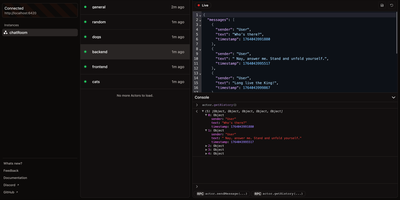
Stateful serverless actors that run indefinitely, sleep when idle, and persist state across restarts without external database round trips. Rivet provides a vendor-neutral alternative to Cloudflare Durable Objects, delivering long-running processes with co-located in-memory state and per-actor SQLite databases on any infrastructure you choose. The Rust engine comprises four packages: Pegboard for actor orchestration, Gasoline for durable execution, Guard for traffic routing via Envoy, and Epoxy implementing multi-region KV storage through EPaxos consensus. Each actor maintains instant-access in-memory state plus a dedicated SQLite database for relational queries, backed by RocksDB on single nodes or PostgreSQL with NATS pub/sub for multi-node clusters. RivetKit SDKs in TypeScript, Rust, and Python support built-in WebSocket connections, task queues, scheduling, and CRDT-based real-time collaboration. The v2.3 rewrite moved the core runtime from JavaScript to native Rust via WebAssembly, eliminating main-thread blocking across Node.js, Bun, Deno, and Cloudflare Workers. A built-in dashboard provides actor inspection with real-time Prometheus metrics. Deploys as a single Docker container on port 6420 with optional PostgreSQL for persistence. Available on RepoCloud with a dedicated VPS under the Apache 2.0 license.