
Split Pro
Split Pro settles the question that ruins group dinners, who owes whom, with a private expense ledger that runs on your own server instead of an ad-supported app. Create a group for the apartment, the trip, or the team lunch rotation, then log each shared cost with its category, currency, date, and a photo of the receipt. Every expense splits your way: equally, by percentage, by shares, by exact amounts, or with manual adjustments when someone covered the tip. Rent, utilities, and subscriptions can repeat on a schedule so recurring bills enter the ledger on their own. The balances view shows exactly who is ahead and who owes, and debt simplification collapses a web of small obligations into the fewest possible payments. Negative expenses record refunds and corrections without breaking the math, and the activity feed keeps a visible history of every edit and deletion. Coming from Splitwise, you can import your friends and groups to pick up where you left off, and bank transactions from supported providers convert straight into expenses. On phones it installs as a progressive web app with push notifications whenever a new expense lands. Logins use email magic links, Google, or your own OIDC provider, and signups can be closed so the instance stays limited to your circle. Running on a dedicated VPS on RepoCloud with guaranteed CPU, RAM, and SSD, full root SSH access, and a browser serial console. MIT licensed.
Opengist
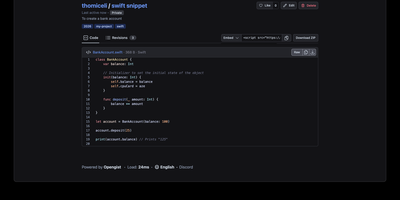
Every code snippet in Opengist lives inside a real Git repository that you can initialize, clone, pull, and push over HTTP or SSH while browsing syntax-highlighted files, revision diffs, and Markdown documents through a self-hosted web interface that replaces GitHub Gist. Create public, unlisted, or private multi-file gists directly from your browser, terminal Git client, or the OpenAPI-documented REST API v1 using personal access tokens. Rich rendering displays source code across hundreds of languages alongside Markdown documents with Mermaid diagrams, LaTeX math, CSV tables, images, and downloadable ZIP archives. Full-text code and metadata search powered by Bleve or Meilisearch lets teams locate snippets by content, filename, extension, language, user, or topic tags in milliseconds. Users can star, fork, archive, and embed snippets into external websites via JavaScript widgets or fetch raw files and structured JSON payloads. Enterprise authentication supports GitHub, GitLab, Gitea, OpenID Connect, and LDAP directories, reinforced by TOTP two-factor authentication and WebAuthn passkeys, while administrators control anonymous access and monitor Prometheus metrics. Running on a dedicated VPS on RepoCloud with guaranteed CPU, RAM, and SSD, full root SSH access, and a browser serial console. AGPL-3.0 licensed.
Elasticvue
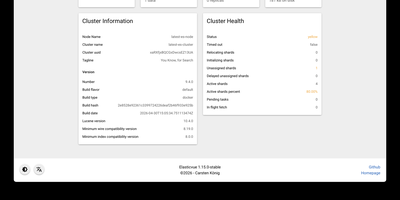
Elasticvue is a graphical interface for Elasticsearch where you can inspect cluster health, browse indices, search and edit documents, and send REST queries. Start on the Home tab, which summarizes status, nodes, shards, indices, document counts, and disk usage. Nodes shows load, CPU, RAM, heap, and disk for each member, and Shards lays out every primary and replica in a grid with a switch for shard allocation. Indices handles creation, aliases, templates, and bulk actions. Search runs query string searches across an index pattern, opens any hit in a JSON editor for updates or deletion, and downloads results as JSON. Rest sends any request from tabbed editors with history, saved queries, and examples, while Snapshots manages repositories and backups. Version 1.16 adds user and role management for Elasticsearch clusters. Secured clusters connect with basic authentication, API keys, or AWS IAM credentials, and the Docker image preloads cluster definitions from an environment variable or a mounted JSON file. Elasticvue supports every Elasticsearch version, even end-of-life releases, and speaks English, Chinese, French, Russian, Japanese, and Italian. Running on a dedicated VPS on RepoCloud with guaranteed CPU, RAM, and SSD, full root SSH access, and a browser serial console. MIT licensed.
PatchMon
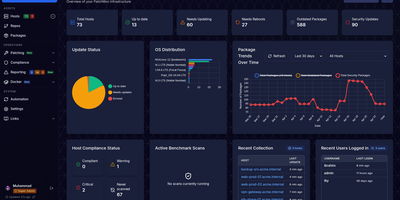
Unpatched Linux servers expose production environments to critical vulnerabilities, and PatchMon eliminates that blind spot by centralizing package telemetry, security advisory tracking, and automated update orchestration across your entire fleet. Administrators can inspect pending updates across APT, DNF, YUM, APK, Pacman, Zypper, FreeBSD pkg, Windows Update, and winget from one unified queue without opening inbound firewall ports on monitored hosts. Before touching production workloads, operators run dry-run validations to preview exact package transactions, enforce multi-user approval workflows, and schedule rollouts during fixed maintenance windows. During execution, live agent output streams directly to the browser over WebSocket so engineers can watch progress in real time or halt a problematic upgrade mid-flight. Beyond package updates, the platform runs OpenSCAP CIS benchmark and Docker Bench security assessments, inventories running containers and outdated base images, and routes host-down or threshold alerts to Slack, Discord, Microsoft Teams, ntfy, or email. Built-in browser SSH and Apache Guacamole RDP terminals let teams troubleshoot machines directly through the outbound agent tunnel with role-based access control and OIDC single sign-on. Running on a dedicated VPS on RepoCloud with guaranteed CPU, RAM, and SSD, full root SSH access, and a browser serial console. AGPL-3.0 licensed.
TrailBase
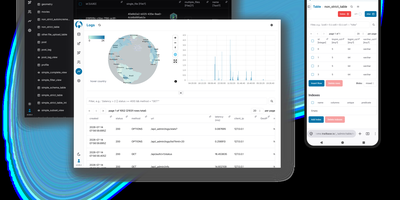
With 5,400+ GitHub stars and sub-millisecond response times that eliminate the need for dedicated caches entirely, TrailBase consolidates your database, API server, auth service, realtime subscriptions, and admin interface into a single Rust binary weighing under 40MB. The platform generates type-safe CRUD APIs automatically from your SQLite schema with configurable access control rules using SQL expressions, while realtime subscriptions push data changes to connected clients via Server-Sent Events. The embedded Wasmtime runtime executes custom server-side logic as WebAssembly components compiled from Rust, JavaScript, Python, or any language targeting WASI, enabling complex business logic without external services. First-class geospatial support through the in-house LiteGIS GEOS extension provides GeoJSON integration, spatial indexing via R-Trees, and query operators including @within, @intersects, and @contains for location-based applications. Client SDKs span JavaScript/TypeScript, Dart/Flutter, Rust, C#/.NET, Swift, Kotlin, Go, and Python — covering mobile, web, desktop, and IoT platforms. The admin dashboard offers visual schema editing, a data browser, Record API configuration, OAuth provider setup, user management, SQL query editor, ERD visualization, and server logs. Experimental PostgreSQL support (v0.28+) allows connecting to existing Postgres instances via connection string. Deploy via a single binary, Docker container, or the one-line install script across Linux, macOS, and Windows. Running on a dedicated VPS on RepoCloud with guaranteed CPU, RAM, and SSD, full root SSH access, and a browser serial console. OSL-3.0 licensed.
GZCTF
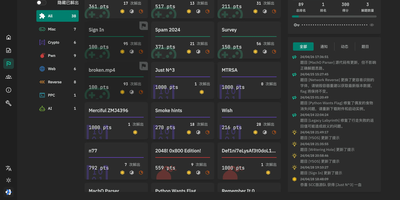
When cybersecurity instructors and competition organizers host Capture The Flag tournaments, GZCTF orchestrates isolated per-team challenge containers, dynamic anti-cheat flags, and live exponential scoreboards from a single web platform. Event administrators can configure four distinct challenge modes covering static attachments, team-specific dynamic attachments, shared static containers, and isolated dynamic containers where unique flags are injected into each team's environment at launch. A customizable exponential scoring engine adjusts point values automatically as more teams solve a problem while awarding first, second, and third blood bonuses to top contenders. Built-in flag-sharing detection monitors every submission in real time, flagging suspicious cross-team flag reuse alongside live event streams and container logs. Participants can group into divisions, track their ranking trajectory on interactive score timelines, and upload post-game writeups directly into the portal for organizer review and batch archiving. Built-in network proxying forwards challenge traffic over WebSocket tunnels with optional packet capture so referees can audit exploit payloads during active matches. Multi-language localization, customizable branding, invitation gates, and email domain restrictions adapt the portal to university courses, corporate security drills, or international tournaments. Running on a dedicated VPS on RepoCloud with guaranteed CPU, RAM, and SSD, full root SSH access, and a browser serial console. AGPL-3.0 licensed.
Codel
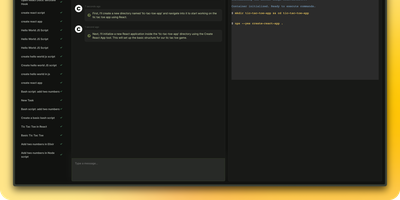
Meet your new digital sidekick, the Fully Autonomous AI Agent! This isn't just any AI; it's like having a superhero in your terminal, browser, and editor. Ready to tackle complex tasks and projects with a single command, this AI Agent is your go-to for making tech magic happen. And with RepoCloud, you're not just saving on costs, you're also joining a league of extraordinary users harnessing the power of open-source collaboration. Get ready to elevate your productivity to legendary levels!
ShellHub
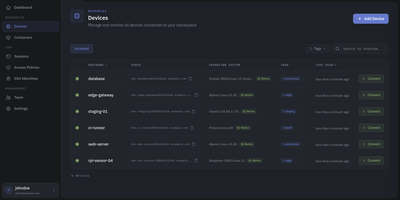
Every server, embedded board, and edge gateway you manage becomes reachable through one SSH address in ShellHub, even when it sits behind NAT with no public IP and no open inbound port. A small agent on each device dials out to your server, so a box on a customer LAN or a cellular link needs nothing beyond outbound web access. Connect with the stock ssh client by typing [email protected]@server, or open a terminal in the browser, and scp, sftp, rsync, and port forwarding work unchanged. SSH identities tie every key to a named team member, so removing someone ends their access on every device at once. Default-deny access policies grant or block members, roles, users, or API keys by device tag, Linux login, and source address, and can require a fresh browser confirmation before a session opens. Provisioning keys enroll whole fleets through automatic, manual, webhook, or allowlist acceptance, with usage limits, expiry dates, and tags. The Sessions page records who connected to which device, as which login, and from where, and browser terminals can be recorded and replayed. A Docker connector turns containers into devices that policies can grant one by one. Four member roles shape what each person can change, and the HTTP API, API keys, and an MCP server let scripts and AI assistants list devices and review sessions. Running on a dedicated VPS on RepoCloud with guaranteed CPU, RAM, and SSD, full root SSH access, and a browser serial console. Apache-2.0 licensed.
Tianji
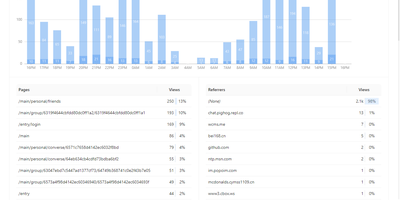
Website analytics, uptime monitoring, and server status - three tools most teams run separately - combined in Tianji, an open-source observability platform. The analytics layer tracks page views, unique visitors, referrers, and UTM parameters with a lightweight cookie-less script, which keeps collection GDPR and CCPA friendly. The uptime monitor checks availability and latency on configurable intervals, accepts passively reported results, and publishes public status pages for incident communication. Server status agents report CPU, memory, disk, and network metrics with threshold-based alerts, and notifications route through webhooks, Slack, Telegram, and other channels with noise control. It also includes anonymous telemetry for tracking deployments of your own open-source projects, surveys, waitlists, team collaboration, and an OpenAPI interface for integrations and exports. The consolidation is the point: traffic analytics, uptime checks, and server metrics share one interface and one alerting layer, so diagnosing an incident does not mean hopping between Google Analytics, Uptime Kuma, and Prometheus - and the built-in public status pages replace a separate paid Statuspage-style subscription. Because collection uses no cookies with IP truncation and aggregation by default, basic traffic measurement requires no consent banner. Built in TypeScript under the Apache 2.0 license and inspired by Umami and Uptime Kuma, it is deliberately right-sized for independent developers and small SaaS teams whose monitoring needs are real but lightweight.

Huntly
Capture every article you read, RSS feed you follow, X/Twitter thread you scroll past, and GitHub repository you star into one searchable, AI-enhanced personal knowledge base with Huntly. Auto-save visited web pages through the companion browser extension, extract distraction-free article text using Mozilla Readability and Defuddle, and highlight passages with inline notes that remain anchored in your library. Reconstruct multi-post X/Twitter threads automatically with embedded media preserved intact. Subscribe to RSS and Atom feeds via OPML import, organize subscriptions into custom folders, and triage unread stories alongside your read-it-later queue and hierarchical collections. Synchronize starred GitHub repositories with their README documentation and repository tags so you can filter tools by topic without leaving your dashboard. Run custom AI shortcuts to summarize long-form essays, translate foreign articles, or query your entire archive from external AI coding agents through the built-in MCP server and Agent Skills integration. Execute boolean, phrase, and bilingual fuzzy queries across every saved document or export your entire library to portable Markdown files. Running on a dedicated VPS on RepoCloud with guaranteed CPU, RAM, and SSD, full root SSH access, and a browser serial console. Apache-2.0 licensed.
OpsiMate
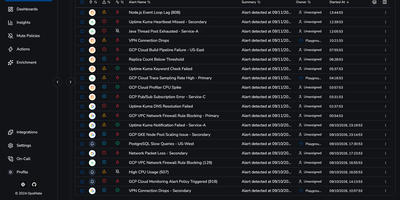
OpsiMate gives on-call teams one queue for alerts that would otherwise arrive in five different dashboards, each demanding attention in its own tab. Connect Grafana, Datadog, Zabbix, Uptime Kuma, Google Cloud, or any custom webhook source and watch incoming alerts land in one table with their source, service, severity, tags, and status attached. Filter the noise down to the team or service you own, group related alerts so one incident does not look like forty separate emergencies, and use mute policies when a known problem should stop paging people. Acknowledge work with one click, assign ownership so nobody wonders who is responding, resolve alerts from the same screen, and follow deep links back into Grafana or Zabbix when you need the original chart or trigger. Let supported integrations auto-resolve alerts when the underlying monitor recovers, and use root-cause notes and insights to keep the next responder from starting at zero. Discover services running in Docker, Kubernetes, and Linux virtual machines so the alert queue stays connected to the infrastructure behind it. Running on a dedicated VPS on RepoCloud with guaranteed CPU, RAM, and SSD, full root SSH access, and a browser serial console. AGPL-3.0 licensed.
slskd
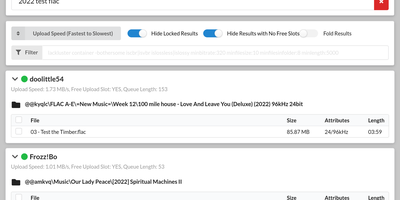
Across peer-to-peer music and file-sharing communities, slskd brings the Soulseek network into any modern web browser through a self-hosted client-server daemon that runs continuously without a desktop GUI. Users can run multiple concurrent network searches, filter results by audio bitrate, file extension, free upload slots, or transfer speed, and queue entire album folders for download in two clicks. The real-time transfer monitor groups active downloads and uploads by peer and directory, allowing you to inspect your live queue position, retry stalled files, or clear completed batches at a glance. For library contributors, the share manager indexes local directories with custom regex exclusion rules and configurable user groups that enforce per-group upload slot allocations, bandwidth caps, and automated leecher blacklists. Built-in social tools let you browse remote user directory trees, auto-join public Soulseek chat rooms on startup, and exchange private messages directly inside the web interface. Multi-server operators can even link a central controller to remote relay agents to distribute file sharing and search workloads across separate machines. When transfers finish or system state changes, event-driven integrations can fire custom HTTP webhooks, execute post-processing shell scripts, upload files via FTP, or expose Prometheus metrics and CIDR-restricted REST API endpoints for external media managers. Running on a dedicated VPS on RepoCloud with guaranteed CPU, RAM, and SSD, full root SSH access, and a browser serial console. AGPL-3.0 licensed.

LubeLogger
Vehicle maintenance records shouldn't live in a homemade spreadsheet and a shoebox of receipts - LubeLogger exists because of exactly that. It's a self-hosted .NET web application (from Hargata Softworks) that gives every vehicle in your garage a complete digital history: service, repair, and upgrade records categorized and searchable, with invoices and receipts attached as documents; fuel fill-ups that compute economy in MPG, UK MPG, L/100KM, or KM/L without spreadsheet tedium; taxes, odometer logs, inspections, equipment, and supplies inventory for tracking the parts and fluids on your shelf. The reminder system is what saves engines: recurring reminders trigger by date, odometer reading, or whichever comes first - exactly how real service intervals work - so oil changes and timing belts stop relying on memory. A dashboard summarizes expenses by year, month, and category, a planner tracks to-dos by type, priority, and progress, and professional vehicle reports print a full history - genuinely useful when selling a car. Collaboration is built in: invite household members as collaborators on shared vehicles, with single sign-on support. Custom fields adapt records to your needs, CSV import/export moves data freely, an API enables automation, and the mobile-tested UI installs as a PWA on iOS and Android. MIT-licensed.
Pinchflat
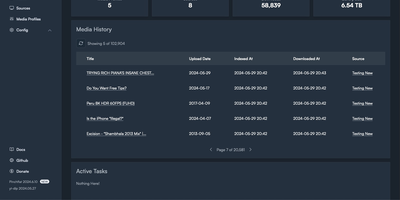
Archiving YouTube channels and playlists into a local media server becomes effortless with Pinchflat, a self-hosted media manager that automates downloading, naming, and organizing online video and audio libraries on disk. Instead of manually copying links into command-line downloaders, you define reusable Media Profiles with presets tailored for Plex, Jellyfin, Kodi, or raw archival storage, and then attach any number of YouTube channels or playlists as monitored sources. Fast Indexing polls RSS feeds or the YouTube API to detect newly published uploads within minutes while falling back to scheduled full scans so back-catalog videos are never missed. Granular source rules let you include or exclude YouTube Shorts and livestreams, filter titles by keyword patterns, enforce earliest upload cutoff dates, and set automatic retention windows that prune older files after a configured number of days. Built-in SponsorBlock integration marks or strips sponsor segments and embeds chapters alongside thumbnails, subtitles, and NFO metadata files so episodes appear cleanly inside your home theater library. You can also schedule Delayed Redownloads a few days after initial publication to capture higher-bitrate transcodes or crowd-sourced SponsorBlock tags, supply browser cookies for private playlists, and subscribe to any archived source in mobile podcast players through generated RSS feeds. Running on a dedicated VPS on RepoCloud with guaranteed CPU, RAM, and SSD, full root SSH access, and a browser serial console. AGPL-3.0 licensed.
OpenSlides
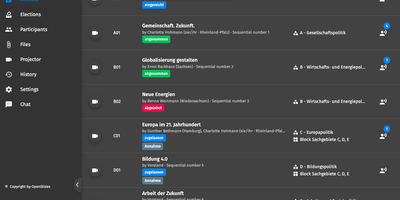
If an assembly needs motions, amendments, speaker lists, and secret ballots on one shared screen, OpenSlides is the open-source web application that runs them. Before the meeting, administrators set up committees and meetings, import participants from CSV or connect a SAML identity provider for single sign-on, email invitations with login data, and sort people into groups with freely defined rights. Members file motions in an HTML editor, attach documents, gather supporters, and send them through customizable workflows with automatic numbering by category, and amendments and change recommendations attach to specific line numbers. Motions can be forwarded to other meetings. During the session the agenda reorders by drag and drop, and every item, motion, or election gets its own speaker list with countdowns, points of order, and recorded speaking time. Votes are open, secret, or nominal and run live for present participants in voting groups, with proxy delegation, vote weighting, multiple rounds, and Yes/No/Abstain options per candidate or list. Results appear against a chosen reference value on projectors, in PDF exports, or as individual tallies. Several projectors can show the current item, a lower third for the active speaker, and live results, and Autopilot guides participants through whatever is happening. A video livestream brings in remote attendees. Afterward, motions export to PDF, CSV, or XLSX. Running on a dedicated VPS on RepoCloud with guaranteed CPU, RAM, and SSD, full root SSH access, and a browser serial console. MIT licensed.
Astuto
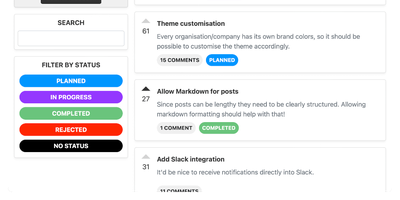
Feature requests, bug reports, upvotes, and a public roadmap: Astuto (Ruby on Rails backend, React frontend) gives users a Canny-style feedback portal so product decisions rest on visible demand rather than the loudest voice in the room. Feedback organizes into as many boards as you want (features, bugs, integrations), each post carrying a custom status you define - "planned," "in progress," "shipped," or whatever matches your process - and those statuses feed a public roadmap view showing users what is actually being worked on. Participation friction is adjustable at both ends: sign-in works with plain email or any OAuth2 provider, anonymous feedback can be enabled for unregistered users, and a moderation queue lets you approve posts before they appear when spam is a concern. Integration hooks are practical rather than sprawling - webhooks fire on events to connect Jira, Trello, or Slack, and a REST API manages the whole feedback space programmatically. Brand customization, an invitation system, private-site settings, and recap emails for administrators complete a deliberately minimal tool: it collects, organizes, and prioritizes feedback well, for free, forever.
Kodus AI
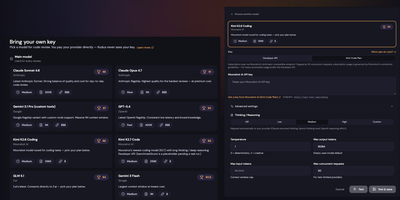
Kodus AI automates pull request code review with inline AI comments across GitHub, GitLab, Bitbucket, and Azure DevOps, supporting any LLM provider at cost with zero token markup. The multi-service TypeScript architecture deploys via Docker Compose, running an API server, background worker, webhooks service, and React dashboard backed by PostgreSQL with pgvector, MongoDB, and RabbitMQ. Integration covers both cloud platforms and their enterprise flavors (GitHub Enterprise Server, GitLab Self-Managed, Bitbucket Data Center) using standard OAuth flows and webhook signing to keep the review loop entirely inside your network. The platform is model-agnostic with Bring Your Own Key support for Claude, GPT, Gemini, Llama, and any OpenAI-compatible endpoint including locally-hosted models. Custom review rules combine your team's coding standards with requirements pulled from Jira, Linear, and Notion, automatically checking every PR against documented specifications. The CLI enables local reviews against working trees, staged diffs, branches, or specific commits, integrating into CI/CD pipelines as pre-merge gates. Source code is never stored and never used for model training, with all data encrypted in transit and at rest. 1,270+ stars and 129+ releases since March 2025. Running on a dedicated VPS on RepoCloud with guaranteed CPU, RAM, and SSD, full root SSH access, and a browser serial console. AGPL-3.0 licensed.
OxiCloud
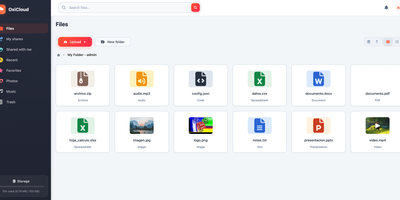
OxiCloud is a self-hosted cloud for files, photos, calendars, contacts, and office documents. Drives can be personal or shared, with configurable storage quotas. Multi-gigabyte uploads travel as parallel, resumable chunks with integrity verification. Images, PDFs, audio tracks, and video streams preview right in the browser, and photos show EXIF details and map locations. Files sync over WebDAV. Calendars sync over CalDAV. Contacts sync over CardDAV. Desktop file managers, Thunderbird, Apple Calendar, and mobile DAVx5 clients connect without proprietary software. Collabora Online or OnlyOffice plug in through WOPI for real-time co-editing of spreadsheets, presentations, and text documents. Administrators enforce role-based access controls. Sign-in runs through OpenID Connect providers such as Keycloak, Authentik, or Azure AD. Public share links can carry a password and an expiration. Identical files are stored once, and adaptive compression keeps footprints compact. Local disks, Amazon S3, and Azure Blob can be mounted at the same time, with live background migration and automated consistency checks. Running on a dedicated VPS on RepoCloud with guaranteed CPU, RAM, and SSD, full root SSH access, and a browser serial console. MIT licensed.