portracker
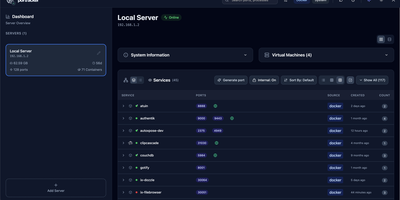
No spreadsheet has to track which service owns which port, because portracker discovers every service and port on your servers and keeps the list current from a self-hosted dashboard. Begin with a single port, shown with its owning service, its source (Docker or the host system), and its address, with internal container ports told apart from ports published to the host. Step back and ports gather into services: expandable cards carrying an icon, a health dot, and a port count, in list, grid, or table layouts, where a Why this status popover names the failing component and the rule that fired. Step back again and each server gets its own panel with hostname, OS, CPU, memory, and uptime, plus TrueNAS apps, VMs, and LXC containers once an API key is added. Step back once more and the whole fleet appears, because other portracker instances can be linked as peers, a VM's instance can be nested under its host, and every server can be searched at once. Along the way, rename services, hide the noisy ones, attach notes, act on a selection in bulk, or press Generate port for an unused number before deploying something new. Optional sign-in with a first-run setup wizard, an autoxpose link that shows public URLs and SSL status, light and dark themes, and keyboard shortcuts finish the picture. Running on a dedicated VPS on RepoCloud with guaranteed CPU, RAM, and SSD, full root SSH access, and a browser serial console. MIT licensed.
mCaptcha
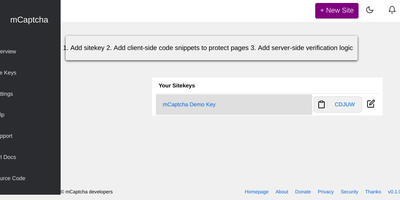
The CAPTCHA bargain - annoy your users and feed their behavior to Google - gets replaced with economics by mCaptcha. Instead of image puzzles, it uses SHA256 proof-of-work: every visitor's browser silently solves a small computational challenge (via a WebAssembly library) before submitting a form. Humans never notice the milliseconds; bots hammering your site must burn more compute sending requests than your server spends answering them, which makes attacks more expensive than defense - the property that also makes mCaptcha genuine DoS protection, not just bot filtering. Written in Rust, the system is fully automated: difficulty scales with traffic, so challenges stay trivial in normal conditions and harden under attack. The privacy and accessibility wins are structural rather than promised: no tracking, no profiling, no user-pattern data collection, and no visual puzzles that exclude users with visual or cognitive impairments - the design was published in Communications of the ACM. Rate limiting is IP-independent, so users behind NATs, VPNs, or Tor get the same experience instead of endless challenge loops, and proofs resist replay attacks, neutering captcha farms. Migration is deliberately easy: the API is compatible with reCAPTCHA and hCaptcha, making it a drop-in replacement. AGPL-licensed core with proprietary-friendly client libraries.
DockFlare
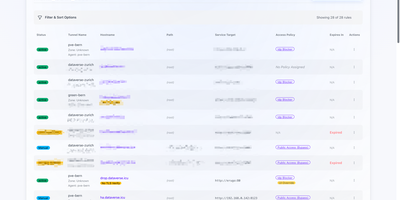
Combining Docker container labels with a live web control plane, DockFlare automates Cloudflare Tunnel ingress routing, multi-zone DNS records, and Zero Trust Access policies across self-hosted infrastructure. DevOps engineers and homelab operators can attach simple container labels to expose HTTP, HTTPS, TCP, SSH, and RDP services publicly in seconds without clicking through external cloud dashboards. For non-containerized workloads such as bare-metal hypervisors or network appliances, administrators can define manual ingress rules, path-based routes, custom TLS SNI headers, and origin certificate bypass flags directly in the web interface. Security teams use reusable Access Groups and wildcard zone policies to enforce Google, GitHub, Azure AD, or custom OIDC authentication across every subdomain from a single policy definition. Distributed deployments connect lightweight remote agents back to the primary controller using Zero Trust service tokens so multi-host clusters share one unified routing view. When containers stop or restart, configurable grace-period timers prevent accidental route churn before cleaning up stale DNS entries, while encrypted state backups protect your entire ingress configuration. Running on a dedicated VPS on RepoCloud with guaranteed CPU, RAM, and SSD, full root SSH access, and a browser serial console. GPL-3.0 licensed.
WebCodex
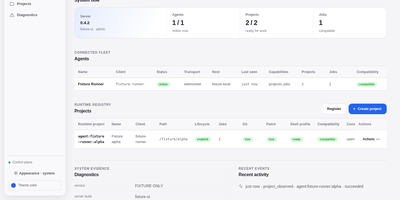
WebCodex gives ChatGPT, Claude, and other MCP clients a real development environment on machines you own, so an AI assistant can edit your actual repositories instead of a pasted snapshot. A self-hosted Server authenticates every request and routes it to a Runner sitting next to your code, where file edits, Git operations, test runs, shell commands, and long jobs execute with your real toolchain. Your projects never move into a hosted workspace; only the tool results you authorize travel back to the model. The browser Runtime Console shows project readiness, the work queue, session activity, and connected Runners, and it is where you decide pending approvals or accept and reject finished work, because the model cannot approve its own changes. Runners join with a short-lived pairing code and stay connected over QUIC, WebSocket, or polling, so machines behind NAT still work. One-command sharing opens a temporary session for a single repository, while durable setups run the Server and Runner as system services behind your own HTTPS domain. Workflow Sessions keep evidence and context across conversations, so long tasks survive closed browser tabs and threads you pick up days later. Running on a dedicated VPS on RepoCloud with guaranteed CPU, RAM, and SSD, full root SSH access, and a browser serial console. Apache-2.0 licensed.
Codel
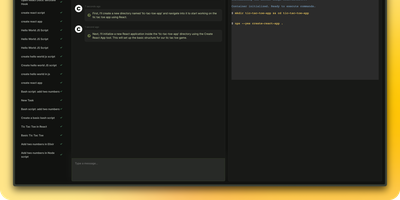
Meet your new digital sidekick, the Fully Autonomous AI Agent! This isn't just any AI; it's like having a superhero in your terminal, browser, and editor. Ready to tackle complex tasks and projects with a single command, this AI Agent is your go-to for making tech magic happen. And with RepoCloud, you're not just saving on costs, you're also joining a league of extraordinary users harnessing the power of open-source collaboration. Get ready to elevate your productivity to legendary levels!
BottleCRM
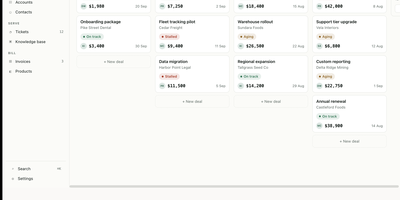
BottleCRM delivers a self-hosted customer relationship management platform that unifies sales lead qualification, visual deal pipeline tracking, helpdesk ticketing, and client invoicing into one workspace. Sales representatives capture prospects through embeddable website forms or CSV imports, qualifying leads before converting them into synchronized account, contact, and opportunity records. Account executives manage visual Kanban deal boards with stage aging timers and weighted pipeline forecasting, dragging cards across qualification phases while preserving complete interaction timelines. Customer support teams handle incoming inquiries with multi-level ticket hierarchies, business-hours service level agreement clocks, automated escalations, approval workflows, and canned response macros. Billing managers generate professional quotes and invoices directly from won deals, applying customizable line-item tax rates and tracking payment statuses through customer self-service portals. Development teams connect autonomous AI agents and third-party software using personal access tokens against the documented REST API to automate data entry and workflow updates. Running on a dedicated VPS on RepoCloud with guaranteed CPU, RAM, and SSD, full root SSH access, and a browser serial console. MIT licensed.
Open Archiver
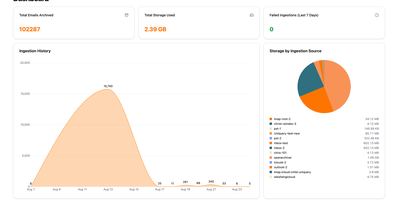
When a regulatory audit, legal discovery request, or employee offboarding requires years of verifiable email records, Open Archiver provides a tamper-evident, self-hosted vault for every message across your organization. Connect Google Workspace domains, Microsoft 365 tenants, personal Outlook OAuth accounts, or standard IMAP servers for continuous background synchronization, or upload historical PST, MBOX, and zipped EML archives in bulk. Every ingested message is deduplicated, compressed, and stored in standard EML format on local disks or S3-compatible object storage while SHA-256 cryptographic hashes verify file authenticity on demand through built-in Integrity Reports. Instant full-text search scans both message bodies and attached PDF or DOCX documents, letting compliance teams reconstruct complete conversation threads and enforce automated retention policies. Granular access control backed by an AWS IAM style policy engine, TOTP two-factor authentication, and an immutable audit trail keeps sensitive correspondence locked down. Running on a dedicated VPS on RepoCloud with guaranteed CPU, RAM, and SSD, full root SSH access, and a browser serial console. AGPL-3.0 licensed.
VictoriaLogs
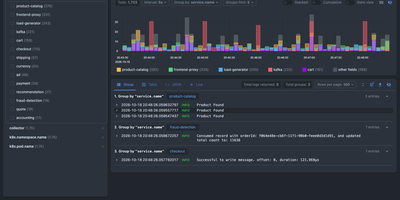
Instead of running an Elasticsearch or Loki cluster, VictoriaLogs stores and searches your logs from a single zero-config server. Ship from Filebeat, Fluent Bit, Fluentd, Logstash, Vector, Promtail, Telegraf, the OpenTelemetry Collector, or the Datadog Agent. Syslog, journald, and Splunk endpoints work too. Query with LogsQL: word, phrase, and prefix filters combine with pipes that extract fields from raw lines and compute stats, top values, and facets. See results as a table, grouped by stream, as raw JSON, or as a live tail. Chart them in Grafana, or work from a terminal with vlogscli and pipe output into grep, less, or jq. Events with hundreds of fields are supported. So are high-cardinality fields like trace_id and user_id. Late, out-of-order backfills are accepted. During an incident, stream_context pulls the lines around any match. Tenants are keyed by AccountID and ProjectID headers. vmalert evaluates LogsQL queries as alerting and recording rules. CEF messages sent over Syslog are parsed automatically for SIEM work. Retention defaults to 7 days and can be capped by disk space. Per-day partitions snapshot and copy out with rsync or rclone. Cluster mode splits ingestion, querying, and storage across nodes for logs that outgrow one server. Running on a dedicated VPS on RepoCloud with guaranteed CPU, RAM, and SSD, full root SSH access, and a browser serial console. Apache 2.0 licensed.
Exceptionless
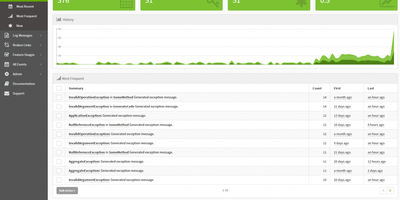
Exceptionless has earned over 2,400 GitHub stars and has been processing production errors since 2014 as the real-time event monitoring platform that captures far more than crashes. Built with ASP.NET Core on Elasticsearch for storage and Redis for caching, Exceptionless ingests exceptions, log messages, feature usage events, broken links, and custom event types through official SDKs for JavaScript, Node.js, .NET Core, ASP.NET, WPF, Web API, WebForms, Console apps, and React Native. Automatic event stacking groups related occurrences by exception type, message, and call stack into single actionable items, while manual stacking keys let developers create custom groupings for specific features or workflows. The real-time dashboard displays Most Frequent, Most Recent, and New event views with filtering by project, date range, environment, and custom tags. Stack management tracks resolution status with version-aware regression detection that automatically reopens resolved issues when the same error surfaces in a newer release. Webhook integrations connect to Slack, Discord, and external services through Zapier for automated issue tracking in GitHub Issues and Jira. Per-project notification settings control email and chat alerts for new errors, regressions, and critical events. OpenTelemetry support captures distributed traces alongside error data. The v8.6.0 release introduced a hosted Model Context Protocol server at the /mcp endpoint, enabling AI tools to query error data via OAuth-authenticated access. Deploy via Docker with the exceptionless/exceptionless image alongside Elasticsearch and Redis. Running on a dedicated VPS on RepoCloud with guaranteed CPU, RAM, and SSD, full root SSH access, and a browser serial console. Apache 2.0 licensed.

LearnHouse
LearnHouse delivers a modern open-source learning platform that replaces proprietary course builders with a self-hosted alternative shipping a rich feature set out of the box. The Tiptap-powered block editor supports videos, documents, embeds, quizzes, and file uploads in a Notion-like interface with real-time co-editing powered by Hocuspocus and Yjs CRDT synchronization over WebSocket. AI tutoring integrates Google Gemini and LlamaIndex for RAG-powered context-aware assistance that adapts to course content, while interactive Playgrounds use AI to generate simulations, diagrams, and learning exercises. The platform handles the full course lifecycle: chapters and activities organize into collections and learning paths, assignments support automated and manual grading, and code blocks execute student submissions in 30+ languages with auto-grading. Analytics dashboards track learner engagement, progress, and completion rates in real time. The backend runs on FastAPI with SQLModel and Alembic migrations against PostgreSQL 16 with pgvector for AI embeddings, while Redis handles caching and session management. The frontend builds on Next.js 16 with React 19 and Tailwind CSS v4. Deployment uses an interactive CLI wizard that configures domain, database, admin account, SSL via Let's Encrypt, and optional features like email via Resend, S3 storage, and Google OAuth, then generates a Docker Compose stack ready to start. On RepoCloud, deploy LearnHouse on a dedicated VPS with root SSH access, persistent PostgreSQL storage for your course data, and complete control over AI provider keys and branding customization, all under the AGPL v3 license.
OpenMeter
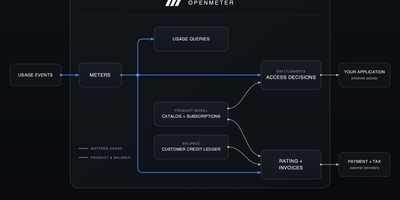
AI and API products live or die by usage, and OpenMeter is the open-source stack that measures it, rations it, and bills for it. Your application emits CloudEvents for every billable action; OpenMeter validates and deduplicates them, then aggregates usage in real time so dashboards and enforcement checks never wait for a nightly batch. Meters slice that usage by customer, time window, or any dimension you attach, which turns raw events into answers like tokens per workspace this month. Entitlements decide who gets what: metered allowances with balances and overage, boolean switches for features like SSO, and static JSON configuration for per-customer model access. Grants top allowances up once or on a schedule, resets roll balances over each usage period, and one API call tells your app whether a customer still has access right now. On the money side, plans carry flat, per-unit, tiered, package, or dynamic prices; subscriptions, credit balances, and the invoice lifecycle run alongside, with webhooks announcing everything to your other systems. Running on a dedicated VPS on RepoCloud with guaranteed CPU, RAM, and SSD, full root SSH access, and a browser serial console. Apache-2.0 licensed.
Webclaw
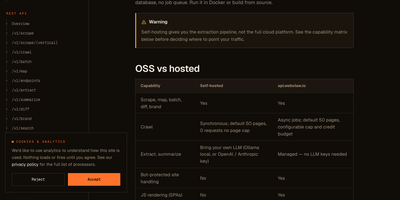
Webclaw turns messy web pages into clean content your AI tools can actually use, extracting the meaningful text and leaving the navigation, ads, and boilerplate behind. You point it at a URL and get back Markdown, plain text, structured JSON, raw HTML, or a format trimmed for language model input, with images stripped, links deduplicated, and whitespace cleaned. Crawl a whole site by following same-origin links page after page, map a domain first to discover every URL from its sitemap before deciding what to fetch, or batch many URLs at once and stream the results as they finish. CSS selectors let you include only the part of a page you care about or exclude the parts you never want, and main-content filtering keeps the article while dropping the chrome around it. Compare today's page against an earlier snapshot to see exactly what changed, or pull a site's colors, fonts, and logo into a brand profile. With your own language model connected, extraction follows a JSON schema or a plain prompt, and summaries come back at the length you ask for. Agents reach the same engine through an MCP server, scripts through the command line, and applications through the REST API. Running on a dedicated VPS on RepoCloud with guaranteed CPU, RAM, and SSD, full root SSH access, and a browser serial console. AGPL-3.0 licensed.
Mstream
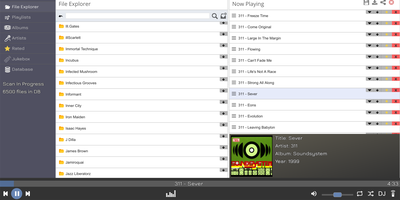
"The easiest music streaming server available" is mStream's own billing, and the claim holds up: a lightweight Node.js app that turns a folder of audio files into a private streaming service in minutes, no external database required. Its filesystem-based design is the clever part - the API mirrors your folder structure, so you can browse and play music immediately, before any library scan finishes, and your organization on disk is your organization in the app. It streams flac, mp3, wav, ogg, opus, aac, and m4a, which matters to the audiophile crowd: FLAC plays uncompressed, bit-perfect, with gapless playback for live albums and continuous mixes. The web player runs anywhere a browser does and packs personality - a Milkdrop-style visualizer (Butterchurn), playlist sharing via links, and drag-and-drop uploads straight through the file explorer. Native iOS and Android apps add the feature streaming subscriptions can't match: sync your collection to your phone for true offline playback of music you own. Multi-user support assigns separate directories and permissions per account. Resource usage is famously light - mStream is tested on multi-terabyte libraries and runs happily on a Raspberry Pi, so a small RepoCloud instance serves a lifetime's collection. GPL-licensed, with zero listening-habit telemetry.

Documize
Enterprise documentation discipline without enterprise infrastructure: Documize Community is the Confluence alternative built on exactly that trade. The entire platform - Go backend, Ember.js frontend - compiles to a single executable binary for Linux, Windows, and macOS with zero runtime dependencies: no Elasticsearch, no Redis, no JVM. Point it at PostgreSQL, MySQL, MariaDB, Percona, or Microsoft SQL Server (rare in open source, decisive in Microsoft shops), and schema migrations run on launch with native full-text search on whichever engine you chose. Content organization rejects nested-folder sprawl for Spaces, categories, and labels, and the section-based composable editor mixes rich text, Markdown, code blocks, PDFs, diagrams, and embedded Jira or Trello content in one document, with reusable blocks and templates so teams start from standards rather than blank pages. It deliberately unifies internal team docs and customer-facing documentation in one system with granular space-, document-, and action-level permissions deciding who sees what. Where wikis stop, Documize continues: content approval workflows (draft, review, approve, publish), version management, lifecycle control, feedback capture, PDF export, analytics showing what gets read and ignored, activity streams, and audit logs. Keycloak, LDAP, and SSO integrate for enterprise auth. AGPL-licensed.
Pelican Panel
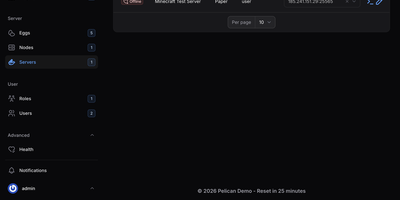
Pelican Panel is an open-source game server management platform that enables gaming communities and hosting providers to deploy, configure, and operate multiplayer servers for titles like Minecraft, Palworld, and Counter-Strike within secure, containerized environments. Administrators can provision dedicated game servers in seconds using modular configuration eggs, allocating precise CPU cores, memory thresholds, and disk quotas to prevent resource contention across noisy neighbors. Players and server operators access an interactive web console featuring live terminal output, instant power state toggles, and direct command execution over secure WebSockets. An integrated file browser enables operators to upload server modifications, edit configuration scripts with syntax highlighting, and decompress archives without opening an external terminal. Built-in scheduling pipelines automate recurring tasks such as world backups, daily server restarts, and mod updates based on custom cron expressions. Multi-tenant permission controls allow guild leaders to invite co-administrators and grant granular privileges for restarting daemons, reviewing console logs, or managing database credentials without exposing the host system. Operators can also provision external SFTP endpoints, attach secondary IP allocations, and trigger webhook alerts whenever container health anomalies occur. Running on a dedicated VPS on RepoCloud with guaranteed CPU, RAM, and SSD, full root SSH access, and a browser serial console. AGPL-3.0 licensed.
Open Kritt
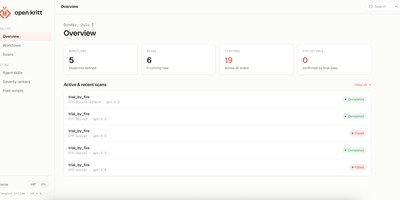
Big repositories, small questions: Open Kritt is a self-hosted platform that splits vulnerability research into focused tasks for AI agents and returns ranked, de-duplicated findings. Build a workflow as a tree of prompt steps, where each step declares the structured output it must produce and the next level launches one fresh agent per result. Scan remote or local repositories along with their dependencies, using Codex, Claude Code, or Grok Build as the harness. Every workflow ends in one fixed finding schema covering file, line, vulnerability type, trigger flow, and a malicious input example. Post-scripts then validate each finding, build a proof of concept, or write the report. Markdown severity rankers tell the model how to prioritize for your bounty program, and repeated findings collapse automatically. Model access comes from a Codex login or OpenAI, Anthropic, DeepSeek, OpenRouter, or xAI keys, with an Active switch to choose which accounts take new work. A dashboard tracks blueprints, scans, and findings, a headless command-line tool imports workflows and launches scans on servers without a browser, and finished scans export as one ZIP with a share-safe manifest. Built-in workflows, including an entry-point-driven hunt, give you a starting point. Running on a dedicated VPS on RepoCloud with guaranteed CPU, RAM, and SSD, full root SSH access, and a browser serial console. AGPL-3.0 licensed.
Akvorado
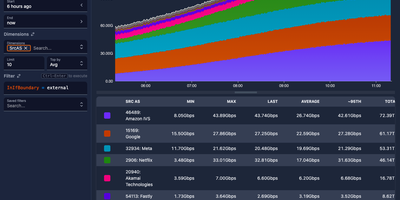
Point your routers at Akvorado and every NetFlow, IPFIX, and sFlow record crossing your network becomes a chart you can interrogate. The web console opens on a live summary of flows per second, exporter count, and traffic split by autonomous system, port, protocol, country, and address family. From there, the visualize page turns stored flows into stacked, line, grid, and heatmap time series, plus Sankey diagrams that show how traffic moves between networks, interfaces, and countries. Filters use a simple SQL-like syntax, so a question like which customers pulled traffic over a transit link last night becomes a query, not a support ticket to your future self. Because the outlet polls each exporter with SNMP or gNMI, flows arrive wearing real interface names, descriptions, and speeds instead of raw ifIndex numbers nobody can read. GeoIP lookups attach country and city to addresses, classification rules tag providers, peers, and connectivity types, and optional BMP sessions add AS paths and BGP communities to every flow. Retention is tiered: raw flows keep full detail for recent days while one-minute, five-minute, and hourly rollups stretch summaries across a year of history. A Grafana plugin is available too, so the same flow data can sit on the dashboards your team already watches. Running on a dedicated VPS on RepoCloud with guaranteed CPU, RAM, and SSD, full root SSH access, and a browser serial console. AGPL-3.0 licensed.
AnyCable
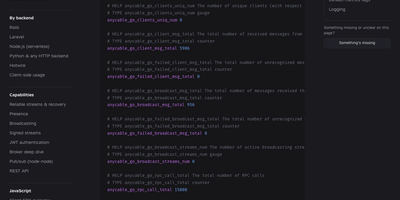
AnyCable moves your WebSocket connections out of your application process and into a dedicated realtime server, so live chat, presence, and notifications keep flowing while your app code focuses on business logic. Rails teams feel it first: the Action Cable channels, subscriptions, and broadcasts already in production keep working unchanged once the endpoint points at AnyCable, which handles authentication, subscriptions, and connection churn by calling back into your application over RPC only when channel code needs to run. Anything that can send an HTTP request can publish to connected clients, and teams outside Rails use standalone mode from Node, Python, Go, or PHP services, including Laravel applications looking for a Reverb or Pusher replacement. Broadcast traffic arrives through Redis Pub/Sub, durable Redis Streams, or the HTTP API, so background jobs and other services push messages without holding a single socket open. Operators watch connected clients, broadcast volume, and RPC failures through Prometheus metrics, and can disconnect remote clients or inspect active streams without a restart. Signed-in users stay safe because every connection request passes through your existing authentication before the server accepts it. Running on a dedicated VPS on RepoCloud with guaranteed CPU, RAM, and SSD, full root SSH access, and a browser serial console. MIT licensed.