Redash
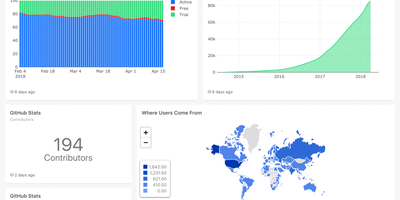
Used by millions of users at thousands of organizations worldwide and holding 29,000+ GitHub stars, Redash is the most established open-source SQL-first business intelligence tool — enabling anyone from analysts to executives to query databases, visualize results, and share dashboards without writing a single line of application code. The browser-based query editor supports SQL and NoSQL with schema browsing, auto-complete, query snippets, and parameterized queries that turn static reports into interactive data applications. Native connectors span 35+ data sources including PostgreSQL, MySQL, Amazon Redshift, Google BigQuery, Snowflake, ClickHouse, MongoDB, Elasticsearch, Databricks, Apache Presto, Microsoft SQL Server, and REST APIs — with an extensible data source API for custom integrations. Visualization types cover line, bar, area, pie, scatter, box plot, funnel, cohort, sankey, sunburst, choropleth map, and pivot tables, all draggable onto shared dashboards with cross-filtering parameters. Scheduled refreshes automatically update query results at configurable intervals, while threshold-based alerts notify teams via email, Slack, or webhook when metrics cross defined boundaries. SAML and Google OAuth SSO integration, role-based access control, API key management, and query-level permissions ensure enterprise-grade security for sensitive datasets. The self-hosted stack deploys via Docker Compose with PostgreSQL for metadata storage, Redis for job queuing, and Celery workers for background task execution. Running on a dedicated VPS on RepoCloud with guaranteed CPU, RAM, and SSD, full root SSH access, and a browser serial console. BSD 2-Clause licensed.
Parse Server
With 21,400 GitHub stars, 500+ contributors, and battle-tested since its 2016 open-source release after powering Facebook's mobile backend infrastructure, Parse Server delivers production-grade Backend-as-a-Service that eliminates months of custom API development. The platform generates REST and GraphQL endpoints automatically from your data schema with class-level permissions and object-level ACLs providing granular access control. Cloud Code enables server-side JavaScript execution for triggers (beforeSave, afterSave, beforeDelete, afterDelete), custom functions, and scheduled jobs — all deployable without restarting the server. Live Queries push realtime data changes to subscribed clients via WebSockets, powering chat applications, collaborative editors, and live dashboards. Push notification support spans APNs for iOS, FCM for Android, and web push for browsers with audience segmentation, scheduling, and delivery analytics. The Parse Dashboard provides a comprehensive admin interface with a data browser featuring configurable info panels, graph visualization, custom canvas builder with draggable elements, AI agent integration via OpenAI, data import/export, and multi-factor authentication. Database flexibility supports MongoDB 6-8 and PostgreSQL 13-18 with PostGIS for geospatial queries. Native SDKs cover JavaScript, iOS (Swift/Objective-C), Android, Flutter/Dart, .NET/Xamarin, Unity, PHP, and Arduino for IoT devices. Deploy via npm, Docker, or the official Express template with automatic schema migration. Running on a dedicated VPS on RepoCloud with guaranteed CPU, RAM, and SSD, full root SSH access, and a browser serial console. Apache 2.0 licensed.
MySQL
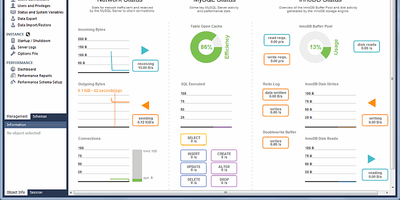
Powering Facebook, Uber, Twitter, and Booking.com, MySQL processes billions of queries daily as the world's most widely deployed open-source relational database. Its default InnoDB storage engine delivers full ACID compliance with row-level locking, crash recovery, and foreign key enforcement, making it the backbone of mission-critical e-commerce, SaaS, and financial applications. MySQL's Document Store bridges relational and NoSQL paradigms, allowing developers to work with schema-less JSON collections alongside traditional SQL tables through the X DevAPI protocol. For high availability, InnoDB Cluster combines Group Replication, MySQL Router, and MySQL Shell into an integrated solution with automatic failover, while InnoDB ClusterSet extends this across data centers for disaster recovery. The database supports multiple storage engines including MyISAM for read-heavy analytics, Memory for temporary high-speed caching, and Archive for compressed historical data. Native JSON functions like JSON_TABLE() transform document data into relational result sets, and spatial data types enable GIS applications. MySQL integrates with every major programming language through official connectors for Python, Java, Node.js, PHP, C++, and .NET, and works seamlessly with frameworks like Django, Laravel, Rails, and Spring. Replication topologies support read replicas for horizontal scaling, and the new Change Stream Applier in MySQL 26.7 enables configurable parallel transaction application with up to 1,024 workers per channel. Running on a dedicated VPS on RepoCloud with guaranteed CPU, RAM, and SSD, full root SSH access, and a browser serial console. GPLv2 licensed.
Nextcloud
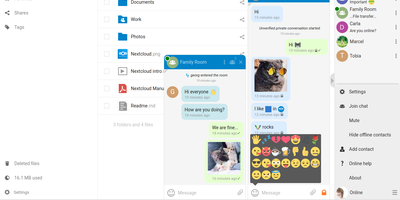
Google Workspace and Microsoft 365, replaced by a platform you actually control: Nextcloud is the self-hosted digital workspace. Files is the core: file storage and sync across desktop, mobile, and web clients, with sharing, versioning, and collaboration built in. Around it, Talk provides private text chat, audio/video conferencing with screen sharing, SIP integration, and persistent voice rooms; Groupware bundles calendar, contacts, and mail with delegation support; and Office offers two collaborative suites - the Collabora-based option with deep ODF support, and Euro-Office, whose local-processing architecture delivers strong Microsoft Office compatibility and fast browser rendering with reduced server load. The Nextcloud Assistant threads AI through the platform via a context-aware sidebar, Whiteboard covers visual collaboration, Flow handles automation, and an app ecosystem of hundreds of extensions adds everything from Kanban boards to end-to-end encryption. Hub 26 brings a lighter UI with a unified app switcher and Nextcloud Governance for organizations under strict regulatory requirements. This is the flagship of data sovereignty: your files, chats, calendars, and documents live on your server, under your jurisdiction, with GDPR compliance by architecture rather than by contract.
Gitness
With 37,400+ GitHub stars and active daily development by the Harness engineering team, Gitness is the open-source developer platform that ships Git hosting, container-native CI/CD pipelines, a Docker-compatible artifact registry, and cloud developer environments in a single Go binary consuming approximately 100 MB of RAM — compared to GitLab's 4+ GB minimum footprint. Born as the next generation of Drone CI, Gitness inherits Drone's battle-tested pipeline engine while adding complete source code management with pull requests featuring threaded code review comments, suggested changes, required reviewer approvals, and merge strategies including squash and rebase. Branch protection rules enforce mandatory pull requests, minimum peer reviews, passing status checks, and force-push blocking. Pipelines use Drone-compatible YAML syntax with stages, steps, and service containers, triggered automatically on code changes with results displayed directly in pull request checks. The built-in container registry eliminates the need for separate Harbor or Docker Registry deployments, supporting Docker image push and pull plus Helm chart storage. Gitspaces provide on-demand remote development environments configured via industry-standard devcontainer.json files. Encrypted secrets management with Gitleaks-powered secret scanning blocks commits containing hardcoded credentials. One-click migration imports existing GitHub Organizations and GitLab Groups, automatically converting GitHub Actions and GitLab CI pipelines to Gitness YAML. The REST API with OpenAPI specification enables programmatic management of all resources. Running on a dedicated VPS on RepoCloud with guaranteed CPU, RAM, and SSD, full root SSH access, and a browser serial console. Apache 2.0 licensed.
Langflow
Langflow turns LLM application development into a visual canvas where every node maps to a real LangChain primitive (chains, agents, retrievers, memory, vector stores, and tools) that teams wire together without writing integration boilerplate. The platform supports 15+ LLM provider components including OpenAI, Anthropic, Google Gemini, Mistral, Groq, Cohere, Azure OpenAI, HuggingFace, and Ollama for fully local inference, with LiteLLM proxying to over 100 additional providers through a single OpenAI-compatible endpoint. Vector database integrations cover Pinecone, Weaviate, Chroma, Qdrant, Astra DB, OpenSearch, FAISS, and Milvus, while built-in Knowledge Bases introduced in version 1.8 allow RAG pipelines without any external vector service. Multi-agent orchestration enables agent-to-agent communication with conversation management, persistent Memory Bases for cross-session context retrieval, and step-by-step reasoning visibility in the interactive Playground. Every flow automatically becomes a callable REST API endpoint via the /run route and an MCP server exposable to Claude Desktop, Cursor, or any MCP-compatible client. Every component is a real Python class that developers can customize, extend, or replace, while Extension Bundles package third-party integrations as independent pip packages for modular installation. Tool integrations include web search, Slack, Gmail, Google Drive, GitHub, and custom REST API calls. Docker deployment with PostgreSQL persistence runs on port 7860. Backed by 153,000+ stars and DataStax. Running on a dedicated VPS on RepoCloud with guaranteed CPU, RAM, and SSD, full root SSH access, and a browser serial console. MIT licensed.
Mattermost
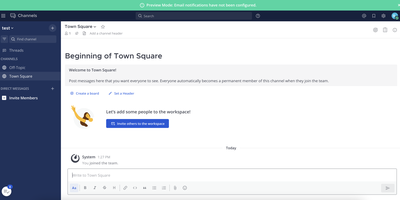
Teams that cannot send messages through someone else's cloud run Mattermost - the open-core, self-hosted alternative to Slack. It provides public and private channels, threaded discussions, unlimited search history, file sharing with previews, one-to-one audio calls, and screen sharing, with desktop clients for Windows, macOS, and Linux plus iOS and Android apps. Messages support full Markdown, which suits engineering conversations with code blocks and logs. Playbooks turn repeatable processes such as incident response and release management into checklist-driven workflows with automated triggers and retrospectives. Integration is a core strength: prebuilt connectors for GitHub, GitLab, Jira, ServiceNow, and PagerDuty, plus webhooks, slash commands, bots, a REST API, and a plugin marketplace with 700+ entries - together making it a working surface for ChatOps rather than just a chat room. Playbooks add keyword and event triggers, task assignment, status broadcasting, and post-incident retrospectives, so operational knowledge is not trapped in individuals' heads. The server is a single Go binary backed by PostgreSQL, with React clients, released monthly under MIT license and deployable fully air-gapped - which is why governments and defense organizations run it inside closed networks, and why the same control applies to any team with confidentiality requirements. The compiled Team Edition is free for unlimited users with no message history cutoff, so costs stay flat as the team grows.

Ntfy
ntfy sends push notifications to your phone or desktop with a single curl command: publish a message to any topic and every subscriber receives it instantly, no signup or API key required. Over 31,000 GitHub stars and 106 releases since 2021 back a server supporting five priority levels mapped to distinct notification sounds and vibration patterns, emoji tags for visual classification, click actions that open URLs when tapped, and up to three action buttons per notification for view, HTTP callback, broadcast, or clipboard copy operations. File attachments push images from surveillance cameras, documents, or any binary payload directly to mobile devices. Subscriptions work through JSON streams, Server-Sent Events, WebSockets, or raw text, with server-side filtering by priority, tags, and message ID. Authentication enforces topic-level access control through Basic Auth, Bearer tokens, or query parameters, with a built-in user and ACL management system. UnifiedPush compatibility lets ntfy serve as a push distributor for Mastodon, Matrix, and other federated services. Web Push via VAPID keys delivers browser notifications without the mobile app. The server ships as a single statically linked Go binary or Docker image supporting amd64, armv7, and arm64 architectures, consuming 30-50 MB RAM at idle with SQLite-backed message caching. Integrations include Grafana, Prometheus Alertmanager, Uptime Kuma, Home Assistant, and Ansible Semaphore. Running on a dedicated VPS on RepoCloud with guaranteed CPU, RAM, and SSD, full root SSH access, and a browser serial console. Apache 2.0 / GPLv2 dual-licensed.
Node-RED
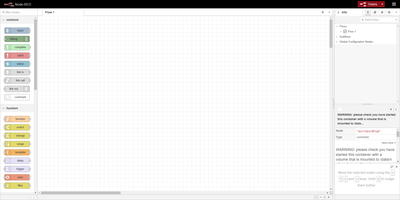
Wire nodes together in a browser, deploy in one click, and real-time data flows from sources through transformations to outputs: Node-RED is the OpenJS Foundation's flow-based programming tool for event-driven applications. Born at IBM as a proof-of-concept for manipulating MQTT topic mappings, it has become the lingua franca of IoT and automation glue - home automation, industrial control, edge data collection - with a community library of over 5,000 contributed nodes and flows covering protocols, devices, and services. Where visual wiring runs out, JavaScript function nodes written in a rich in-editor code editor take over, and every flow serializes to importable, exportable JSON that shares cleanly and version-controls sensibly. Version 5.0 (2026) delivered the largest editor overhaul in the project's history: a rethought layout with Explorer and Information panels in a split sidebar, a native dark theme with theme variants, improved accessibility, and refreshed node appearance. The runtime is lightweight Node.js, exploiting the event-driven non-blocking model so the same flows run on a Raspberry Pi at the network edge or a cloud VM. Apache-2.0 licensed with 240+ contributors, it pairs naturally with dashboard nodes for live charts and controls.
AutoGen Studio
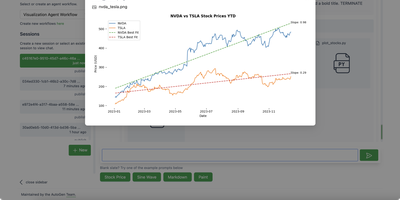
Prototype multi-agent AI systems without writing orchestration code: AutoGen Studio is Microsoft's low-code interface over the AutoGen AgentChat framework. You compose teams of LLM-powered agents in a visual Team Builder, either by drag-and-drop from a component library or by editing the declarative JSON specification directly. Each agent gets a model, a prompt, tools (Python functions), and the team gets termination conditions and an orchestration pattern, sequential or LLM-driven. The Playground runs teams interactively with live message streaming between agents, a visual control-transition graph, tool-call and code-execution tracking, and pause/stop controls, which makes it a practical debugger for agent behavior. Finished teams export as JSON for use in any Python application via the TeamManager class, or serve as an API endpoint. Any OpenAI-compatible model endpoint works, including local servers like Ollama or vLLM. Microsoft labels it a research prototype: use it for prototyping and evaluation, and build production systems on the underlying AutoGen framework.
Jitsi Meet
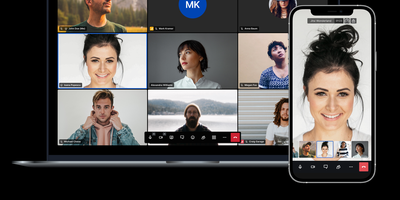
Backed by nearly 30,000 GitHub stars and powering millions of meetings through meet.jit.si, Jitsi Meet is the open-source video conferencing platform that runs entirely in the browser with no plugins or downloads required. The WebRTC-based architecture delivers HD audio and video through the Jitsi Videobridge selective forwarding unit, while Prosody handles XMPP signaling and Jicofo manages conference focus and orechestration. End-to-end encryption uses AES-GCM 128-bit keys exchanged via the Olm protocol, protecting audio, video, and screen sharing through the Insertable Streams API in Chromium-based browsers. Moderators can split participants into breakout rooms with individual password protection, enable lobby waiting rooms for admission control, set meeting passwords, and track speaker statistics with per-participant talk time metrics. Virtual backgrounds leverage TensorFlow.js body segmentation with WebGPU and WebGL acceleration, automatically adapting quality through device tier detection. Server-side recording and YouTube live streaming run through Jibri, while Jigasi provides a SIP gateway for PSTN dial-in and speech-to-text transcription. The platform includes in-meeting chat with private conversations, polls, raise-hand functionality, emoji reactions, and tile and speaker view layouts. Mobile applications for iOS and Android complement the web client, and both web and native SDKs enable embedding video conferences into custom applications. Running on a dedicated VPS on RepoCloud with guaranteed CPU, RAM, and SSD, full root SSH access, and a browser serial console. Apache-2.0 licensed.
Harbor
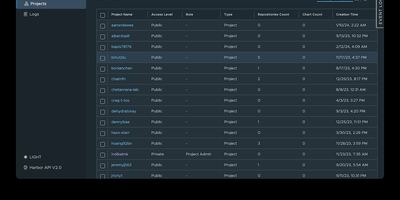
The first container registry to reach CNCF graduated status with over 29,000 GitHub stars since VMware open-sourced it in 2016, Harbor transforms the basic Docker Distribution into a hardened enterprise registry with vulnerability scanning, supply chain signing, multi-datacenter replication, and project-level access control out of the box. Trivy scans every pushed image against the NVD, GitHub Advisory Database, and distribution-specific vulnerability feeds, with scan-on-push policies that block deployment of images exceeding configurable severity thresholds. Artifact signing through Cosign keyless signatures and Notation enforces content trust policies ensuring only cryptographically verified images reach production clusters. Policy-based replication synchronizes images and Helm charts between Harbor instances across multiple datacenters using repository, tag, and label filters with automatic retry and bandwidth throttling — enabling hybrid-cloud and disaster-recovery topologies. The RBAC model isolates projects with per-project quotas, robot accounts for CI/CD automation, webhook notifications, and audit logging that tracks every pull, push, delete, and configuration change. LDAP, Active Directory, and OIDC authentication integrate with existing identity providers, while the proxy cache transparently caches images from Docker Hub, Quay, and other upstream registries to reduce pull latency and rate-limit exposure. The RESTful API with embedded Swagger UI, tag retention policies, garbage collection scheduling, and immutable artifact rules complete the lifecycle management. Deploy via Docker Compose or Helm Chart on Kubernetes. Running on a dedicated VPS on RepoCloud with guaranteed CPU, RAM, and SSD, full root SSH access, and a browser serial console. Apache 2.0 licensed.
SpiderFoot
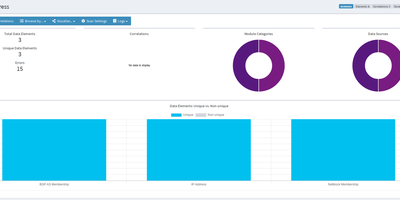
SpiderFoot is an open-source OSINT automation platform, replacing hours of manual reconnaissance with automated intelligence gathering across more than 200 data collection modules. The platform accepts ten distinct target types including IP addresses, domains, hostnames, network subnets, ASNs, email addresses, phone numbers, usernames, person names, and Bitcoin addresses, then feeds them through a publisher-subscriber event bus where each module's findings trigger downstream analysis automatically. SpiderFoot queries Shodan, VirusTotal, HaveIBeenPwned, AlienVault OTX, Censys, crt.sh, WHOIS databases, social media platforms, breach databases, and dozens more sources, with most modules requiring no API keys and many offering free tiers for those that do. The YAML-configurable correlation engine applies 37 pre-defined rules to identify relationships between discovered data points, flagging patterns like shared infrastructure, credential exposure, and domain reputation anomalies. Results export in CSV, JSON, and GEXF graph formats for integration with external analysis tools. TOR integration enables dark web searching, and SpiderFoot can invoke external tools including DNSTwist, Whatweb, Nmap, and CMSeeK for deeper technical assessment. The embedded web server delivers an intuitive dashboard for scan management, data visualization, and result exploration alongside a full command-line interface for scripted automation. Running on a dedicated VPS on RepoCloud with guaranteed CPU, RAM, and SSD, full root SSH access, and a browser serial console. MIT licensed.
Excalidraw
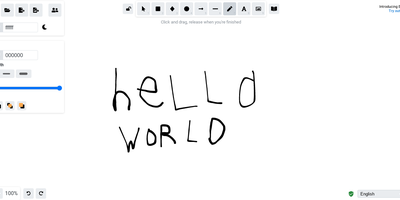
Half the architecture sketches on the internet trace back to Excalidraw - the MIT-licensed virtual whiteboard whose hand-drawn aesthetic made technical diagramming feel approachable, at roughly 85,000 GitHub stars. The infinite canvas offers rectangles, ellipses, diamonds, arrows with smart binding and labels, free-draw, text, images, and an eraser, with full undo/redo, zoom, dark mode, and keyboard-first ergonomics. Community shape libraries add thousands of pre-built elements - AWS architecture icons, flowchart stencils, UI wireframe kits - and everything exports to PNG, SVG, the clipboard, or the open .excalidraw JSON format that keeps drawings diffable and portable. Live collaboration works on a share-a-link model with live cursors and a laser pointer for presenting, and it is end-to-end encrypted by design: the room key travels in the URL hash, which never reaches the server, so the WebSocket relay only ever sees ciphertext. The architecture is remarkably light - the app is a static bundle served by Nginx, drawings persist locally in the browser, and the stateless excalidraw-room relay handles multiplayer - so a self-hosted deployment gives unlimited boards and collaborators with near-zero resource cost, replacing per-editor whiteboard subscriptions.
Hoppscotch
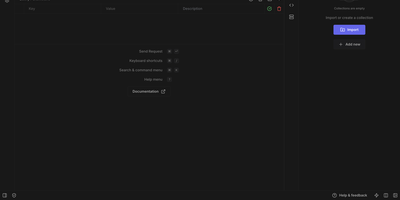
Backed by nearly 80,000 GitHub stars and recognized as one of the most popular developer tools in the open-source ecosystem, Hoppscotch delivers a complete API development platform that runs instantly in any browser with zero installation. The platform supports six protocols out of the box including REST with full HTTP method coverage, GraphQL with schema introspection and multi-column documentation, WebSocket for full-duplex communication, Socket.IO, MQTT for IoT messaging, and Server-Sent Events for real-time streaming. Request collections organize your API calls into logical groups with support for sub-folders, environment variables with scope inheritance, pre-request scripts and post-request test scripts written in JavaScript, and automatic code snippet generation in over twenty languages and frameworks. Teams can collaborate in real-time with shared workspaces, role-based access controls, and cloud synchronization across devices. Migration from Postman, Insomnia, or OpenAPI specifications happens with a single click import. The self-hosted edition deploys via Docker Compose with PostgreSQL for data persistence, supporting SSO authentication through SAML and OAuth providers, SMTP configuration with OAuth2, and admin dashboard for user management. The platform also ships as a native desktop application for macOS, Windows, and Linux with offline support, plus a CLI tool for running collections in CI/CD pipelines. A built-in proxy mode bypasses CORS restrictions during development, and an interceptor enables request debugging and response modification. Running on a dedicated VPS on RepoCloud with guaranteed CPU, RAM, and SSD, full root SSH access, and a browser serial console. MIT licensed.
HedgeDoc
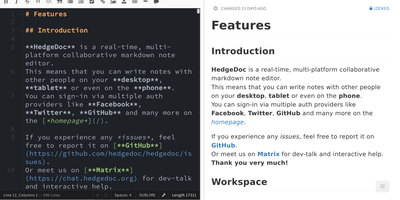
Real-time collaborative Markdown behind your own firewall: HedgeDoc (formerly CodiMD, descended from HackMD's open-source edition) keeps team notes on team infrastructure. Share a note's URL and collaborators are editing together instantly - live cursors, changes appearing keystroke by keystroke - in a three-mode interface that toggles between raw Markdown, rendered preview, and side-by-side split. The Markdown dialect is extended where engineers need it: Mermaid, Graphviz, and Vega-Lite diagrams, MathJax for equations, syntax-highlighted code blocks, embedded content, and a presentation mode that turns a note into reveal.js slides with a single YAML header. A dropdown permission system controls each note - freely editable, limited to signed-in users, or locked read-only - and published notes become clean read-only pages for wider distribution. Revisions track every change with the ability to revert to any earlier version. The AGPL-3.0 codebase is light enough to run on a Raspberry Pi and deploys via Docker with PostgreSQL, MySQL, or SQLite. Authentication covers LDAP, SAML, OAuth2, and email. It deliberately stays a focused document editor - no page trees or kanban - and does that one job with excellent keyboard-first ergonomics for meeting notes, RFCs, runbooks, and shared scratchpads.
OpenHands
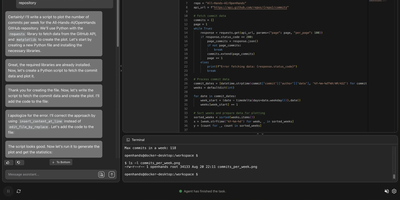
With 83,000+ GitHub stars and $18.8M in Series A funding, OpenHands delivers the leading open-source platform for AI coding agents that scored 68.4% on SWE-bench Verified with Claude Opus 4.6, outperforming Devin 2.0's publicly reported 45.8%. The Agent Canvas web UI organizes work into persistent conversations where agents edit files, run shell commands, browse the web, and execute multi-step development tasks inside isolated Docker sandbox containers. The observe-plan-act loop drives agent behavior: the Python controller manages LLM abstraction via LiteLLM routing to 100+ providers including OpenAI, Anthropic, Google, DeepSeek, Qwen, Llama, and local Ollama models. Built-in skills for code review, Docker management, PRD generation, repo-rules enforcement, release notes, and test running attach to conversations automatically via auto-discovery or trigger-based activation. The Automations system schedules recurring agent tasks with configurable templates for CI workflows, dependency updates, and documentation generation. MCP server integration enables agents to access external tools and data sources. The REST API powers an OpenAI-compatible endpoint for connecting agents to chat UIs, IDEs, and voice platforms. GitHub, GitLab, Slack, and Jira integrations enable pull request reviews, issue resolution, and team notifications. The SDK provides Python and REST APIs for embedding agents in custom tools with local or cloud execution, custom agent behaviors, and Kubernetes deployment. On RepoCloud, deploy OpenHands on a dedicated VPS with Docker socket access, persistent project storage, root SSH access, and complete control over your AI development infrastructure, all under the MIT license.
NextChat
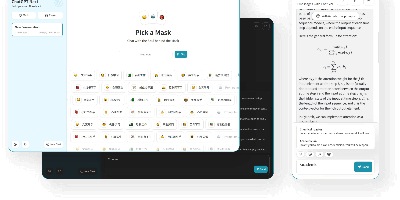
Thirteen-plus LLM providers, one unified client: NextChat (formerly ChatGPT-Next-Web) is an open-source AI chat interface built on Next.js that spans OpenAI GPT-4, Anthropic Claude, Google Gemini, DeepSeek, Groq, Azure endpoints, and self-hosted backends like Ollama, LocalAI, and RWKV-Runner. Its defining trait is minimalism - the first screen loads in about 100 KB, the desktop client is roughly 5 MB, and there is no database or user system to operate; chat history lives locally in the browser with optional WebDAV or UpStash Redis sync. The Mask system saves reusable prompt-template personas you can share and debug, long conversations auto-compress to fit context windows, and Markdown rendering covers LaTeX, Mermaid diagrams, and code highlighting with streaming responses. Plugins add web search and calculators, MCP support enables external tool calling, and Artifacts previews generated content in a separate pane. Ships as a web app, Docker image, and Tauri desktop builds for Windows, macOS, and Linux, translated into 20+ languages. MIT-licensed.