Open Source App Cloud Marketplace
Deploy, host, and scale with one click, at half the cost. Then customize with AI agents.
Laranode
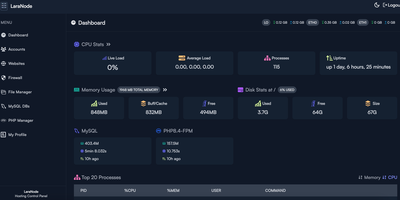
Built for self-hosted server deployments, Laranode transforms bare Linux installations into multi-tenant web hosting platforms with automated Let's Encrypt certificates and isolated PHP environments without recurring license fees. System administrators can provision isolated user accounts with dedicated document roots, configure custom domains, and deploy SSL certificates across all active websites in seconds. The integrated PHP manager enables per-site runtime isolation from legacy PHP 7.4 through cutting-edge PHP 8.5 releases, preventing version conflicts between separate production web applications. Operators can create MySQL databases, manage database users, inspect active connections, and adjust UFW firewall port access directly from the visual dashboard. An integrated browser-based file manager lets developers browse directories, edit configuration files, extract compressed archives, and modify file permissions without external FTP tools. Real-time telemetry monitors CPU utilization, memory consumption, disk capacity, and network traffic over customizable historical timeframes to catch bottlenecks early. Automated backup routines archive full accounts, individual websites, or specific databases to local storage, remote SFTP servers, or S3-compatible cloud object stores with point-in-time recovery verification. Running on a dedicated VPS on RepoCloud with guaranteed CPU, RAM, and SSD, full root SSH access, and a browser serial console. MIT licensed.

Hatchdoor
Hatchdoor gives your Markdown notes two front doors at once: a fast web interface for you, and an MCP endpoint where AI agents read and edit the very same vault. Point it at any folder of Markdown files, an existing Obsidian vault included, and it indexes everything into a disposable SQLite read model that rebuilds itself from your files if deleted. In the browser you browse folders, follow wikilinks that survive renames, explore backlinks and graph views, and search by keyword or meaning across every vault you mount. The live editor shows Markdown syntax only on the line you are editing and saves automatically, while concurrency checks refuse a save when the note changed underneath you. Agents connect with their own token and start read-only; turn writes on and Claude Code, Codex, Cursor, or Hermes can create, edit, move, and link notes through the same checked operations the interface uses. Saved queries in Obsidian's Bases syntax render as live tables, attachments preview inline, and optional git integration commits and pushes every change back to your vault's repository. Running on a dedicated VPS on RepoCloud with guaranteed CPU, RAM, and SSD, full root SSH access, and a browser serial console. AGPL-3.0 licensed.
osTicket
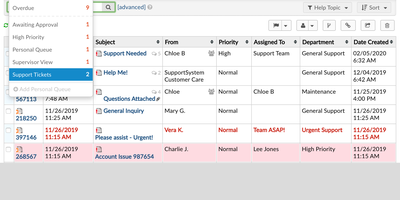
With nearly 3,900 GitHub stars, over 1,800 forks, and continuous development since 2013 culminating in the v1.18.4 release in June 2026, osTicket remains one of the most deployed open-source help desk systems worldwide, trusted by organizations from small businesses to universities and government agencies. The PHP backend on Apache or IIS with MySQL stores every ticket, response, and attachment while the web interface provides separate agent and customer portal views with role-based access control across departments, teams, and individual agents. Customers submit tickets through web forms, email piping, or phone-entry by agents, and configurable ticket filters automatically route incoming requests to the correct department, assign agents or teams, set priority levels, apply SLA plans, and trigger canned responses based on matching criteria including custom field values. Agent collision avoidance locks tickets during response composition to prevent duplicate replies, while SLA plans with business hour schedules track due dates and escalate overdue tickets automatically. Custom forms and fields let organizations capture structured data specific to each help topic — from IT asset tags to billing account numbers — with configurable required and internal-only visibility. The advanced search system with saved queries and CSV export enables reporting across all ticket metadata and custom fields. The customer portal provides ticket tracking, profile management, and knowledge base access. OAuth2 plugin support enables modern email authentication with Microsoft 365 and Google. Running on a dedicated VPS on RepoCloud with guaranteed CPU, RAM, and SSD, full root SSH access, and a browser serial console. GPL-2.0 licensed.
BeaverHabits
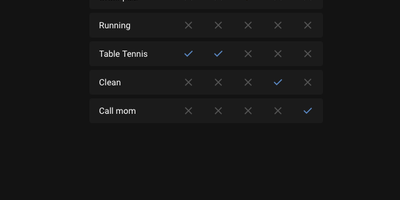
No targets, no gamification spiral, no motivational nagging: Beaver Habit Tracker is a self-hosted habit tracker deliberately built without "Goals". The core loop is honest: add habits, check them off each day, watch streaks accumulate on a calendar view. Its design follows behavioral-science basics - make it obvious (visual streak cues), make it attractive (progress is the motivator), make it satisfying (tracking becomes its own reward). Beyond the daily checklist it supports per-day notes intelligently grouped per habit, periodic habits, habit categories and tags, drag-to-reorder (manual or automatic), dark mode, and detailed streak and frequency views. Data lives where you choose: a single SQLite database or flat JSON files on a mounted volume, with JSON export and import for full portability. A REST API opens automation - community integrations already cover Stream Deck buttons, Home Assistant triggers, and CalDAV. The Python app ships as one Docker container with no external dependencies; environment variables tune everything from first day of week and index-page columns to iOS standalone PWA mode, and single-user setups can bypass the login entirely with TRUSTED_LOCAL_EMAIL. BSD-3-Clause licensed with no commercial restrictions - a well-executed single-purpose tool whose mobile PWA works anywhere a browser does.
OpenBudgeteer
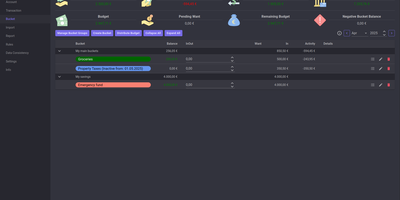
Allocating every incoming dollar into purposeful spending and savings buckets before transactions occur, OpenBudgeteer gives households complete financial control through a self-hosted zero-based envelope budgeting platform. Users can organize expenditures into customizable bucket hierarchies, grouping everyday living costs, debt repayments, and sinking funds into distinct categories with target balances. Financial planners can import bank statement files via flexible CSV mapping profiles that parse transaction descriptions, clean up merchant strings, and auto-assign records to corresponding expense buckets. The transaction registry provides split-transaction functionality, allowing shoppers to divide a single department store receipt across grocery, household, and clothing envelopes with exact currency precision. Interactive progress bars display bucket health throughout the billing month, signaling when spending velocity threatens allocated limits and calculating suggested contributions for forthcoming paychecks. Advanced forecasting reports plot multi-month net worth trajectories, track category expenditure patterns, and calculate burn rates against long-term retirement and emergency savings goals. Account balances synchronize across multiple physical checking accounts, credit cards, and cash wallets, ensuring total bucket balances reconcile perfectly against real bank reserves. Running on a dedicated VPS on RepoCloud with guaranteed CPU, RAM, and SSD, full root SSH access, and a browser serial console. AGPL v3 licensed.
Campfire Rust
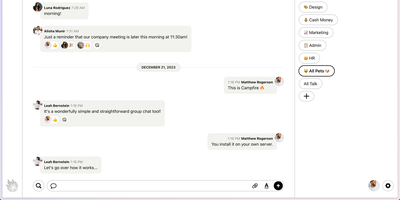
Your team chat can be one executable on your own server: Campfire Rust runs rooms, direct messages, attachments, and search as a single binary that replaces the whole Ruby, Puma, Redis, Resque, and Thruster stack. Create rooms with access controls for projects, departments, or a private board discussion, and keep direct messages beside them for quick questions. File attachments arrive with previews, mentions pull the right person into a thread, and search finds the decision someone made months ago. Web Push notifications reach browsers and phones, so a quiet room still finds its people when it matters. Chatbots connect through a simple HTTP API for sending and receiving messages and attachments, which makes Campfire a home for build alerts, deploy notices, and support pings. Existing Campfire installs upgrade in place because the Rust binary reads the same SQLite database, storage layout, and signed cookies, with no data migration and no mass sign-out. Automatic TLS with Let's Encrypt certificates, HTTP/2, and Action Cable-compatible WebSockets are built in, and the whole system works on air-gapped networks that never touch the internet. Run it as your primary chat, as a backup for the day a hosted service goes down, or as a walled garden for executives and events. Running on a dedicated VPS on RepoCloud with guaranteed CPU, RAM, and SSD, full root SSH access, and a browser serial console. MIT licensed.
Tinykit
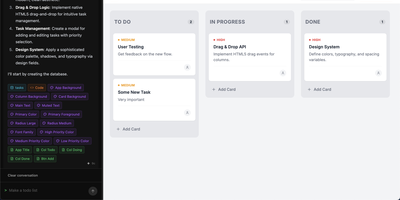
Describe the small app you keep wishing existed, and Tinykit builds it, gives it a database, and puts it live on your server. Tell it the tool you need and the agent writes the code, creates the data collections behind it, and wires the two together, then steps aside. The result is not a screenshot of an app; it is the app, served from your own server with its data syncing in real time and its files stored beside it. Open the built-in code editor to adjust the single file behind each app, or avoid code entirely: content fields let you edit text like a miniature CMS, and the design system panel restyles colors, fonts, and shadows visually. Every change takes a snapshot, so bold prompts carry an undo button and nothing is one bad idea away from lost. Hosts running errands for a household, an internal team, or a portfolio of side projects can keep adding apps, each reachable on its own domain, with token costs for every prompt shown in real money so the building budget is never a mystery. Running on a dedicated VPS on RepoCloud with guaranteed CPU, RAM, and SSD, full root SSH access, and a browser serial console. MIT licensed.
Nixopus
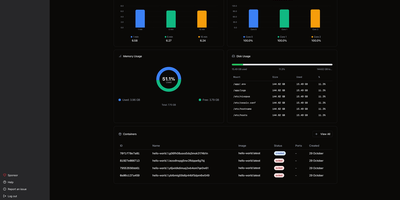
Tell an AI agent to deploy your app and watch it actually happen. Nixopus connects to your GitHub repo, analyzes the codebase to detect your framework, generates the right Docker configuration, resolves dependency conflicts, and ships the whole thing to your server with HTTPS enabled. When something breaks, the agent reads the logs, creates a pull request with a fix, and redeploys without waking you up. The chat interface lets you deploy, add custom domains, check logs, roll back, and troubleshoot in plain English from the web dashboard or directly from your VS Code or Cursor editor. Extensions bring one-click installs for 100+ self-hostable apps like Appwrite, Excalidraw, and Ollama, each showing you exactly what it runs on your server before installation. Connect multiple servers and monitor CPU, memory, disk, and running containers across your entire fleet from a single dashboard with draggable widget layouts. The built-in terminal opens SSH sessions right in the browser with split-pane support, so you can watch logs in one pane while running commands in another. Framework detection covers Next.js, Django, Rails, Go, FastAPI, and anything else that fits a container image. Every deployment gets automatic TLS via Caddy with Let's Encrypt certificates provisioned and renewed silently. Previous container images are retained so rollbacks skip the rebuild step entirely. Deploy on a dedicated VPS on RepoCloud with guaranteed CPU, RAM, and SSD, full root SSH access, and a browser serial console. AGPL-3.0 licensed.
Shelf
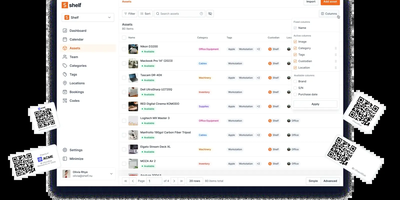
Shelf answers the three questions every equipment manager dreads — who has it, where is it, and when is it coming back — using QR-code-first tracking where every asset gets a unique scannable label, every handover is logged with timestamps and e-signed custody agreements, and every scan captures GPS coordinates displayed on a map. Built on React Router 7 with React 19, TypeScript 5, Prisma 6 ORM, and Tailwind CSS 3 with Radix UI components, the platform generates QR codes and barcodes (Code128, Code39, Datamatrix) printable on DYMO, Brother, and Zebra label printers. The custody system records every handover with user details and generates PDF custody agreements with e-signatures for high-value items, while a complete audit trail tracks responsibility from check-out to return. The visual booking calendar prevents double-bookings automatically, supports partial check-outs and returns with segmented lifecycle bars, and handles quantity-tracked consumables alongside individually serialized equipment. Asset Models enable bulk creation of identical items with shared defaults while maintaining individual QR codes and custody histories. Location tracking displays last-scanned GPS coordinates on MapTiler maps. Supabase Auth provides email and SSO authentication, pg-boss handles background job queuing, and Nodemailer delivers SMTP email. The Shelf Companion app on iOS and Android enables field scanning and bookings. Export Asset Inventory, Asset Distribution, and Custody Snapshot reports for compliance. Deploy via Docker with PostgreSQL and Supabase. Running on a dedicated VPS on RepoCloud with guaranteed CPU, RAM, and SSD, full root SSH access, and a browser serial console. AGPL v3.0 licensed.
PayMe
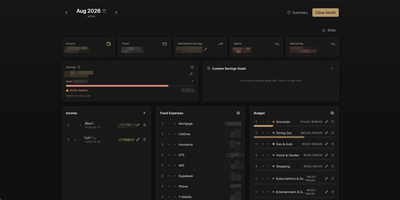
PayMe is a privacy-first personal finance dashboard that runs entirely on your own hardware with zero third-party service dependencies. The Rust backend compiled to a single binary serves a React 19 frontend built with Vite, TypeScript, and Tailwind CSS 4, storing all financial data in a local SQLite database that auto-migrates on startup. Monthly dashboards track income entries, fixed expenses like mortgage and utilities, and budget categories with real-time progress bars showing spending against configurable limits. The savings module includes goal tracking with percentage-based progress indicators, custom savings goals for targeted objectives, retirement savings projections with breakdown analysis, and projected savings calculations. Variance analysis compares actual spending against budgets across categories. Drag-and-drop reordering powered by dnd-kit lets you arrange income sources, expenses, and budget items to match your workflow. The interactive charts rendered by Recharts visualize spending trends, income patterns, and savings trajectories. Month-by-month navigation tracks financial history over time, while the Summary and Stats views aggregate data across periods. JWT-based authentication secures access, and the full OpenAPI Swagger documentation at the /swagger-ui endpoint exposes every API route for automation and integration. Docker Compose deployment creates a minimal image with the compiled Rust binary and static frontend assets, running on port 3001 behind nginx, Caddy, or Traefik reverse proxy with HTTPS. On RepoCloud, deploy PayMe on a dedicated VPS with persistent SQLite storage, root SSH access, and complete privacy over your household financial data, all under the MIT license.
Initiative
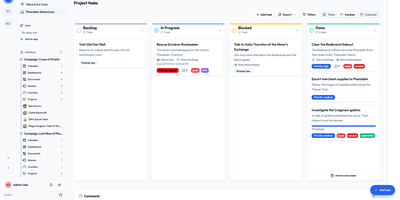
Initiative is a self-hosted, multi-tenant project management platform that organizes projects, tasks, collaborative documents, and schedules into strictly isolated community workspaces without enterprise complexity. Users create distinct communities where data remains strictly partitioned across separate database schemas, allowing agencies, volunteer groups, and gaming guilds to manage multiple client environments from a single deployment. Within each community, initiatives group related projects and documents while interactive drag-and-drop Kanban boards track task progression across custom columns, priorities, and deadlines. Integrated collaborative documents enable team members to co-author notes, project briefs, and meeting minutes in real time with threaded inline discussions and user mentions. Granular role-based permissions let administrators specify exact view and edit privileges down to individual items, while a recoverable trash system prevents accidental deletions from interrupting live operations. Curated marketplace apps supply customizable analytics dashboards, and optional bring-your-own-key artificial intelligence integrations generate task suggestions and summarize lengthy discussion threads. Running on a dedicated VPS on RepoCloud with guaranteed CPU, RAM, and SSD, full root SSH access, and a browser serial console. GNU AGPLv3 licensed.

Pretix
Pretix powers thousands of events and millions of ticket sales through a fully brandable ticket shop with interactive seating plans, 30+ payment providers, and a mobile check-in app for venue entry management. With over 2,400 GitHub stars, it delivers what organizations need when they demand full control over attendee data and revenue rather than surrendering margins to Eventbrite or Ticket Tailor. Built with Python and Django on PostgreSQL with Redis and Celery, the ticket shop adapts to your colors, logo, and domain with responsive design. The graphical seating plan editor handles everything from small cinemas to large stadiums, letting buyers choose seats mapped to pricing categories. Payment providers connect through plugins including Stripe, PayPal, Mollie for iDEAL and Bancontact, SEPA direct debit, and bank transfer with automatic CSV import for payment matching. The voucher engine generates bulk discount codes with usage limits, quota reservations, and automated email distribution. Waiting lists automatically offer released tickets to the next registrant with expiration deadlines. A built-in mini-CMS hosts event descriptions, terms of service, and static pages directly in the ticket shop. Customer accounts enable repeat buyers to check out faster across events. The pretixSCAN mobile app performs QR code check-in on Android and iOS with offline capability. Embeddable JavaScript widgets integrate the shop into any website. Plugin architecture extends functionality with output formats, analytics, and Apple Wallet passes. Deploy via Docker with the pretix/standalone image alongside PostgreSQL and Redis. Running on a dedicated VPS on RepoCloud with guaranteed CPU, RAM, and SSD, full root SSH access, and a browser serial console. AGPL-3.0 licensed.
Carbone
Document-generation code is the worst kind of code in your backlog - Carbone kills it. Its insight is separating design from data - templates are ordinary office documents (DOCX, ODT, XLSX, PPTX, HTML, even custom XML) built in LibreOffice, Microsoft Office, or Google Docs, with mustache-like markers such as {d.companyName} typed directly into the text. Send a template plus JSON from your existing APIs to the HTTP API, and Carbone returns the finished document - exported as-is or converted to PDF, XLSX, CSV, HTML, PNG, EPUB, and more via its integrated LibreOffice converter (Chromium and OnlyOffice engines are also supported for HTML-fidelity and office-format conversions). The template language goes well beyond substitution: loops over arrays render dynamic table rows, filters and aggregations run inside the document, and built-in formatters handle dates, numbers, currencies, timezones, and locales, with custom JavaScript formatters when needed. One template serves multiple languages through translation markers with auto-maintained translation files. The XML-agnostic engine means anything your document editor can design - pagination, headers, footers, nested tables, charts - survives generation intact, and Carbone guarantees no breaking changes in template syntax. Node.js-based, fast via multi-threaded LibreOffice conversion. The invoices, contracts, and reports your product owes its users become template edits, not sprints.
UWAS
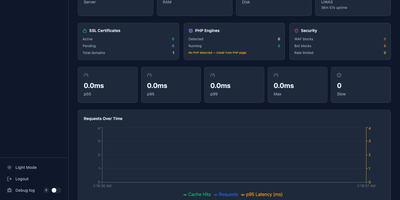
One 18 MB Go binary does the job of Apache, Nginx, Varnish, Caddy, and cPanel combined. Point UWAS at your /var/www directory and it auto-detects sites, provisions Let's Encrypt certificates, enables HTTP/3 via QUIC, and activates a two-tier caching engine with L1 memory shards and L2 disk storage, all before you write a single line of configuration. The React 19 admin dashboard provides 42 management pages for domains, PHP versions, databases, cron jobs, DNS records, file management, backup and restore, SFTP users, and uptime monitoring with real-time SSE updates. PHP sites run through FastCGI with connection pooling and full .htaccess compatibility, so WordPress, Laravel, and legacy applications work without migration effort. The built-in WAF catches SQL injection, XSS, path traversal, and shell exploits, while per-domain rate limiting and bandwidth caps protect against abuse. Reverse proxy mode supports five load balancing algorithms, circuit breakers, canary deployments, and mirroring for blue-green rollouts. Git deploy clones your repository, runs the build, checks health, and restarts the service with rollback on failure. An MCP server lets AI agents manage domains, cache, and deployments through natural language. The Nginx and Apache migration CLI converts existing configurations to UWAS format automatically. Deploy on a dedicated VPS on RepoCloud with guaranteed CPU, RAM, and SSD, full root SSH access, and a browser serial console. AGPL-3.0 licensed.
Talivia
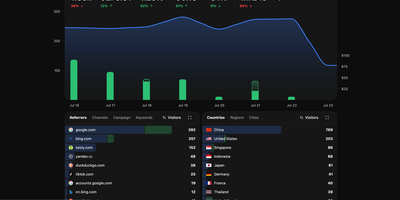
Founders do not need another chart of pageviews; they need to know which visit became money, and Talivia is a self-hosted, revenue-first analytics platform that fuses website traffic with payment data so every metric answers in dollars. Connect Stripe, LemonSqueezy, Polar, Dodo, or Yolfi, and the dashboard pairs visitor counts with revenue, conversion rate, revenue per visitor, refunds, and disputes, so a traffic spike that never buys anything stops masquerading as success. Referrers, campaigns, keywords, and countries are ranked by the money they produce, which reduces budget decisions to one question: which channel brought customers who actually paid? When a page underperforms, session replay shows what visitors actually did there and the moment they gave up, so you debug journeys instead of guessing from aggregates. Events and multi-step funnels trace the path from landing page to checkout, while bot traffic detection stops crawlers from inflating your conversion statistics. The live visitor feed shows who is browsing right now, with country, device, browser, acquisition source, events, and spend for each session as it unfolds. Public links publish any dashboard as a read-only page for investors or clients, and teammates join the workspace with their own accounts when they need to dig deeper. Visitors, replays, and payment records all stay in your own PostgreSQL database, so customer journeys never pass through a third-party analytics cloud. Running on a dedicated VPS on RepoCloud with guaranteed CPU, RAM, and SSD, full root SSH access, and a browser serial console. MIT licensed.
Uptrace
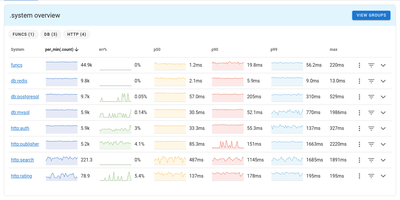
Pinpoint distributed system bottlenecks across polyglot microservices using Uptrace, an open telemetry monitoring platform that correlates traces, metrics, and logs inside a unified diagnostic dashboard. Engineers can track end-to-end request flows across polyglot microservices, inspecting database queries, third-party API calls, and internal function calls with sub-millisecond precision. The platform automatically aggregates spans into high-level latency percentiles, highlighting p50, p90, and p99 bottlenecks while calculating baseline error rates across production deployments. Integrated log correlation links log entries directly to parent trace spans, eliminating the friction of manual search across separate monitoring tools during active outages. You can construct custom dashboard views using a visual query builder, monitor cluster nodes, and map out upstream and downstream service dependencies with interactive topological graphs. Automated alerting channels notify on-call teams via Slack, Telegram, webhooks, or email whenever error budgets or metric thresholds trigger an incident. Running on a dedicated VPS on RepoCloud with guaranteed CPU, RAM, and SSD, full root SSH access, and a browser serial console. AGPL-3.0 licensed.
Meteroid
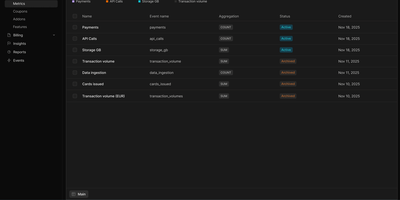
Meteroid delivers the billing infrastructure that SaaS companies need when Stripe Billing gets too rigid and building in-house gets too expensive. The Rust backend ingests usage events via REST API or Kafka with deduplication by event ID and customer ID, storing time-series data in ClickHouse for sub-second aggregation queries across billions of events. Billable metrics transform raw events — API calls, compute time, tokens, storage, transactions — into accurate charges using configurable aggregation functions, dimensions, and filters without pre-aggregation. The plan builder supports any pricing structure: flat rate, per-unit, tiered graduated, tiered volume, package, and hybrid combinations with multiple price components per plan. Versioned plans enable pricing changes without affecting existing subscribers through grandfathering, while experiments let you A/B test pricing with controlled rollouts. Subscription management handles the full lifecycle — creation, upgrades, downgrades, mid-cycle proration, scheduled changes, and cancellation with configurable grace periods. The TypeScript frontend provides a complete web dashboard for managing customers, plans, subscriptions, invoices, and revenue analytics with MRR tracking, churn analysis, and cohort insights. Automated invoice generation handles complex scenarios including usage-based line items, credits, discounts, and tax calculations with PDF rendering. Stripe Connect integration enables payment collection directly through the platform. Running on a dedicated VPS on RepoCloud with guaranteed CPU, RAM, and SSD, full root SSH access, and a browser serial console. AGPL-3.0 licensed.
Azimutt
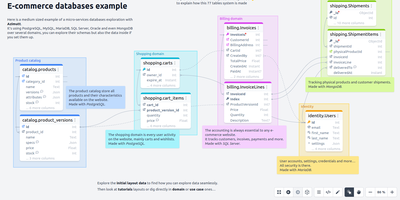
Inheriting a sprawling database with hundreds of undocumented tables usually means weeks of guesswork, unless you open it in Azimutt to visually map schemas, trace relationships, and inspect live rows in one workspace. Instead of dumping every table onto a cluttered canvas that crashes your browser, the visual explorer starts clean so you can search across entity names, column types, and SQL comments to reveal only the tables relevant to your investigation. Clicking foreign-key or primary-key indicators expands incoming and outgoing relations step by step, while the graph path-finder automatically calculates the shortest join route between any two distant entities. When debugging production issues or answering support tickets, you can query live records across PostgreSQL, MySQL, MariaDB, SQL Server, Oracle, SQLite, MongoDB, Couchbase, Snowflake, and BigQuery, then click directly through foreign keys in the result rows to follow data lineage visually. Architects and developers also design new schemas at typing speed using Azimutt Markup Language (AML), attach contextual markdown notes, tags, and memos to saved layouts for team onboarding, and run automated schema analysis that flags missing primary keys, implicit foreign keys, inconsistent column types, and oversized tables. Running on a dedicated VPS on RepoCloud with guaranteed CPU, RAM, and SSD, full root SSH access, and a browser serial console. MIT licensed.