Open Source App Cloud Marketplace
Deploy, host, and scale with one click, at half the cost. Then customize with AI agents.
TRIP
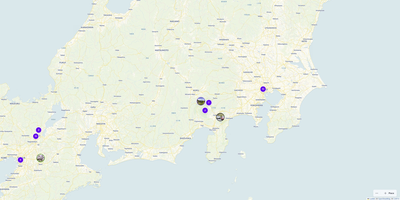
Plan multi-day expeditions, map custom waypoints, and coordinate shared group travel itineraries with TRIP, a private self-hosted journey management platform free from commercial tracking. Travelers can drop custom pins across global topographic or satellite maps, tagging locations with categories, visit durations, cost estimates, accessibility notes, and pet-friendly attributes. The visual trip builder organizes individual stops into ordered daily schedules, helping you calculate travel intervals and rearrange destination sequences using intuitive drag-and-drop tools. You can attach reference photos, booking confirmations, external links, and packing checklists directly to each itinerary milestone. Shared workspace controls enable travel companions to collaborate on upcoming road trips, leave comments on specific attractions, and coordinate shared responsibilities in real time. Dynamic filtering lets you isolate culinary destinations, outdoor hikes, or cultural landmarks by budget and travel style. Offline caching ensures your navigational routes and saved coordinates remain accessible in remote backcountry areas with spotty cellular coverage. Running on a dedicated VPS on RepoCloud with guaranteed CPU, RAM, and SSD, full root SSH access, and a browser serial console. MIT licensed.
Aptabase
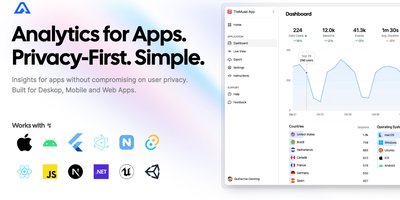
Web analytics tools ignore native mobile, desktop, and game apps; Aptabase was built for exactly those. If Firebase Analytics would force a privacy-policy footnote you don't want to write, this is the alternative - session-based metrics with no cookies, no IDFA or GAID, no device fingerprinting, and a daily-rotated salt that makes cross-day re-identification mathematically impossible. That design means GDPR, CCPA, and PECR compliance out of the box and "Data Not Collected" App Store privacy labels without ATT prompts. The SDK coverage is the widest in its category: eleven first-party libraries spanning Swift, Kotlin, Flutter, React Native, Tauri, Electron, .NET MAUI, NativeScript, Unity, Unreal Engine, and JavaScript for web - each MIT-licensed, following platform conventions, and accepting a custom host parameter that points at your instance. Integration is minutes: initialize with an app key, call trackEvent with optional properties, and the dashboard shows sessions, events, app versions, OS breakdowns, and country-level geography. The self-hosted stack is a .NET server over PostgreSQL for metadata and ClickHouse for high-volume event ingestion, giving cloud-parity features under an AGPL license. For indie iOS/Android apps, Electron and Tauri tools, and Unity or Unreal games, it replaces Firebase without the Google entanglement.
Vince
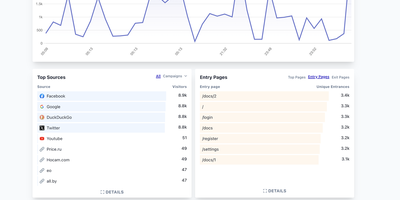
Own every visitor metric without cookies, consent banners, or external database clusters through Vince, a self-hosted web analytics platform engineered for fast multi-site traffic intelligence. Zero cookies. Sub-kilobyte tracking script. Unlimited domains and events. You can point existing Plausible Analytics tracker snippets directly at your instance and immediately begin recording unique visitors, total sessions, pageviews, views per visit, bounce rates, and visit durations across all of your properties. Interactive dashboards break down incoming traffic by referral sources, UTM campaign parameters, entry and exit pages, countries, regions, cities, device categories, browsers, and operating systems. Behavior analytics go beyond simple pageviews by capturing outbound link clicks, file downloads, 404 error pages, pageview goals, and custom event conversions with custom properties. Period-over-period comparisons let you benchmark current traffic and conversion rates against previous date ranges or custom calendar intervals with a single click. Dashboards stay private by default, but you can open public stats views or generate unique, optionally password-protected shared links for clients and stakeholders, as well as query metrics programmatically over the REST API. Running on a dedicated VPS on RepoCloud with guaranteed CPU, RAM, and SSD, full root SSH access, and a browser serial console. AGPL-3.0 licensed.
ISMS Builder
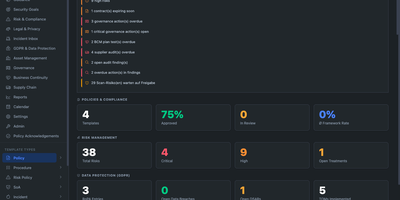
For teams that need ISO 27001, NIS2, and GDPR evidence without handing compliance data to a SaaS vendor, ISMS Builder is a self-hosted information security management system for policies, risks, assets, audits, and incidents. Compliance managers move policies from draft through review to approved and archived, and recipients confirm each one through a token link that needs no login. Security officers close gaps in a Statement of Applicability that cross-maps BSI IT-Grundschutz, NIS2, EUCS, the EU AI Act, and the Cyber Resilience Act, with ISO 27001 controls imported from their own licensed copy. Risk owners keep treatment plans, turn Greenbone and OpenVAS reports into risk drafts, and score assets for confidentiality, integrity, availability, and authenticity. Data protection officers run records of processing, processor agreements, impact assessments, data subject requests, a 72-hour timer, and a deletion log with email alerts. The CISO inbox collects incidents, including reports from a public form that needs no login, beside a 30-item NIS2 Article 21 checklist and Article 23 deadline alerts. Auditors work from a findings register, a compliance matrix, and an exportable audit log of every create, update, delete, and login. Administrators enforce TOTP two-factor sign-in, choose among German, English, French, and Dutch, run semantic search locally through Ollama, and publish approved policies to Nextcloud or ownCloud as PDFs. Running on a dedicated VPS on RepoCloud with guaranteed CPU, RAM, and SSD, full root SSH access, and a browser serial console. AGPL-3.0 licensed.
VoucherVault
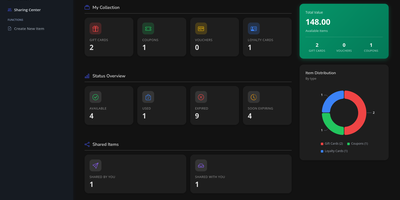
Stop losing money to forgotten paper gift cards and expired retail coupons by centralizing every voucher, loyalty barcode, and store credit inside VoucherVault, a self-hosted digital wallet accessible from any browser or mobile device. Point your phone camera at physical cards during item creation to scan 1D barcodes and 2D QR codes with automatic format detection, or upload original PDF receipts and image attachments directly to each entry. At the checkout register, pull up high-contrast QR codes and scannable barcodes instantly, even inside underground stores without cellular reception thanks to the manual 48-hour offline caching mode. Gift card balances update automatically as you log individual partial redemptions in the per-item transaction ledger. Configurable Apprise notification rules alert you 30 days and 7 days before any voucher expires across Telegram, Discord, Gotify, Ntfy, or email. Households and teams can share specific cards between accounts while keeping personal items private, and administrators can enable OpenID Connect single sign-on for frictionless login. Multi-currency conversion automatically calculates portfolio totals across international vouchers. A built-in REST API endpoint even exposes live portfolio counts and value statistics directly to Home Assistant dashboards. Running on a dedicated VPS on RepoCloud with guaranteed CPU, RAM, and SSD, full root SSH access, and a browser serial console. GPL-3.0 licensed.
Wiredoor
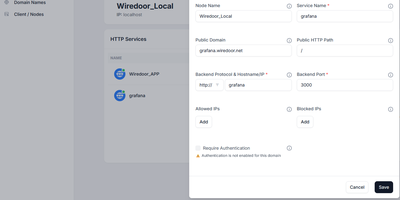
A self-hosted front door for apps that live on home labs, office LANs, and private clusters, Wiredoor publishes them to the internet without opening a single inbound port on the private side. The Wiredoor CLI on each remote machine dials out to the server over an encrypted WireGuard tunnel. Web apps and APIs are routed by domain and path, WebSocket traffic included, while TCP and UDP services such as SSH or Redis get a public port of their own. Public domains receive Let's Encrypt certificates, internal names fall back to self-signed ones, and Cloudflare or GoDaddy credentials let the server create DNS records itself. Any web route can demand OAuth2 sign-in with an email allow list and a few open paths, and every protocol accepts IP allow lists. Gateway nodes stretch one tunnel across a Docker network, Kubernetes cluster, or private subnet, so a single link serves many backends. Services can be switched off or given an expiry such as 30 minutes, 2 hours, or 1 day. The dashboard shows which nodes are connected and whether their services are enabled, while the CLI creates, enables, and disables services from a terminal. Optional Prometheus and Grafana views chart traffic and tunnel peers, and CrowdSec can block abusive addresses. Running on a dedicated VPS on RepoCloud with guaranteed CPU, RAM, and SSD, full root SSH access, and a browser serial console. Apache-2.0 licensed.

BookLogr
For avid readers who want to catalog their home bookshelves and track annual reading progress without handing personal habits to commercial social networks, BookLogr delivers a self-hosted personal library and reading tracker that replaces Goodreads and The StoryGraph. Searching by title, ISBN-10, or ISBN-13 pulls book covers, author names, page counts, and descriptions directly from OpenLibrary, while manual entry and user-defined custom fields let you record text, numbers, dates, selections, or boolean attributes for rare and indie editions. Configurable library tabs organize titles across Reading, To Be Read, Already Read, Did Not Finish, and All views with instant author filtering. As you read, you can update your current page number or completion percentage, log start and finish dates across multiple re-reads, and rate completed books on a granular 0.5 to 5.0 star scale. Readers can capture page-linked notes and favorite quotes, keeping reflections private or publishing them to a dedicated Notes and Quotes feed on a shareable public profile. Automated Mastodon integration posts reading milestones to the fediverse, while OpenID Connect single sign-on and single-user mode adapt the workspace for households or solo collectors. Built-in Goodreads CSV import and one-click exports to CSV, JSON, and HTML guarantee complete data portability. Running on a dedicated VPS on RepoCloud with guaranteed CPU, RAM, and SSD, full root SSH access, and a browser serial console. Apache-2.0 licensed.
MIND
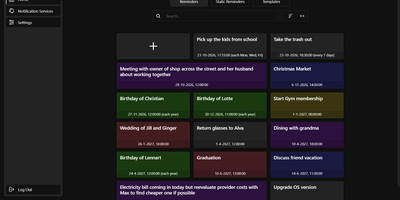
Unlike a calendar alert that rings on one phone, a MIND reminder reaches any of 100+ services, including email, Pushbullet, BlueSky, Cisco Webex Teams, and SMS gateways, from a self-hosted reminder app that you control. Normal reminders fire with second precision once or repeat every few days, once a year, on chosen weekdays, or on a custom cron schedule, while static reminders wait for a button press, so a single tap can tell the family that you are running late. Templates store colour, title, services, and text for fast creation, and the colour-coded library can be searched and sorted, with each reminder enabled, disabled, or tested on demand. Time zone changes, including daylight saving shifts, are accounted for, and sends that fail on a connection error are retried every two minutes until they succeed. Several users can share one instance: the admin panel handles accounts and registration, login lifetime, reverse-proxy URL prefix, debug logs, and scheduled database backups that can be exported and imported, and sign-in supports two-factor authentication. A documented REST API covers reminders, templates, notification services, and static triggers, and the web interface adapts to phone screens. Running on a dedicated VPS on RepoCloud with guaranteed CPU, RAM, and SSD, full root SSH access, and a browser serial console. GPL-3.0 licensed.
Hasty Paste
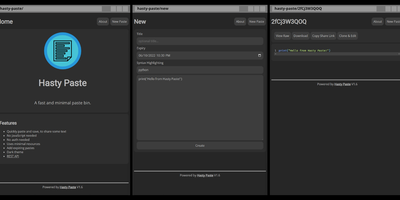
Paste some text, hit save, share the link - Hasty Paste is a fast, minimal pastebin written in Python on the async Quart framework, named, by its author's own admission, "because you use it so fast without a care in the world." No accounts, no authentication, no friction - built for the everyday case of handing a debug log, config snippet, or stack trace to someone in tech support or a chat channel. Pastes get randomly generated IDs, with an optional "long" ID mode that makes brute-force URL guessing impractical, and expiry times ensure throwaway content actually gets thrown away. Optional Pygments syntax highlighting makes code readable, a dark theme spares your eyes, and the whole interface works without JavaScript - it renders in terminal browsers and under the strictest script blockers. Storage is a custom flat-file system (no database), caching runs internally or through Redis for busier instances, and a REST API plus the companion "Hastily Paste It" CLI script enable piping command output straight into a paste from the terminal. The Alpine-based Docker image is tiny, resource usage is minimal, and the license is AGPL.

Claper
Passive slide decks put audiences to sleep, which is why Claper turns any presentation into a two-way live session where every attendee can vote in polls, submit questions, and react in real time from their phone. Speakers upload existing PDF or PowerPoint decks directly into the web studio and interleave interactive poll, quiz, form, and web embed slides between their static pages without rebuilding presentations from scratch. Conference organizers and educators share a short join code or QR link so hundreds of participants can enter the attendee room instantly from any mobile browser without installing an app or creating an account. During the talk, the presenter console displays incoming audience questions sorted by upvote popularity, alongside moderation controls to approve, pin, hide, or mark inquiries as answered on the main screen. Live polling supports multiple-choice, rating scale, and open-text prompts that animate into real-time bar charts and percentage breakdowns as votes arrive, while timed quizzes grade participant responses automatically. Integrated real-time speech transcription generates live captions and searchable session transcripts so international and hearing-impaired attendees can follow every spoken word. Universities and corporate training teams connect Claper directly to Moodle or OpenID Connect identity providers via LTI 1.3 to synchronize student rosters, push quiz scores to gradebooks, and export complete CSV engagement reports after every session. Running on a dedicated VPS on RepoCloud with guaranteed CPU, RAM, and SSD, full root SSH access, and a browser serial console. AGPL-3.0 licensed.
Yaade
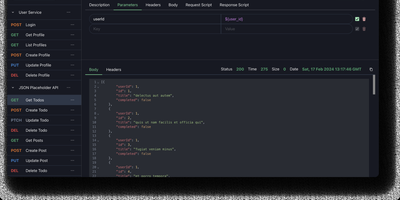
Yet Another API Development Environment delivers a self-hosted alternative to Postman designed from the ground up for teams that need secure, collaborative API development without sending sensitive credentials through third-party cloud services. The multi-user system manages team members with role-based permissions and supports external authentication through OAuth2 and OIDC providers, while all data persists in an H2 file-based database that survives container and server restarts. REST and WebSocket request testing includes environment variable substitution, request chaining, and Markdown documentation for each endpoint. The JavaScript scripting engine runs request and response scripts for automated testing and data extraction, with cron job scheduling and API-triggered execution for continuous integration workflows. Collections import directly from OpenAPI specifications and Postman exports, while outbound export generates request code in multiple languages and frameworks. The browser extension proxy for Chrome and Firefox routes requests through the user's browser to bypass CORS restrictions when testing localhost and internal APIs, with an alternative server-side proxy for headless environments. Single-file data import and export simplifies backup and migration between instances. The React and Vite frontend ships with dark mode enabled by default. Running on a dedicated VPS on RepoCloud with guaranteed CPU, RAM, and SSD, full root SSH access, and a browser serial console. MIT licensed.
Noisedash
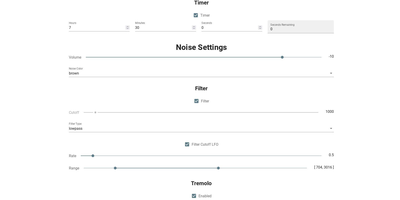
Noisedash is a self-hosted soundscape studio that generates the ambient noise you wish your surroundings made, from steady fan hums to layered rainstorms, and plays it in any browser. Start from white, pink, or brown noise and shape it with filters, LFOs, and effects until the hum in your head goes quiet. Upload your own recordings of rain, wind, thunder, or a café at noon, set loop points and fade-ins, and drop them into the mix as a continuous bed or an occasional sprinkle. Add reverb to a sample, let a thunderclap wander in every few minutes instead of looping, and balance every layer until the room feels right. Save the result as a noise profile, keep one for sleeping and another for deep work, and switch between them with a tap. Profiles travel: export one to share with a friend, import theirs, or record the generated audio to take the soundscape somewhere else entirely. An instance can host the whole household, with admin tools managing users, and the interface works as happily on a phone beside the bed as on a desktop. Running on a dedicated VPS on RepoCloud with guaranteed CPU, RAM, and SSD, full root SSH access, and a browser serial console. AGPL-3.0 licensed.

Hammond
When Clarkson, the once-popular fuel logger, stopped receiving updates, Hammond stepped in as its logical successor - a self-hosted vehicle expense tracker. Written in Go with a Vue.js interface and SQLite storage - a single lightweight container, no external database - it tracks every cost your vehicles generate: fuel fill-ups with cost, volume, and odometer readings; maintenance and repairs; and arbitrary other expenses, each attachable with photos and documents stored against the vehicle. The multi-user, multi-vehicle design is what sets it apart from phone apps: a household or small business adds all its vehicles and all its drivers, shares vehicles across users, and every fill-up lands in one ledger no matter who was driving. The Quick Entries feature respects how expenses actually happen - snap a photo of the receipt or pump screen at the gas station, then complete the structured entry later when you have a minute. Reporting works at both the vehicle level (cost per distance, fuel economy trends) and across the whole fleet. Migration matters here: importers for Clarkson, Fuelly, and Drivvo bring years of fill-up history along, so switching does not mean starting your data over.
Zusam
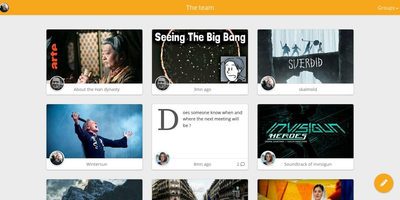
From the German "zusammen," together: Zusam is a private social space for a group of friends - a self-hosted alternative to the family WhatsApp group or the friends Facebook group, with no ads, algorithms, or data harvesting in between. The AGPLv3 project is deliberately modest in scope and stack: a Symfony PHP backend exposing a REST API over SQLite, with a lightweight Preact single-page frontend, designed for a low server footprint that runs comfortably on small hardware. Groups post messages into shared feeds that handle real life well: video and image uploads (with FFmpeg processing), photo albums for trips and events, and rich link previews with inline embeds for YouTube, Vimeo, Imgur, SoundCloud, Twitch, and Bandcamp - so sharing a song or a clip looks the way it should. When something needs to leave the circle, public link generation exposes a single message to non-members without opening the group. The interface is fully responsive and mobile-friendly, targeting Firefox ESR and recent Chrome. It is the small-web answer to a real question: where does a group chat's shared history live when you want it owned by the group instead of a platform?
Rustunnel
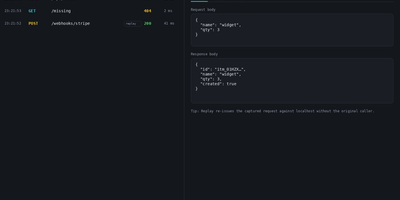
Rustunnel turns a service running on your laptop or private network into a public HTTPS, TCP, or UDP endpoint without opening inbound ports on the machine where it lives. Point the client at a local port and share the public address for webhook testing, a quick demo, an AI agent tool, SSH access, a game server, or an IoT device that cannot accept inbound connections. Give tunnels custom subdomains on your own wildcard domain, terminate HTTPS with automatic Let's Encrypt certificates, and keep client traffic encrypted from edge to local service. Put several backends behind one subdomain or TCP port and let TCP or HTTP health probes remove sick members before visitors hit them. When two peers can reach each other directly, start a P2P tunnel with NAT hole punching and QUIC, with relay fallback when the direct path fails. Watch sessions, tunnel health, traffic, and request logs from the live dashboard, inspect headers and bodies in the local request inspector, and replay a captured call while debugging a webhook. Manage tunnels, tokens, groups, captured requests, and history through the REST API, scrape Prometheus metrics, review audit logs, or let an MCP-compatible coding assistant create and close tunnels in plain language. Running on a dedicated VPS on RepoCloud with guaranteed CPU, RAM, and SSD, full root SSH access, and a browser serial console. AGPL-3.0 licensed.
ZaneOps
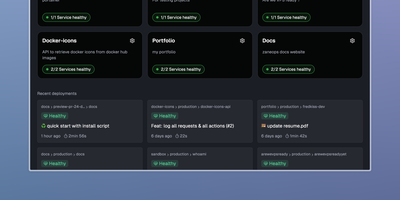
Shipping a Git repository to a live HTTPS URL takes one dashboard and one server with ZaneOps, an open-source alternative to Heroku, Railway, and Render. Linked GitHub or GitLab repositories build with a Dockerfile, Nixpacks, Railpack, or a static directory builder. Deploys start by hand, on git push, or from a CI webhook. Blue/green releases keep the previous version serving traffic while the new one starts. Each pull request or merge request can open its own preview environment, and the API can create one on demand. Configuration edits queue up as changes that you review before a new version deploys. A pasted docker-compose.yml or a ready-made template (Postgres, Redis, WordPress) deploys a whole stack with blue/green rollouts. Every domain gets a free SSL certificate that renews itself. Wildcard hosts, permanent or temporary redirects, and several services under one domain all work. Runtime logs, request logs, metrics, and health checks gather in the dashboard. Services get CPU and memory limits and volumes, and environment variables import or export as .env files. Viewer, Member, Admin, and Owner roles decide who can see and change what; the free tier allows one workspace and three users. A web terminal opens a shell inside any running deployment, and a second one reaches the server itself over SSH. Running on a dedicated VPS on RepoCloud with guaranteed CPU, RAM, and SSD, full root SSH access, and a browser serial console. MIT licensed.

Surmai
When a family vacation or group expedition spans multiple airlines, hotels, rental cars, and currencies, Surmai brings every reservation and shared cost into one collaborative travel planner. Each trip breaks down into dedicated sections for transportation legs, lodging stays, daily activities, and travel notes. Confirmation codes, terminal numbers, departure times, and street addresses stay right where everyone in your party can find them. Built-in airport, city, and airline directories auto-complete flight routes in seconds, or you can forward booking confirmation emails directly into an active trip for automatic parsing. The chronological itinerary view then weaves flights, hotel check-ins, and excursions into a clean day-by-day timeline so your group can spot layover gaps immediately. Boarding passes, train tickets, and PDF vouchers live inside a central attachment vault. Installing the Progressive Web App caches your entire itinerary and travel documents on your phone for offline viewing at airport gates or remote trailheads. A built-in expense ledger logs shared purchases across multiple currencies so nobody has to guess who paid for dinner. Administrators can invite fellow travelers over SMTP email, enable OAuth2 or OpenID Connect login with Authentik, Keycloak, Google, or Microsoft, and replicate backups continuously to S3-compatible object storage. Running on a dedicated VPS on RepoCloud with guaranteed CPU, RAM, and SSD, full root SSH access, and a browser serial console. MIT licensed.
Atlas
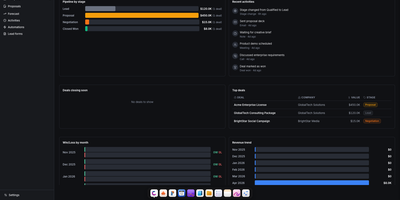
Atlas delivers a complete business operations platform in a single Docker Compose deployment, replacing the need for separate CRM, HRM, project management, invoicing, and file storage subscriptions. The CRM module provides pipeline management with Kanban views, contacts, companies, deals, leads, forecasting, saved views, and web-to-lead forms with Gmail integration for per-user email tracking inside deal timelines. HRM handles employees, departments, org charts, leave management, and attendance tracking. The invoicing system generates professional invoices with recurring billing, customizable templates, and payment tracking. Agreements provides PDF contract generation with legally-binding e-signatures, sequential signing workflows, counterparty linking, audit trails, and automated reminders. Projects integrates time tracking, billing, client management, budgets, and reporting in one view. Drive offers file storage with versioning, sharing, comments, activity logs, and password-protected links with Google Drive import and export. The calendar syncs bidirectionally with Google Calendar across month, week, day, year, and agenda views. Write provides rich text documents with cover images, comments, and templates, while Draw adds an Excalidraw-based whiteboard canvas with PDF export and presentation mode. The platform supports five languages, multi-tenant isolation, role-based permissions, and includes an Odoo importer that ingests res.partner, crm.lead, and CRM activity CSV exports for migration. Built on React, TypeScript, Vite, TanStack Query, and Zustand on the frontend with Express, Drizzle ORM, PostgreSQL, Redis, and BullMQ on the backend. Running on a dedicated VPS on RepoCloud with guaranteed CPU, RAM, and SSD, full root SSH access, and a browser serial console. AGPL-3.0 licensed.