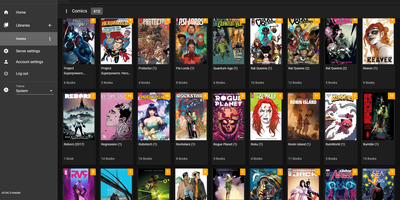
Komga
What Jellyfin is for video, Komga is for comics, manga, BDs, magazines, and eBooks: point it at folders of CBZ, CBR, CBT, PDF, and EPUB files and it becomes a proper library with cover art, embedded metadata import, and per-user reading progress. The responsive web reader handles multiple reading modes - left-to-right for western comics, right-to-left for manga, webtoon scrolling - while collections and read lists organize crossovers and story arcs, with ComicRack .cbl read list import for existing curation. Its openness is the real differentiator: OPDS v1.2 and v2.0 feeds serve virtually every reader app (Panels, Moon+ Reader, Mihon/Tachiyomi, KyBook), with OpenSearch and page-streaming extensions so mobile apps fetch pages on demand instead of whole archives. E-ink support is built in, not bolted on - Kobo devices sync directly against Komga instead of Kobo's servers, with two-way read progress, on-the-fly KEPUB conversion via Kepubify, and optional proxying so official Kobo purchases still work; KOReader sync covers everything else. Multi-user management brings per-library access control, age restrictions, and label restrictions for family setups. Housekeeping tools detect duplicate files and duplicate pages, and a REST API feeds a healthy ecosystem of community scripts. Runs from a single Docker container with embedded SQLite.
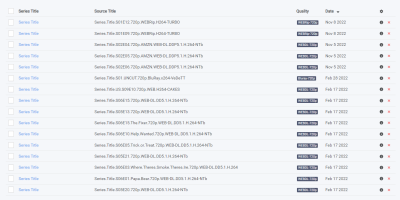
Sonarr
Add a series once, set a quality profile, and everything downstream is automated: Sonarr is the smart PVR for Usenet and BitTorrent users. It monitors RSS feeds from your indexers, detects new episodes the moment they release, sends matching grabs to SABnzbd, NZBGet, qBittorrent, Deluge, or another download client, then renames files with fully configurable templates, sorts them into consistent folder structures, and notifies Plex, Kodi, or Jellyfin to update the library. Quality profiles define what's acceptable (HDTV, WEB-DL, Blu-ray, up to 4K) and an upgrade cutoff - when a better release appears, Sonarr replaces the existing file automatically, stepping from HDTV to WEB-DL to Blu-ray until the cutoff is met. Custom formats add weighted scoring for finer-grained release selection, with community-maintained TRaSH Guides presets as the widely accepted defaults. Failed downloads are handled without intervention: Sonarr retries with another release, and manual search shows every candidate with the reasons any was rejected. It scans existing libraries for missing episodes, fully supports specials, multi-episode files, and daily and anime series types, and a calendar view shows upcoming episodes across every tracked show. Runs on Linux, Windows, macOS, and Raspberry Pi, and pairs naturally with Prowlarr for centralized indexer management.
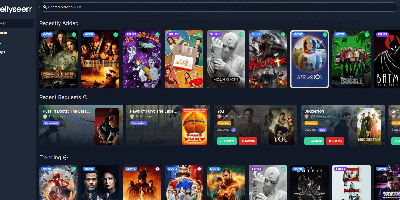
Jellyseerr
Browse trending titles, search anything, request it in two clicks: Jellyseerr gives Jellyfin, Emby, and Plex users a beautiful storefront for the media library. Born as the Overseerr fork that added Jellyfin and Emby support (the projects have since unified as Seerr), it handles the full request lifecycle - users authenticate with their existing media-server accounts, pick individual seasons or movies in a clean interface, and admins approve or decline from a simple queue, including on mobile. Approved requests flow straight to Sonarr and Radarr, which handle acquisition automatically, with support for separate 4K server instances. Regular library scans keep availability accurate, so users see instantly what already exists instead of requesting duplicates. A granular permission system controls who can request what - auto-approval for trusted users, quotas and limits elsewhere - and override rules adjust request routing by user, tag, or other conditions. Watchlist and blocklist functions curate discovery, notifications reach email, Discord, Telegram, Slack, Pushover, and Pushbullet, and both PostgreSQL and SQLite are supported. Localized into many languages, it turns "can you add this movie?" texts into a self-service system that runs itself.
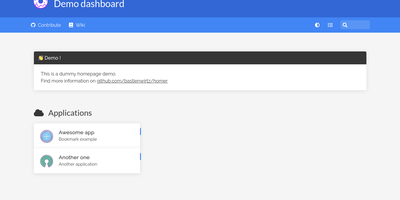
Homer
"Dead simple static HOMepage for your servER" - Homer's name is the spec. It is a fully static HTML/JS dashboard driven by one YAML file (assets/config.yml): list your services in groups with names, icons, tags, and URLs, and Homer renders a clean, fast landing page for everything you self-host. Because there is no backend, no database, and nothing to maintain, the container is tiny and effectively zero-maintenance - the entire operational surface is a text file you can version-control alongside your infrastructure. Despite the minimalism, the feature set is genuinely useful: smart cards add live data to service tiles via a type key - Pi-hole block statistics, AdGuard Home status, Jellyfin activity, Gatus and Home Assistant states, and dozens more integrations, with configurable periodic refresh. Fuzzy search jumps to any service as you type, keyboard shortcuts drive navigation, and multi-page support with item grouping keeps large homelabs organized. Theming covers built-in light and dark modes plus full custom CSS, tags get color-coded styles, and the whole dashboard installs as a PWA on phones and tablets. Icons come from Font Awesome or your own images. If Dashy is the maximalist dashboard and Homarr the drag-and-drop one, Homer is the minimalist: one YAML file, instant loads, and nothing that can break at 2 a.m.
Homebox
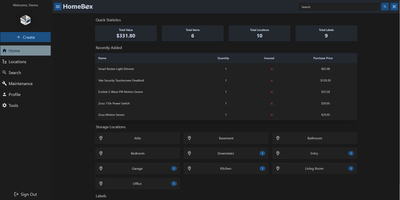
With over 7,000 GitHub stars and active community maintenance through version 0.26.0 released in June 2026, Homebox fills the gap between inadequate spreadsheets and overcomplicated enterprise asset management by providing a purpose-built inventory system designed specifically for home users, families, and small groups. The Go backend with SQLite storage deploys as a single Docker container consuming under 50MB of RAM at idle, running on hardware as modest as a Raspberry Pi while the responsive web interface adapts seamlessly across desktops, tablets, and smartphones. The entity-based architecture introduced in v0.26 unifies items and locations into a shared structure supporting custom fields, attachments, entity types, and reusable templates for consistent data entry across inventory categories. QR code generation creates printable labels that scan with any smartphone camera to instantly display item details, photos, serial numbers, and associated documents. Warranty tracking records purchase dates, prices, and expiration dates while maintenance scheduling sends reminders for recurring service tasks. Location hierarchies organize items spatially with nested sub-locations, and flexible label tagging enables cross-cutting categorization beyond physical placement. Multi-user support shares collections with family members or roommates with OIDC single sign-on integration for Active Directory, Okta, and other identity providers. CSV import and export handles bulk operations, while the full REST API enables automation and third-party integrations. Collection-level ZIP export packages complete inventories with attachments for backup or migration. Running on a dedicated VPS on RepoCloud with guaranteed CPU, RAM, and SSD, full root SSH access, and a browser serial console. AGPL-3.0 licensed.
Baby Buddy
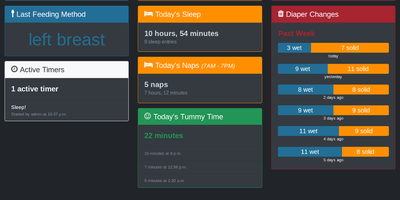
Baby Buddy is a private self-hosted child care tracker that centralizes feeding sessions, sleep cycles, diaper changes, and developmental health milestones into a collaborative dashboard for parents and caregivers. Caregivers can start quick timers on mobile devices to measure nursing intervals, bottle feedings, naps, and tummy time sessions with single-tap precision. The dashboard automatically calculates daily averages, feeding amounts, and awake windows to help families establish consistent daily sleep and feeding routines. Parents can track diaper changes by recording wetness, stool consistency, and color anomalies to spot digestive health changes early. Physical measurements including weight, height, and head circumference plot directly against World Health Organization growth curves to visualize percentile progression between pediatric visits. Multi-child profiles allow families with twins or multiple young children to switch contexts instantly and monitor individual growth timelines. Granular user permissions let parents invite nannies, babysitters, and relatives with restricted logging permissions while keeping administrative settings private. The built-in REST API and webhook system enable physical smart button clicks and home automation routines to log events instantly without opening a browser. Running on a dedicated VPS on RepoCloud with guaranteed CPU, RAM, and SSD, full root SSH access, and a browser serial console. BSD-2-Clause licensed.
Mealie
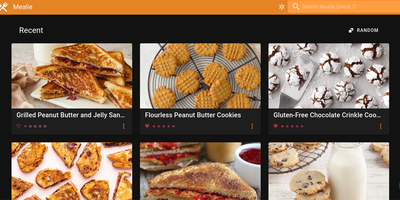
A recipe manager that feels like a consumer product rather than a homelab experiment: Mealie pairs a FastAPI backend with a reactive Vue frontend for the most polished self-hosted meal planning around. The killer feature is the recipe scraper: paste a URL from hundreds of supported cooking sites and Mealie imports the ingredients, steps, times, and photos automatically. Structured HTML/JSON paste, a Markdown-capable manual editor, and imports from other recipe apps (like Tandoor) cover everything else. Meal planning uses a drag-and-drop calendar with breakfast, lunch, dinner, and snack slots, plus rule-based random recipe insertion - constrain the pool by tags or categories per meal type or weekday. Shopping lists link recipes so all ingredients land in one place, organized into supermarket sections, and update in real time for everyone in the household. The multi-tenancy model is genuinely thought through: isolated Groups can host multiple tenants, and Households within a group share recipes and organizers while keeping meal plans and shopping lists private. Cookbooks group recipes by your own criteria, a cooking mode stays readable on a phone propped against the backsplash, and 35+ language translations ship built-in. A fully documented REST API and scheduled webhooks (e.g., today's meal plan to Home Assistant) make it automatable, with SQLite or PostgreSQL storage and automatic backups.

LubeLogger
Vehicle maintenance records shouldn't live in a homemade spreadsheet and a shoebox of receipts - LubeLogger exists because of exactly that. It's a self-hosted .NET web application (from Hargata Softworks) that gives every vehicle in your garage a complete digital history: service, repair, and upgrade records categorized and searchable, with invoices and receipts attached as documents; fuel fill-ups that compute economy in MPG, UK MPG, L/100KM, or KM/L without spreadsheet tedium; taxes, odometer logs, inspections, equipment, and supplies inventory for tracking the parts and fluids on your shelf. The reminder system is what saves engines: recurring reminders trigger by date, odometer reading, or whichever comes first - exactly how real service intervals work - so oil changes and timing belts stop relying on memory. A dashboard summarizes expenses by year, month, and category, a planner tracks to-dos by type, priority, and progress, and professional vehicle reports print a full history - genuinely useful when selling a car. Collaboration is built in: invite household members as collaborators on shared vehicles, with single sign-on support. Custom fields adapt records to your needs, CSV import/export moves data freely, an API enables automation, and the mobile-tested UI installs as a PWA on iOS and Android. MIT-licensed.
Radarr
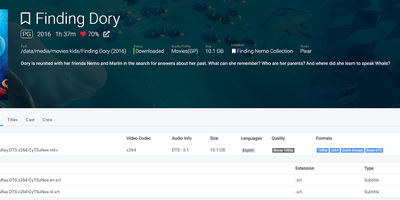
The movie half of the *arr stack: Radarr is a .NET collection manager that automates acquiring films for Usenet and BitTorrent users the way Sonarr does for TV. Add a movie once and Radarr handles the rest: it monitors indexers and RSS feeds, grabs a matching release the moment one appears, sends it to SABnzbd, NZBGet, qBittorrent, Deluge, Transmission, rTorrent, or another connected download client, then imports, sorts, and renames the file into your library structure. Quality profiles are the control surface - define allowed resolutions and a cutoff, and Radarr keeps upgrading files automatically, replacing a DVD rip when a Blu-ray release lands. Custom formats go further, scoring releases by codec, HDR metadata, release group, streaming source, or arbitrary regex so the copy you want always wins the pick. Failed downloads retry with another release automatically; a manual search shows every candidate and explains why one was skipped. Release parsing recognizes director's cuts, special editions, AKA titles, and hardcoded subs. Plex and Kodi integration handles notifications, library refreshes, and metadata like posters, trailers, and subtitles, and a calendar view tracks upcoming releases. It pairs naturally with Jellyseerr for request management and shares its API conventions with the whole *arr ecosystem.
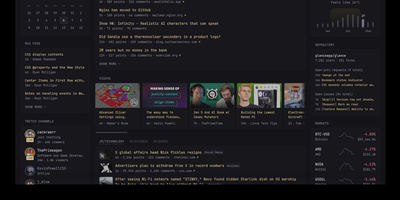
Glance
With over 35,000 GitHub stars in just two years, Glance has become the most popular self-hosted dashboard project on GitHub, outpacing established alternatives like Homarr and Homepage. Built as a single Go binary under 20MB with minimal JavaScript and zero external dependencies, Glance delivers a blazing-fast personal information dashboard that consolidates your entire digital morning routine into one beautiful page. Configure everything through clean YAML files that support modular includes and environment variable interpolation, with automatic hot-reload that applies changes without restarting the server. The widget ecosystem covers RSS and Atom feeds, Reddit and Hacker News frontpages, YouTube channel subscriptions, GitHub release timelines, weather forecasts from Open-Meteo, stock market quotes, Docker container status, Twitch live streams, calendar events via iCal, site monitor uptime checks, and custom HTML or iframe embeds. A community widgets repository extends functionality even further with user-contributed integrations. The theming system provides light, dark, and custom color schemes with multiple layout options including slim and wide column configurations. Authentication support added in 2025 secures access with username and password protection. Preconfigured page templates let you get started in seconds with curated layouts for development, homelab monitoring, news reading, and entertainment tracking. Deploy via Docker Compose or as a standalone binary on Linux, macOS, or Windows across AMD64 and ARM64 architectures. Running on a dedicated VPS on RepoCloud with guaranteed CPU, RAM, and SSD, full root SSH access, and a browser serial console. AGPL-3.0 licensed.
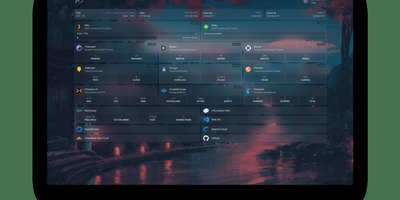
Homepage
With over 31,000 GitHub stars and 430 contributors, Homepage has become the definitive self-hosted dashboard for homelab enthusiasts and server administrators who want a single, elegant landing page for all their services. The dashboard renders as a fully static site at build time for instant page loads, while a Node.js backend securely proxies all API requests to prevent exposing service credentials to the browser. Docker integration automatically discovers running containers through label-based configuration, populating the dashboard with service status indicators, health checks, and real-time statistics without manual URL entry. Over 100 native service widgets display live data from popular applications including Plex, Jellyfin, Radarr, Sonarr, Home Assistant, Pi-hole, Portainer, Proxmox, Nextcloud, Gitea, and dozens more, each showing relevant metrics like active streams, download queues, or system health directly on the dashboard. Information widgets provide weather forecasts, system resource utilization, search bars, and date/time displays. The layout system supports multiple columns, tabs, and custom CSS for pixel-perfect arrangement of service groups and bookmarks. Built-in authentication options include OIDC integration and password protection. Quick search functionality enables instant access to bookmarks and services with keyboard shortcuts. Internationalization covers 40+ languages with community-maintained translations. Configuration lives entirely in YAML files for version-controlled, reproducible dashboard setups. Deploy on a dedicated VPS on RepoCloud with guaranteed CPU, RAM, and SSD, full root SSH access, and a browser serial console for complete control. GPL-3.0 licensed with an active community and bi-weekly releases.
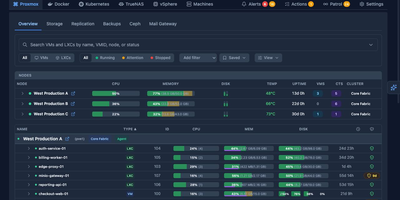
Pulse
Pulse monitors your entire heterogeneous infrastructure from one screen: Proxmox VE, Proxmox Backup Server, Proxmox Mail Gateway, Docker, Podman, Docker Swarm, Kubernetes, TrueNAS SCALE/CORE, VMware vSphere, and standalone Linux/Windows/macOS machines. The Go binary embeds a SolidJS/TypeScript frontend, delivering WebSocket-driven dashboards with sub-second metric updates on port 7655. A unified agent auto-detects Docker, Podman, Kubernetes, and Proxmox on each host without manual configuration and self-updates silently, while Proxmox nodes need only API credentials with zero agent installation. Smart alerts use adaptive hysteresis-based thresholds to prevent notification floods, pushing to Discord, Slack, Telegram, Teams, email, ntfy.sh, Gotify, and generic webhooks with per-resource overrides. The standout feature is Pulse Patrol: scheduled AI health checks running every ten minutes to seven days using OpenAI, Anthropic, Gemini, or local Ollama models. Patrol catches silent backup failures, capacity creep, restart loops, unhealthy containers, and clock drift that dashboards miss when nobody is watching. Platform-specific views render Proxmox nodes, Ceph clusters, Docker Compose projects, Kubernetes workloads, TrueNAS pools, and vSphere VMs in familiar layouts. OIDC, SSO, and SAML authentication with credential encryption at rest secures access. 6,500+ stars and 441 releases since February 2025. Running on a dedicated VPS on RepoCloud with guaranteed CPU, RAM, and SSD, full root SSH access, and a browser serial console. MIT licensed.

OpenHAB
Over 400 technologies and thousands of smart devices from any manufacturer, unified under one roof: openHAB is the vendor-neutral home automation platform with a pluggable binding architecture. Each binding translates a device or service into openHAB's clean abstraction: Things expose Channels, Channels link to Items, and Items feed a rules engine that runs your home. That engine meets you at your skill level: Blockly gives non-programmers drag-and-drop visual logic, JS Scripting (GraalJS with the openhab-js library) is the modern text-based standard, the classic Rules DSL remains supported, and JSR223 opens the door to Python, Ruby, and Groovy. Time- and event-based triggers, scripts, notifications, and voice control compose into automations of any complexity, and users report decade-old rule sets still running rock solid. The Main UI handles configuration, semantic modeling, and now built-in charting - no external Grafana required. Built in Java on Apache Karaf's OSGi runtime and stewarded by the non-profit openHAB Foundation, it requires no cloud to function: everything runs locally, talking directly to your devices. Optional connectors bridge to Alexa, Google Assistant, and HomeKit, with iOS, Android, and web apps for control from anywhere.
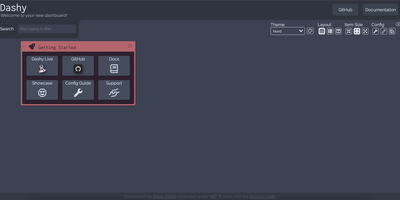
Dashy
Every service you run, behind one polished start page: Dashy is the most customizable homelab dashboard, built as a Vue.js homepage. Configuration lives in a single YAML file, but you never have to hand-edit it: an integrated UI editor with real-time validation writes changes back to disk, so both config-as-code and point-and-click camps are served. Status indicators put a live health dot next to every app - HTTP checks or pings on custom intervals, with response time and status details on hover - giving you an at-a-glance uptime overview before anything breaks. Over 50 built-in widgets pull dynamic content from the services you already run: Pi-hole and AdGuard block stats, Proxmox lists, Nextcloud status, Netdata CPU/memory history, Prometheus data, plus weather, RSS, crypto prices, and generic iframe/API-response widgets for anything with an endpoint. Instant fuzzy search launches any app as you type, with customizable hotkeys and web-search fallthrough. Theming is deep: dozens of built-in themes, a UI color palette editor, and custom CSS over CSS variables. Alternate views include a fast-loading minimal startpage and a workspace view that embeds apps side-by-side without leaving the dashboard. Icons resolve from Font Awesome, homelab icon packs, emojis, or auto-fetched favicons. Built-in authentication, multi-page support, cloud backup/sync, and multi-language round out an MIT project with a massive community.
Homelable
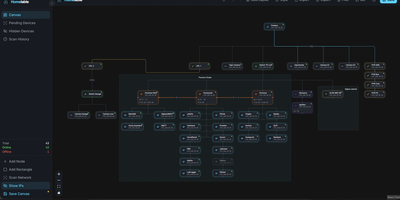
Homelable turns your entire homelab into a live, interactive network canvas where every device, link, and service shows its real-time status at a glance. Run an nmap-powered network scan against your subnets and the tool fingerprints services, queues unknown devices for review, and drops approved hosts onto a drag-and-drop canvas with 15 native node types covering routers, switches, hypervisors, NAS boxes, IoT sensors, and more. Import your full Zigbee2MQTT mesh (controllers, routers, end devices with link quality indicators) and Z-Wave JS device trees in one click, preserving the actual RF topology without manual wiring. Proxmox integration pulls in hosts, VMs, and LXC containers so you can nest virtual machines inside their parent hypervisor node on the canvas. The Rack Canvas mode documents the physical side of your lab: create racks with configurable U-height, mount gear into slots, and patch ports across devices to track your cabling. Health checks run every 60 seconds using ping, HTTP, HTTPS, TCP, SSH, or Prometheus scrape endpoints, with WebSocket push delivering green, red, or pending status pulses directly to the canvas. Split your infrastructure across multiple canvases organized by site, rack, or purpose, and share a read-only Live View URL with anyone on your network. A built-in Model Context Protocol server lets AI assistants like Claude query and modify your topology through natural language. Deploy on a dedicated VPS on RepoCloud with guaranteed CPU, RAM, and SSD, full root SSH access, and a browser serial console. MIT licensed.
Mstream
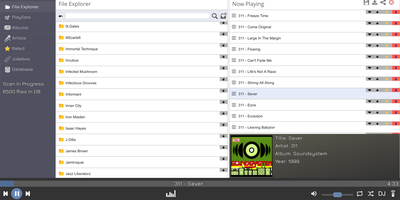
"The easiest music streaming server available" is mStream's own billing, and the claim holds up: a lightweight Node.js app that turns a folder of audio files into a private streaming service in minutes, no external database required. Its filesystem-based design is the clever part - the API mirrors your folder structure, so you can browse and play music immediately, before any library scan finishes, and your organization on disk is your organization in the app. It streams flac, mp3, wav, ogg, opus, aac, and m4a, which matters to the audiophile crowd: FLAC plays uncompressed, bit-perfect, with gapless playback for live albums and continuous mixes. The web player runs anywhere a browser does and packs personality - a Milkdrop-style visualizer (Butterchurn), playlist sharing via links, and drag-and-drop uploads straight through the file explorer. Native iOS and Android apps add the feature streaming subscriptions can't match: sync your collection to your phone for true offline playback of music you own. Multi-user support assigns separate directories and permissions per account. Resource usage is famously light - mStream is tested on multi-terabyte libraries and runs happily on a Raspberry Pi, so a small RepoCloud instance serves a lifetime's collection. GPL-licensed, with zero listening-habit telemetry.
KitchenOwl
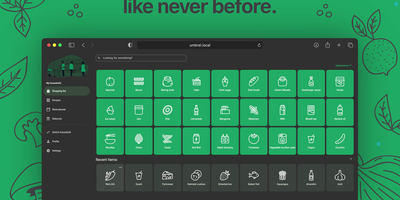
Your household's kitchen command center: shared grocery lists that sync in real-time across everyone's phones, a recipe book that imports from 500+ websites with one tap, a weekly meal planner that auto-generates shopping lists, and expense tracking that splits costs between roommates or family members. Native apps for Android, iOS, macOS, Windows, Linux, and web provide partial offline support so the list works even in store dead zones. The recipe-scrapers library with wild mode fallback handles imports from virtually any cooking site, extracting ingredients, steps, and images automatically — then converts recipe ingredients directly to shopping items with a single tap. Smart suggestions learn from your patterns over time, ordering items by your typical store route and recommending frequently purchased products. OpenID Connect authentication supports Google, Apple, Authelia, and custom providers. LLM-powered ingredient parsing uses configurable AI models for intelligent recipe text extraction. A Home Assistant integration enables voice-controlled list management via smart speakers. The REST API with a published Python client library allows third-party automation. Multi-language support covers 30+ languages through Weblate community translations. Running on a dedicated VPS on RepoCloud with guaranteed CPU, RAM, and SSD, full root SSH access, and a browser serial console. AGPL-3.0 licensed.
Navidrome
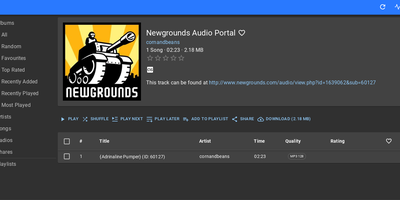
Spotify economics without the subscription or catalog gaps: Navidrome, the reference self-hosted music server, streams your own FLAC, MP3, and ALAC collection from a single Go binary with a React/Material UI web player. Its Subsonic/OpenSubsonic API compatibility is the superpower: 50+ existing clients work out of the box, from Symfonium and DSub on Android to Feishin and Sonixd on desktop, plus Android Auto, CarPlay, and Android TV apps. Transcoding is server-managed and FFmpeg-backed - FLAC direct-plays at home and downsamples to MP3, AAC, or Opus over mobile bandwidth, with the OpenSubsonic transcoding extension letting clients declare capabilities and receive per-track direct-play or transcode decisions automatically. Multi-user support gives every account its own play counts, favorites, ratings, and playlists, and multi-library support scopes different collections to different users. The feature list covers serious listening: Last.fm and ListenBrainz scrobbling, artist bios and images, embedded and external lyrics, audiobook bookmarks, saved play queues that resume on another device, internet radio, jukebox mode, and M3U playlist auto-import kept in sync with your folder. Resource usage is famously low - it runs happily on a Raspberry Pi and scales to six-figure track counts.