multi-scrobbler
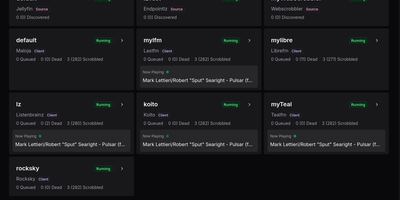
Listening to music across Spotify on your commute, Jellyfin at your desk, and Sonos in the living room usually leaves your play history fragmented across walled gardens, which is why multi-scrobbler unifies over 30 music sources and routes every track to your chosen scrobble backends automatically. Instead of relying on brittle browser plugins per device, you configure active polling or ingress webhooks once for sources including Plex, Navidrome, Subsonic, Apple Music, Deezer, YouTube Music, MPD, VLC, Chromecast, and Music Assistant. Every detected play passes through an intelligent pipeline that verifies listen duration thresholds, cleans messy track titles or featured artist tags using regex rules, and enriches missing metadata against the MusicBrainz, Spotify, or Rocksky catalogs. Before forwarding a play to Last.fm, ListenBrainz, Libre.fm, Maloja, Koito, teal.fm, Discord Now Playing, or Tuneshine, the engine checks temporal and title similarity scores to block duplicate scrobbles. When a downstream service goes offline, failed scrobbles enter a persistent retry queue so you never lose listening history, while Gotify, Ntfy, and Apprise webhooks alert you to source issues. Running on a dedicated VPS on RepoCloud with guaranteed CPU, RAM, and SSD, full root SSH access, and a browser serial console. MIT licensed.
Mstream
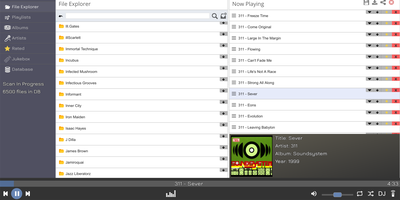
"The easiest music streaming server available" is mStream's own billing, and the claim holds up: a lightweight Node.js app that turns a folder of audio files into a private streaming service in minutes, no external database required. Its filesystem-based design is the clever part - the API mirrors your folder structure, so you can browse and play music immediately, before any library scan finishes, and your organization on disk is your organization in the app. It streams flac, mp3, wav, ogg, opus, aac, and m4a, which matters to the audiophile crowd: FLAC plays uncompressed, bit-perfect, with gapless playback for live albums and continuous mixes. The web player runs anywhere a browser does and packs personality - a Milkdrop-style visualizer (Butterchurn), playlist sharing via links, and drag-and-drop uploads straight through the file explorer. Native iOS and Android apps add the feature streaming subscriptions can't match: sync your collection to your phone for true offline playback of music you own. Multi-user support assigns separate directories and permissions per account. Resource usage is famously light - mStream is tested on multi-terabyte libraries and runs happily on a Raspberry Pi, so a small RepoCloud instance serves a lifetime's collection. GPL-licensed, with zero listening-habit telemetry.
OpenAgentCore
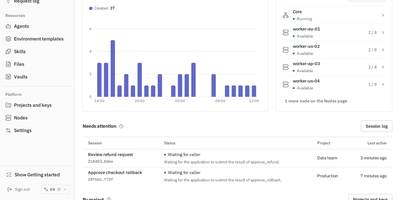
OpenAgentCore puts Codex, Claude Code, and MiniMax Code behind one self-hosted Agents API, so your applications start agent sessions through the official OpenAI SDK while the work runs on machines you control. Set OPENAI_BASE_URL to your installation and issue a Project API key, and the same client code that talks to OpenAI now talks to your Core. Each session runs a native harness, exactly as it runs on a developer's machine, with the model provider, model ID, and protocol you configure per harness or per session. Choose where sessions execute: microsandbox nodes you operate, Docker, E2B, or a self-hosted workstation, VM, or container connected by the oac-daemon with a credential scoped to one environment. Idle microsandbox sessions release their compute and resume on a compatible node with workspace files intact, so long investigations do not rent a machine while they sleep. The Web console walks operators through setup, tracks sessions and turns, manages models and credentials, and issues keys, while the separate Core API serves operators and the Agents API serves applications. Durable execution state in PostgreSQL keeps events, results, and schedules recoverable across restarts. Sandbox providers, workspace filesystems, harnesses, and model providers all plug in through defined protocols, so every layer can be replaced on its own. Running on a dedicated VPS on RepoCloud with guaranteed CPU, RAM, and SSD, full root SSH access, and a browser serial console. MIT licensed.
AtomicServer
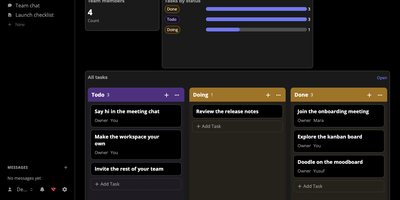
Documents, tables, files, chat, and video meetings share one workspace in atomic.place, and AtomicServer is the part you host yourself so a team can edit together while the data stays on a machine it controls. Documents are collaborative rich text with comments, icons, and cover images, tables enforce a strict schema with keyboard navigation and copy and paste, and any table can switch to a kanban, calendar, dashboard, or timer view. Templates start an issue tracker, a CRM, a project task list, or a time tracker. Live cursors, typing indicators, and presence avatars show who is working where, group channels carry attachments, replies, and search, and an infinite canvas can be drawn on together. Every write is a signed commit, so a full history is kept. Read and write rights follow the resource hierarchy, and invite links bring people in. Websites are designed in the browser, published in one click, and rolled back to any earlier version. Custom classes and properties come from the Ontology Editor, small apps are plain JavaScript screens over the same data, and AI features work with any model through OpenRouter or a local Ollama and support MCP. Typeahead search suggests results as you type. A REST API answers in JSON-AD, Turtle, or JSON-LD for automation, and export and import commands write and read JSON-AD backups. Running on a dedicated VPS on RepoCloud with guaranteed CPU, RAM, and SSD, full root SSH access, and a browser serial console. MIT licensed.

Lunarr
Lunarr turns the movie and TV folders you already store into a private streaming service with posters, progress tracking, and play-anywhere convenience. Point it at local disks or at libraries living on SFTP and WebDAV servers, and it scans, identifies, and decorates everything with TMDb artwork, cast pages, similar titles, and because-you-watched recommendations. Press play and the file either streams directly or is transcoded on the fly into seekable HLS, generating only the segments around the moment you are watching instead of converting whole films up front. Continue watching follows you between sessions, sidecar subtitles are picked up automatically, and known intros and credits can be skipped. Send the picture to the big screen with Chromecast or AirPlay, pair new devices without typing passwords, and hand a guest a share link instead of your account. Underneath, an admin console manages users, roles, and which libraries each person may see, watches background jobs, and holds API keys and registration settings. Rescans run on schedules you set from minutes to a month, local folders can be watched live for new arrivals, and metadata refreshes itself on a timer. Running on a dedicated VPS on RepoCloud with guaranteed CPU, RAM, and SSD, full root SSH access, and a browser serial console. Apache-2.0 licensed.
Nezha Monitoring
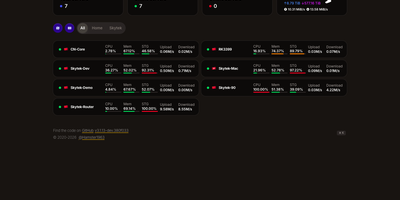
Keep every VPS, home-lab box, NAS, and router you run on one self-hosted dashboard, with a small agent on each machine reporting whether it is up and how hard it is working. Nezha tracks CPU, memory, swap, disk, load, traffic, process counts, and TCP and UDP connections on Linux, Windows, macOS, OpenWRT, and Synology machines, plus GPU and temperature where supported. Servers sort into groups and appear as cards, a list, or a world map, with live charts and, when the optional time-series database is on, 1, 7, and 30 days of history. HTTP GET, ICMP Ping, and TCPing monitors run from the servers you choose, chart latency and packet loss, and warn about HTTPS certificate changes and upcoming expiry. Alert rules watch offline servers, resource use, bandwidth, and cycle traffic limits, then message Telegram, Slack, Matrix, Feishu, DingTalk, or any webhook. A browser terminal and file manager handle quick fixes, while scheduled or alert-triggered tasks run backups, restarts, and scripts across many servers. DDNS updates Cloudflare, Tencent Cloud, or Hurricane Electric records when an agent's IP changes, and NAT traversal publishes a home router or NAS page on your own domain. Admin and user roles, scoped API tokens, and an optional MCP endpoint let people and AI tools list servers and run commands within their permissions. Running on a dedicated VPS on RepoCloud with guaranteed CPU, RAM, and SSD, full root SSH access, and a browser serial console. Apache-2.0 licensed.
Polaris Control Plane
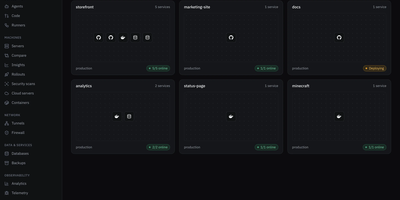
Polaris puts app deploys, file storage, team chat, tasks, and a password vault behind one login on a server you control. Deploy from a Git repository or an image with databases, volumes, environment variables, logs, a terminal, and a domain, published through your own domain, a Cloudflare tunnel, or DuckDNS. Enroll more machines over SSH with one generated command, then watch their containers and metrics and schedule backups with restore. Drive spans local disks, SFTP, S3-compatible storage, SMB, NFS, Google Drive, OneDrive, and Dropbox, with password-protected public links, expiry, and drop points for people without an account. Vault works with the Bitwarden apps and extensions and encrypts in the browser, so the server never sees your master password. Chat brings channels, threads, direct messages, voice and video calls, screen sharing, and a soundboard, while Tasks adds lists, boards, sprints, goals, and time tracking, and can hand work to coding agents over MCP. Calendar syncs both ways with Google, Microsoft 365, and CalDAV and offers booking pages. Game servers run Minecraft, ARK, and FiveM, a firewall blocks countries, networks, and bots, and one-click Marketplace installs add more apps. The interface comes in English and Spanish. Running on a dedicated VPS on RepoCloud with guaranteed CPU, RAM, and SSD, full root SSH access, and a browser serial console. AGPL-3.0 licensed.
Webmin
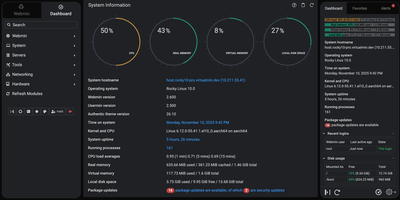
Skip the shell and the configuration file: Webmin handles user accounts, disk quotas, services, and server software on Linux and Unix machines from a browser tab. More than 100 standard modules sit under seven menus: Webmin, System, Servers, Tools, Networking, Hardware, and Cluster. System covers Users and Groups, Scheduled Cron Jobs, Running Processes, System Logs, Log File Rotation, Disk Quotas, Filesystem Backup, and systemd Bootup and Shutdown, plus Software Package Updates, which can hold selected packages on APT and DNF systems. Servers edits Apache, Nginx, BIND DNS, Postfix, Dovecot, MySQL and MariaDB, and PostgreSQL through forms. Networking brings an nftables firewall editor, Fail2Ban jails, and IPsec VPN settings. Tools adds File Manager, Custom Commands, and a Terminal that opens right in the browser. Hardware lists firmware, PCI, USB, storage, and sensor details. The dashboard keeps live CPU, memory, and disk gauges, stats history graphs, and a pending updates alert in view. Webmin Users limits each account to the modules it needs, while two-factor authentication, IP access control, and SSL settings guard the panel itself. Cluster modules reach other hosts registered in the Webmin Servers Index and run cron jobs, shell commands, and package installs on many servers at once. Running on a dedicated VPS on RepoCloud with guaranteed CPU, RAM, and SSD, full root SSH access, and a browser serial console. BSD-3-Clause licensed.
Kanidm
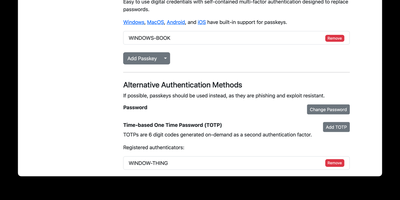
Every service you self-host wants its own account database, and Kanidm exists so they can all share one: one identity server where people sign in with passkeys and every application trusts the same login. Users register YubiKeys, Touch ID, Windows Hello, or TPM backed authenticators, and attested passkey policies let administrators restrict sign-in to specific authenticator models in high security environments. Applications connect as OAuth2 or OpenID Connect clients with authorization code, client credentials, PKCE, token exchange, and revocation supported, so your wiki, Git forge, and file sync all delegate sign-in instead of storing passwords. The application portal gives each person one page of tiles for every service they may open, and role based access control decides which groups see which applications and scopes. Older systems that only speak LDAP bind to the read-only LDAPS gateway, while Wi-Fi and VPN gear authenticates through the built-in RADIUS server with MS-CHAPv2 and EAP-TLS. Linux machines join through the Unix client for PAM and NSS authentication, cached offline credentials protected by the machine TPM, and SSH keys distributed from the server to every host. A second server replicates the whole database with strong eventual consistency, every node accepting writes without elections or quorums, so a failed machine never locks your users out of sign-in. Running on a dedicated VPS on RepoCloud with guaranteed CPU, RAM, and SSD, full root SSH access, and a browser serial console. MPL-2.0 licensed.
Emby
Point Emby at your movie, music, and photo libraries and it becomes a private streaming service: metadata and artwork arrive from TMDB and TVDB, everything lands in a polished browsable interface, and media transcodes on the fly whenever a client can't play the original format. The client reach is the selling point: native apps span Android TV, Apple TV, Google TV, Fire TV, Roku, LG and Samsung smart TVs, iOS, Android, Apple CarPlay, Android Auto, plus web browsers and desktop apps for Windows, macOS, and Linux, and DLNA devices are auto-detected for casting and remote control. Multi-user support gives each household member their own account, watch history, favorites, and recommendations, with genuinely capable parental controls: content restrictions, access schedules, time limits, and live monitoring with remote control of kids' sessions. Live TV works with hardware tuners like HDHomeRun or M3U playlists, with free guide data in the US, Canada, and UK. The server and core features are free; an optional Premiere key adds hardware-accelerated transcoding, DVR recording, offline sync, and Cinema Mode intros.
Nuclio
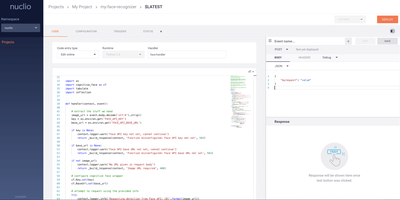
Serverless platforms promise to run your code only when it is needed; Nuclio adds the part they usually skip, raw throughput for data-heavy work, with a single function instance able to process hundreds of thousands of HTTP requests or records per second. You write functions in Python, Go, Node.js, Java, .NET, or plain Shell, and deploy them from the dashboard on port 8070, from the nuctl command line, or from Jupyter through the Nuclio SDK. Events reach your code through HTTP calls, cron schedules, Kafka and Kinesis streams, MQTT and NATS messages, RabbitMQ queues, or Azure Event Hubs, so the same function model covers APIs, stream processors, and scheduled jobs. Each function ships as its own container, built securely with Kaniko, and scales on plain Docker for a single server or on Kubernetes when the workload outgrows one machine, with GPU support for inference and media pipelines. Projects organise functions with shared configuration, secrets, and API gateways, and the dashboard shows invocations, logs, and metrics while templates for common jobs get a first function running in minutes. Data science teams plug Nuclio into MLRun and Kubeflow Pipelines to serve models and automate ML workflows without a separate serving tier. Running on a dedicated VPS on RepoCloud with guaranteed CPU, RAM, and SSD, full root SSH access, and a browser serial console. Apache-2.0 licensed.
AKB
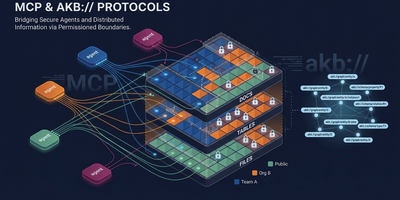
Achieving 98.4% Recall@5 on LongMemEval-S without a reranker, AKB is the agent-native knowledge infrastructure giving Claude Code, Cursor, Windsurf, and any MCP-aware agent persistent organizational memory — a drop-in replacement for Confluence or Notion where AI agents read and write directly rather than scraping human-formatted pages. Documents are stored as Markdown with YAML frontmatter in Git bare repositories (full version history, branching, diff), while PostgreSQL 16 serves as source of truth for chunk text, metadata, and BM25 vocabulary, with dense embeddings handled by a pluggable vector store (pgvector default, Qdrant optional, or managed Seahorse). Agents interact through 20+ MCP tools — akb_put, akb_search, akb_browse, akb_relations, akb_sql, akb_edit, akb_history — performing hybrid dense plus BM25 search fused via Reciprocal Rank Fusion in one call. The URI graph (depends_on, related_to, implements relations) lets agents traverse knowledge connections without external graph databases. Multi-tenant vault isolation is enforced at the PostgreSQL ACL level with per-user roles and SET LOCAL ROLE for SQL sandboxing. Event fanout streams structured events to Redis Streams for external consumers (synthesis bots, digest agents, audit trails), and a hash-chained append-only audit log integrates with enterprise SIEMs. Ships with agent plugins for Claude Code and Codex (session capture, wiki ingest, lifecycle hooks), Kubernetes kustomize manifests, and Open Knowledge Format export. Running on a dedicated VPS on RepoCloud with guaranteed CPU, RAM, and SSD, full root SSH access, and a browser serial console. BSL 1.1 licensed (free under 100 seats, auto-converts to Apache 2.0 after four years).
BillionMail
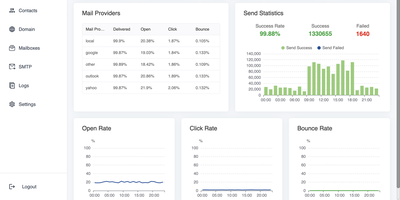
With over 15,000 GitHub stars accumulated since its February 2025 launch, BillionMail delivers the rare combination of a production mail transfer agent and a full email marketing suite in a single self-hosted package — eliminating the monthly per-subscriber fees charged by Mailchimp, SendGrid, and similar platforms. The Go-based architecture bundles Postfix for SMTP transmission, Dovecot for IMAP and POP3 mailbox access, Rspamd for intelligent spam filtering and greylisting, and RoundCube for browser-based webmail, all orchestrated through Docker Compose with PostgreSQL for persistent storage and Redis for queue management and caching. The marketing engine supports unlimited subscriber lists with tag-based segmentation, scheduled campaign sends, A/B subject line testing, and both HTML and drag-and-drop visual template editors for crafting responsive emails without coding. Real-time analytics dashboards track sent volume, deliverability rate, open rate, click-through rate, and bounce reasons, while the platform provides step-by-step DNS record configuration wizards for SPF, DKIM, and DMARC to maximize inbox placement. A transactional email API exposes REST endpoints for single and batch sending, enabling integration with CRM systems, e-commerce platforms, and custom applications. Auto-provisioned free SSL certificates, Fail2ban brute-force protection, and privacy-first architecture with zero third-party tracking ensure secure operation. The platform installs in under eight minutes via a single shell script and supports SMTP on port 25, SMTPS on 465, submission on 587, IMAP on 143/993, and POP3 on 110/995. Running on a dedicated VPS on RepoCloud with guaranteed CPU, RAM, and SSD, full root SSH access, and a browser serial console. AGPLv3 licensed.
Stalwart
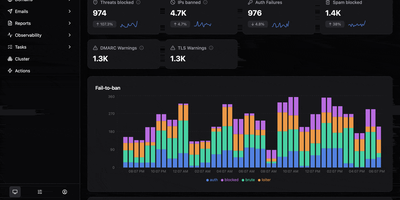
With 14,000 GitHub stars and 81 releases since March 2023, Stalwart is the most protocol-complete open-source mail server available — delivering JMAP, IMAP4rev2, IMAP4rev1, POP3, SMTP, CalDAV, CardDAV, and WebDAV from a single Rust binary that compiles to a memory-safe, zero-garbage-collection executable with predictable latency under load. The SMTP server implements DMARC, DKIMv2, DKIMv1, SPF, and ARC for complete message authentication with automatic DKIM key rotation, while transport security enforces DANE, MTA-STS, and SMTP TLS reporting to prevent downgrade attacks. Built-in spam filtering with statistical classifiers, DNS blocklists, and collaborative reputation databases eliminates the need for external Rspamd or SpamAssassin deployments. Encryption at rest protects stored messages with S/MIME or OpenPGP, and automatic TLS certificate provisioning via ACME supports TLS-ALPN-01, DNS-01, and HTTP-01 challenges without manual certificate management. The ManageSieve server enables server-side email filtering rules, while full-text search indexes message bodies and attachments for instant retrieval. Pluggable storage backends support RocksDB for embedded deployments, PostgreSQL, MySQL, and S3-compatible object storage for distributed architectures. LDAP and SQL-based authentication integrate with existing directory services, and the web administration panel manages domains, accounts, quotas, and DKIM keys. Security audited with memory safety guaranteed by Rust's ownership model. Running on a dedicated VPS on RepoCloud with guaranteed CPU, RAM, and SSD, full root SSH access, and a browser serial console. AGPL-3.0 licensed.
Octo Server
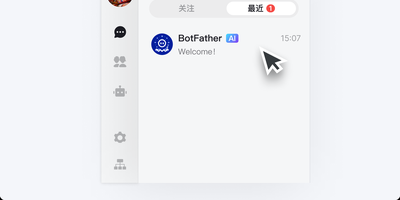
Most team chat keeps people in one app and AI agents in another; Octo Server is the backend that puts both in the same conversation. It powers the OCTO workplace, where Lobsters, the platform's OpenClaw-powered AI agents, sit in channels as first-class participants that read context, run tool calls, and report back alongside their human teammates. Every request flows through one pipeline: token and cookie authentication, organisation-aware role checks and per-channel permissions, business logic that can start or resume an agent session, then fan-out through WuKongIM for real-time delivery. Channels support threaded subspaces, shared files, and a GROUP.md document that stores the group's standing context where the whole team can edit it. The smart summary service reads busy channels and produces structured digests, so catching up means reading one brief instead of hundreds of messages. External bridges connect conversations to GitHub, WeCom, Feishu, and Loop through adapters, and webhooks push group events to your own systems. The official one-command deployment runs the server with the web client, admin console, task service, WuKongIM, MySQL, Redis, and MinIO behind nginx, scaling as one backend that every client speaks to. Running on a dedicated VPS on RepoCloud with guaranteed CPU, RAM, and SSD, full root SSH access, and a browser serial console. Apache-2.0 licensed.
Keygate
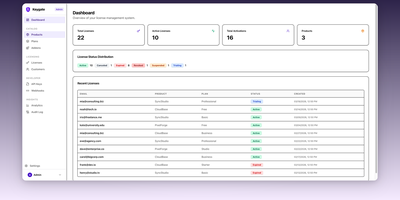
Software makers who would rather not rent a licensing backend use Keygate to issue, sell, and enforce license keys from infrastructure they control. You create desktop, SaaS, or hybrid products and sell them as subscriptions, perpetual licenses, perpetual licenses with a maintenance period, trials, or floating concurrent licenses that are checked out, heartbeated, and returned automatically. The admin dashboard manages products, plans, customers, licenses, API keys, webhooks, analytics, audit logs, team members, email templates, and branding, with search, filters, and CSV or JSON export. Your application activates and verifies keys through the license API, enforces per-device or per-user activation limits with grace periods, and can verify Ed25519 signed tokens offline with a public key. Usage metering tracks API calls, storage, bandwidth, or custom metrics against quotas with hourly, daily, monthly, or yearly reset cycles and webhook threshold warnings. Connecting Stripe makes checkout create licenses automatically, follows plan and seat changes with proration, handles refunds and cancellations, sends dunning emails after failed payments, and gives customers a billing portal and self-service license management. Team seats, feature entitlements, purchasable add-ons, scoped API keys, and optional S3-backed release hosting round out the selling stack in one binary with one PostgreSQL database. Running on a dedicated VPS on RepoCloud with guaranteed CPU, RAM, and SSD, full root SSH access, and a browser serial console. AGPL-3.0 licensed.
AgentDock
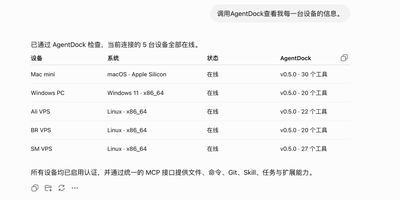
AgentDock turns the computers and servers you already run into machines an AI assistant can operate for you through one secure MCP endpoint. Connect ChatGPT, Claude, Codex, or any other MCP client and the agent works in the real environment: reading and writing files, searching code, running shell commands, and driving Git where the project actually lives. Long jobs survive interruptions because task state and checkpoints persist on the node, ready to resume where they stopped. Browser work is covered as well, with web pages driven through a native Chrome DevTools connection that reuses your logged-in sessions, captures screenshots, and can even operate macOS desktop applications. Capabilities grow through installable Skills and dynamic MCP servers, so a node picks up new tools without a rebuild. Run a single node on a laptop, or spread nodes across VPS hosts and containers and pair them with the optional NexusDock console for one fleet view, shared Recall memory, reusable workflow templates, and a single MCP address for every machine. Access stays locked down with Bearer tokens or OAuth sign-in, loopback-only defaults, and optional Cloudflare Tunnel or HTTPS exposure when a remote client needs a way in. Running on a dedicated VPS on RepoCloud with guaranteed CPU, RAM, and SSD, full root SSH access, and a browser serial console. Apache-2.0 licensed.
Calibre
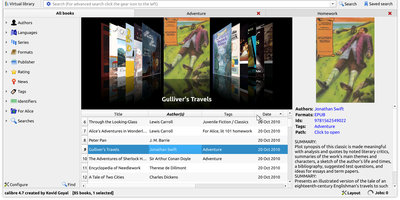
Serious readers organize, convert, edit, and serve their e-book libraries with Calibre - the definitive open-source e-book manager. This deployment runs the full Calibre desktop application on your server, accessible from any browser, so your library lives in one authoritative place instead of scattered across devices. Its conversion engine is the best in the business, translating between every major format - EPUB, MOBI, AZW3, PDF, DOCX, and dozens more - with fine control over fonts, margins, metadata, and structure detection. Metadata management downloads covers, descriptions, series info, and identifiers from online sources, and every field is editable in bulk. Beyond cataloging, Calibre includes a full e-book editor for EPUB and AZW3 internals, a news engine that fetches newspapers and magazines from the web on schedule and converts them into e-books, book comparison tools, and device syncing that sends the right format to each connected reader. The built-in content server exposes your library over HTTP so phones, tablets, and e-readers can browse and download remotely. A deep plugin ecosystem extends everything - metadata sources, format support, store integrations. For power users, the complete CLI (calibredb, ebook-convert) enables scripted library automation. Your books, your metadata, your server - permanent and DRM-free storage under your control.