Undb
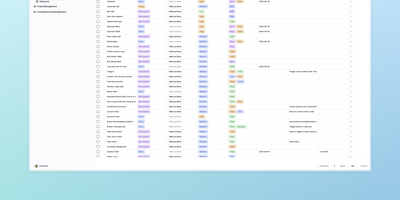
Undb turns a browser tab into a full-featured database with spreadsheet-style editing, auto-generated REST APIs, and five configurable views for every table. The platform organizes data through Spaces, Bases, and Tables, offering grid view for traditional editing, Kanban boards for workflow tracking, calendar for date-based planning, gallery for image-rich records, and pivot tables for analytical summaries, each with independent filtering, sorting, color coding, and field selection. An ANTLR4-powered formula engine provides Airtable-style calculated fields with proper syntax validation, variadic argument handling, and type-checked function signatures that go beyond simple string interpolation. Every table automatically generates a fully documented OpenAPI REST endpoint with Swagger UI, letting developers integrate Undb data into external applications through standard HTTP methods without additional configuration. The Drizzle ORM abstraction layer supports four database backends (SQLite, PostgreSQL, MySQL, and Turso edge-distributed SQLite) with separate migration configurations for each adapter. Authentication uses Lucia with OAuth2 via Arctic for GitHub login and Oslo for TOTP two-factor authentication. The SvelteKit 5 frontend renders through Houdini's compile-time GraphQL client and TanStack Svelte Query, while the Elysia.js backend compiles into a single executable via Bun's --compile flag, embedding all assets into one portable binary. File attachments store in any S3-compatible backend including MinIO. Running on a dedicated VPS on RepoCloud with guaranteed CPU, RAM, and SSD, full root SSH access, and a browser serial console. AGPL-3.0 licensed.
ServerKit
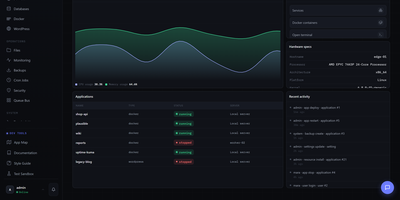
ServerKit delivers a server control panel that fits on a small VPS while managing everything from Docker containers to mail servers. The Python/Flask backend exposes 1,519 REST endpoints across 107 blueprints with full OpenAPI documentation at /api/v1/docs, while the React frontend spans 65 screens in a 1.75MB gzipped bundle served entirely from your own infrastructure. Docker management includes full container lifecycle control, Docker Compose project orchestration, real-time log streaming, and terminal access. Database panels cover MySQL/MariaDB and PostgreSQL with user management, browser-based query consoles, and automated backups to S3, Backblaze B2, or local storage. Nginx virtual host management automates Let's Encrypt certificate provisioning with hardened TLS 1.2+ configurations and Cloudflare-aware setups. The Go-based cross-platform agent enables multi-server fleet management with HMAC-SHA256 authentication over a WebSocket gateway, supporting Linux, Windows, and macOS across amd64 and ARM64 architectures. Fleet monitoring provides cross-server heatmaps, metric comparison charts, alert thresholds, anomaly detection, and capacity forecasting. A built-in marketplace distributes 106 one-click application templates using a declarative YAML schema with Docker Compose stacks. The extension system allows community plugins for Kubernetes management, Redis browsers, and WordPress site orchestration. Running on a dedicated VPS on RepoCloud with guaranteed CPU, RAM, and SSD, full root SSH access, and a browser serial console. MIT licensed.
ExcaliDash
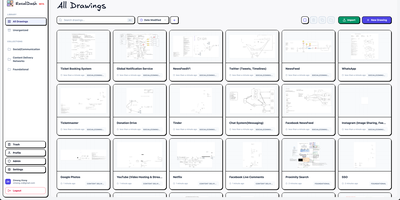
ExcaliDash adds persistent storage, access control, version history, and real-time collaboration to Excalidraw, transforming ephemeral whiteboarding sessions into a managed drawing library your team can rely on. The Node.js/Express backend with React/TypeScript frontend deploys via Docker Compose on port 6767, using Prisma ORM on SQLite for all drawings, users, and metadata. WebSocket-powered collaboration lets multiple users edit the same canvas simultaneously with live cursor presence. Drawing snapshots preserve every revision with visual preview and one-click restore to any previous state. Three authentication modes handle different deployment needs: local email/password for personal use, hybrid mode mixing native credentials with OIDC for gradual enterprise adoption, and enforced OIDC-only for organizations requiring SSO through providers like Authentik or Keycloak. Scoped sharing controls determine whether drawings stay private, shared internally with team members, or accessible via external links without authentication. Collections organize drawings through drag-and-drop grouping, full-text search locates any diagram instantly, and exports use the non-proprietary .excalidraw format ensuring complete data portability. 1,350+ stars since November 2025. Running on a dedicated VPS on RepoCloud with guaranteed CPU, RAM, and SSD, full root SSH access, and a browser serial console. AGPL-3.0 licensed.
Paca
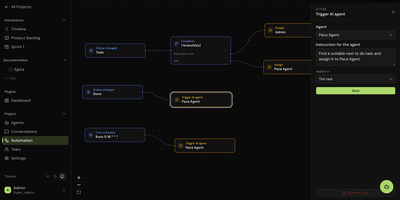
Paca is a self-hosted project management platform and Scrumban workspace where autonomous artificial intelligence agents collaborate with human software engineers as first-class Scrum teammates instead of external chat assistants. Engineering teams manage sprints, backlogs, and task lifecycles through a shared real-time board powered by Socket.IO where both humans and agents pick up assignments and post progress updates. A native Model Context Protocol server connects external coding assistants such as Claude Desktop and Claude Code directly into projects, tasks, and sprint data without custom scraping scripts. Distributed agents execute in isolated runtime sandboxes powered by the OpenHands software development kit, co-authoring behavior-driven development Gherkin scenarios with product owners and maintaining living system design documents. Visual event-driven automation builders compose multi-branch trigger, condition, and action pipelines that evaluate task dependency gates and cron schedules. A sandboxed WebAssembly plugin runtime allows developers to write custom backend logic and custom board views using Go or Rust. Running on a dedicated VPS on RepoCloud with guaranteed CPU, RAM, and SSD, full root SSH access, and a browser serial console. Apache 2.0 licensed.
Kodus AI
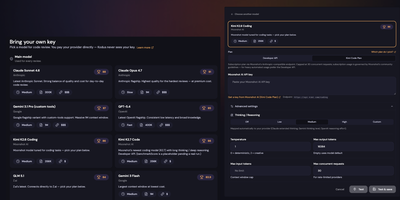
Kodus AI automates pull request code review with inline AI comments across GitHub, GitLab, Bitbucket, and Azure DevOps, supporting any LLM provider at cost with zero token markup. The multi-service TypeScript architecture deploys via Docker Compose, running an API server, background worker, webhooks service, and React dashboard backed by PostgreSQL with pgvector, MongoDB, and RabbitMQ. Integration covers both cloud platforms and their enterprise flavors (GitHub Enterprise Server, GitLab Self-Managed, Bitbucket Data Center) using standard OAuth flows and webhook signing to keep the review loop entirely inside your network. The platform is model-agnostic with Bring Your Own Key support for Claude, GPT, Gemini, Llama, and any OpenAI-compatible endpoint including locally-hosted models. Custom review rules combine your team's coding standards with requirements pulled from Jira, Linear, and Notion, automatically checking every PR against documented specifications. The CLI enables local reviews against working trees, staged diffs, branches, or specific commits, integrating into CI/CD pipelines as pre-merge gates. Source code is never stored and never used for model training, with all data encrypted in transit and at rest. 1,270+ stars and 129+ releases since March 2025. Running on a dedicated VPS on RepoCloud with guaranteed CPU, RAM, and SSD, full root SSH access, and a browser serial console. AGPL-3.0 licensed.
ExpenseOwl
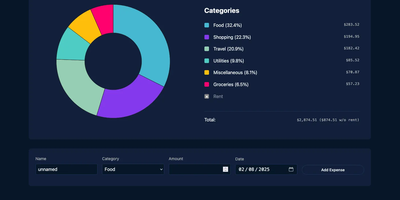
Log a date, amount, and category; get a clean monthly pie chart and a cashflow strip showing income, expenses, and net balance - ExpenseOwl is expense tracking stripped to what actually matters. The MIT-licensed Go application deliberately is not a budgeting system - no envelopes, no accounts, no double-entry, no bank sync - because its author found tools like Firefly III and Actual too heavy for the simple question "where did this month's money go?" The dashboard makes that question fast: click a pie slice to exclude fixed costs like rent and see discretionary spending clearly, then drill into a chronological table view to inspect or delete individual transactions. Recurring transactions handle salaries and subscriptions automatically, optional tags add a second classification axis, and settings cover custom categories, currency symbol, and a configurable month start date for non-calendar pay cycles. CSV import migrates data from virtually any other tool, and CSV export keeps your data portable. It ships as a self-contained binary and multi-architecture Docker image with zero internet interaction, stores data in flat JSON files by default (PostgreSQL optional), and installs as a PWA on phones. Single-user by design; pair it with an authenticating reverse proxy if exposed publicly.
IRONSIGHT
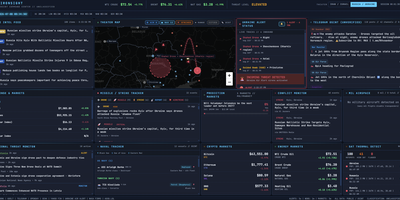
IRONSIGHT fuses over 50 publicly available intelligence sources into a single real-time dashboard that requires zero API keys and zero configuration. The Live Intel Feed aggregates 20+ RSS news sources with keyword relevance filtering from outlets including Reuters, Al Jazeera, and Kyiv Post. The Telegram OSINT module scrapes 27 channels every 60 seconds with automatic translation from Hebrew, Arabic, and Farsi. The interactive Leaflet Theater Map plots military aircraft positions via ADS-B transponder data, naval vessel locations in the Persian Gulf and Eastern Mediterranean, strike markers extracted from news and Telegram, missile trajectory arcs with range rings, and country-border overlays with a distance measurement tool. A header toggle switches the entire dashboard between Iran/Israel and Russia/Ukraine theaters, re-pointing every panel, map layer, and data feed to the selected conflict. The Israel Alert module streams live Pikud HaOref missile alerts with audio notifications, while the Conflict Monitor categorizes events into strikes, defense, diplomatic, and nuclear. Financial panels track defense contractor stocks, S&P 500, VIX, gold, Bitcoin, Ethereum, energy commodities via Yahoo Finance, and Polymarket prediction odds on conflict outcomes. NASA FIRMS satellite thermal detection flags fire and explosion signatures. The Next.js 16 App Router handles server-side data fetching for RSS and API endpoints while client-side React state management drives real-time polling updates. On RepoCloud, deploy IRONSIGHT on a dedicated VPS with persistent storage, root SSH access, and full control over your intelligence monitoring environment, all under the MIT license.
DockPanel
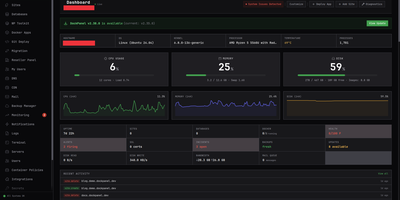
Created in March 2026 and rapidly gaining traction in self-hosting communities, DockPanel delivers the most feature-dense free server panel available — 811 API endpoints, 153 one-click Docker app templates across 14 categories, and full multi-server management, all running on three Rust binaries consuming under 50MB of combined RAM. The panel handles the complete server lifecycle: sites with automatic SSL via Let's Encrypt, MySQL and PostgreSQL databases in Docker containers, Git push-to-deploy using Nixpacks for automatic language detection without Dockerfiles, blue-green zero-downtime deployments with automatic rollback on failed health checks, DNS management, mail servers, monitoring dashboards, and encrypted backups to S3, SFTP, Backblaze B2, or Google Cloud Storage. Security receives production-grade attention with per-image CVE scanning that gates deployments, a built-in WAF, passkey authentication alongside Argon2 password hashing, HttpOnly JWT sessions with blacklist-on-logout, rate limiting on auth endpoints, and fail2ban integration — all verified through an 18-vulnerability pentest with zero remaining issues. Infrastructure as Code support exports your entire server configuration to YAML, and the developer CLI provides status, diagnose, and export commands for automation. GPU passthrough enables AI workload hosting, reseller accounts support white-label branding for agencies, and ARM64 compatibility covers Raspberry Pi and Oracle Cloud free-tier deployments. Running on a dedicated VPS on RepoCloud with guaranteed CPU, RAM, and SSD, full root SSH access, and a browser serial console. AGPL-3.0 licensed.
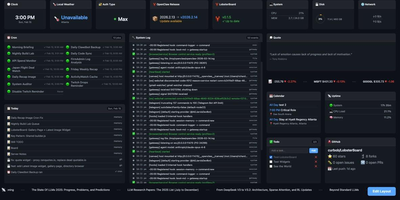
LobsterBoard
LobsterBoard lets you assemble custom monitoring dashboards from 50 pre-built widgets using a visual drag-and-drop editor, covering everything from CPU and memory gauges to AI subscription trackers, stock tickers, and camera feeds on your own server with zero cloud dependencies. The snap-grid editor handles layout composition with resize handles and a property panel, so you drag widgets onto a canvas, configure their data sources, and the dashboard is live. Real-time system statistics flow through Server-Sent Events, updating CPU load, memory pressure, disk usage, network throughput, and Docker container status without page refreshes. Five built-in themes range from a dark default to a retro CRT terminal aesthetic, a warm sepia paper look, and pastel options for different display environments. The template gallery lets you export complete dashboard layouts with auto-captured screenshot previews, share them with other users, and import configurations as a full replacement or selective merge. Custom pages extend beyond dashboards into notes, kanban boards, or any free-form layout you need. Built-in widgets connect to iCal feeds for calendar events, RSS sources for news aggregation, weather APIs for local conditions, and financial data providers for cryptocurrency and stock prices. The whole system runs from a single server.cjs file with zero cloud dependencies or external frameworks. Running on a dedicated VPS on RepoCloud with guaranteed CPU, RAM, and SSD, full root SSH access, and a browser serial console. BSL-1.1 licensed (free for non-commercial use; converts to MIT in 2030).
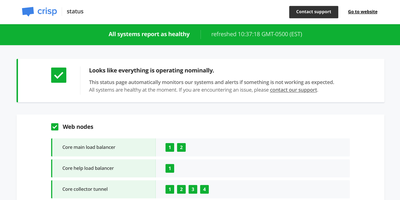
Vigil
Vigil monitors your entire distributed infrastructure and generates a public status page from a single Rust binary small enough to run on a Raspberry Pi, consuming minimal CPU and memory while providing crash-free reliability. Four distinct monitoring modes cover every topology: poll probes check HTTP, TCP, SSH, and ICMP endpoints for reachability with configurable intervals and thresholds; push probes receive health reports from Vigil Reporter libraries embedded in your application code across Node.js, Python, Golang, Rust, TypeScript, Dart, and C#; local probes delegate monitoring to Vigil Local slave daemons running behind firewalls on separate LANs; and script probes execute custom shell commands for specialized health checks. Each monitored service transitions through healthy, sick, and dead states based on consecutive probe failures, with configurable thresholds controlling state transition sensitivity. When services change state, Vigil dispatches notifications through twelve alert channels including Slack, Email, Twilio SMS, Telegram, Pushover, Gotify, XMPP, Matrix, Zulip, Cisco Webex, and generic webhooks. The generated status page displays service groups organized by category with real-time replica status, system load metrics from reporter probes, and a maintenance announcement system for communicating planned downtime through the Manager HTTP API. Configuration uses a single TOML file defining all probes, services, and notification channels with no database dependency. Docker deployment pulls the official image with volume-mounted configuration. Running on a dedicated VPS on RepoCloud with guaranteed CPU, RAM, and SSD, full root SSH access, and a browser serial console. MPL-2.0 licensed.
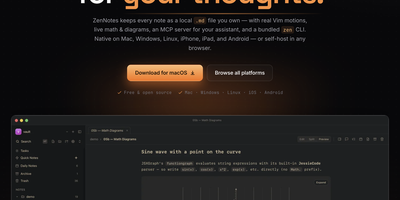
ZenNotes
With over 2,200 GitHub stars and a philosophy that your notes should be files you own rather than rows in a database, ZenNotes is the keyboard-first Markdown editor that runs as a self-hosted web app backed by a Go server accessible from any browser on your network. Every note is a plain .md file in a vault directory you mount, with zero proprietary lock-in. Modal editing with real Vim motions, leader-key flows, and a command palette keeps your hands on the keyboard through edit, split, and preview modes. The rendering engine handles KaTeX math, Mermaid diagrams, TikZ graphics, and JSXGraph plots directly from Markdown syntax alongside wiki links and callout blocks. A first-party MCP server ships in the box with one-click integration for Claude Desktop and Cursor, letting AI assistants read and write the same Markdown files on disk without sync layers or duplicate copies. The bundled zen CLI provides note creation, search, tagging, task toggling, and piped capture with JSON output for shell scripting. Board views render plain CSV files as Kanban columns. Daily notes, quick capture, archive, and trash round out the vault workflow. The Go backend serves the browser frontend on port 7878 with token-based authentication, configurable browse roots, TLS proxy support, and file permission hardening at 0600/0700 defaults. Deploy via the multi-arch Docker image for linux/amd64 and linux/arm64. Running on a dedicated VPS on RepoCloud with guaranteed CPU, RAM, and SSD, full root SSH access, and a browser serial console. MIT licensed.
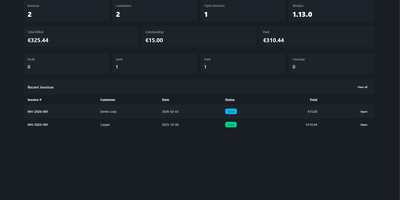
Invio
Create an invoice, share a secure link, get paid — that's the entire workflow, no client portals or account registrations required. Invio distills billing into its absolute minimum viable surface while still producing legally compliant EU electronic invoices in Factur-X/ZUGFeRD 2.2 BASIC, UBL 2.1, and Italian FatturaPA formats, all embedded as XML attachments inside WeasyPrint-rendered PDFs. The Deno 2 backend uses Hono v4 for HTTP routing with SQLite persistence, while the SvelteKit 2 frontend styled with Tailwind CSS v4 and DaisyUI v5 delivers a responsive interface that stays out of your way. The team access system includes a permission matrix, TOTP-based two-factor authentication, and OIDC integration with configurable auto-provisioning — drop it into existing identity infrastructure without manual user management. Preset products let you build invoices from reusable catalog items. A change history log tracks every modification for audit purposes. Rate limiting protects the API behind reverse proxies. The entire stack ships as a single multi-stage Docker image containing Deno, Bun, Node, WeasyPrint, and all required font packages — zero external service dependencies beyond the container itself. Running on a dedicated VPS on RepoCloud with guaranteed CPU, RAM, and SSD, full root SSH access, and a browser serial console. Unlicense licensed.
Yuvomi
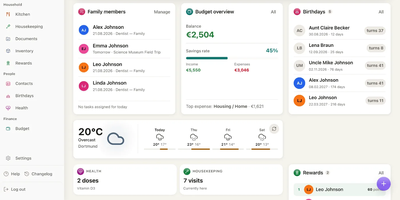
Replace a dozen household subscriptions with one app that keeps your family's tasks, calendars, meals, budget, and shopping in a single private place you control. Nineteen modules cover the daily rhythms of a household: assign chores with deadlines and priorities, plan the week's dinners and push the ingredients to a shared shopping list in one tap, track income and expenses by category with automatic subscription renewal warnings, and log health activities from vitals to medications. Two-way sync connects to Google Calendar via OAuth, iCloud and Nextcloud via CalDAV, and Outlook via Microsoft Graph, so every family member's phone shows the same schedule without switching apps. CardDAV keeps contacts in sync with external address books. The budget module handles accounts, loans, split expenses, and per-category planning with savings goals and month-over-month comparisons. Documents attach to tasks, receipts link to transactions, and a checked-off grocery item books itself back into the pantry inventory with its quantity. A Kanban board, recurring task schedules, and a rewards ledger that pays out points for completed chores keep kids and adults accountable. Wall mode turns a kitchen tablet into a glanceable family dashboard, and the Immich screensaver shows your own photos when the screen goes idle. API tokens and a built-in MCP endpoint let AI agents and third-party tools interact with every module programmatically. Deploy on a dedicated VPS on RepoCloud with guaranteed CPU, RAM, and SSD, full root SSH access, and a browser serial console. MIT licensed.
Cozy Cloud
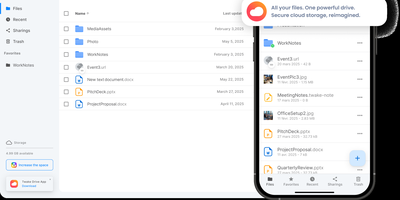
With over 1,200 GitHub stars, 12,000+ commits, and more than a decade of active development distributed under the AGPL-3.0 license, Cozy Cloud operates as a comprehensive personal data hub that goes far beyond file storage by connecting your documents, contacts, calendars, banking transactions, energy bills, and productivity tools into a single self-hosted platform where no third party profiles you. The cozy-stack Go binary handles file storage, CouchDB document management, job scheduling, app serving, and the REST API in a single process consuming approximately 150MB of RAM idle. Sandboxed konnectors import data from 50+ external services — banks, utility providers, telecom operators, cloud drives — running as isolated jobs via nsjail to prevent untrusted code from accessing other user data. The built-in app store serves web applications in subdomain-isolated environments with Content Security Policy headers, each app communicating exclusively through the documented REST API. Real-time synchronization via PouchDB replication and WebSocket keeps files, contacts, and documents consistent across desktop clients, mobile apps for iOS and Android with automatic photo backup, and the web interface. Security features include automatic Let's Encrypt TLS certificates, Argon2id password hashing, optional TOTP two-factor authentication, and GDPR-compliant data export via the CLI. Each user receives their own isolated instance with independent storage, database, and application configuration. Running on a dedicated VPS on RepoCloud with guaranteed CPU, RAM, and SSD, full root SSH access, and a browser serial console. AGPL-3.0 licensed.
SnapOtter
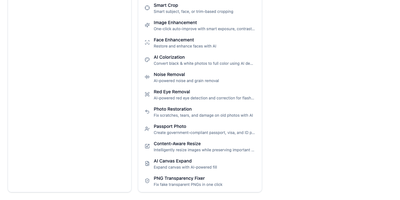
Fifty-plus image processing tools in a single Docker container, with no Redis, no Postgres, and no external dependencies: SnapOtter is a self-hosted image toolkit. The everyday operations are all here: resize, crop, compress, watermark, vectorize, meme generation, GIF creation, and format conversion spanning 55+ input formats (including 23 camera RAW formats) to 14 output formats. What sets it apart is the local AI layer: background removal, photo upscaling and restoration, object erasing, face blurring, OCR, and canvas expansion all run on locally hosted models, so no image ever leaves your server - a hard guarantee that cloud tools like remove.bg or Canva can't make. Optional NVIDIA GPU support accelerates those AI tasks substantially when hardware is available, but everything works on CPU. A built-in layer-based editor handles composition work directly in the browser, and screenshot beautification turns plain captures into polished visuals with backgrounds, shadows, and padding - useful for docs and marketing alike. Batch operations process unlimited images simultaneously, and the full REST API with OpenAPI documentation exposes every tool for pipelines and automations: thumbnail generation on upload, bulk RAW conversion, automated watermarking. For teams processing sensitive imagery or anyone tired of per-image SaaS pricing, SnapOtter replaces a stack of subscriptions with one private container.
Aptabase
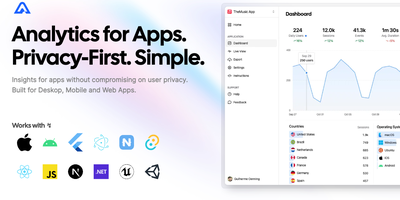
Web analytics tools ignore native mobile, desktop, and game apps; Aptabase was built for exactly those. If Firebase Analytics would force a privacy-policy footnote you don't want to write, this is the alternative - session-based metrics with no cookies, no IDFA or GAID, no device fingerprinting, and a daily-rotated salt that makes cross-day re-identification mathematically impossible. That design means GDPR, CCPA, and PECR compliance out of the box and "Data Not Collected" App Store privacy labels without ATT prompts. The SDK coverage is the widest in its category: eleven first-party libraries spanning Swift, Kotlin, Flutter, React Native, Tauri, Electron, .NET MAUI, NativeScript, Unity, Unreal Engine, and JavaScript for web - each MIT-licensed, following platform conventions, and accepting a custom host parameter that points at your instance. Integration is minutes: initialize with an app key, call trackEvent with optional properties, and the dashboard shows sessions, events, app versions, OS breakdowns, and country-level geography. The self-hosted stack is a .NET server over PostgreSQL for metadata and ClickHouse for high-volume event ingestion, giving cloud-parity features under an AGPL license. For indie iOS/Android apps, Electron and Tauri tools, and Unity or Unreal games, it replaces Firebase without the Google entanglement.
SwarmClaw
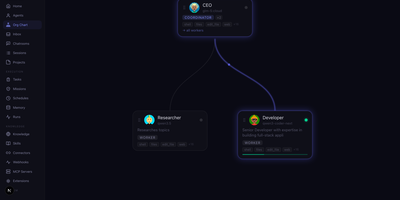
Running a single AI agent is straightforward; running a team of specialized agents that delegate tasks, share memory, and coordinate through structured workflows requires an orchestration layer, and that is exactly what SwarmClaw provides. Define a hierarchy of agents in an org chart where a Coordinator (your CEO agent) delegates research tasks to a Researcher, coding tasks to a Developer, and design tasks to a Designer, each configured with its own LLM provider, tool permissions, and skill set. The Task Board presents a Kanban view of all work items across Backlog, Queued, Running, and Completed columns, with each task card showing its assigned agent, tags, due dates, and approval gates that pause execution until a human reviews and approves. Agents execute work using built-in tools for file operations, shell commands, browser automation, and persistent memory, plus any MCP server you connect via stdio, SSE, or streamable HTTP transport. Durable structured sessions support branching logic, repeat loops, parallel branches with explicit joins, and restart-safe run state that survives crashes without losing progress. Over 23 LLM providers ship built-in: Claude Code CLI, OpenAI, Anthropic, Google Gemini, DeepSeek, Groq, Mistral, xAI Grok, Fireworks, Ollama, and more. Connectors push messages to Discord, Slack, and Telegram, while cron schedules and webhooks trigger agent runs automatically. Running on a dedicated VPS on RepoCloud with guaranteed CPU, RAM, and SSD, full root SSH access, and a browser serial console. MIT licensed.
Nixopus
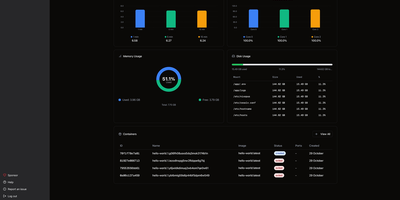
Tell an AI agent to deploy your app and watch it actually happen. Nixopus connects to your GitHub repo, analyzes the codebase to detect your framework, generates the right Docker configuration, resolves dependency conflicts, and ships the whole thing to your server with HTTPS enabled. When something breaks, the agent reads the logs, creates a pull request with a fix, and redeploys without waking you up. The chat interface lets you deploy, add custom domains, check logs, roll back, and troubleshoot in plain English from the web dashboard or directly from your VS Code or Cursor editor. Extensions bring one-click installs for 100+ self-hostable apps like Appwrite, Excalidraw, and Ollama, each showing you exactly what it runs on your server before installation. Connect multiple servers and monitor CPU, memory, disk, and running containers across your entire fleet from a single dashboard with draggable widget layouts. The built-in terminal opens SSH sessions right in the browser with split-pane support, so you can watch logs in one pane while running commands in another. Framework detection covers Next.js, Django, Rails, Go, FastAPI, and anything else that fits a container image. Every deployment gets automatic TLS via Caddy with Let's Encrypt certificates provisioned and renewed silently. Previous container images are retained so rollbacks skip the rebuild step entirely. Deploy on a dedicated VPS on RepoCloud with guaranteed CPU, RAM, and SSD, full root SSH access, and a browser serial console. AGPL-3.0 licensed.