DOMjudge
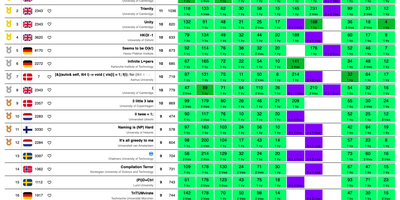
Built for ICPC-style programming contests, DOMjudge takes team submissions, judges them in a restricted sandbox, and posts a live scoreboard. Each team gets its own page. There they read the problem set, submit source code from the browser or a command line client, follow verdicts, and send clarification requests. Judges see every submission, judging run, and output diff. They verify results and rejudge a single submission or everything for a language, problem, team, or judgehost. Administrators schedule activation, start, freeze, end, and unfreeze times, import teams, categories, affiliations, and problems in bulk, and watch a traffic-light status for every team. The public scoreboard freezes for the final stretch and exports as a static HTML page. Judgehosts compile and run each solution with time and memory limits in languages such as C, C++, Java, Python, Kotlin, Go, and Haskell, with custom validators and interactive problems when a task calls for them. Balloon runners get a delivery queue. Clarifications sort into categories. Open contests accept self-registration. The Contest API and event feed connect external scoreboards, and a shadow mode compares results against another system. Running on a dedicated VPS on RepoCloud with guaranteed CPU, RAM, and SSD, full root SSH access, and a browser serial console. GPL-2.0 licensed.
Scoold
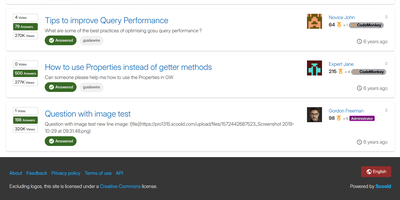
Scoold brings Stack Overflow-style Q&A to a server you control, so answers get voted, accepted, and found again instead of scrolling away in chat. Askers get a Markdown editor with live preview, tags, and emojis, and the form suggests similar questions and flags likely duplicates before anything is posted. Answerers collect upvotes, accepted answers, reputation points, and badges, including custom ones with your own text, icon, and color. Authors and moderators can restore any earlier revision, because every edit is kept. Searchers can use Lucene syntax such as exact phrases, wildcards, and boolean operators. Admins split one site into private spaces, up to ten in the free edition, and choose how people sign in: email and password, LDAP, or social providers such as Google and GitHub. They can also back up and restore data, import a Stack Overflow for Teams export, and follow a dashboard of questions, answers, traffic, and active members. Builders get a REST API with OpenAPI docs, signed webhooks, Zapier and n8n connectors, and an optional MCP server for AI assistants. Color themes include a dark mode, Mermaid diagrams and KaTeX formulas can be switched on, and right-to-left languages are supported. SAML, SCIM, file uploads, and chat integrations are Pro-edition features. Running on a dedicated VPS on RepoCloud with guaranteed CPU, RAM, and SSD, full root SSH access, and a browser serial console. Apache-2.0 licensed.
OpenCode Manager
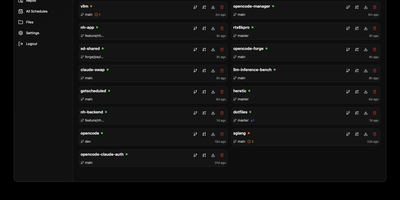
OpenCode Manager is a mobile-first command center for AI coding agents. Install the PWA on your phone or tablet and you get real-time streaming chat, multi-repository Git operations, and scheduled automation right in your pocket. Git integration handles SSH-authenticated repo cloning, worktree management, unified diffs, and branch operations across all your projects in one dashboard. Chat with coding agents through Server-Sent Events streaming that supports slash commands, @-mentions for files, Plan and Build modes, and Mermaid diagram rendering for architecture discussions. Schedule reusable prompts to run against any repository on intervals or cron expressions, with each run tracking history and linking to sessions so you can pick up exactly where automation left off. MCP server configuration adds local and remote HTTP servers with OAuth support, plugging into the broader Model Context Protocol ecosystem. A dedicated assistant workspace provides an isolated AI environment with auto-provisioned skills for managing schedules, notifications, and settings. Multiple AI providers are supported including Anthropic, GitHub Copilot, and OpenAI-compatible services, each configurable with custom system prompts and granular tool permissions. Push notifications alert you to session events, agent questions, errors, and task completions across all managed repositories.
docat
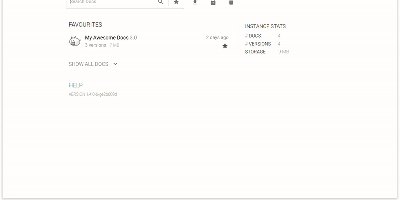
Hosting finished documentation for many projects at once, Docat leaves every uploaded version online for the readers still on version 2. Zip the static HTML that MkDocs, Sphinx, or mdBook produced. Send it to a project and version with curl or the docatl command line client. Tag the newest build as latest, and links get a stable address. Readers land on a home page that opens on starred favourites. A search box narrows the list, and its queries can be shared as links. Instance statistics report documents, versions, and storage. Inside any docs page, a version dropdown with a latest label moves between releases. Uploads are open at first. Claim a project and it returns a token that must accompany every later version upload or deletion. The same token hides versions from the dropdown and from search, and each project can carry its own icon. Operators can mount a small config file for custom header and footer HTML, raise the 100 MB default archive limit with an environment variable, and put nginx basic authentication in front of the write endpoints. Swagger UI and ReDoc pages at /api/docs and /api/redoc document the HTTP API for pipeline authors. Running on a dedicated VPS on RepoCloud with guaranteed CPU, RAM, and SSD, full root SSH access, and a browser serial console. MIT licensed.
WYGIWYH
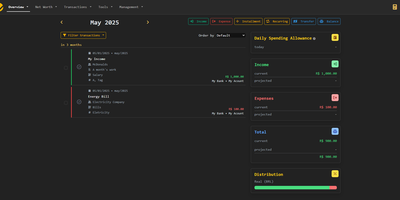
Track income, recurring expenses, and multi-currency assets with WYGIWYH, a self-hosted personal finance platform built on a strict cash-flow principle that preserves monthly savings while exposing spending patterns. Users can aggregate holdings across checking accounts, physical cash reserves, crypto wallets, and custom asset models with automatic foreign exchange rate calculations. The transaction engine executes automated adjustment rules to normalize merchant names, apply category tags, and calculate split costs on every purchase. Investors can schedule dollar-cost averaging portfolios to monitor accumulation performance and price averages over extended investment horizons. Interactive dashboards provide monthly breakdown grids, calendar views of pending recurring bills, and multi-year net worth trajectories. Financial analysts can export transaction journals to CSV, automate data synchronization through REST webhooks, or query accounts with AI agents via the Model Context Protocol. Customizable notification triggers alert account owners to payment due dates and anomalous spending spikes across monitored accounts. Running on a dedicated VPS on RepoCloud with guaranteed CPU, RAM, and SSD, full root SSH access, and a browser serial console. GNU AGPL v3.0 licensed.

Warmbly
Cold outreach dies in the spam folder long before a prospect reads it, and Warmbly is the open-source platform that keeps your mailboxes warm, capped, and credible while campaigns run from the accounts you already own. Connect Google Workspace, Microsoft 365, or any SMTP and IMAP mailbox, and Warmbly checks SPF and DMARC records, scores mailbox health, then warms each account gradually, starting near 10 messages a day and ramping toward a 40-per-day ceiling instead of blasting from day one. Campaigns run as multi-step sequences spread across many mailboxes, with per-mailbox daily caps, minimum spacing between sends, and weekday sending windows, so volume grows without one account absorbing all the risk. Opens, clicks, bounces, and complaints stream into a deliverability view with suppression handling, while every reply from every mailbox lands in one unified inbox your whole team can work in real time. A built-in CRM tracks contacts, pipelines, deals, tasks, and meetings next to the conversations that created them. Visual playbooks react the moment a reply, booking, bounce, or warmup dip arrives: branch on intent or confidence, let an AI step read the reply and act only with the actions you allow, open the deal, post to Slack, update HubSpot or Pipedrive, and test the whole path on a canvas before it goes live. Running on a dedicated VPS on RepoCloud with guaranteed CPU, RAM, and SSD, full root SSH access, and a browser serial console. Apache-2.0 licensed.
CrowdSec Web UI
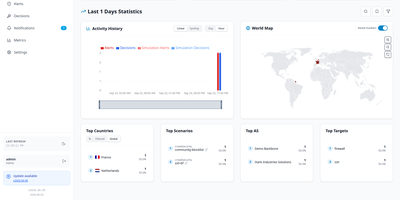
CrowdSec Web UI provides a centralized web console for monitoring intrusion detection telemetry, managing firewall remediation decisions, and auditing security events across multiple CrowdSec security engines. Administrators can connect several CrowdSec Local API endpoints simultaneously, aggregating threat intelligence and active bans into a unified visual interface. The dashboard displays geographic origins of attacking IP addresses, active remediation durations, and specific scenario triggers such as brute-force authentication attacks or web vulnerability probes. Operators can search through historical alert logs, inspect raw HTTP request details, and drill down into individual IP behaviors to differentiate authentic threats from false positives. Manual intervention tools let security teams enforce custom IP bans, adjust expiration timers, or immediately revoke erroneous bans across all connected bouncers with a single click. Integrated notification pipelines dispatch real-time security alerts to external destinations including ntfy, Gotify, and MQTT message brokers whenever critical thresholds are breached. Built-in Prometheus metrics dashboards visualize processing latencies, parser throughput, and decision counts over customizable time windows. Running on a dedicated VPS on RepoCloud with guaranteed CPU, RAM, and SSD, full root SSH access, and a browser serial console. AGPL-3.0 licensed.
Lingarr
When international movies and series arrive in a Radarr or Sonarr library without native-language captions, Lingarr automatically translates subtitle files across dozens of languages using local AI models or cloud translation engines. Connect your existing movie and television directories to scan media folders, identify missing target-language subtitles, and generate translated caption files alongside the original video streams. Administrators can configure an ordered chain of 13 translation backends, pairing a primary engine such as OpenAI, Anthropic, Gemini, DeepSeek, Mistral, xAI, or DeepL with automatic fallback to self-hosted LibreTranslate or local Ollama models whenever rate limits occur. Context-aware prompt templates inject preceding and following dialogue lines into each AI request so idioms, speaker tone, and timing remain natural across scene transitions, while batch translation mode processes multi-line blocks in a single call. From the web dashboard, users can browse indexed movies and episodes, trigger manual single-file or library-wide translations, and monitor active queues, progress percentages, and historical logs in real time. Scheduled background tasks and a documented REST API allow media servers to automate caption generation completely hands-free as new releases finish downloading. Running on a dedicated VPS on RepoCloud with guaranteed CPU, RAM, and SSD, full root SSH access, and a browser serial console. AGPL-3.0 licensed.
Cinephage
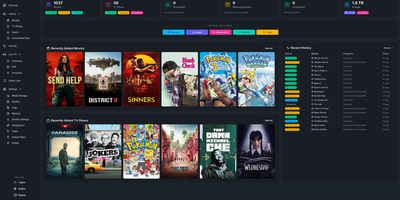
Cinephage puts your movies, series, live TV, subtitles, indexers, and download clients into one self-hosted media command center instead of a stack of separate automation services. Browse and organize libraries from a responsive interface that works on desktop and mobile, with file scanning and metadata matching keeping titles identified correctly. Search across configured indexers, compare releases with quality profiles and custom scoring rules, and send chosen downloads to your client without repeating setup for each media type. Let monitoring tasks watch for missing episodes, upgraded releases, and newly aired content, while the blocklist stops failed releases from coming back. Pull subtitles from multiple providers with language profiles, create dynamic smart lists from list sources or custom queries, and add matching titles automatically. Generate streaming links as .strm files for players such as Jellyfin, Emby, and Kodi, try live TV channels with guide data where configured, and receive library update notifications in your media server. Running on a dedicated VPS on RepoCloud with guaranteed CPU, RAM, and SSD, full root SSH access, and a browser serial console. GPL-3.0 licensed.
Temps
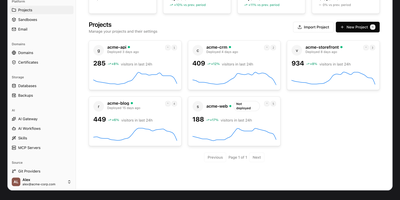
Consolidate application hosting, web analytics, error tracking, and performance monitoring into Temps, an open-source developer platform that replaces disparate SaaS subscriptions with a single compiled Rust binary. Engineering teams deploy full-stack web applications, background daemons, and microservices directly from Git repositories with automated TLS certificate provisioning powered by an embedded Cloudflare Pingora reverse proxy. The centralized web console unifies real-time visitor analytics, conversion funnels, and rrweb-powered session replay recordings without third-party tracking scripts. Integrated error monitoring ingests runtime exceptions with full stack traces and source map resolution, while continuous health checks evaluate container CPU utilization, memory thresholds, and network throughput across custom alerting rules. Developers manage infrastructure through an extensive command line interface containing over 440 operations across 69 command groups, or deploy drop-in skill files that allow AI coding assistants like Claude Code and Codex to provision preview environments autonomously. The platform also provides serverless key-value storage, S3-compatible blob buckets, and native transactional email routing with custom DKIM validation. Running on a dedicated VPS on RepoCloud with guaranteed CPU, RAM, and SSD, full root SSH access, and a browser serial console. Apache 2.0 licensed.
Budget Board
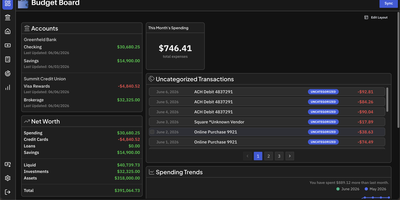
Budget Board is an open-source personal finance dashboard built to replace Mint by unifying checking accounts, credit cards, property assets, monthly category budgets, and long-term savings goals under your own roof. Households can connect their financial institutions through SimpleFIN for North American banks or LunchFlow for international accounts so balances and daily transactions sync automatically on a configurable schedule. If you prefer offline statement management, the bulk CSV importer parses custom date and amount formats while mapping rows directly to your accounts. Once transactions arrive, you can train the built-in machine learning auto-categorizer on your historical spending with a customizable confidence threshold, or define deterministic rules that match merchant descriptions, dates, and amounts. Monthly budget cards track hierarchical parent and child categories against spending limits, and the goals workspace calculates progress toward paying down debt or building an emergency fund. Interactive trends charts let you filter cash flow, net worth, and category breakdowns across custom date ranges and accounts. Multi-user households can secure their financial records with local two-factor authentication or external OpenID Connect single sign-on, alongside localized date and currency formatting in English, German, French, and Simplified Chinese. Running on a dedicated VPS on RepoCloud with guaranteed CPU, RAM, and SSD, full root SSH access, and a browser serial console. AGPL-3.0 licensed.
Wastebin
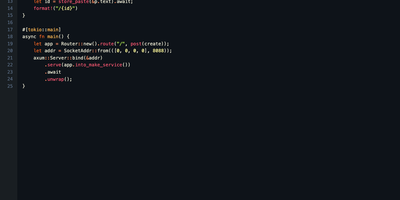
Wastebin is a self-hosted pastebin that turns any text or code snippet into a shareable link with syntax highlighting, optional password encryption, and expiration you control. Code pastes are highlighted for more than 170 languages, and nine built-in color themes in light and dark variants keep long listings readable. Markdown pastes render as formatted HTML with tables, task lists, and admonitions, and a single keystroke flips between the rendered page and the highlighted source. Sensitive snippets can be locked behind a password, and links can expire after a set time or burn after a single reading, which makes it a clean way to hand over credentials, tokens, and one-off secrets. Every paste view can show a QR code that opens the same page on your phone, and keyboard shortcuts cover raw view, URL copying, line wrapping, and the rendered toggle without touching the mouse. There are no accounts to create: you paste anonymously, and an owner cookie lets you delete your own entries later. Scripts and terminals are first-class citizens through a small JSON API, and a Neovim plugin pastes the current buffer without leaving the editor. The whole service is one small program with almost no upkeep, and stored pastes are compressed on disk so a busy instance stays lean for years. Running on a dedicated VPS on RepoCloud with guaranteed CPU, RAM, and SSD, full root SSH access, and a browser serial console. MIT licensed.
Calagopus
When hosting multiplayer game servers for communities or friends requires container isolation and low-overhead administration, Calagopus steps in as a modern game server management panel. Server operators use it to deploy and control Minecraft, Rust, ARK, Valheim, FiveM, and any other Linux containerized workload while reusing existing Pterodactyl and Pelican eggs without modification. From the live WebSocket console, administrators monitor real-time CPU, memory, and network graphs, autocomplete saved command snippets, inspect per-layer Docker image pull progress bars, and pop the terminal out into a secondary window. Managing configuration files and modpacks happens directly in the browser through a split-pane tabbed editor featuring real-time collaborative editing, side-by-side revision diffs with one-click rollback, a visual disk usage treemap, in-place archive browsing, and VS Code workspace mounting. Database workflows are equally streamlined: you can provision MySQL, PostgreSQL, MongoDB, or Redis instances, browse and edit rows or SQLite files in a built-in data explorer, and run read-only or writable SQL queries without external database clients. Automated schedules support conditional if-else branching, regex variable extraction from console output, crash-detection triggers, and eight backup storage drivers including S3, Restic, Kopia, ZFS, Btrfs, and Proxmox Backup Server. Running on a dedicated VPS on RepoCloud with guaranteed CPU, RAM, and SSD, full root SSH access, and a browser serial console. MIT licensed.
Castopod
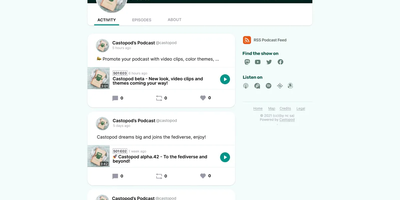
Every podcast you publish through Castopod automatically becomes a Fediverse social account that Mastodon, Pleroma, and Pixelfed users can follow, boost, and comment on from their own timelines. This ActivityPub integration transforms podcast distribution from a one-way broadcast into a two-way conversation where listeners interact with episodes through the social platforms they already use. Beyond federation, the platform manages the complete lifecycle: upload an episode, and auto-generated RSS feeds distribute it to Apple Podcasts, Spotify, Deezer, Podcast Addict, and every compatible directory. IABv2-compliant analytics measure downloads, geographic distribution, and listening apps while maintaining GDPR, CCPA, and LGPD compliance through anonymized data collection. Podcasting 2.0 namespace support unlocks chapters with images, SRT/VTT transcripts, location tags, and person credits that modern podcast apps surface to listeners. Video episodes publish alongside audio, and auto-generated clips feed social media sharing workflows. Monetization tools span Value4Value micropayments, premium subscriptions, funding links, and cookieless advertising. Multi-user roles operate per-podcast: contributors, editors, and admins each work within defined permission boundaries. The PHP application runs behind nginx with MariaDB and Redis on a RepoCloud VPS with dedicated CPU, RAM, and SSD. AGPL-3.0 licensed.

Glean
Information overload is the default state of the modern internet, and Glean exists to tame it by pulling every blog, newsletter, and news source you follow into a single, organized reading experience with an interface that prioritizes clarity over clutter. Subscribe to RSS and Atom feeds, import your existing subscriptions via OPML, and organize everything into multi-level folders with a flexible tagging system that lets you slice your reading list by topic, priority, or mood. A three-pane layout presents your feed list, article summaries, and full content side by side, with one-click actions for marking articles as read, saving them for later, bookmarking favorites, or archiving what you have already processed. Background workers fetch new articles every 15 minutes so your feeds stay current without manual refreshes. The preference learning engine (backed by Milvus vector embeddings) scores incoming articles against your reading history and surfaces a personalized Smart Feed of content you are most likely to care about, reducing the time spent scrolling past irrelevant posts. A built-in MCP server lets AI assistants like Claude Desktop search and interact with your feed library directly. The admin dashboard on a separate port provides user management, system monitoring, and configuration controls for multi-user deployments. Bookmark external URLs from any browser with the Chrome extension, or access your feeds on mobile through the Progressive Web App. Running on a dedicated VPS on RepoCloud with guaranteed CPU, RAM, and SSD, full root SSH access, and a browser serial console. AGPL-3.0 licensed.
Pluton
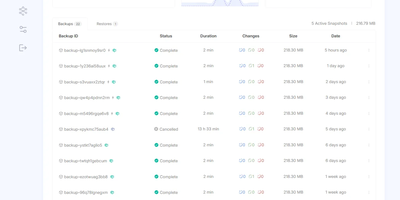
On a schedule you choose, Pluton backs up your folders to cloud storage and other disks, then lets you verify and restore every snapshot and see exactly what happened in a clean, self-hosted web dashboard. Three copies: every plan writes to a primary storage and can replicate to up to two more, so the 3-2-1 rule is a toggle in the plan wizard rather than a weekend project. Two kinds of media: pair a local disk or mounted drive with Backblaze B2, Cloudflare R2, Google Drive, Dropbox, pCloud, SFTP, S3-compatible buckets, or any of 70+ connectors, and press Verify to test a connection before trusting it. One place to look: the plan page charts file counts and sizes over a selectable range, a health strip colors recent runs, and a live panel counts files, bytes, and time remaining while each mirror initializes and replicates. Zero mysteries: every backup keeps a timestamped event timeline from dry run to pruning, and plan logs filter by level and task, search messages, and download as a file. Schedules run from every few minutes to monthly, including chosen weekdays; retention keeps daily, weekly, and monthly snapshots; and scripts can run before or after a job. Alerts reach you by email, Slack, Discord, or ntfy, and optional two-factor sign-in guards the dashboard. Running on a dedicated VPS on RepoCloud with guaranteed CPU, RAM, and SSD, full root SSH access, and a browser serial console. Apache-2.0 licensed.

OpenPost
OpenPost is an open-source content creation and publishing suite that unifies multi-platform social scheduling, graphic design, and video editing into a single self-hosted control center. Creators can compose one primary announcement and tailor bespoke copy, media attachments, and thread structures across sixteen distinct networks including Bluesky, Mastodon, X, Threads, LinkedIn, YouTube, and Discord. The integrated browser canvas lets you design multi-slide carousels with custom typography, layer ordering, and automated background removal without juggling external design software. A built-in multitrack video suite allows you to trim footage, render subtitle captions, insert transitions, and slice clips directly by highlighting spoken words in generated transcripts. Social managers can organize campaigns through an interactive visual calendar, stagger deliveries across automated queues, and monitor unified comment streams to answer incoming audience inquiries directly from a single inbox. Teams can organize multiple independent client brands into partitioned workspaces with role-based permissions, automated repost policies, and programmable scheduling webhooks via native REST and Model Context Protocol endpoints. Running on a dedicated VPS on RepoCloud with guaranteed CPU, RAM, and SSD, full root SSH access, and a browser serial console. AGPL-3.0 licensed.
ClassicPress
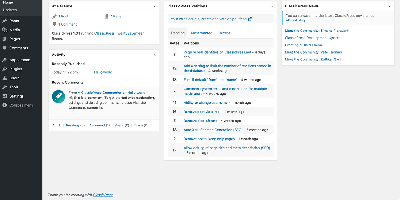
WordPress without Gutenberg: ClassicPress, the community-led fork, keeps the TinyMCE classic editor as the default and strips the block editor and Full Site Editing out of core entirely. The result is roughly half WordPress's size - obsolete libraries like jQueryUI, Thickbox, and Flash support are gone, replaced by native HTML5 elements and modern alternatives like SortableJS - which translates to a measurably faster admin and a leaner attack surface. Forked from WordPress 6.2, it remains compatible with the vast plugin and theme ecosystem targeting that lineage (anything not requiring blocks generally works, helped by a blocks-compatibility mode), and the PHP-first WordPress API developers have used for over a decade works unchanged - no React required to extend your CMS. The fork adds its own improvements: built-in media categories and tags with bulk editing, revision management that lets you prune database bloat, native HTML5 dialogs for accessible touch-friendly menus, and recent releases bring APCu object-cache support, vanilla-JS core widgets, and performant translations. Governance is democratic and community-driven rather than corporate. For content sites, business sites, and blogs where the classic editing workflow is the feature, ClassicPress is stability as a philosophy.