Airstation
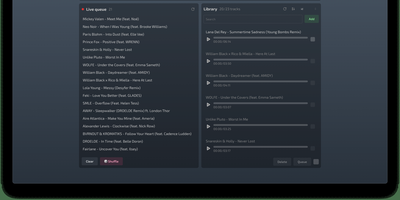
Airstation turns your music folder into a radio station where every listener hears the same second of the same song at the same time. From the studio panel you upload tracks once, and they stay in a permanent library you can search and sort by date added, name, or duration. Build the broadcast queue by dragging tracks into order, reshuffle it whenever the mood changes, let it cycle endlessly, shuffle it randomly, or pause the station entirely when the day is done. Playlists group tracks for recurring shows, and the playback history shows listeners what has already aired. Anyone with the link opens the player page and is listening within seconds, no account and no app install, while a live counter tells you how many people are tuned in right now. The player page itself can be retitled to match your station's name. Friends get a shared listening moment instead of another playlist link, communities get a station that plays their own rotation around the clock, and collectors get to hear their library the way radio always felt: live, shared, and slightly out of your control once it starts. Running on a dedicated VPS on RepoCloud with guaranteed CPU, RAM, and SSD, full root SSH access, and a browser serial console. MIT licensed.
Composr
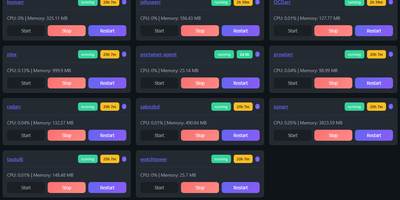
Managing multi-server container fleets often deteriorates into fragmented SSH sessions, mismatched compose files, and conflicting port allocations. Composr consolidates multiple Docker host daemons into a unified web dashboard that controls running containers, stack definitions, and system metrics from a single interface. Operators can connect remote Docker daemons through encrypted TCP sockets, inspect container health, and stream live execution logs with sub-second responsiveness. A built-in project creation wizard guides administrators through drafting new Compose topologies across local directories or remote server nodes. In-browser CodeMirror editors deliver live syntax highlighting for YAML files, configuration dotfiles, and reverse proxy definitions without detaching containers from disk. The platform tracks service properties directly, letting you toggle Compose profiles, relocate services between YAML manifests with pre-flight risk checks, and detect target port collisions before redeployment. Integrated backup managers bundle container metadata, compose files, and environment definitions into downloadable archive packages for automated disaster recovery. System operators can open interactive browser terminals into any active container, execute batch maintenance tasks, and configure scheduled image update checks. Running on a dedicated VPS on RepoCloud with guaranteed CPU, RAM, and SSD, full root SSH access, and a browser serial console. MIT licensed.
Warpdrive
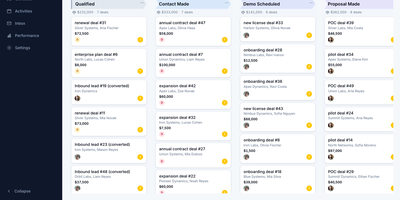
Warpdrive is a self-hosted sales CRM that gives business-development teams the complete Pipedrive workflow, pipelines, deal timelines, and two-way Gmail, on infrastructure they own outright. Drag deals across a Kanban board with custom stages while per-stage weighted totals, rotting-deal warnings, and saved filters keep the forecast honest without a weekly cleanup meeting. Every deal opens into one workspace where activities, notes, files, emails, and the full change history share a single timeline, with participants, followers, labels, and lost reasons attached. People and organizations carry custom fields, firmographics, and org-to-org relationships, and a leads inbox plus CSV import with an undo step keeps new data from corrupting the book. Contact enrichment from Apollo, RocketReach, and GetProspect fills empty people and organization fields, and every enriched value waits behind an explicit review step before it lands. Two-way Gmail sync threads every message onto its deal and contact automatically, and templates, signatures, merge fields, scheduled sends, and open tracking live in the same inbox. Boards, inboxes, and notifications update in real time across the team, while funnel and activity stats show exactly where deals stall and who is carrying the pipeline. An MCP server lets AI assistants query the pipeline and log activity under the same permissions, and role-based access keeps every seat scoped to its own work. Running on a dedicated VPS on RepoCloud with guaranteed CPU, RAM, and SSD, full root SSH access, and a browser serial console. MIT licensed.
ServerBee
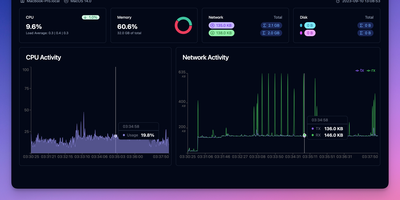
ServerBee delivers complete fleet monitoring from a single Rust binary that embeds both the server and web UI, requiring no external database or heavy runtime. Lightweight agents installed on each node stream CPU, memory, disk, network, load, temperature, GPU, and disk I/O metrics over persistent WebSocket connections to a central server backed by embedded SQLite. The real-time React dashboard presents 17 drag-and-drop widget types across custom layouts, with historical charts spanning one hour to 30 days and monthly traffic statistics with billing-cycle prediction and cost insights including burn rate and per-resource unit cost scoring. Network monitoring covers ICMP, TCP, and HTTP ping probes, service monitors for SSL certificates, DNS records, HTTP keyword matching, TCP ports, and WHOIS expiration, plus network-quality probing across 96 China 3-ISP and international presets with IP-quality and streaming-unlock detection. Remote management features include a web terminal with sandboxed file manager, Docker container stats with logs and events, firewall configuration, and agent auto-update capabilities. Public status pages display 90-day uptime timelines, while alerting supports email and webhook notifications with flexible trigger expressions. A native iOS companion app provides mobile monitoring access. Deploy via Docker or download the single binary for Linux, macOS, or Windows, running on a dedicated VPS on RepoCloud with guaranteed CPU, RAM, and SSD, full root SSH access, and a browser serial console. AGPL-3.0 licensed.
Storyden
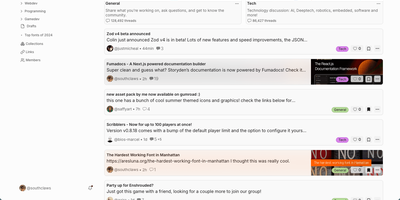
Think of Storyden as running your own small Reddit, except the knowledge your community produces does not scroll away and die in the feed. Discussion happens in threaded forums organized by categories and tags, where posts collect replies, likes, emoji reactions, and saves into personal collections. Beside the chatter sits the Library, a tree of rich pages your members build together into wikis, directories, catalogs, and guides that stay findable. Library pages carry typed properties, attached files, and table views, so a car club can track vehicles as data instead of arguing over a spreadsheet. Threads can reference Library pages and pages can link back to threads, letting a great answer graduate into permanent knowledge. Optional AI assistance helps organize titles, tags, and summaries, while the recommendation engine surfaces posts each member is likely to care about. The first account registered becomes admin, roles and permissions govern who can post or moderate, and community settings live in the admin panel rather than config files. One container starts everything with an embedded database and local file storage, and OpenAPI documentation is served from the same address. Running on a dedicated VPS on RepoCloud with guaranteed CPU, RAM, and SSD, full root SSH access, and a browser serial console. MPL-2.0 licensed.
Flowctl
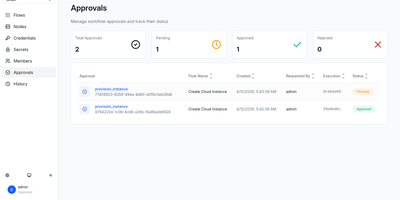
Flowctl turns repetitive ops work, such as granting SSH access, restarting a service, or provisioning a server, into self-service forms that anyone on the team can run without holding credentials. Each workflow is a YAML or HUML file with typed inputs, validation rules, and a list of actions. Actions run in order or as a dependency graph, so independent branches execute in parallel. Every action runs in a Docker container, as a shell script, or as another flow, and scripts can target remote servers over SSH, several at once. Sensitive steps pause until a reviewer approves or rejects them. Output from one action feeds the next, files pass along as artifacts, and failed actions can be retried. Cron schedules with time zones and labels run flows unattended, while logs stream live in the browser. Email, Slack, Mattermost, and webhook notifications announce success, failure, waiting, or cancellation. Teams get isolated namespaces with user, operator, reviewer, and admin roles, OIDC single sign-on, and encrypted storage for SSH keys and secrets. A built-in flow editor means nobody has to hand-write files, and custom executors can be added as Go plugins. Running on a dedicated VPS on RepoCloud with guaranteed CPU, RAM, and SSD, full root SSH access, and a browser serial console. Apache-2.0 licensed.
DumbBudget
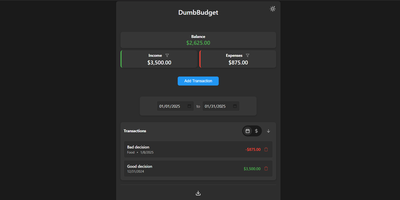
"Stupid simple software" is the entire philosophy at DumbWare.io, and DumbBudget delivers it: no over-engineering, no complexity, no accounts, no bank connections - just a clean, modern ledger for money in and money out. Log income and expenses, assign categories, and watch real-time balance calculations update as you type. Finding transactions is quick: filter by type, narrow by date range, sort by date or amount. When tax season or spreadsheet analysis calls, everything exports to CSV. Access control matches the philosophy - a single PIN (set via one environment variable) gates the app, backed by real security engineering: rate limiting on PIN attempts, temporary lockout after failures, secure session handling, and no sensitive data in browser storage. Multi-currency support covers the ISO codes, and a SITE_TITLE variable names each instance - deliberately useful, because running separate instances per account or family member is the intended pattern for multi-user needs. The responsive UI ships light and dark themes and installs as a PWA on phones, where expense logging actually happens. Configuration is five environment variables; data persists in one folder. If Actual Budget and Firefly III feel like accounting software, this is the notepad that gets used. GPL-licensed.

Quackback
Quackback unifies customer feedback boards, feature voting, public roadmaps, release changelogs, help centers, status pages, and a multi-channel support inbox into a single self-hosted workspace that replaces Canny, Productboard, and Intercom. Product teams use its branded boards to collect feature requests and bug reports, merge duplicate submissions, and rank demand by user votes or customer segments. When a request moves into development, two-way integrations with Linear, GitHub, and Jira automatically update the card across customizable Kanban status columns or quarterly timeline views on your public roadmap. Support agents work out of a shared inbox that brings real-time Messenger web chat, inbound email threads, and durable support tickets together under one roof, complete with SLA timers, office hours, saved macros, and CSAT surveys. Conversations that uncover a feature gap convert directly into votes on existing feedback posts without losing thread context. Quinn, the built-in AI assistant, answers common questions from your Help Center articles, drafts agent replies, and exposes a Model Context Protocol server so external AI tools can triage posts or manage tickets. Once features ship, publishing a scheduled changelog entry automatically notifies every voter via email and in-app alerts. Running on a dedicated VPS on RepoCloud with guaranteed CPU, RAM, and SSD, full root SSH access, and a browser serial console. AGPL-3.0 licensed.
Garage UI
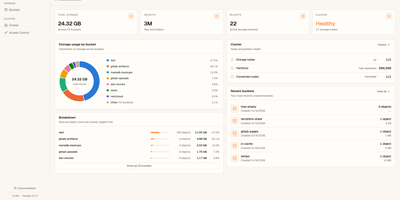
Garage UI is the web dashboard that Garage object storage never shipped, turning an admin API that speaks JSON over HTTP into screens your whole team can use. Create and configure buckets, browse objects with drag-and-drop uploads, and preview images, video, PDFs, and text inline instead of downloading files just to check what they are. A recursive search finds objects across a whole bucket, and bucket settings carry size and object-count quotas so one tenant cannot quietly eat the cluster. Access keys are created in the UI and assigned per-bucket permissions, replacing error-prone command-line key surgery. The cluster overview watches node status, layout configuration, and storage usage, so a degrading node shows up in the dashboard before it shows up as an outage. Sign-in flexes to your setup: no auth on a trusted network, basic admin credentials, the Garage admin token, or OIDC single sign-on through providers like Keycloak and Authentik. With OIDC teams enabled, access control maps token claims to bucket prefixes with named permission presets, and unmatched users are denied by default rather than promoted. Zero-config startup reads your existing garage.toml, so the first login takes minutes. Running on a dedicated VPS on RepoCloud with guaranteed CPU, RAM, and SSD, full root SSH access, and a browser serial console. MIT licensed.
Limelit Open
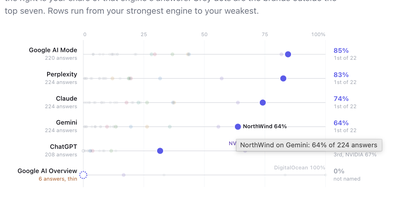
When a buyer asks ChatGPT, Claude, or Perplexity which product to choose, Limelit Open shows whether your brand appears in the answer, where it ranks, and which sources the engines trusted. You define the prompts your market actually asks, register your competitors, and the tracker runs every prompt against seven engines on a schedule you control: ChatGPT, Claude, Perplexity, and Gemini through vendor APIs with web search on, plus Google AI Overviews, Google AI Mode, and Bing Copilot through scraper providers, each result labeled by how it was collected. Every stored answer is searched for your brand and each competitor with the rank of the list item they appear in, so visibility, share of voice, average position, and citation share rest on readable evidence rather than a black-box score. Click any number and you land on the full answer text with matches highlighted, the searches the engine ran, the brands it named, and every cited URL classified as yours, a competitor's, social, informational, or other. A prompt by engine grid makes weak spots obvious, and the built-in MCP server lets Claude or another assistant query the same data in plain language. Runs are capped by a daily ceiling you set, prompts and answers live in one SQLite file, and a single export command dumps the whole instance as JSON or CSVs for your own reporting. Running on a dedicated VPS on RepoCloud with guaranteed CPU, RAM, and SSD, full root SSH access, and a browser serial console. Apache-2.0 licensed.
Facet
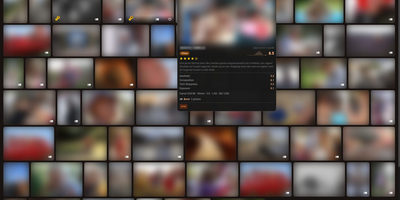
Thousands of frames land on the card after a wedding shoot, and Facet finds the keepers among the bursts, blinks, and near-duplicates. Facet scores every photo across nine dimensions, aesthetic quality, composition, face quality, eye sharpness, technical sharpness, color, exposure, subject saliency, and dynamic range, with category-specific weights for portraits, landscapes, wildlife, and 30-plus other content types. The culling darkroom groups bursts and visually similar frames, protects exposure brackets and panorama sequences, and flags closed eyes per face, so you keep the sharpest open-eyed frame and reject the rest in one pass. Face detection clusters into people you can rename, merge, and search, while albums, star ratings, favorites, and AI content tags organize what survives. Browse survivors through a mosaic gallery with semantic search by plain description, a timeline, a geotag map, and slideshow capsules. Statistics dashboards track your gear usage and metric correlations, and the weight editor learns from A/B comparisons so scores drift toward your own taste. Shared album links support client proofing with hearts and comments, phones auto-upload over the built-in WebDAV inbox, and ratings round-trip to Lightroom, darktable, and Immich through XMP sidecars. Everything runs locally on your own hardware: no cloud accounts, no subscriptions, no photo ever leaves the server. Running on a dedicated VPS on RepoCloud with guaranteed CPU, RAM, and SSD, full root SSH access, and a browser serial console. MIT licensed.
RushDB
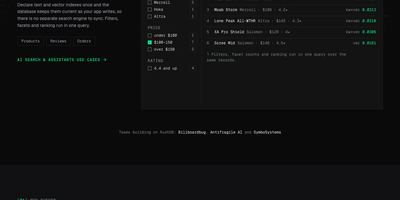
RushDB is a database your AI agents can actually understand, because it remembers the shape of everything you write. Send nested JSON and each object becomes a record, automatically linked to its parent, while field names, types, and values are cataloged on every write. Agents introspect that catalog before querying, so they ask questions the data can answer instead of hallucinating tables that never existed. The same records answer five query styles: a JSON query language, SQL over the PostgreSQL wire protocol, Cypher over HTTP or Bolt, Gremlin, and Mongo-style document queries. Vector, full-text, and hybrid search run against the same store, so an agent can find the record that mentions a phrase and the records merely similar to it. Everything ships as one binary with one data directory, speaking HTTP on port 3000, PostgreSQL on 5432, and Bolt on 7687 to the drivers and tools you already use. Point your SDKs, SQL clients, BI tools, or local MCP-connected agents at it, and back it up, replicate it, or restore to a point in time with the engine's own tooling. Running on a dedicated VPS on RepoCloud with guaranteed CPU, RAM, and SSD, full root SSH access, and a browser serial console. Apache-2.0 licensed.
Digarr
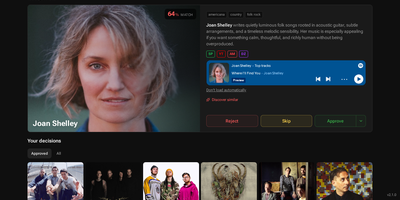
Your next favorite record is hiding in your listening history, and Digarr is the self-hosted discovery engine that finds it, scores it, and queues it for your library. Connect ListenBrainz, Last.fm, Spotify, Deezer, Discogs, or your Plex, Jellyfin, Emby, or Subsonic server, and Digarr builds a taste profile from what you actually play. An AI provider you choose, from Anthropic, OpenAI, and Gemini to a local Ollama model, proposes candidates, and a weighted scoring system ranks them by consensus, similarity, genre overlap, and your past feedback. Every suggestion lands in a review queue where you can preview tracks, approve, reject, or permanently block artists before anything touches your collection. Approve an artist and Digarr adds them to Lidarr with your quality profile, queues the release in slskd, or exports a playlist to Spotify, Navidrome, Jellyfin, Emby, or Plex. Album-level discovery runs on its own: Release Radar catches new releases from artists you follow, Library Gap-Fill surfaces the studio albums you are missing, and scheduled subscriptions keep fresh candidates flowing in without you lifting a finger. Share the instance with family or friends, each with their own queue and connections, protected by local accounts or OIDC single sign-on, and get notified through webhooks, ntfy, Telegram, or Apprise when new picks arrive. Running on a dedicated VPS on RepoCloud with guaranteed CPU, RAM, and SSD, full root SSH access, and a browser serial console. MIT licensed.
Tiledesk
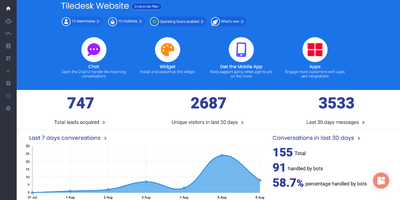
Tiledesk lets you build AI-powered conversational agents with a visual drag-and-drop designer, then deploy them simultaneously across web chat, WhatsApp, Telegram, Facebook Messenger, Instagram, email, and Slack without rebuilding per channel. The no-code Design Studio combines LLM-powered conversations with conditional logic, external API calls, and branching dialogue trees that work identically everywhere. Multi-RAG knowledge management separates content into isolated repositories with hybrid search combining traditional full-text retrieval and semantic understanding via Qdrant vector embeddings, enabling accurate answers even when users phrase queries in unexpected ways. LLM integration supports GPT-4, GPT-4o, Anthropic Claude, and any model exposing an OpenAI-compatible API including locally hosted models via Ollama for complete data sovereignty. The human-in-the-loop system provides seamless escalation from AI agents to live support staff with full conversation context preserved, while multi-agent workflows enable complex orchestration where specialized bots collaborate on different aspects of a customer interaction. REST and MQTT APIs power integration with external systems and webhook-triggered automations, and pre-designed templates accelerate common scenarios. Docker Compose deployment starts the full stack including server, dashboard, messaging engine, and widget. Running on a dedicated VPS on RepoCloud with guaranteed CPU, RAM, and SSD, full root SSH access, and a browser serial console. MIT licensed.
Roamgate
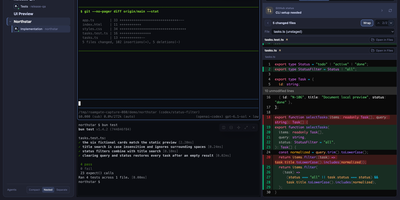
Close the laptop, keep the agents: Roamgate brings the Herdr workspace running on your server into any browser, so the terminal session you left mid-task is waiting on your phone exactly as you left it. Every workspace and recognized agent sits in one view: check what each agent is doing, read its conversation, and take over a real terminal with streaming output, split panes, scrollback, multiline paste, and clickable links. When the agent finishes, the review happens in the same place: inspect staged, unstaged, untracked, and branch changes, annotate exact diff lines, preview rendered Markdown, and send compiled feedback back into the agent pane without pre-filling a submission you did not approve. Files browse beside the terminals, and session history survives disconnects because Herdr owns the sessions, not your browser tab. Connections stay flexible: run the bridge beside Herdr on one machine, save SSH profiles to reach remote hosts, and install the whole thing as a PWA for an app window without tabs. Login is required even on loopback, push notifications flag agents waiting for input, and themes, accents, and terminal fonts make the cockpit yours. Running on a dedicated VPS on RepoCloud with guaranteed CPU, RAM, and SSD, full root SSH access, and a browser serial console. MIT licensed.
Mere Medical
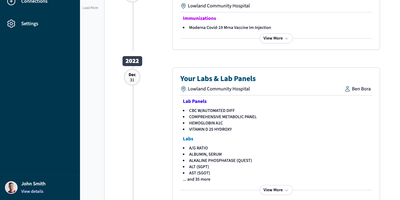
Mere Medical pulls the records from every hospital and clinic patient portal you use into one date-ordered timeline, so lab panels, immunizations, and procedures from different systems sit side by side. Each timeline card shows its facility and, when recorded, the provider, and expands with View More; a Jump To index leaps between years. The Summary tab condenses bookmarked labs, medications, conditions, immunizations, care plans, and allergies onto one dashboard whose cards can be dragged into any order or hidden. Lab results are graphed over time wherever the units line up, and a search bar finds specific entries by keyword. Connections sync from Epic MyChart, Oracle Health (Cerner), Veradigm, DrChrono, eClinicalWorks Healow, athenahealth, and NextGen, and several sources can feed one profile at once. Everything lives on your device, so records stay searchable offline and no account sign-in is needed; an optional password encrypts them at rest. Separate user profiles hold each person's records, and JSON export and import make backups simple. Experimental AI features add semantic search that links a phrase like high blood sugar to related labs, plus a Mere Assistant that answers plain-language questions about your records using local Ollama models or an OpenAI key. Install it on a phone or desktop home screen for quick access in the waiting room. Running on a dedicated VPS on RepoCloud with guaranteed CPU, RAM, and SSD, full root SSH access, and a browser serial console. MIT licensed.
BullFlow
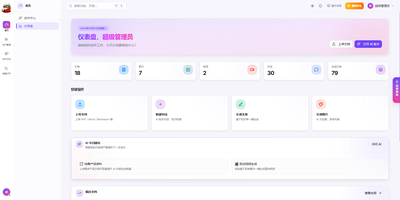
Generic AI writing sounds like nobody in particular; BullFlow writes from your own company knowledge instead. It first builds a private knowledge base from your documents, images, audio, and video plus structured records for your company, brand, products, customers, and cases. Ingestion runs entirely on local open models: OCR reads scans, semantic splitting and chunking prepare text, and hybrid vector plus full-text search retrieves passages with their sources and relevance scores shown under every answer. A creation agent then works in one conversation: it searches the knowledge base, drafts articles with images embedded in the text, generates image sets or short videos, and exports finished pieces as PDF or Word. Output adapts to where it is going, long-form articles for article platforms, multi-image posts with matching copy for image feeds. A separate distribution gateway sends one finished piece to many accounts across Chinese and international social platforms, checks account health on a schedule, and returns publish results and metrics by webhook. Around all of that sits a commercial shell: multiple tenants with isolated data, roles from super admin to finance, credit billing measured per token, image, and second, subscriptions, invoices, referral commissions, and a conversion funnel in the operations backend. Scheduled rules can generate and publish on a timetable with nobody watching, and notifications report each completion or failure. Running on a dedicated VPS on RepoCloud with guaranteed CPU, RAM, and SSD, full root SSH access, and a browser serial console. MIT licensed.
OpenAgentCore
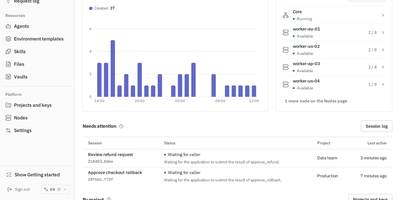
OpenAgentCore puts Codex, Claude Code, and MiniMax Code behind one self-hosted Agents API, so your applications start agent sessions through the official OpenAI SDK while the work runs on machines you control. Set OPENAI_BASE_URL to your installation and issue a Project API key, and the same client code that talks to OpenAI now talks to your Core. Each session runs a native harness, exactly as it runs on a developer's machine, with the model provider, model ID, and protocol you configure per harness or per session. Choose where sessions execute: microsandbox nodes you operate, Docker, E2B, or a self-hosted workstation, VM, or container connected by the oac-daemon with a credential scoped to one environment. Idle microsandbox sessions release their compute and resume on a compatible node with workspace files intact, so long investigations do not rent a machine while they sleep. The Web console walks operators through setup, tracks sessions and turns, manages models and credentials, and issues keys, while the separate Core API serves operators and the Agents API serves applications. Durable execution state in PostgreSQL keeps events, results, and schedules recoverable across restarts. Sandbox providers, workspace filesystems, harnesses, and model providers all plug in through defined protocols, so every layer can be replaced on its own. Running on a dedicated VPS on RepoCloud with guaranteed CPU, RAM, and SSD, full root SSH access, and a browser serial console. MIT licensed.