Apache OpenMeetings
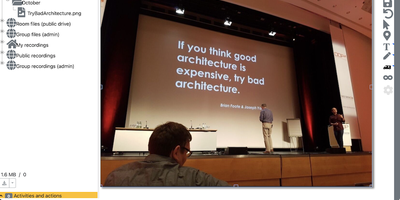
Apache OpenMeetings puts the whole meeting in the browser: cameras, a shared whiteboard, the agenda document, and recording controls, all running on your own server. Participants join rooms with audio and video, audio only, or video only, choose camera resolutions and devices, and present by sharing a screen or a single window at selectable quality. Moderators control the floor person by person: who may draw on the whiteboard, present, share or record the screen, mute others, or speak while everyone else stays muted. Multiple whiteboards hold drawings, text, clip art, and imported documents in PDF, office, and image formats, rescaling to fit every participant's screen, and boards can be saved into the drag-and-drop file explorer for the next session. Every meeting can be recorded with all audio streams exactly as heard, then downloaded as MP4 or played back in the integrated player, and the built-in calendar schedules rooms and sends invitations. Breakout rooms split classes and workshops into groups, polls gather decisions live, private and group chat runs beside the video, and telephone users can dial into rooms through the Asterisk SIP integration. Running on a dedicated VPS on RepoCloud with guaranteed CPU, RAM, and SSD, full root SSH access, and a browser serial console. Apache-2.0 licensed.
Apache Doris
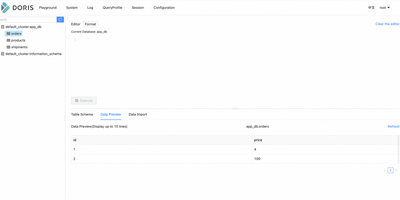
Dashboards should not wait minutes for yesterday's data, so Apache Doris answers analytical SQL over fresh data with a massively parallel, fully vectorized engine that processes column batches instead of row after row. Frontends receive queries over the MySQL protocol, plan them with a cost-based optimizer, and coordinate execution, while Backends store columnar tablets and run scans, joins, and aggregations in parallel pipelines across cores. Data lands continuously through stream and batch loads, broker imports from object storage, and change capture from operational databases, and it is queryable immediately for reporting that reflects the last minutes rather than the last nightly job. Tables outside Doris join the same SQL through catalogs for Hive, Iceberg, Paimon, Hudi, and JDBC sources, with local caching and materialized views accelerating the lakehouse queries your team runs every day. Search workloads live here too: an inverted index and a SEARCH function provide full-text retrieval, vector indexes support similarity search, and AI functions call language models from SQL for extraction and summarization, so hybrid queries mix keywords, semantics, and structured filters in one statement. Workload groups, resource controls, and compute-storage separation in cloud mode keep interactive dashboards fast while heavy ETL spills safely to disk. Running on a dedicated VPS on RepoCloud with guaranteed CPU, RAM, and SSD, full root SSH access, and a browser serial console. Apache-2.0 licensed.
Eclipse Kura
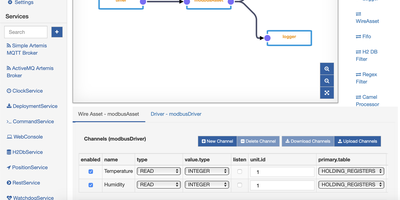
Between the factory floor and the cloud sits a gateway that has to speak Modbus to a PLC, OPC-UA to a machine, and MQTT to your platform, and Eclipse Kura is the framework that runs that gateway as a managed, programmable container. Drivers encapsulate each field protocol and its settings, while Assets model the data channels of attached devices, giving every sensor and controller a uniform mirror that applications can read, write, and publish. Kura Wires turns edge logic into a diagram: drag an asset onto the canvas, wire it through timers, filters, and SQL-based aggregation, and publish the result to the cloud, installing extra components from the Eclipse Kura Marketplace when the palette runs short. Telemetry survives bad networks because the data service stores messages locally and forwards them when the connection returns, with publishing policies abstracting the underlying MQTT transport. Administrators manage the whole gateway from the web console: network interfaces, firewall, installed bundles, snapshots of the full configuration that can be exported and restored, and remote deployment and upgrade of applications through the cloud connection. Hardware services expose serial ports, USB, Bluetooth, GPS position, GPIO, I2C, and a watchdog that resets the system when a critical component stops reporting. Running on a dedicated VPS on RepoCloud with guaranteed CPU, RAM, and SSD, full root SSH access, and a browser serial console. EPL-2.0 licensed.
Tryton
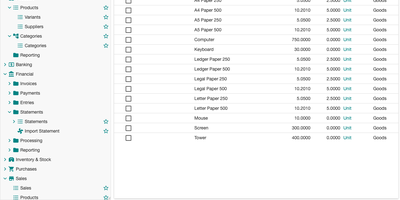
In Tryton, an invoice knows its shipment and a production order knows its stock, since accounting, inventory, purchasing, and sales are modules of one ERP rather than separate programs exchanging exports. Financial accounting posts customer and supplier invoices, reconciles bank statements imported from SEPA or configured CSV formats, manages dunning and direct debits, and produces Factur-X electronic invoices, while analytic accounting splits results across cost centers. Stock tracks goods through warehouses and locations with lots, shipments, inventories that warn when counts drift beyond tolerance, and automatic period closing, and production consumes bill-of-material inputs into finished goods with quantity checks. Sales quotations become orders, shipments, and invoices without retyping; purchases calculate real supplier lead times; point of sale records lot numbers at the till; subscriptions bill recurring services on schedule. Multi-company installations share the same database with per-company wizards, tax rules can be defined per organization for European trade, and parties, products, carriers, currencies, and customs duties are managed as shared reference data. Access happens through the browser web client, a desktop client, or scripting and REST libraries, so integrations read and write the same business objects your staff see. Running on a dedicated VPS on RepoCloud with guaranteed CPU, RAM, and SSD, full root SSH access, and a browser serial console. GPL-3.0-or-later licensed.
SaltStack
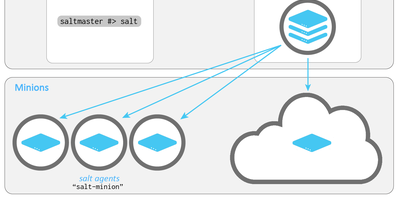
Type one command on the Salt master and ten thousand machines answer, because Salt publishes jobs to minions that subscribe, check whether the job targets them, and execute it in parallel before reporting results back. Configuration management describes the desired end state in YAML state files: which packages, files, services, and users should exist, and highstate runs converge every targeted minion toward that description with dependency ordering. Targeting goes far beyond hostnames, since grains describe each minion's operating system, hardware, and roles, and Pillar delivers per-minion secrets and settings rendered only for the machines that should receive them. Beacons watch services, load, disks, logins, and file changes on minions and emit events onto the bus, while reactors bind those events to prepared responses, so a failed service can restart itself and an administrator gets notified with the evidence attached. Orchestration runners coordinate multi-machine procedures in sequence, such as draining a load balancer pool, patching it, and returning it to service, and the master exposes HTTP APIs and pluggable returners that stream job results into your databases and dashboards. Machines that cannot run an agent are reached through Salt SSH, and Salt Resources target appliances and API endpoints that should be managed without a minion at all. Running on a dedicated VPS on RepoCloud with guaranteed CPU, RAM, and SSD, full root SSH access, and a browser serial console. Apache-2.0 licensed.
Uyuni
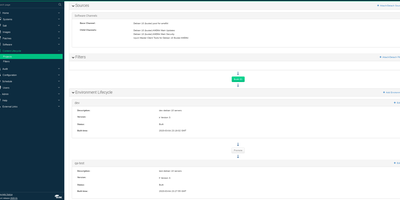
Four hundred servers need a security patch, they run five different Linux distributions, and a spreadsheet says which ones were done. Uyuni replaces that spreadsheet: one server inventories your fleet, mirrors the software channels each machine subscribes to, and shows exactly which patches and errata apply where. Administrators register clients manually, by bootstrap script, or automatically through activation keys, then group them into systems sets so an action aimed at a group lands on staging first and production on schedule. Patch management creates and applies errata with CVE context, and CVE audits check systems against vulnerability data so you can prove a fix landed instead of believing it did. Configuration channels push files, directories, and symbolic links rendered with Jinja templates through the built-in Salt master, which also runs remote commands and orchestration across tens of thousands of clients. The Content Lifecycle Manager promotes package sets from development through testing to production channels, so every environment consumes tested content in order. Provisioning reinstalls or network-boots machines through PXE with AutoYaST, Kickstart, or cloud-init profiles, proxies cache content for branch offices, and built-in Prometheus and Grafana monitoring watches the management server itself. Running on a dedicated VPS on RepoCloud with guaranteed CPU, RAM, and SSD, full root SSH access, and a browser serial console. GPL-2.0 licensed.
SRS
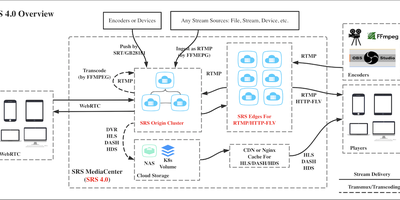
Viewers arrive on browsers, phones, and desktop players, and SRS meets each of them with the right protocol from a single published stream. A broadcaster pushing RTMP can reach browser viewers through WebRTC with sub-second latency, phone apps through HLS, and desktop players through HTTP-FLV, all from the same live source without running parallel encoders. WHIP endpoints accept WebRTC ingest from browser studios and tools like OBS, while WHEP serves WebRTC playback, so an entire publish-to-viewer path can stay on modern web protocols. Operators shape each channel with virtual hosts, authenticate publishers and players through HTTP hooks that consult your own backend, and record live streams to disk as DVR archives for replay. Forwarding republishes a stream to YouTube, Facebook, or another SRS instance, and origin clustering lets edge servers pull from a central origin so one ingest feeds viewers in several regions. The built-in HTTP API reports streams, clients, and server health for monitoring, and GB28181 support ingests surveillance camera networks alongside creator broadcasts. Configuration lives in a single reloadable file, so changing a vhost or enabling HLS rarely means restarting the listeners your audience is attached to. Running on a dedicated VPS on RepoCloud with guaranteed CPU, RAM, and SSD, full root SSH access, and a browser serial console. MIT licensed.
Janus Gateway
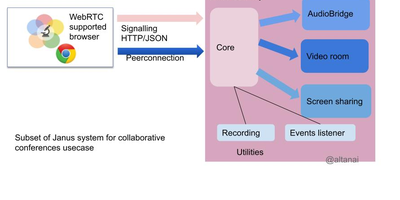
One Janus installation can host a video meeting in one session, stream a camera feed in another, and bridge a browser call into a telephone network in a third, because Janus is a general-purpose WebRTC server whose work is done by interchangeable plugins. The VideoRoom plugin publishes each participant's streams to everyone else in the room with simulcast and viewport selection, so a class or team call adapts quality per viewer instead of forcing one bitrate on all. Streaming mounts live or prerecorded sources, including RTSP cameras and RTP feeds, and hands them to any number of WebRTC viewers, while AudioBridge mixes voices into conference rooms with recording and signed-token access. SIP and NoSIP plugins register with existing VoIP infrastructure and place or receive calls, translating between WebRTC media and telephone audio so a web page can ring a desk phone. Record&Play captures publisher streams to files you can replay through the same server, TextRoom adds data-channel chat rooms, and Lua or JavaScript plugins let you script custom media logic without recompiling the core. Applications talk to Janus over HTTP or WebSocket APIs, with RabbitMQ, MQTT, and NATS transports for bus-driven deployments, and event handlers report session activity to your monitoring stack. Running on a dedicated VPS on RepoCloud with guaranteed CPU, RAM, and SSD, full root SSH access, and a browser serial console. GPL-3.0 licensed.
Apache Solr
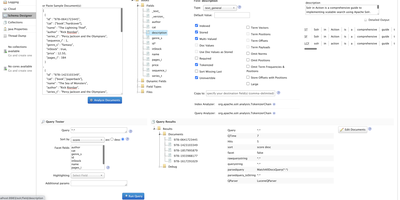
Product catalogs, help centers, and document archives all fail the same way: visitors type a few words, get the wrong results, and leave. Apache Solr is the search platform behind fast, relevant answers, returning ranked matches with faceted filters, highlighted snippets, spell suggestions, and geospatial distance in a single query. Index documents through HTTP updates or data import handlers, shape fields in the schema, and watch changes appear through near-real-time indexing without rebuilding the corpus. SolrCloud turns one index into a distributed collection: shards split large corpora across nodes, replicas copy each shard for failover and query load, and ZooKeeper coordinates configuration so every node serves the same schema. Dense vector fields store embeddings beside your text, and the KNN parser retrieves nearest neighbors through HNSW graphs, so semantic search runs in the same engine as keyword search instead of a second system. A combined query handler merges keyword and vector rankings with reciprocal rank fusion, and an enrichment processor can call language models at index time to tag or summarize documents as they arrive. Streaming expressions add analytics over results, from rollups and percentiles to joins across collections, while JWT authentication and authorization rules protect the admin console and APIs. Running on a dedicated VPS on RepoCloud with guaranteed CPU, RAM, and SSD, full root SSH access, and a browser serial console. Apache-2.0 licensed.
Apache IoTDB
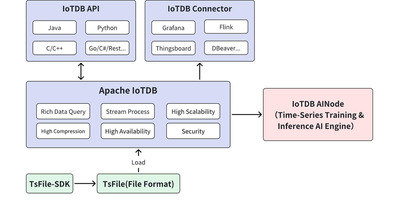
Sensors on factory floors, wind turbines, and connected vehicles produce readings every second, and Apache IoTDB is the time-series database built to store those readings and answer questions over them. Devices write through client sessions that tolerate out-of-order, delayed, and multi-frequency arrivals, so a gateway that reconnects after an outage can backfill history without corrupting the timeline. Series live in a device hierarchy you can browse like a directory tree, or in tables queried with standard SQL, common table expressions, set operations, and more than one hundred built-in aggregation and time-series functions. The TsFile columnar format shares one time column across aligned series and applies encodings designed for sensor data, which keeps high-frequency archives compact while Spark and Hadoop jobs read the same files directly for larger analysis. Pipe synchronization streams records or transfers whole TsFiles between edge sites and central clusters with path and device filtering, so plants keep collecting locally while headquarters queries a continuous copy. AINode brings forecasting, anomaly detection, and missing-value imputation into the database itself: register a model with SQL, then ask for predictions in the same query language instead of shipping measurements to a separate machine learning service. A low-memory Edge edition runs collection on constrained gateways, and clusters scale by adding DataNodes under ConfigNode coordination with automatic load balancing. Running on a dedicated VPS on RepoCloud with guaranteed CPU, RAM, and SSD, full root SSH access, and a browser serial console. Apache-2.0 licensed.
Apache Zeppelin
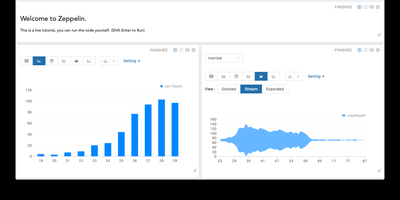
Analysts explore data where it lives with Apache Zeppelin, a web notebook where each paragraph can speak a different language: run Spark in Scala, query through SQL, prototype in Python, and plot the results without leaving the page. Pluggable interpreters connect notebooks to Spark, Flink, JDBC databases, Neo4j, Elasticsearch, and dozens of other engines, all sharing variables through the ZeppelinContext so a DataFrame built in one paragraph feeds the next in another language. Built-in visualizations turn query output into bar, pie, line, and scatter charts with pivot controls, while dynamic forms add dropdowns and inputs that make notebooks reusable reports for colleagues. Multiple Spark and Scala versions coexist in one instance, with interpreter binding modes from globally shared to isolated per note, and execution on local, standalone, YARN, or Kubernetes clusters. Teams collaborate through multi-user support with authentication and note permissions, schedule notebooks as jobs, and drive everything through a REST API. The 0.12.1 maintenance release hardens JWT validation and path traversal defenses, upgrades the Angular frontend, and stabilizes the Spark, Flink, Python, Neo4j, and File interpreters. Running on a dedicated VPS on RepoCloud with guaranteed CPU, RAM, and SSD, full root SSH access, and a browser serial console. Apache-2.0 licensed.
Eclipse Che
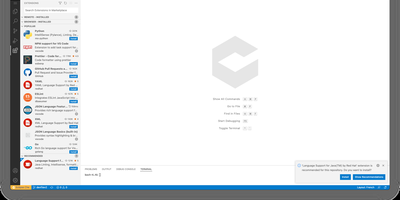
Eclipse Che spins up complete development environments on Kubernetes from a Devfile in the project repository, so new developers click a factory link and open a browser IDE with dependencies, runtimes, and debugging already configured instead of spending their first day installing toolchains. Each workspace runs as a DevWorkspace custom resource in the user's namespace, making environments API-manageable with kubectl and GitOps tooling alike. Developers choose their editor per workspace, from Visual Studio Code Open Source to JetBrains IDEs via Projector, and the 7.124 release adds Orca, an agent development environment for working alongside AI coding agents. Workspaces carry their own containers for build and run, so code executes in a production-like environment with direct Kubernetes API access from the IDE. Teams standardize stacks as Devfile templates, onboard contributors in minutes, and open a fresh workspace per branch or pull request in a new browser tab. The 7.124 release also builds workspace lifecycle commands into chectl, including SSH connections with port forwarding to desktop editors, and DevWorkspace Operator 1.0 adds optional per-workspace NetworkPolicy isolation. Running on a dedicated VPS on RepoCloud with guaranteed CPU, RAM, and SSD, full root SSH access, and a browser serial console. EPL-2.0 licensed.
Icinga 2
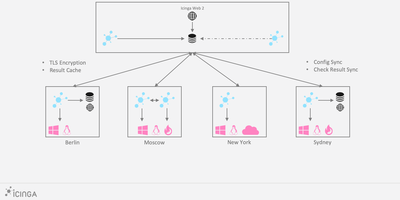
Servers, services, and network gear report their health to Icinga 2, the open-source monitoring core that runs checks, evaluates thresholds, and decides who gets woken up. A distributed hierarchy of master, satellite, and agent zones scales from a single box to global estates: satellites execute checks in remote regions and keep working when the master is unreachable, while agents run local checks under TLS-secured, certificate-based trust. The object-based configuration language defines hosts, services, dependencies, and notification rules as code, with apply rules generating checks across whole groups automatically. Performance data streams into Graphite, InfluxDB, or Elasticsearch writers, and Icinga DB carries runtime state and history into Redis and SQL for the web frontends. The REST API drives acknowledgements, downtimes, and check scheduling from scripts and chat tools, with fine-grained permissions down to diagnostic information. The 2.16 line hardens API security, streams richer runtime updates to Icinga DB for the new Icinga Notifications 1.0 incident workflows, and lets operators set exact acknowledgement times through the API. Running on a dedicated VPS on RepoCloud with guaranteed CPU, RAM, and SSD, full root SSH access, and a browser serial console. GPL-3.0-or-later licensed.
ManageIQ
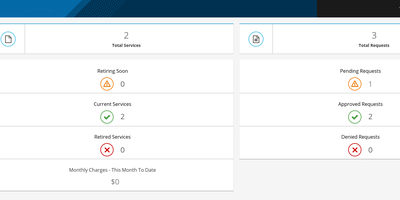
ManageIQ gives operators one console for every cloud and hypervisor the organization runs, connecting to VMware, OpenStack, AWS, Azure, Google Cloud, Kubernetes, OpenShift, and Nutanix to continuously discover inventory, map relationships, and listen for changes without installing agents. Discovered estates become manageable: operators publish bundles of resources into a self-service catalog that end users order like apps, then govern the full life cycle through policy, compliance, delegated operations, and retirement. SmartState analysis scans the contents of VMs, hosts, and containers agentlessly, even foreign or uncooperative ones, feeding security and compliance policies that flag drift automatically. Utilization metrics reveal idle systems and right-sizing opportunities, with capacity planning and what-if scenarios before hardware purchases. Chargeback and showback assign rates to tenants, group VMs by tag or container images by label, and generate reports in multiple currencies. Embedded Ansible automation executes playbooks for provisioning and remediation, and the Spassky release adds Nutanix and Terraform Enterprise providers on a Rails 7.2 core. Running on a dedicated VPS on RepoCloud with guaranteed CPU, RAM, and SSD, full root SSH access, and a browser serial console. Apache-2.0 licensed.
Eclipse Hono
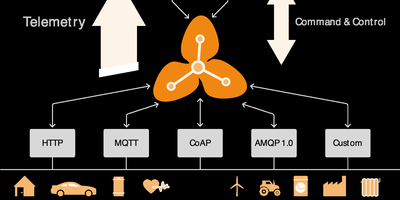
Eclipse Hono is an IoT connectivity platform that sits between device fleets and business applications, accepting connections over MQTT, HTTP, AMQP 1.0, and CoAP adapters and normalizing everything into uniform telemetry and event streams. Devices authenticate against a central registry of tenants and credentials, with X.509 client certificates, pre-shared keys, or automatic provisioning for zero-touch onboarding. Applications consume normalized data from Apache Kafka or an AMQP 1.0 messaging network, choosing per tenant which backbone carries its traffic, and send commands back down to devices through the same platform with delivery feedback. Resource limits cap how much data each tenant's devices may move, keeping one noisy fleet from crowding out the rest, while metrics and tracing follow every message hop. The 2.7 release adds preliminary MQTT 5 support with corrected connect reason codes, message tracing logs, and a hardened JDBC device registry backed by PostgreSQL for production tenant and credential management. Protocol adapters scale horizontally as stateless services, so capacity grows by adding instances behind a load balancer. Running on a dedicated VPS on RepoCloud with guaranteed CPU, RAM, and SSD, full root SSH access, and a browser serial console. EPL-2.0 licensed.
MatrixOne
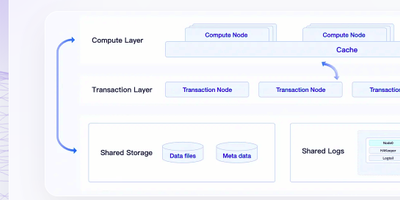
Transactions, analytics, full-text search, and vector retrieval stop needing four separate systems: MatrixOne folds them into one hyper-converged database engine that speaks the MySQL 8.0 wire protocol, so existing drivers, JDBC applications, Navicat, and BI tools connect unchanged. A single TAE storage engine serves OLTP and OLAP together, with compute and storage separated so query nodes scale independently of the data they scan. Vector columns carry IVF and HNSW indexes with L2, cosine, and inner-product distance, powering RAG and semantic search at billions scale beside your relational tables instead of in a sidecar database. Full-text indexing joins the same query, so hybrid searches combine keyword relevance and embedding similarity in one statement. Git-style version control for data lets teams clone, branch, and roll back datasets the way they already treat code, which makes experiments and audits reproducible. Streaming ingestion through Kafka connectors keeps analytical tables current, and the 4.2 line sharpens window-query performance, composite-index planning, and physical backup and restore that preserves table history. Running on a dedicated VPS on RepoCloud with guaranteed CPU, RAM, and SSD, full root SSH access, and a browser serial console. Apache-2.0 licensed.
OpenNebula
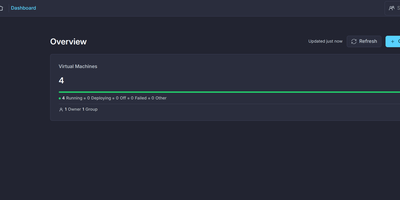
One front-end server can run your entire cloud: OpenNebula orchestrates KVM virtual machines and LXC containers across clusters of hosts, presenting everything through the FireEdge Sunstone web interface and a full API. Operators define VM templates once and instantiate them anywhere, attaching disks and networks, taking snapshots, scheduling actions, and opening remote consoles through Guacamole without leaving the browser. The OneDRS distributed resource scheduler reads historical and real-time metrics to predict demand spikes and migrate workloads before contention bites, with customizable policies and automation levels. GPU passthrough and PCI device hotplugging serve AI and accelerator workloads, while OVA import through the oneswap command ingests virtual machines exported from VMware vCenter for re-virtualization projects. Edge Clusters deploy on demand on premises or at remote providers, extending the same management model to hybrid and distributed sites without a separate stack. The 7.4 Helix release redesigns Sunstone with a slide-in side drawer and richer resource visualizations, and brings OneKS managed Kubernetes plus LVM storage to the Community Edition. Ceph and LVM datastores, incremental backups, cluster-level and generic quotas for resources like vGPUs, and OneFlow service orchestration for multi-VM applications round out daily operations. Running on a dedicated VPS on RepoCloud with guaranteed CPU, RAM, and SSD, full root SSH access, and a browser serial console. Apache-2.0 licensed.
Apache CloudStack
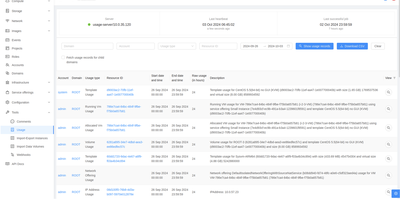
Your racks of hypervisor hosts become one private cloud with Apache CloudStack, the open-source IaaS platform that deploys and manages large networks of virtual machines behind a single web interface and API. One cloud can mix hypervisors side by side, running KVM, XenServer or XCP-ng, and VMware vSphere clusters under the same control plane, each organized into regions, zones, pods, and clusters that mirror your physical datacenters and racks. Administrators provision instances from templates and ISO images, take volume and VM snapshots on schedules, and migrate running instances between hosts in a cluster without downtime. Built-in networking spans isolated and shared networks, VPCs with tiered virtual routers, load balancers with SSL offloading, VPNs, and firewall rules, all exposed both to admins and to end users through separate, customizable interfaces. Multi-tenancy is native: domains, accounts, usage metering, and resource quotas let providers bill departments or customers for what they consume. The 4.22 LTS release strengthens backup and disaster recovery, adds a CSI driver for CloudStack Kubernetes Service, and streamlines VMware-to-KVM migrations for teams consolidating onto open virtualization. Running on a dedicated VPS on RepoCloud with guaranteed CPU, RAM, and SSD, full root SSH access, and a browser serial console. Apache-2.0 licensed.