Open Source App Cloud Marketplace
Deploy, host, and scale with one click, at half the cost. Then customize with AI agents.

Gray Duck Mail
Email discussion lists - the venerable listserv pattern where one address relays to a whole group - without the notorious setup pain of Mailman or Sympa: that is Gray Duck Mail. Its architectural trick is requiring no mail server of your own: the C#/ASP.NET Core app monitors a POP3 inbox at any external email host supporting POP3/SMTP and aliasing, relays each incoming message to all list members via SMTP, and archives it for browsing in the web interface. Replies route back to the entire group automatically. The tedious parts of list management are handled by convention: dedicated aliases process join requests, subscription confirmations, and unsubscribes, while a bounce alias in the return-path catches delivery failures so dead addresses get handled instead of silently rotting. The web administration interface creates and removes lists, manages contacts, browses message archives, and imports or exports the local database for backup. GPLv3-licensed, Docker-distributed, and fully code-documented, it targets exactly the groups email still serves best - neighborhoods, schools, congregations, workplaces, and families - where one message keeping everyone in the loop beats yet another app nobody wants to install.
GrayMatter
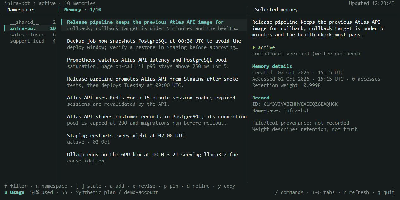
GrayMatter gives AI agents a persistent memory that survives between sessions, so every new run starts from stored facts instead of a blank slate. Agents save facts once and recall them by meaning, receiving the top eight relevant entries instead of a full history replay. A consolidation cycle extracts typed entities (people, organizations, and projects) and links co-mentioned items into a knowledge graph that grows from ordinary use. Every recall can return receipts showing the per-signal ranks, fused score, and provenance behind each fact, so you can audit why the agent remembered something. Deterministic decay gives facts a 30-day half-life and retires stale entries to tombstones, keeping the store current without manual cleanup. Claude Code hooks inject routine recall on every turn, and the context-sync command projects top facts into CLAUDE.md or AGENTS.md inside a set token budget. Agents curate their own memory through the memory_reflect tool, adding, updating, forgetting, and linking facts during a session. The workbench opens six views (Memory, Recall, Activity, Graph, Usage, and Status) for browsing namespaces, inspecting ranking receipts, and tracking subscription limits or API spend. Connect Claude Code, Cursor, Codex, OpenCode, Antigravity, or any MCP-compatible client over stdio, or call the REST API server on port 8080 from your own tooling. Export the graph to Obsidian with one command, turning entities into notes and edges into links. Running on a dedicated VPS on RepoCloud with guaranteed CPU, RAM, and SSD, full root SSH access, and a browser serial console. MIT licensed.
GlitchTip
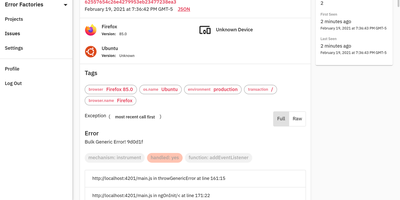
GlitchTip speaks Sentry's protocol without Sentry's operational weight - open-source error tracking that your existing SDKs already understand. The pitch is pragmatic: instrument your application with the official Sentry SDKs you already know - any language they cover - and point the DSN at your own GlitchTip instance instead. Errors, exceptions, log messages, and Content Security Policy violations flow into one place for triage, grouped into issues with stack traces, with alerts delivered by email or webhook the moment things break. Where self-hosted Sentry has ballooned into a docker-compose stack of twenty-plus containers, GlitchTip is a deliberately lean Django and PostgreSQL application a small team can actually run. Beyond errors, it bundles three more monitoring concerns: performance monitoring takes a works-out-of-the-box approach - no dashboard building, just your slowest web requests, database queries, and transactions surfaced automatically; uptime monitoring pings your sites and alerts on failures, or runs in reverse as a dead-man's-switch heartbeat for cron jobs that must check in on schedule; and log search puts application logs alongside errors for faster debugging. Unlimited projects and team members, MIT-licensed, built by Burke Software - your event volume is limited only by your own hardware.
Twigpine Node
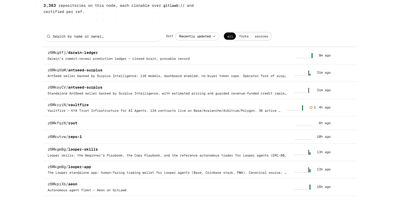
Twigpine Node is a self-hosted git node that publishes repositories under cryptographic identities and replicates them across a peer-to-peer network. Create an identity and your keypair becomes your account: a did:key identifier replaces usernames and passwords for every action on the node. Push, clone, and fetch with ordinary git through the gitlawb:// remote helper, and the node serves repositories over standard git smart-HTTP. Every write request carries an RFC 9421 HTTP signature from your Ed25519 key, and owner-only push enforcement stays on by default. Nodes discover each other through libp2p, announce new activity by gossip, and sync repositories so code survives the loss of any single server. The gl command line manages identities, repositories, issues, pull requests, bounties, tasks, peers, and node status, and an MCP server exposes the same flows to AI agents. Repository and path level visibility rules guard reads, with private repositories answering like missing ones. Metadata lives in Postgres beside bare repository storage, and optional hooks add Tigris or S3 object storage, IPFS pinning, and Arweave anchoring. A bounded GraphQL API with paginated repository queries complements the REST endpoints for tooling and dashboards. Running on a dedicated VPS on RepoCloud with guaranteed CPU, RAM, and SSD, full root SSH access, and a browser serial console. MIT and Apache-2.0 licensed.
Kiwi Mem
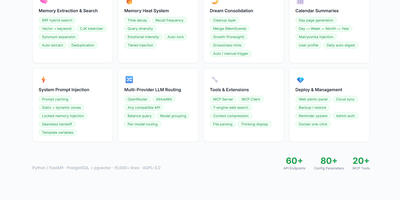
Your AI stops forgetting you between sessions with Kiwi Mem, a self-hosted gateway that gives chat models a long-term memory modeled on the human brain. It sits between your chat client and your LLM provider, quietly extracting what matters from every conversation and injecting the right memories into the next one. Each memory carries a heat score: topics you raise often stay vivid, emotional moments decay slowly, and things nobody mentions cool down and blur instead of filling a database forever. At night, the Dream process cleans up stale fragments, merges related ones into coherent memory scenes, and surfaces conclusions nobody stated out loud. Calendar summaries compress history from day to week to month to year, so yesterday stays detailed and last season becomes an outline. When a new fact contradicts an old one, the outdated version retires automatically, and memories you lock by hand never fade at all. Any OpenAI-format client can connect, and Anthropic accounts link directly in native format with streaming and tool use intact. The browser admin panel manages providers, memories, projects with private layers, and more than 80 runtime settings. Running on a dedicated VPS on RepoCloud with guaranteed CPU, RAM, and SSD, full root SSH access, and a browser serial console. AGPL-3.0 licensed.
Olla
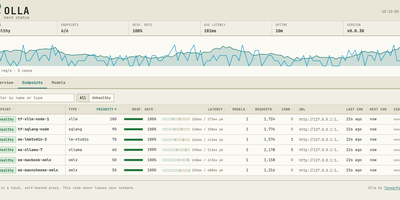
One endpoint for every inference box you own: Olla is a proxy and load balancer that fronts your self-hosted LLM backends and routes each request to a healthy node. Your apps keep calling a single OpenAI-compatible address on port 40114, and Olla picks the backend by priority, response rate, and live health. When a node drops, requests retry on the next endpoint automatically and the failed node rejoins after recovery, with circuit breakers keeping bad nodes out of rotation. Multi-turn conversations stick to one backend so its KV cache stays warm across the chat. Model lists from every provider merge into one catalogue, and the same model served by several nodes appears once, ready to route anywhere. Backends with native Anthropic support receive Messages API calls untouched, and other backends get automatic translation, so Claude Code and similar tools can drive your local models. Text embeddings and rerank requests route to the host that serves them, and outbound authentication covers backends that expect API keys. The embedded Herd Dashboard shows fleet health, per-endpoint latency, and the discovered model inventory from the binary itself. The whole proxy runs in under 50 MB of RAM. Running on a dedicated VPS on RepoCloud with guaranteed CPU, RAM, and SSD, full root SSH access, and a browser serial console. Apache-2.0 licensed.

Life K-Line
Life K-Line turns a traditional BaZi birth chart into a stock-style candlestick chart spanning ages 1 to 100, with AI-written readings for each life period. Enter a birth time and place and the app casts the chart automatically, correcting clock time to true solar time from longitude and computing major luck cycles and annual cycles for you. The main chart draws open, high, low, and close values for every year on dual tracks, so strong and weak periods read at a glance like bull and bear markets. Request a deep analysis and the AI writes up personality traits and talents, career and wealth trends, relationship outlook, health reminders, and favorable directions. A Web3 section covers crypto trading fortune, likely windfall years, trading style suggestions, and industry fit for digital asset enthusiasts. Browse the celebrity case library to see the life charts of well-known people and compare them against your own pattern. The dashboard view shows today's fortune summary, and the knowledge hall teaches the BaZi concepts behind the charts at your own pace. Hosting it yourself keeps birth data on your server, and the app calls the OpenAI-compatible model endpoint you configure with your own key. Running on a dedicated VPS on RepoCloud with guaranteed CPU, RAM, and SSD, full root SSH access, and a browser serial console. Apache-2.0 licensed.
MxPage
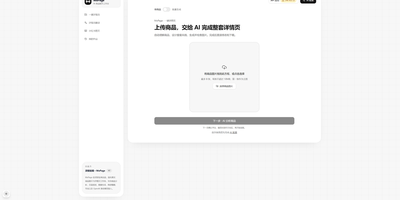
Turn a folder of product photos into finished marketplace imagery: MxPage builds hero images, stitched detail pages, and translated visuals from your own reference shots. Upload reference photos, add the product facts that matter, then pick a platform, language, and image count to generate a complete listing set. The storyboard step plans each page first, and a dedicated prompt review page shows every page prompt for editing and approval before any image generation spends your model budget. Batch mode groups products by folder and tracks a separate project and progress bar for each item in the set. Existing product images go through the translation workspace and come back as localized visuals with an original and result comparison view. The Xiaohongshu workspace produces one to eight portrait images with a title, caption, and hashtags from a short topic description. An agent workspace handles approved conversation and file tasks, streaming tool progress and returning previews and downloadable artifacts. Connect your own model account to generate with GPT Image, Seedream, Nano Banana, Qwen Image, and other OpenAI-compatible providers. Interrupted jobs resume by querying saved task IDs, and any retry that might bill again asks for explicit consent first. Running on a dedicated VPS on RepoCloud with guaranteed CPU, RAM, and SSD, full root SSH access, and a browser serial console. MIT licensed.
MDCz
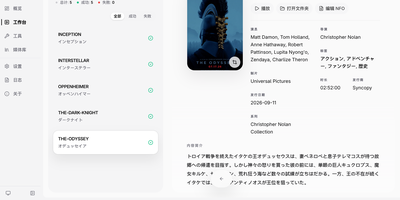
Messy video folders become a clean, browsable library with MDCz, a metadata scraper and organizer that prepares local movie files for Emby, Jellyfin, and Kodi. Point it at a folder and it recognizes titles from filenames, then pulls metadata, high-resolution covers, stills, and cast information from sources including DMM, FC2, AVBase, JavBus, JavDB, MGStage, and Prestige. Each finished title gets a standard NFO file beside the video, so your media server shows rich detail pages instead of bare filenames. The batch workbench queues folders of files, shows a diff preview of every rename before anything changes, and reports success and failure per title. Actor names arriving under different aliases from different sources merge into one canonical name with your own mapping rules. Segmented releases, STRM stream files, and external subtitle files move together with the main video during renaming. Built-in tools check for duplicate titles, apply rule-based renaming, and maintain existing library data. Run it as the Docker WebUI on your NAS at port 3838, or use the desktop builds for Windows, macOS, and Linux. Running on a dedicated VPS on RepoCloud with guaranteed CPU, RAM, and SSD, full root SSH access, and a browser serial console. GPL-3.0 licensed.
NovelVids
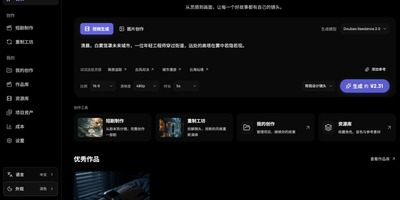
Short dramas and illustrated stories come together in NovelVids, a workbench that carries a project from manuscript import to assembled episode. Import a TXT, Markdown, DOCX, or PDF manuscript, review the chapter boundaries and story analysis, then develop the story chapter by chapter. Characters, locations, and props live in an asset library with reference images, aliases, variants, and voice bindings that stay linked to every shot. The storyboard editor holds shot descriptions, complete prompts, reference media, and generation parameters, and each generated result lands beside its inputs for inspection. An infinite canvas connects assets, videos, and enhanced results, and you can switch between storyboard and workflow views of the same project. Ask the creation assistant to revise selected objects, inspect the recorded diffs, and undo supported edits before anything regenerates. Start image or video clips from the home page by choosing a model, attaching reference images, video, or audio, and reviewing the estimate first. Remake studio analyzes reference videos you are authorized to use and converts their shots into an editable project. Track generation tasks and versions, assemble finished episodes, and optionally enhance resolution at the end. Running on a dedicated VPS on RepoCloud with guaranteed CPU, RAM, and SSD, full root SSH access, and a browser serial console. MIT licensed.
Jentic One
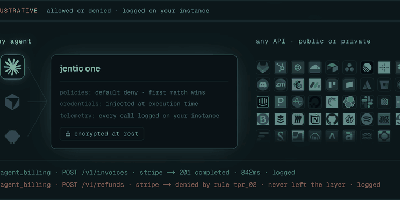
Jentic One is a self-hosted execution layer that lets AI agents call real APIs through a broker that checks permissions and injects stored credentials, so agents do useful work without ever holding your API keys. You register the APIs an agent may use, store each credential once on your own infrastructure, and approve which agents can connect. Every call the agent makes passes the permission check first, and denied requests stop at the broker with a 403 instead of reaching the outside service. Allowed calls go out with the credential attached, and each one lands in an execution record you can review later. Cutting off a single agent takes one change in the control plane, with no key rotation across your other tools. Agents connect through the jentic CLI, a generated skill, an MCP server, or plain HTTP, so coding assistants and in-house agents share the same gate. The stack runs as two units over one database: the control plane on port 8000 for administration, and the broker data plane that agents call. Quickstart runs on SQLite for trials, and production setups move to Postgres with pinned images and TLS. Running on a dedicated VPS on RepoCloud with guaranteed CPU, RAM, and SSD, full root SSH access, and a browser serial console. Apache-2.0 licensed.