Open Source App Cloud Marketplace
Deploy, host, and scale with one click, at half the cost. Then customize with AI agents.
Manager.io
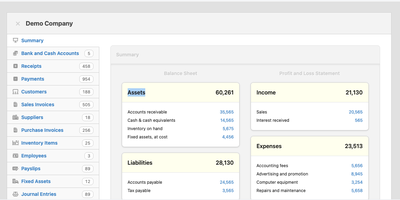
Full double-entry accounting on your own server: Manager.io Server Edition runs the same engine as the free desktop edition as a web server, so unlimited users work in unlimited businesses concurrently, with all books on infrastructure you control. The module coverage is genuinely comprehensive - general ledger with a customizable chart of accounts, sales and purchase invoices, quotes and orders, bank and cash account reconciliation, inventory with stock tracking, fixed assets with depreciation, payroll, multi-currency with exchange gains and losses, tax codes for VAT and GST regimes, and the complete reporting stack: balance sheet, profit and loss, trial balance, aged receivables and payables, and cash flow statements. The interface is translated into more than seventy languages, reflecting a genuinely global user base. The licensing model is the refreshing part: a server license is a one-time perpetual purchase, not a subscription - twelve months of updates included, optional renewals after, no per-user tiers, no data limits, and you can downgrade to the free desktop edition anytime, so your books are never hostage. Businesses wanting collaborative accounting behind their own firewall, with data sovereignty and no monthly fees, get exactly that.
Forgejo
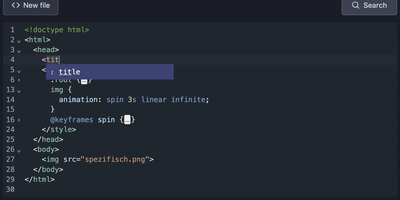
Governed by the non-profit Codeberg e.V. with over 150 contributors and quarterly major releases reaching v16.0 in July 2026, Forgejo delivers a complete code collaboration platform in a single Go binary that runs comfortably on 512 MB of RAM — providing full Git hosting with SSH and HTTPS, pull requests with inline code review, issue tracking with labels and milestones, kanban project boards, wikis, and an integrated package registry supporting Docker, npm, PyPI, Maven, NuGet, and Cargo. Forgejo Actions provides GitHub Actions-compatible CI/CD with reusable workflows, OpenID Connect for secure third-party access, ephemeral runners for autoscaling, and dynamic matrix support for complex build pipelines. The platform implements ActivityPub-based forge federation allowing issues, pull requests, and stars to work across independent instances — enabling a decentralized development ecosystem similar to how Mastodon federates social networks. Organizations and team permissions provide fine-grained access control, while LDAP, OAuth2, and OpenID authentication integrate with existing identity infrastructure. Code search indexes repositories for fast discovery, LFS handles large files efficiently, and mirror synchronization imports repositories from GitHub, GitLab, and other forges. Deploy via a single static binary, Docker container, or official Helm charts with SQLite for small instances or PostgreSQL and MySQL for production workloads. Running on a dedicated VPS on RepoCloud with guaranteed CPU, RAM, and SSD, full root SSH access, and a browser serial console. GPLv3+ licensed.

Ntfy
ntfy sends push notifications to your phone or desktop with a single curl command: publish a message to any topic and every subscriber receives it instantly, no signup or API key required. Over 31,000 GitHub stars and 106 releases since 2021 back a server supporting five priority levels mapped to distinct notification sounds and vibration patterns, emoji tags for visual classification, click actions that open URLs when tapped, and up to three action buttons per notification for view, HTTP callback, broadcast, or clipboard copy operations. File attachments push images from surveillance cameras, documents, or any binary payload directly to mobile devices. Subscriptions work through JSON streams, Server-Sent Events, WebSockets, or raw text, with server-side filtering by priority, tags, and message ID. Authentication enforces topic-level access control through Basic Auth, Bearer tokens, or query parameters, with a built-in user and ACL management system. UnifiedPush compatibility lets ntfy serve as a push distributor for Mastodon, Matrix, and other federated services. Web Push via VAPID keys delivers browser notifications without the mobile app. The server ships as a single statically linked Go binary or Docker image supporting amd64, armv7, and arm64 architectures, consuming 30-50 MB RAM at idle with SQLite-backed message caching. Integrations include Grafana, Prometheus Alertmanager, Uptime Kuma, Home Assistant, and Ansible Semaphore. Running on a dedicated VPS on RepoCloud with guaranteed CPU, RAM, and SSD, full root SSH access, and a browser serial console. Apache 2.0 / GPLv2 dual-licensed.

Ubuntu VPS
A minimal Ubuntu 24.04 LTS virtual private server — no pre-installed applications, no opinionated configuration, just the operating system and root access. Start from a clean slate and install exactly what you need: web servers, databases, development toolchains, CI runners, monitoring stacks, VPN endpoints, game servers, or anything else that runs on Linux. The server ships with apt package management, systemd service supervision, and standard networking configured out of the box, giving you access to over 36,000 packages in the Universe repository alone. Connect via SSH with the key you select during deployment; a dedicated IPv4 address is included with every server at no extra charge. A browser-based serial console in the RepoCloud dashboard provides emergency access without an SSH client. Snapshots let you capture the server state before risky changes and roll back with one click. Resize CPU and RAM on demand without reinstalling. Canonical's standard security maintenance covers this LTS release through May 2029 — five years of patches for the Main repository. Ubuntu Pro extends that to ten years with additional Universe coverage, kernel livepatching, and compliance tooling, available free for up to five machines.
Lenpaste
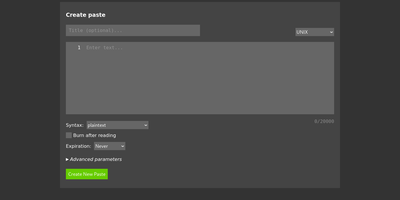
Share code snippets, logs, configs, and notes without registration, tracking, or ads: Lenpaste is a minimal, self-hosted, anonymous alternative to pastebin.com. It is deliberately spartan in the right ways: no accounts, no JavaScript required (the entire site works in text browsers and hardened setups), and cookies used solely to store display preferences. Pastes support syntax highlighting across a long list of languages (from ApacheConf and Arduino to mainstream stacks), configurable expiration from minutes to unlimited, one-use "burn after reading" pastes that self-delete on first view, optional author attribution, and iframe embedding for dropping pastes into other pages. The form-encoded HTTP API covers everything the UI does - create pastes with title, syntax, expiration, and line-ending normalization, fetch them by ID, and query server capabilities - making it trivial to pipe command output to your paste server from shell scripts. Server operators control maximum title and body lengths, maximum paste lifetime, rate limits for viewing and creation, search-engine indexing policy, and can lock private instances behind HTTP Basic authentication. It deploys as a single lightweight Docker container, giving your team a snippet-sharing endpoint where the content never touches a third-party service.
Substreamer
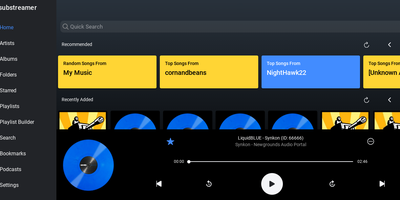
A free, polished web client for Subsonic-compatible music servers: Substreamer is the browser-based frontend you point at your existing streaming backend to play your own library from anywhere. It speaks the Subsonic API (v1.13 and higher), which makes it compatible with the whole ecosystem that has grown around that protocol: the original Subsonic server, its forks Airsonic and Madsonic, and modern implementations like Navidrome and Ampache. That decoupling is the point - your music files, transcoding, and library indexing live on whichever server you prefer, while Substreamer provides the listening experience: browse by artist, album, and genre, build and manage playlists, search your collection, and stream on demand. This RepoCloud deployment runs the containerized web edition, so the same interface is available from any browser without installing a native app, and it pairs with the Substreamer mobile apps that made the client popular. For anyone assembling a self-hosted Spotify replacement - typically Navidrome for the backend plus a good client - Substreamer fills the client half with a clean, familiar player UI. Because it is a stateless client, the container is lightweight and low-maintenance: connect it to your server's URL and credentials, and your entire collection is streaming in minutes, with no subscription and no catalog that can disappear.
Githome
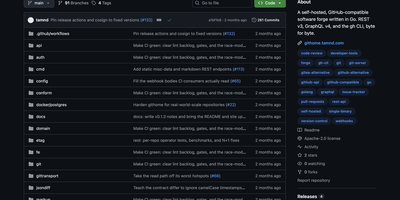
Point the gh CLI at your private Githome server and it works identically to github.com, because every REST v3 and GraphQL v4 endpoint returns byte-for-byte compatible JSON shapes, headers, Link pagination, and ETag caching. A single compiled Go binary serves the REST API under /api/v3, GraphQL under /api/graphql, git smart-HTTP transport, and a server-rendered web UI implementing the GitHub Primer design system with full functionality when JavaScript is disabled. The web interface provides repository browsing with Markdown rendering and syntax highlighting, issue tracking, pull requests with unified diffs and inline code review threads, full-text search, user profiles, and a notifications inbox. Authentication supports personal access tokens with prefix-based identification, OAuth device and web flows, and scoped permissions on every response header with only token hashes stored. The pull request system implements the complete lifecycle including async mergeable state computation, squash, merge, and rebase strategies, commit statuses, check runs, and statusCheckRollup fields. Webhooks deliver events with X-Hub-Signature-256 verification, SSRF protection, and at-least-once retry semantics. Storage supports SQLite for single-node deployments or PostgreSQL for production configurations. Performance optimizations include batch loaders replacing N+1 queries, keyset pagination, FTS-backed search, and GraphQL dataloaders. Docker deployment pulls the official multi-arch container image from GitHub Container Registry. Running on a dedicated VPS on RepoCloud with guaranteed CPU, RAM, and SSD, full root SSH access, and a browser serial console. Apache-2.0 licensed.
Gray Duck Mail
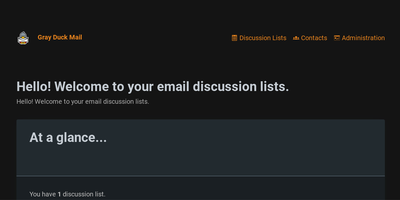
Email discussion lists - the venerable listserv pattern where one address relays to a whole group - without the notorious setup pain of Mailman or Sympa: that is Gray Duck Mail. Its architectural trick is requiring no mail server of your own: the C#/ASP.NET Core app monitors a POP3 inbox at any external email host supporting POP3/SMTP and aliasing, relays each incoming message to all list members via SMTP, and archives it for browsing in the web interface. Replies route back to the entire group automatically. The tedious parts of list management are handled by convention: dedicated aliases process join requests, subscription confirmations, and unsubscribes, while a bounce alias in the return-path catches delivery failures so dead addresses get handled instead of silently rotting. The web administration interface creates and removes lists, manages contacts, browses message archives, and imports or exports the local database for backup. GPLv3-licensed, Docker-distributed, and fully code-documented, it targets exactly the groups email still serves best - neighborhoods, schools, congregations, workplaces, and families - where one message keeping everyone in the loop beats yet another app nobody wants to install.
GlitchTip
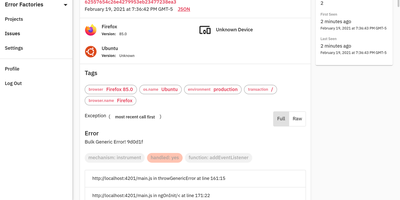
GlitchTip speaks Sentry's protocol without Sentry's operational weight - open-source error tracking that your existing SDKs already understand. The pitch is pragmatic: instrument your application with the official Sentry SDKs you already know - any language they cover - and point the DSN at your own GlitchTip instance instead. Errors, exceptions, log messages, and Content Security Policy violations flow into one place for triage, grouped into issues with stack traces, with alerts delivered by email or webhook the moment things break. Where self-hosted Sentry has ballooned into a docker-compose stack of twenty-plus containers, GlitchTip is a deliberately lean Django and PostgreSQL application a small team can actually run. Beyond errors, it bundles three more monitoring concerns: performance monitoring takes a works-out-of-the-box approach - no dashboard building, just your slowest web requests, database queries, and transactions surfaced automatically; uptime monitoring pings your sites and alerts on failures, or runs in reverse as a dead-man's-switch heartbeat for cron jobs that must check in on schedule; and log search puts application logs alongside errors for faster debugging. Unlimited projects and team members, MIT-licensed, built by Burke Software - your event volume is limited only by your own hardware.
AI Inbox Agent
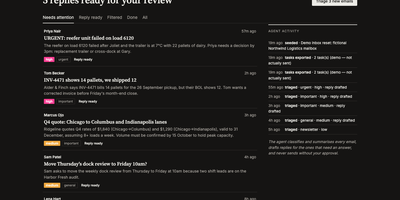
You open the inbox and AI Inbox Agent has already done the first pass: the mail sorted and summarized, and a draft in your voice waiting wherever an answer is needed. Unread Gmail lands in one of six categories, urgent through spam, with a priority, a confidence score, and a one-line reason, and phishing is flagged instead of answered. Summaries come with key points, action items with deadlines, and the sender's sentiment. Drafts come from your own history: the agent finds the closest past replies, borrows their tone, and lists the ones it used. Nothing leaves without your yes. Approve it, edit it, skip it, or type a plain-words note like "shorter, and confirm we'll cover the cost" for a rewrite. Approved replies join the examples, so drafts drift closer to how you write. Action items go to Google Tasks, Notion, or Todoist through n8n or any webhook, high-priority ones automatically and the rest in one click. High-priority threads return the next day and medium ones after a few days, with Done and Snooze. A morning digest lists what to act on first, and a stats page estimates the minutes saved. Rules decide which categories earn drafts and whether approval stays required. Bring a key for Anthropic, OpenAI, Gemini, or DeepSeek, or try the recorded demo mailbox first. Running on a dedicated VPS on RepoCloud with guaranteed CPU, RAM, and SSD, full root SSH access, and a browser serial console. MIT licensed.
Lightspeed
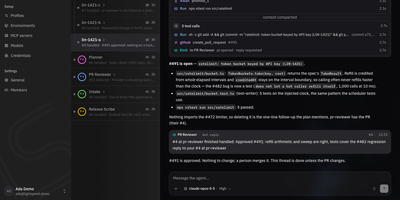
For AI agents that must work for weeks without a computer idling beside each one, Lightspeed runs the agent loop as a durable workflow and borrows a real machine only while a task needs one. A sleeping agent stays cheap. Bots wake on a schedule, a webhook, a data change, or a chat message, set up their own triggers, and message one another, which lets a planner, an implementer, and a reviewer pass work along. Sessions last months and survive restarts; a run can be canceled, steered midway, or followed by a queued message. Sub-agents take delegated work under profiles that set instructions, model, reasoning effort, and limits. Tool calls from MCP servers can pause until a person approves them. When a task needs a shell, the agent attaches an environment: a machine already owned, one provisioned on demand, or any host that registers itself with a key. Idle environments pause, suspend, or stop, then wake automatically when needed. Workspaces hold persistent files with no operating system attached, and credentials stay encrypted, refresh their OAuth tokens, and reach jobs without the model seeing them. Universes keep tenants apart, each with its own providers (OpenAI, Anthropic, or any OpenAI-compatible endpoint, local ones included) and four access tiers, owner through viewer. Three hosted demos show a personal assistant, a software factory, and technical support. Running on a dedicated VPS on RepoCloud with guaranteed CPU, RAM, and SSD, full root SSH access, and a browser serial console. Apache-2.0 licensed.
Dialzen
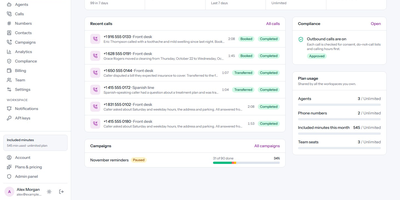
A missed call is a missed booking, and Dialzen picks up with an AI voice agent that answers support questions, schedules appointments, and follows up with people who agreed to be called. Build an agent from one of eight templates, add prompt variables, a knowledge base, voices, languages, and post-call analysis fields, then rehearse it with a browser test call. Agents book through Cal.com or Google Calendar, connect Google Sheets, send signed webhooks, and hand the call to a person when needed. Buy US and Canada numbers, import Twilio or SIP trunk numbers, route inbound calls, and set daily dial caps. No media server needed. Every call lands in a log with its recording, transcript, summary, sentiment, and extracted data, and analytics add a heatmap. An embeddable widget lets website visitors talk to an agent straight from the browser. Contacts carry consent records, CSV imports run as a dry run first, and opt-out phrases in English, Hindi, and Arabic are caught automatically. Campaigns check compliance at dial time, respect calling windows in each contact's time zone, and handle retries and pacing. A compliance center covers AI disclosure, recording notices, KYC approval for outbound access, kill switches, and an append-only audit log. Prepaid credit wallets, credit packs, and per-minute pricing turn it into a reseller business with workspaces, roles, and plans. Running on a dedicated VPS on RepoCloud with guaranteed CPU, RAM, and SSD, full root SSH access, and a browser serial console. MIT licensed.
AlianHub
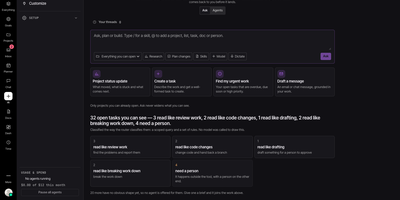
AlianHub is an open-source project manager where people and AI agents plan, do, and report the work together, and every change is approved, logged, and undoable. Ask about at-risk tasks in plain words, or give the project generator a brief and a few answers, then review a drafted plan of lists, tasks, views, starter automations, and a dashboard before anything is built. Team packs turn on role agents for eight kinds of company, while autonomy levels, a skill library, and daily or monthly AI budgets keep their work in bounds. Proposals wait in an AI Inbox where a person approves, edits, or declines with a reason, and the audit log records who did what. Claude, ChatGPT, or Claude Code can connect over MCP and act with only the permissions of the person who connected them. Underneath runs a familiar work tracker with List, Board, Table, Calendar, Gantt, and Workload views, sprints with burndown and velocity, subtasks, custom fields, and automation rules. Timers feed weekly timesheets with an approval step. Docs sit beside tasks, chat has channels per project, and roles can be tuned per company. Pull requests link to tasks once GitHub is connected, and imports bring work over from Jira, ClickUp, Trello, Asana, Monday.com, or a CSV file. Fourteen interface languages are included. Running on a dedicated VPS on RepoCloud with guaranteed CPU, RAM, and SSD, full root SSH access, and a browser serial console. AGPL-3.0 licensed.
SerOps
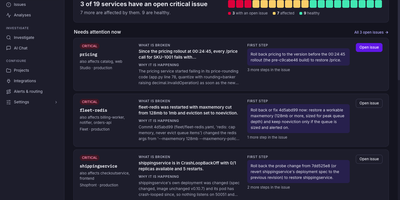
Root cause first, dashboards second: SerOps reads the logs, metrics, traces, deploys, and commits you already produce and explains why an incident happened, even when no alert fired. It plugs into Elasticsearch, Loki, Splunk, Datadog, and the big three clouds for logs, plus Prometheus, VictoriaMetrics, Jaeger, and Tempo. GitHub, GitLab, Bitbucket, Azure DevOps, Jenkins, Argo CD, and Flux supply the other half of the story: which change shipped, and when. Analyses come back as a plain-language root cause, the reasoning behind it, and numbered next steps, with the suspect commit linked beside it. Evidence, not guesses. The Overview page opens on what is broken, why, and the first thing to try, so whoever is on call starts at the fix. Issues are deduplicated and land in a table you can filter by severity, status, project, environment, or service, then resolve, mute, or acknowledge. Need an answer now? Run an investigation over a window you pick, then keep asking in AI Chat, which sees the same evidence. Choose Claude, Gemini, OpenAI, DeepSeek, or local Ollama, cap monthly spend, and re-run any analysis on a second model to compare answers. Regex masking strips secrets and personal data from what goes to the model, and quiet windows skip the AI call. Alerts reach Slack, Teams, PagerDuty, OpsGenie, or email, with routing rules, quiet hours, and digests. Running on a dedicated VPS on RepoCloud with guaranteed CPU, RAM, and SSD, full root SSH access, and a browser serial console. AGPL-3.0 licensed.
Viberglass
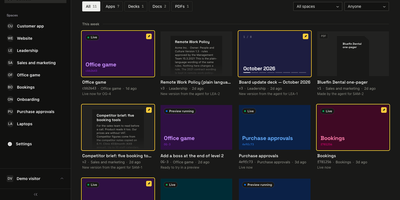
Describe the tool your team needs, and Viberglass has a coding agent build it, preview it, and run it, with nobody on the team touching code. Trackers, approval lists, checklists, and booking calendars replace spreadsheets, each app running on your own servers behind team sign-in, with backups and rollback. Changes run in a preview on a copy of the live data and go live only when the requester or a maintainer says so. The same tasks produce documents and presentations, kept as versioned artifacts that preview in the app, or open GitHub pull requests for engineering to review. For code, the agent writes a plan, asks the right person when something is unclear, takes line-by-line comments, then builds in parts, one pull request each. One task, one thread. Pick Claude Code, Codex, Antigravity, Qwen Code, Mistral Vibe, Kimi Code, OpenCode, or Pi, with provider keys, coding plans, or any OpenAI- or Anthropic-compatible endpoint. Run details show the agent's thinking, tool calls, prompt, worker log, and token usage. Tasks start in Slack, a browser extension, GitHub Issues, Jira, Shortcut, webhooks, schedules, or an MCP client. Roles for members, guests, and read-only viewers, open or private spaces, shared secrets, and an audit log cover a shared installation. Agent runs start in a throwaway container that is removed afterward, and stored credentials are encrypted. Running on a dedicated VPS on RepoCloud with guaranteed CPU, RAM, and SSD, full root SSH access, and a browser serial console. AGPL-3.0 licensed.
Lambda ERP
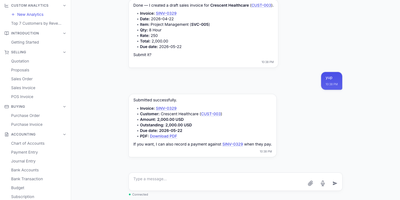
Lambda ERP gives a small business double-entry books, stock control, and full sales and purchase cycles, then lets people run all of it by chatting. A setup wizard asks your country and kind of business, proposes the chart of accounts and taxes for review, and books nothing until you approve. Quotations flow into orders, deliveries, invoices, and payments, purchasing mirrors them, and returns post credit notes with stock reversals. Tell it to bill a customer, change a price, or reorder stock, and it drafts the document, asks before submitting, and links the PDF. Attach a supplier PDF or photo and the assistant can turn it into an invoice or quotation. Trial balance, profit and loss, balance sheet, general ledger, aging, and stock reports come ready to use. Request a custom chart, such as top customers by revenue, and it is saved as a report you can rerun, edit, or share. Analytics queries use whitelisted datasets, never free-form SQL. Documents print as PDFs in layouts you edit by hand or by chat, and issued ones keep their original layout. An admin can enable role-scoped keys for a REST API, a chat API, and an MCP endpoint that Claude or Codex can drive. The assistant runs on your own OpenAI key. Admin, manager, and viewer roles and English, German, or French screens are included. Running on a dedicated VPS on RepoCloud with guaranteed CPU, RAM, and SSD, full root SSH access, and a browser serial console. Apache-2.0 licensed.
OLO Toolgate
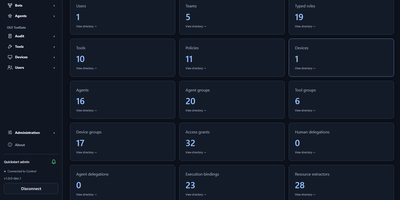
When an AI agent reaches for a tool, OLO ToolGate decides on the spot whether the call is allowed, needs a person's approval, or is blocked. A fresh install grants nothing: new users and agents start disabled, and access comes only from explicit grants to tool groups. Sensitive calls wait for an independent reviewer, who approves one exact call: tool, arguments, version, and target. Requests, approvals, decisions, and outcomes are recorded per tenant and tied to the identities involved. Existing HTTPS MCP servers can be governed unchanged: register one, scan its tools, approve the ones you trust, then grant them like any other. Write your own tools with the SDK and deliver them as signed packages to enrolled Windows, Linux, and macOS devices that open no inbound ports. Beyond the gateway, portable bot bundles wire agents, models, and triggers together, then publish and run with live progress and a recorded result. If the control plane is unreachable, nothing runs. Starter demo bots summarize text with a local model, have two agents assess an incident, or watch folders and logs. OpenTelemetry metrics and traces flow to Grafana or New Relic, and bot runs can be traced in Langfuse, LangSmith, or Phoenix. The admin console manages users, teams, typed roles, access grants, execution bindings, and resource extractors. Running on a dedicated VPS on RepoCloud with guaranteed CPU, RAM, and SSD, full root SSH access, and a browser serial console. Apache-2.0 licensed.
Memoturn
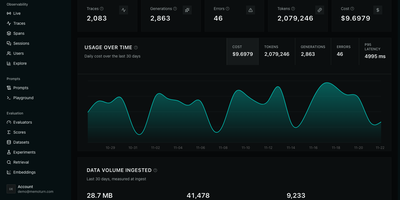
Tracing each model call, pricing it, scoring the answer, and versioning the prompt behind it, Memoturn gives AI teams proof of what works before it ships. Traces unfold on a waterfall timeline where agent plans, tool calls, retrievals, and generations each get a bar, with tokens and cost on every step. Quality is measured three ways: offline experiments over datasets, online judges sampling production traces, and human review queues with one-click scoring. Scores appear on the trace they came from. A versioned prompt registry promotes versions through deploy channels, A/B tests split live traffic between them, and a streaming playground compares models side by side. Cost, token, and latency charts break down by day, model, user, and tool, while budget alerts run every minute and automations post to Slack or a webhook when a score drops. A retrieval page flags weak document matches, and an embeddings map with similarity search turns one bad generation into every trace like it. An MCP server hands prompts, datasets, and review queues to agent IDEs like Claude Code and Cursor, with roles checked per tool. Teams get organizations and projects, SSO through OIDC or SAML, read-only viewer roles, PII masking at ingest, and retention rules. Data arrives from any OpenTelemetry exporter, with integrations for OpenAI, Anthropic, LangChain, and LiteLLM. Running on a dedicated VPS on RepoCloud with guaranteed CPU, RAM, and SSD, full root SSH access, and a browser serial console. Apache-2.0 licensed.